Wood Blind Slat Size Two Inch Versus Two Half Inch
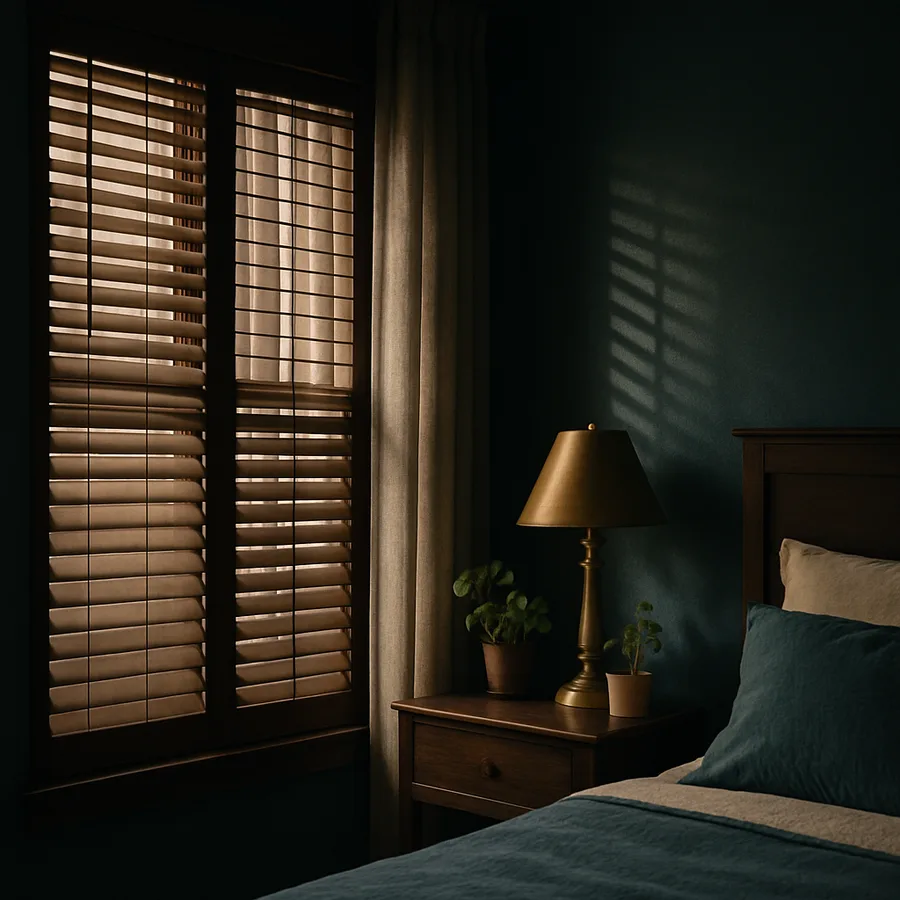
Once you have decided on real wood blinds and chosen your stain, the next question the salesperson asks is the one most people are not ready for: do you want two-inch slats or two-and-a-half-inch slats. The two sizes look almost the same in the showroom sample book. They look noticeably different on an actual window. The half inch of slat width changes the visual rhythm of the blind, the amount of light that comes through when the slats are open, and how the blind reads against the rest of the room.
If you are choosing right now, here is the practical breakdown that goes beyond what fits in a product description.
What The Two Sizes Actually Look Like On A Window
A two-inch wood blind is the workhorse size most retailers default to. The slats are wide enough to feel substantial and modern, narrow enough to disappear visually when tilted fully open. A standard residential window will show roughly eighteen to twenty-four slats when fully extended, depending on window height.
A two-and-a-half-inch slat is wider and reads heavier. The same window now shows roughly fifteen to nineteen slats. Fewer horizontal lines across the window means a calmer, less busy look. The wider slats also throw a deeper shadow line when partially closed, which gives the window a more architectural feel and pairs well with traditional or transitional rooms with substantial millwork.
The difference sounds small on paper. In a real room, the two-and-a-half-inch slats look custom and the two-inch slats look standard. That distinction matters in a formal living room or a primary bedroom with crown molding. In a kitchen or a home office, the standard two-inch reads cleaner and more functional.
Light Control, View Through, And Stack Height
Wider slats let in more light and view per slat when tilted open. With two-and-a-half-inch slats fully open, you see noticeably more of the view outside because each gap between slats is taller. Two-inch slats, fully open, still show a slightly more striped view of the world.
Closed, the math reverses. Two-and-a-half-inch slats overlap more securely when tilted shut, blocking more light at the slat junctions and giving better privacy. Two-inch slats leave slightly more light bleed at the seams unless tilted very tightly closed.
The stack height is the detail that catches people off guard. When you raise wood blinds fully, the slats stack at the top of the window. Two-and-a-half-inch slats stack taller because each slat is wider. On a thirty-six-inch tall window, expect roughly eight to ten inches of stacked slats at the top with two-and-a-half-inch blinds versus six to seven inches with two-inch blinds. If your window has limited height above the frame, the wider stack can eat into the glass you wanted to see when the blinds are raised.
The Window Covering Manufacturers Association publishes general guidance suggesting you measure the available reveal above the window before specifying any slat size, because a stack that drops into the visible glass area defeats the purpose of raising the blind. That guidance applies more sharply to wider slats.
Cost, Weight, And Operation
Two-and-a-half-inch real wood blinds cost more, typically ten to twenty percent more than equivalent two-inch blinds at the same retailer. The wider slats use more wood, the tilt and lift mechanisms have to be slightly beefier, and the production runs are shorter than the volume two-inch lines.
The blinds are also heavier. On a wide window past about forty-eight inches, the weight starts to matter. A standard cordless lift mechanism handles two-inch wood blinds across most window widths but can struggle with two-and-a-half-inch blinds on the widest sizes. If you are shading a window over five feet wide, ask whether the cordless mechanism is rated for the wider slat weight or whether you should consider a corded option, a continuous-loop system, or motorization.
The American Society of Interior Designers points out in their general window treatment guidance that wider slats can also amplify any imperfection in the slat material. A small warp or grain inconsistency that disappears at two inches becomes visible at two-and-a-half inches because there is more slat surface to show it. Real wood from reputable manufacturers like Hunter Douglas or Norman is engineered to minimize this, but lower-end imports sometimes show the difference. You can browse their professional standards through the American Society of Interior Designers.
Which Slat Size Belongs On Your Window
If your windows are average size (twenty-four to forty-eight inches wide, thirty-six to sixty inches tall), in casual rooms, in a modern or transitional home, the two-inch slat is the safer choice. It costs less, operates more smoothly cordless, stacks shorter at the top, and reads clean in almost any setting. It is the right answer for a kitchen, a kid's room, a guest room, or a home office.
If your windows are tall, you want a more custom or traditional look, the room has substantial millwork or crown molding, or you simply love the more architectural shadow lines that wider slats throw across a wall in late afternoon, go to two-and-a-half-inch. The extra cost is worth it in a primary bedroom, a formal dining room, or a living room you genuinely care about visually. The Better Homes & Gardens window coverings guide includes side-by-side photo comparisons that are worth scanning before you commit.
A question to ask yourself: when you stand in the room and look at the window with no blind, do you imagine fewer big horizontal lines that read calm and substantial, or more smaller horizontal lines that read crisp and standard? Your gut answer is the right slat size more often than the spec sheet.
If you are torn between the two and the window is a hero window in the room, order one window in two-and-a-half-inch as a sample install, live with it for a week, then order the rest. Most window covering retailers will let you start with one room and add on later. A small piloted order beats committing to a whole-house mistake.
More Articles You May Like



Comments
Post a Comment