Playroom to Homework Room: Transitioning Kids Spaces by Age
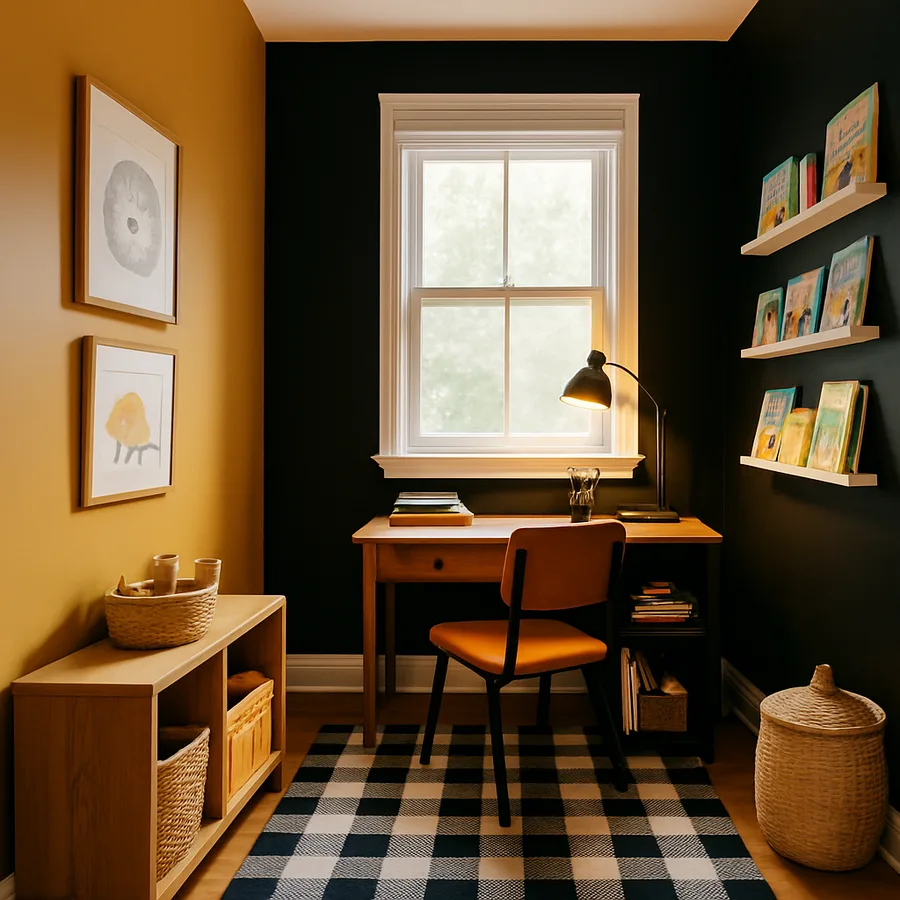
Why the Playroom Has an Expiration Date
Every parent remembers the moment they realized the playroom no longer matched their child's life. The foam floor tiles that cushioned a toddler's tumbles now look absurd beneath the feet of a ten-year-old working through long division. The toy bins overflow with plastic figurines nobody has touched in months, while textbooks and notebooks pile on the floor because there is nowhere proper to put them. Children's needs evolve faster than most rooms do, and the gap between what a space offers and what a growing child actually requires widens with each passing school year. Recognizing this mismatch is the first step toward a room that supports your child's development rather than anchoring it in a phase they have already outgrown.
The National Association for the Education of Young Children (NAEYC) has published extensive research showing that a child's physical environment directly influences cognitive development, attention span, and self-regulation skills. A room filled with age-inappropriate stimuli can actually hinder concentration in school-age children who need calm, organized surroundings for focused work. The bright primary colors and open bins of scattered toys that stimulated a three-year-old's imagination become sources of distraction for an eight-year-old trying to finish a reading assignment. The environment sends signals, and a room stuck in toddler mode tells an older child that serious work does not happen here.
The transition from playroom to homework room does not need to happen overnight. In fact, the most successful transformations occur gradually, with each adjustment calibrated to the child's current developmental stage. A five-year-old entering kindergarten needs a different setup than a twelve-year-old managing multiple subject assignments and extracurricular schedules. What matters is that parents recognize the transition as inevitable and plan for it rather than waiting until the mismatch becomes a daily source of frustration. Have you found yourself clearing toys off the dining table every evening so your child can do homework? That is the signal that the playroom's current incarnation has run its course.
This guide walks through the transition in four age-defined stages, offering specific furniture recommendations, layout changes, and storage strategies for each phase. The goal is not to strip childhood joy from the room but to evolve the space so it continues to serve your child's most pressing needs, whether those needs involve building block towers, practicing cursive, researching a history project, or preparing for college entrance exams.
Stage One: Ages Three Through Five, The Structured Play Foundation
The earliest version of a child's dedicated room should prioritize open floor space, soft surfaces, and low-height storage that a small child can access independently. At this stage the room is primarily a playroom, but the seeds of future functionality should already be present. A child-height table and chair set placed near natural light serves triple duty as a coloring station, a snack spot, and an early introduction to the concept of sitting down to work on a task. This single piece of furniture begins training the habit of focused seated activity that will evolve into homework discipline years later.
Storage at this stage should follow the Montessori principle of accessibility. Open bins on low shelves allow children to choose activities independently and, crucially, to put them away without adult help. The American Montessori Society recommends limiting the number of visible toys to eight to twelve at any time, rotating others into a closet to prevent overstimulation. This practice reduces clutter and teaches children that a space has a finite capacity, a lesson that translates directly into desk organization skills during the school years. Label each bin with a picture and a word so the child begins associating written language with physical objects.
Wall space matters more than parents typically realize at this stage. A large magnetic whiteboard or chalkboard panel mounted at the child's standing height provides a vertical work surface for drawing, letter practice, and early math concepts. Unlike paper taped to a wall, these surfaces are reusable and easy to clean, and they establish the wall as a functional zone rather than purely decorative. When the child reaches school age, this same wall area can transition to a pinboard for assignments, a calendar for tracking due dates, or a whiteboard for brainstorming essay outlines. Planning the wall infrastructure now saves repainting and patching later.
Flooring choices at this stage lean toward soft and forgiving. Interlocking foam tiles, washable area rugs, or cork flooring protect against the inevitable falls and spills of early childhood. However, it is worth choosing materials that will not look juvenile as the room matures. A neutral-toned area rug in a geometric pattern reads as playful at age four and sophisticated at age fourteen, while a rug printed with cartoon characters has a much shorter visual lifespan. Better Homes & Gardens has consistently advised parents to invest in quality neutral rugs for children's rooms, noting that a single well-chosen rug can anchor the room through multiple decorating phases and save hundreds of dollars in replacements.
Stage Two: Ages Six Through Eight, Introducing the Homework Zone
The start of formal schooling marks the first major inflection point in the room's evolution. A child who now has nightly reading assignments, spelling lists, and math worksheets needs a dedicated workspace that signals the shift from pure play to a blend of play and purposeful work. This does not require eliminating toys entirely. Rather, it means carving out a defined area of the room, ideally near a window for natural light, where a desk and chair replace the toddler table. The desk surface should be large enough for an open workbook and a pencil case, approximately 36 to 42 inches wide and 20 inches deep for this age group.
Chair selection at this stage affects posture habits that persist into adulthood. The American Academy of Pediatrics (AAP) recommends that children's desk chairs allow feet to rest flat on the floor with knees bent at approximately ninety degrees. An adjustable-height chair is the most practical investment because it grows with the child and eliminates the need for footrests or booster cushions. Ergonomic task chairs designed for children are available from manufacturers like IKEA and Pottery Barn Kids at price points between fifty and two hundred dollars, and they represent one of the highest-impact purchases in the entire room transition.
The play zone does not disappear at this stage; it contracts and becomes more intentional. Open-floor play space decreases to make room for the desk area, and toy storage shifts from open bins to closed cabinets or drawers that contain the visual noise. Construction toys like LEGO sets, art supplies, and board games remain age-appropriate and cognitively valuable, but they should live in designated containers that the child opens deliberately rather than in piles that dominate the room's visual landscape. This containment strategy teaches the child to compartmentalize activities, a skill that supports executive function development.
A daily routine station near the room's entrance helps the six-to-eight age group manage the new demands of school life. A wall-mounted hook strip for the backpack, a small shelf for the lunchbox, and a tray for permission slips and homework folders create a landing zone that prevents the common problem of school materials scattering across the house. The National PTA has published guidelines encouraging parents to establish consistent homework environments, citing research that children who work in the same organized space each day complete assignments faster and with fewer errors than those who migrate between the kitchen table, the couch, and the bedroom floor.
Stage Three: Ages Nine Through Twelve, The Academic Workspace Takes Priority
By fourth or fifth grade, homework demands increase substantially. Projects span multiple days, research requires reference materials spread across a work surface, and the volume of papers, binders, and textbooks multiplies. The room's layout should now prioritize the academic workspace as the dominant feature, with play and leisure occupying supporting roles rather than competing for center stage. A full-size desk measuring at least 48 inches wide provides adequate surface area for a laptop, an open textbook, and writing materials simultaneously. Depth should increase to 24 inches to accommodate a monitor or laptop screen at a comfortable viewing distance.
This is the stage where technology enters the room in earnest. A child who previously did all work on paper now needs access to a computer for research, typing assignments, and educational software. The desk should include cable management solutions, a power strip mounted to the underside or rear, and adequate lighting for screen-based and paper-based work. A task lamp with adjustable color temperature allows the child to switch between warm light for reading and cooler light for screen work, reducing eye strain during long study sessions. The Illuminating Engineering Society recommends a minimum of 50 foot-candles of light on the desk surface for reading tasks, which most standard desk lamps achieve at their medium brightness setting.
The remaining play elements at this stage typically consolidate into a single leisure corner. A beanbag or small armchair, a bookshelf stocked with age-appropriate novels and hobby books, and perhaps a small media station for a gaming console or art supplies constitute the non-academic zone. This corner should be physically separated from the desk area, even if only by the orientation of the furniture, so the child's body must turn away from the work surface to engage with leisure activities. That physical pivot creates a psychological boundary between work mode and relaxation mode that supports sustained concentration.
Bulletin boards and organizational wall systems become essential at this age. A corkboard or magnetic panel mounted above the desk provides a place to pin assignment schedules, project timelines, and inspirational items. The American Society of Interior Designers recommends allocating at least four square feet of vertical display space per child in a homework area, noting that visual task management systems help children develop planning skills that correlate with academic success. Supplementing the board with a small wall-mounted calendar or a dry-erase weekly planner gives the child a birds-eye view of upcoming deadlines and commitments.
Stage Four: Teenagers and the Full Study Suite
The teenage years bring the room to its final academic configuration. The playroom has fully transformed into a study suite where focused intellectual work is the primary activity and everything else is secondary. The desk expands to its largest practical size, often an L-shaped configuration that provides separate zones for computer work and paper-based study. A secondary surface, such as a side table or a pull-out extension, accommodates the sprawl of textbooks, notebooks, and reference materials that accompany high school coursework. Storage shifts entirely to closed systems: filing drawers for papers organized by subject, book shelves for an expanding library, and a closet section dedicated to school supplies rather than toys.
According to a survey conducted by the National Center for Education Statistics (NCES), high school students who report having a quiet, dedicated study space at home score an average of 12 percentile points higher on standardized assessments than peers who study in shared or multipurpose spaces. This statistic is not merely correlational; the physical environment's influence on concentration and retention is well documented in educational psychology literature. A teenager's room that still contains remnants of its playroom past sends a subtle but persistent message that the space is not serious, and that perception can undermine the motivation to treat study time with the rigor it demands.
Acoustic management becomes a genuine concern during the teenage years. A student preparing for exams or writing college application essays needs the ability to block out household noise. Acoustic panels mounted on the wall behind the desk area, heavy curtains on windows, and a solid-core door all contribute to a quieter environment. Even a thick area rug on a hard floor absorbs enough ambient sound to make a noticeable difference. These modifications are not extravagant; they are practical investments in a teenager's academic performance during the years when grades carry the most weight for future opportunities.
The leisure corner from the previous stage evolves into a rest and decompression zone. A comfortable reading chair with good lighting, a small speaker for background music, and a shelf for personal interests replace the beanbag and gaming corner. The key distinction is that this zone should feel intentional and adult-adjacent rather than childish. A teenager who perceives their room as a mature, well-designed space takes greater ownership of keeping it organized and using it productively. The room's aesthetic has become part of their identity, and that emotional investment is one of the most powerful motivators for maintaining the space in a condition that supports both relaxation and rigorous study.
Furniture That Grows: Smart Investments for the Long Transition
The most expensive approach to transitioning a child's room is replacing every piece of furniture at each developmental stage. The most economical approach is selecting adaptable furniture from the beginning that can be reconfigured, adjusted, or repurposed as the child's needs evolve. Height-adjustable desks that raise from toddler table height to full adult working height represent the single best long-term investment in a child's room. A quality adjustable desk purchased at age four and used through age eighteen costs roughly the same as buying three separate desks over that period, with the added benefit of consistent aesthetics and no disposal hassle.
Modular shelving systems offer similar longevity. A wall-mounted track-and-bracket shelving system allows parents to add, remove, raise, and lower shelves as storage needs change. At age four, the shelves sit low and hold picture books and toy bins. At age ten, they rise to desk height and hold textbooks and binders. At sixteen, they reach adult height and accommodate a growing book collection, framed photos, and decorative objects that reflect the teenager's personality. The Container Store and IKEA both offer track-based systems that have remained in production for decades, ensuring replacement brackets and additional shelves remain available years after the initial purchase.
Convertible beds deserve mention in the context of long-term room transitions. A crib that converts to a toddler bed that converts to a full-size daybed provides sleeping infrastructure from birth through the teenage years without requiring three separate bed purchases. When the bed frame remains constant, the room's layout stability increases, and each transition phase focuses on the surrounding furniture and storage rather than rearranging everything around a new bed. This consistency is psychologically comforting for children who may resist room changes if they feel their familiar sleeping space is being disrupted.
Do you find yourself hesitating to invest in quality furniture for a child's room because children outgrow things so quickly? That hesitation is understandable but often misguided. A well-built desk, a durable shelving system, and a quality task chair are not items a child outgrows; they are items that grow alongside the child when chosen with adaptability in mind. The per-year cost of a two-hundred-dollar adjustable desk used for fourteen years is roughly fourteen dollars, less than the cost of a single replacement toy. Reframing children's furniture as long-term infrastructure rather than disposable staging makes the initial investment far easier to justify.
Making the Transition Work for Your Family
The shift from playroom to homework room is ultimately about respecting the pace of your child's development and designing a space that meets them where they are. No single layout works for every family, every room size, or every child's temperament. An introverted child who recharges through solitary reading will benefit from a room that prioritizes quiet comfort and ample bookshelves. An active child who processes energy through movement may need the room to retain a small open floor zone for stretching or yoga even through the teenage years. The frameworks in this guide are starting points, not rigid prescriptions.
Timing the transition stages does not require a calendar alarm. Watch your child's behavior in the room for the signals that a change is needed. When toys sit untouched for weeks, it is time to donate them and reclaim the storage for academic materials. When the child consistently chooses to do homework at the kitchen table instead of in their room, the room's workspace is probably inadequate or poorly lit. When a teenager starts tacking posters over the cartoon wallpaper, the aesthetic has fallen behind their identity. These behavioral cues are more reliable indicators than any age chart because every child matures on their own timeline.
Involve the child in every stage of the transition. Even a five-year-old can choose between two paint colors or decide which toys to keep and which to pass along to a younger cousin. A twelve-year-old can sketch a rough layout and advocate for the desk position they prefer. A sixteen-year-old can research furniture options online and present a proposal with a budget. Each level of involvement builds decision-making skills and investment in the outcome. The Houzz community forums are filled with testimonials from parents who report that children who helped design their room transitions maintained the resulting spaces with far less parental nagging than children whose rooms were changed for them without consultation.
Start your child's room transition this week by conducting a simple audit. Walk into the room with fresh eyes and list every item that no longer matches your child's current age and interests. Count the toys versus the academic materials and compare the ratio to how your child actually spends their after-school hours. That gap between the room's current state and your child's current reality is your project scope. Close it gradually, one stage at a time, and the room will remain a place your child loves at every age. If you have a transition story or a layout solution that worked for your family, share it so other parents can learn from your experience.
More Articles You May Like



Comments
Post a Comment