Pellet Stove Versus Wood Stove Operating Cost Comparison
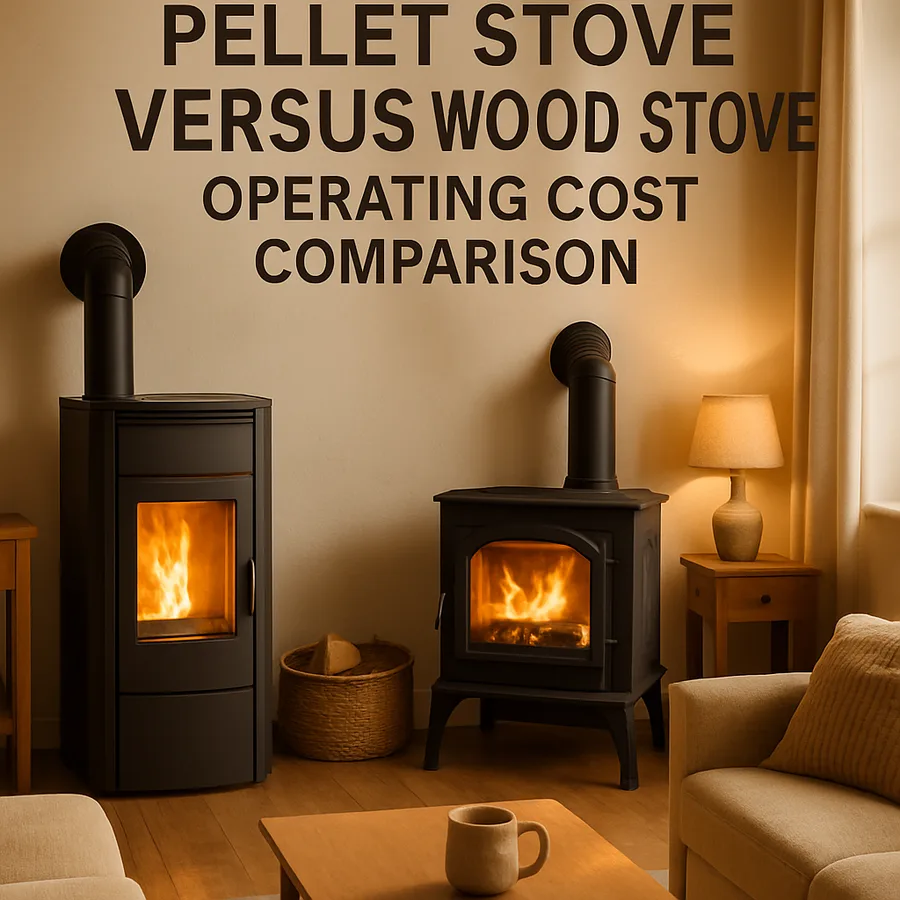
Anyone seriously evaluating a solid-fuel heating appliance eventually runs into the pellet-versus-wood debate. Both technologies burn renewable biomass. Both can deliver impressive heat output, comparable comfort, and meaningful reductions in utility bills compared to fossil-fuel heating. But they differ sharply in operating economics, and the right choice depends on local fuel prices, household labor preferences, climate, and the structural realities of the home where the appliance will live.
The numbers are worth getting right. According to the U.S. Energy Information Administration, residential heating energy costs vary dramatically by region and fuel, and small differences in efficiency or fuel price compound into hundreds of dollars per heating season. Pellets and cordwood do not move in lockstep with natural gas or heating oil prices, which means the comparison between a pellet stove and a wood stove can produce very different conclusions in different parts of the country, and even in different counties of the same state.
How The Two Appliances Actually Differ
Before comparing operating costs, it is worth pinning down what each appliance is and is not. A wood stove burns split firewood loaded by hand into a refractory-lined firebox. Combustion air is regulated by manual dampers, and heat is delivered primarily by radiation from the stove body, with some convection from surrounding air. The appliance is mechanically simple, has few moving parts, and can operate during a power outage with no modification.
A pellet stove burns small, compressed wood pellets fed automatically from an integrated hopper by a motorized auger. Combustion air is supplied by an electric fan, and a second fan circulates heated air into the room. A control board manages feed rate, fan speed, and ignition, and most modern units include programmable thermostats and remote control. The result is a much more automated user experience, at the cost of dependence on electricity and a meaningful population of moving parts.
Both appliances are subject to Environmental Protection Agency (EPA) certification under increasingly tight emissions standards, and both can achieve excellent real-world efficiency in current generations. According to the EPA's Burn Wise program, modern certified appliances burn roughly 50 percent less wood than older uncertified units to produce the same heat output. You can review the EPA's program details at epa.gov/burnwise.
Fuel Cost Per Million BTU Delivered
The cleanest way to compare heating fuels is on a per-million-BTU-delivered basis. This calculation accounts for both the fuel price and the appliance efficiency, and it lets you compare across fuels and appliances that otherwise look incomparable.
The basic formula is straightforward: fuel cost per unit, divided by the BTU content per unit, divided by appliance efficiency. For solid fuels, a useful set of approximate numbers includes:
- Seasoned cordwood: roughly 20 to 24 million BTU per cord, depending on species and moisture content
- Premium wood pellets: roughly 16.5 million BTU per ton
- Modern wood stove efficiency: 70 to 80 percent for EPA-certified units
- Modern pellet stove efficiency: 75 to 85 percent for EPA-certified units, due to better combustion control
Plugging local prices into this framework produces meaningful comparisons. In regions where cordwood is inexpensive and locally abundant, a wood stove often delivers heat at a lower per-million-BTU cost than a pellet stove. In regions where cordwood is scarce, expensive, or sold in dubious quantities, the consistent pricing and predictable BTU content of bagged pellets often wins on cost as well as convenience.
There is also a hidden labor cost in wood. A cord of split, seasoned firewood requires hours of stacking, often hauling, and ongoing wood-shed management. A ton of pellets arrives on a pallet, is shrink-wrapped against weather, and stores in roughly half the footprint of a cord of wood with no further handling until the bags are opened. Have you actually priced your time, or are you assuming that the labor is free because you enjoy splitting wood? For some homeowners, the answer is genuinely that the labor is a feature rather than a cost. For others, it becomes a chore by the second or third winter.
Electricity Use And Power-Outage Behavior
The most important operational difference between the two technologies is the role of electricity. A wood stove is, in normal operation, a fully passive heating device. It needs no electrical service to function, and many homeowners specifically choose wood heat for its independence from the grid. During a winter power outage that knocks out the central heating system, a wood stove keeps the house warm with no modification and no fuel reserve beyond the firewood already on the rack.
A pellet stove, by contrast, depends on electricity for its augers, fans, control board, and ignition. A typical residential pellet stove draws roughly 100 to 400 watts during normal operation, with brief startup spikes higher for the ignition element. Over a heating season, this can add up to a real but modest line item on the electric bill, typically in the range of 100 to 300 dollars depending on usage and local electric rates.
The more meaningful consequence of electrical dependence shows up during outages. A pellet stove without power shuts down within seconds. If pellets remain in the burn pot when the fans stop, smoke can backdraft into the room until the fire dies, particularly in stoves without sealed combustion. Homeowners who want pellet heat plus outage resilience typically address this with one of several solutions:
- A small dedicated battery backup sized to keep the stove running for several hours
- A whole-house standby generator that powers the stove along with other essential circuits
- A second, simpler heat source such as a propane wall heater or a small wood stove as backup
Each of these solutions has its own cost, and that cost should be included in any honest comparison of pellet stove operating economics against a wood stove that needs nothing to operate in an outage.
Maintenance Schedules And Long-Term Costs
Both appliances require regular maintenance, but the patterns differ in instructive ways. A wood stove's maintenance is intermittent and physically demanding. Tasks include:
- Annual chimney inspection and sweeping by a certified chimney professional
- Periodic gasket replacement on the door and ash pan
- Firebrick or baffle replacement every several years
- Daily ash removal during the heating season
- Catalyst replacement on catalytic models, typically every several heating seasons
A pellet stove's maintenance is more frequent but generally less physically demanding. Tasks include:
- Daily or every-other-day burn pot cleaning during the heating season
- Weekly ash removal from the ash pan
- Periodic cleaning of the heat exchanger surfaces by the homeowner or technician
- Annual professional service including auger inspection, fan cleaning, gasket check, and vent system inspection
- Replacement of igniter elements, fans, and control boards over the life of the appliance
Pellet stoves have more parts that wear out and need eventual replacement. Combustion fans, convection fans, augers, and ignition elements all have finite service lives, typically measured in seasons rather than decades. Wood stoves, in contrast, can run for decades with little more than gasket and firebrick replacement. Over a 15- or 20-year horizon, the maintenance and parts cost of a pellet stove is meaningfully higher than that of a wood stove, and this should be factored into long-term comparisons.
Fuel Storage, Sourcing, And Logistics
The storage and supply chains for cordwood and pellets are fundamentally different. Cordwood is a regional product. Within a roughly 100-mile radius of any given home, there are typically multiple suppliers cutting, splitting, drying, and delivering cordwood at competitive prices. The quality, however, varies enormously. A delivery sold as seasoned hardwood might arrive with a moisture content well above 25 percent, which is essentially unburnable in a modern stove without first drying for an additional season.
The storage requirement for cordwood is substantial. A cord measures 4 feet by 4 feet by 8 feet of stacked wood, and a typical northern household burning wood as a primary heat source uses three to six cords per season. Storage requires a wood shed or covered rack that protects the wood from rain and snow while allowing airflow for continued drying. Stacking, restacking, and carrying wood into the house become weekly routines from October through April.
Pellets are a manufactured product with much more consistent quality, sold in 40-pound bags or, in some regions, by bulk delivery into outdoor storage silos. A typical household burning pellets as a primary heat source uses two to four tons per season, where a ton is 50 bags. The bags stack on pallets in a dry garage or basement, occupy roughly half the footprint of equivalent cordwood, and require no further handling until each bag is opened and poured into the stove's hopper.
The risk in pellet supply is concentration. Pellet manufacturing is centralized in a smaller number of regional mills, and supply disruptions in cold winters can lead to local shortages and price spikes. Homeowners who depend on pellets as a primary heat source typically buy a season's worth of fuel in late summer or early fall, before the rush, rather than buying month to month. Are you set up to receive and store a full season of pellets in one delivery, or will you be competing for supply in January?
Total Cost Of Ownership Over A Decade
The most honest comparison between the two technologies considers the full cost of ownership over a realistic horizon, typically 10 to 15 years for the appliance plus its supporting systems. This calculation should include:
- Initial appliance cost and installation
- Chimney or vent system cost, which differs substantially between the two
- Annual fuel cost at realistic local prices and household heating loads
- Annual electricity cost, which is meaningful for pellet stoves and zero for wood stoves
- Annual maintenance and inspection cost, including professional service
- Parts replacement cost over the appliance lifetime
- The value of homeowner labor, if you choose to assign it a price
For households in regions with inexpensive local cordwood, willing physical labor, and a preference for grid-independent heat, the wood stove typically wins this calculation by a meaningful margin. For households in regions with scarce or expensive cordwood, limited storage, and a preference for automation, the pellet stove typically wins despite higher per-million-BTU fuel cost and ongoing electricity use. For households somewhere in between, the calculation can flip either way depending on local fuel markets and lifestyle preferences.
The financial comparison is rarely the only factor that matters. Wood stoves offer a sensory and atmospheric experience that pellet stoves do not match. The visible flame is larger, the radiant warmth is more intense, and the ritual of building and tending a fire has cultural and emotional value for many homeowners. Pellet stoves, in turn, offer a level of convenience and consistency that wood stoves cannot match. A pellet stove can be programmed to fire up before you wake, to throttle back during the day, and to ramp up again in the evening, with no daily attention from anyone in the house.
Conclusion
The pellet-versus-wood operating cost comparison resolves differently for different households, but the framework for making the comparison honestly is consistent. Pull your local fuel prices in dollars per cord and dollars per ton. Calculate cost per million BTU delivered using realistic appliance efficiencies. Add the electricity cost for a pellet stove, the maintenance and parts cost over a realistic horizon, and the value, if any, that you assign to your own time. Subtract the value of grid-independent heat if power outages are common in your area.
For many rural and semi-rural homeowners with access to inexpensive cordwood and the physical capacity to handle it, the wood stove wins on operating cost, on outage resilience, and on long-term simplicity. For many suburban and urban homeowners with limited storage, no access to a local woodlot, and a preference for set-it-and-forget-it operation, the pellet stove wins on labor, on consistency, and on cleanliness even when the fuel-cost calculation goes the other way.
The structural realities of the home matter as well. Pellet stoves can vent horizontally through a wall with a relatively simple sealed vent system, which means they fit into homes where installing a full Class A chimney would be expensive or impossible. Wood stoves require a full chimney, with the cost and structural impact that implies. For some installations, the venting requirement settles the question before any fuel-cost analysis is even relevant.
If you are weighing the two for a specific home, the most useful step you can take is to model a single heating season honestly, with realistic local fuel prices, your actual heating load, and your honest preferences about labor and automation. Talk to certified hearth installers about both options, pull your local fuel quotes, and run the numbers on paper before committing to either appliance. Either choice, well installed and properly operated, can deliver decades of efficient, comfortable, low-cost heat. The wrong choice for your particular situation will quietly remind you, every cold morning, that you should have looked harder before you bought.
More Articles You May Like



Comments
Post a Comment