Wood Storage Indoor Decorative Versus Practical Solutions
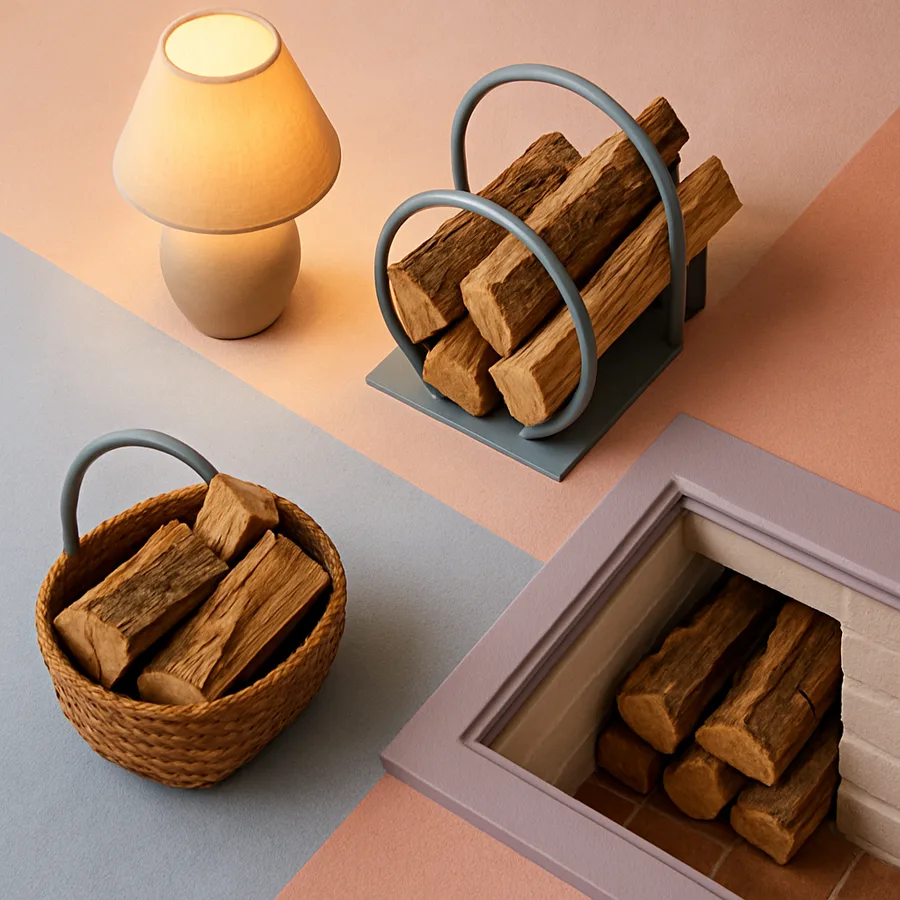
Indoor firewood storage sits at an unusual crossroads of interior design and home maintenance. On one hand, a stack of split logs can be one of the most evocative visual elements in a winter room, suggesting warmth, ritual, and the slower rhythms of cold weather. On the other hand, firewood brings real practical concerns into the home: moisture, insects, dust, bark debris, and the need for accessibility when you actually want to light a fire.
This guide unpacks the choices homeowners face when deciding how to store wood inside, contrasting purely decorative solutions with strictly practical ones, and showing where smart hybrids can deliver both. Whether you are designing a new hearth wall from scratch or trying to make a corner of an existing living room work harder, the same fundamental questions apply.
What Counts as Decorative Versus Practical Wood Storage
The terms decorative and practical sound straightforward, but they cover a wide spectrum. A purely decorative wood storage solution prioritizes how the wood looks in the room: the species selected for visual interest (birch with its bright bark, oak with its grain figure), the geometric arrangement of the logs, and the material of the rack itself. Often these displays hold very little actual fuel, perhaps a single day's worth, with the rest stored outside.
A purely practical solution prioritizes volume, ease of restocking, and protection from debris. Think utility-grade steel racks in a basement, custom drawers built into a mudroom, or simple wall-mounted brackets in a garage that hold a week of fuel. These rarely show up in design magazines because they are not meant to be seen.
Most homeowners actually want a hybrid: enough wood within arm's reach of the hearth to make lighting a fire effortless, displayed in a way that adds to the room rather than detracting from it. The American Society of Interior Designers regularly publishes case studies where the indoor wood storage element becomes the strongest single design feature of an entire room.
Decorative Solutions: Sculptural Racks and Niche Displays
Sculptural wood racks have become a category unto themselves over the past decade. Designers are working in blackened steel, brushed brass, walnut, white oak, and even cast concrete to create freestanding holders that read as furniture rather than utility. A well-chosen sculptural rack can hold ten to twenty logs while occupying less than three square feet of floor area, making it a strong choice for apartments and small rooms.
Built-in hearth niches are another decorative move, particularly in new construction. Carving a recessed cube of fifteen to twenty-four inches into the wall beside the firebox creates a frame for the wood that doubles as a permanent architectural feature. The trade-off is that these niches are typically sized for visual impact rather than fuel capacity. They look stunning when full and noticeably less stunning when half-empty.
What about the wood species itself? White birch with its bright peeling bark photographs beautifully and has become the default choice for designer-led wood displays, but it actually burns less efficiently than denser hardwoods. The National Association of Home Builders has noted that some clients now order two separate cords of wood, one display-grade birch for visual presentation and one burn-grade oak or maple stored elsewhere, when budget allows.
An important note for built-in niches: the cavity wall must be constructed of non-combustible materials if it sits within the code-required clearance zone of the firebox. Many designers and homeowners assume that a wood-storage niche, simply because it is intended to hold wood, can be framed in standard lumber and finished in drywall. In fact, if the niche is within a few feet of the firebox opening, the framing and finish should be metal studs and cement board respectively, with a non-combustible interior surface. Confirm the assembly with your local building department before any framing starts.
Practical Solutions: Capacity, Cleanliness, and Pest Management
Practical indoor wood storage solves three problems that decorative displays often ignore. The first is capacity: how much wood can you keep inside without making constant trips outside in cold weather? The second is cleanliness: bark, sawdust, and small wood fragments fall off split logs constantly, and a good storage solution contains that debris. The third is pest management: firewood is a vector for spiders, termites, carpenter ants, and other insects that you absolutely do not want establishing colonies inside your home.
The EPA Burn Wise program explicitly recommends bringing in only as much wood as you plan to burn within a few days, and storing the bulk of your supply outside in a dry, covered location. This guidance directly contradicts the decorative impulse to keep large quantities of wood visible indoors, and it is a tension that thoughtful designers acknowledge openly. The compromise most often used is a small interior display, perhaps two to four days of fuel, paired with substantial outdoor storage.
Practical interior options include drawer-style log holders built into millwork, where logs sit on a slide-out platform that can be wheeled to the hearth, then closed away when not in use. Wall-mounted steel racks with integrated debris trays catch bark before it reaches the floor. Even simple metal canvas log carriers with leather handles can solve the cleanliness problem for homeowners who do not want built-in solutions.
An overlooked detail is floor protection beneath the storage location. Even with a debris tray, fine particles of bark dust and small wood fragments will accumulate over the course of a season. Placing a flat-weave rug, a leather mat, or a hardwood-protector pad directly under the storage solution simplifies cleanup enormously and protects the underlying floor from scratching when logs are loaded and unloaded. This small accessory is often the difference between a system you maintain happily and one that gradually frustrates you into abandoning indoor storage entirely.
Where Hybrid Designs Win
The most successful indoor wood storage solutions almost always blend decorative and practical thinking. A hearth wall might feature a tall, narrow niche showing eight to twelve carefully arranged logs as a visual focal point, while a hidden cabinet behind a plaster panel beside the hearth holds another two days of less-curated fuel. This pattern, public display plus hidden working storage, gives the homeowner the visual reward of beautiful wood without sacrificing function.
Another popular hybrid is the iron log holder placed on the hearth itself, which sits within the required non-combustible zone and therefore poses no fire hazard. These holders can be selected to match the fireplace tools set, creating a coordinated visual story while still keeping a working supply of fuel within arm's reach. Have you considered whether your current setup actually invites you to light fires, or whether the friction of restocking from outside is quietly discouraging you?
For new construction or significant remodels, designers sometimes specify a pass-through log box with an exterior door on the outside wall and an interior door beside the fireplace. This is the gold standard solution because it allows the homeowner to restock from outside, keep insects and debris contained, and still have an attractive interior face. The Hearth, Patio & Barbecue Association notes that pass-through boxes are increasingly common in custom homes built over the past several years.
A frequently overlooked hybrid is the furniture-piece-as-storage approach, where an existing piece such as a low credenza, a vintage steamer trunk, or a custom bench is repurposed to hold firewood. This solution adds zero new objects to the room while solving the storage problem completely, and it sidesteps the visual debate over what kind of dedicated rack to buy. The interior must of course be protected with a metal or canvas liner to contain bark and debris, but the exterior reads as ordinary furniture, which can be exactly the right answer in formal living rooms or in spaces where additional hearth accessories would feel busy.
Moisture, Seasoning, and Why Indoor Storage Has Limits
Firewood arrives at most homes with a moisture content between twenty and fifty percent, depending on whether it has been properly seasoned. The EPA recommends a moisture content below twenty percent for clean, efficient burning, and reaching that level typically requires six to twelve months of outdoor storage with good airflow and a roof cover. Bringing wet wood indoors is a bad idea for two reasons. First, the wood will not burn cleanly and will deposit creosote in the chimney. Second, the moisture will evaporate inside your home, raising indoor humidity and potentially feeding mold growth.
This is the strongest argument for limiting indoor storage to a few days of fuel at a time. Properly seasoned wood, stored briefly indoors, is fine. Freshly split or partially seasoned wood, stored long-term indoors, can cause real problems. A small moisture meter, available for under thirty dollars at hardware stores, lets homeowners check incoming wood and avoid this mistake entirely.
An additional risk worth flagging is insect infestation. Even well-seasoned firewood routinely hosts beetles, spiders, ants, and occasionally larger pests that emerge after the wood warms to room temperature. Bringing in a week's supply at a time and burning through it quickly minimizes the window during which insects can disperse into the home. Several entomology departments at land-grant universities have published guidance recommending that firewood spend no more than three to five days indoors before being burned, which directly shapes how much storage capacity you actually need in the hearth zone itself.
Styling Wood Storage for Different Interior Vocabularies
The decorative vocabulary of indoor wood storage shifts dramatically based on the surrounding interior style. In modern minimalist rooms, wood is often presented in stark monochromatic stacks, often single-species, often arranged with almost obsessive geometry. In rustic and farmhouse interiors, mixed species and varied log sizes read as honest and welcoming. In transitional rooms, the balance between intentional arrangement and casual abundance becomes the entire styling challenge.
Color also matters. White birch reads as bright and Scandinavian. Darker oak and walnut suggest gravitas and warmth. Even the cut surface of a freshly split log, often pale and slightly luminous, can be styled to face outward as a deliberate visual texture. According to interior design surveys, the visual presence of firewood is one of the most frequently cited signals of a high-end winter interior.
Lighting also dramatically affects how indoor wood reads. A narrow LED strip mounted at the top of a wood niche, casting light downward across the cut faces of the logs, transforms an ordinary stack into a near-museum display. The effect is most pronounced with light-colored woods like birch, maple, and ash, but even dark oak takes on a sculptural quality when grazed by warm-toned downlight. Many interior designers now specify integrated niche lighting as a standard part of new hearth-wall projects, since the lighting cost is modest relative to the visual impact it delivers across the rest of the room.
Conclusion
Indoor wood storage is one of those interior design choices that rewards thoughtful planning and punishes default behavior. Treat it as decorative and you may end up with a beautiful display that fails when you actually want to light a fire on a cold Tuesday night. Treat it as purely practical and you miss an opportunity to add warmth and character to a room that already centers on the hearth. The best solutions sit in the middle, with deliberate attention to capacity, cleanliness, pest management, and the visual story the wood tells in the room.
The questions to ask before committing to any storage approach are concrete. How often will you actually light fires this season? How will you restock without dragging mud and bark across the floor? How will you contain insects? How will the storage solution look in summer when it sits empty or near-empty? Designs that answer those questions deliberately almost always succeed, while designs that ignore them almost always disappoint.
If you are planning a hearth wall, an alcove, or even just upgrading from a folding metal rack to something more permanent, take the time to sketch your options and walk through a full season's worth of use in your mind. Visit a hearth showroom or a specialty design studio, see the racks and built-ins in person, and ask about pass-through options if you are doing any structural work. The thirty minutes of conversation could change the entire feel of your living room for the next decade.
For background reading, consult the EPA Burn Wise program for storage and moisture guidance, the Hearth, Patio & Barbecue Association for hearth product standards, and the National Association of Home Builders for current residential design trends.
More Articles You May Like



Comments
Post a Comment