Smoker Built In Outdoor Kitchen Charcoal Versus Pellet
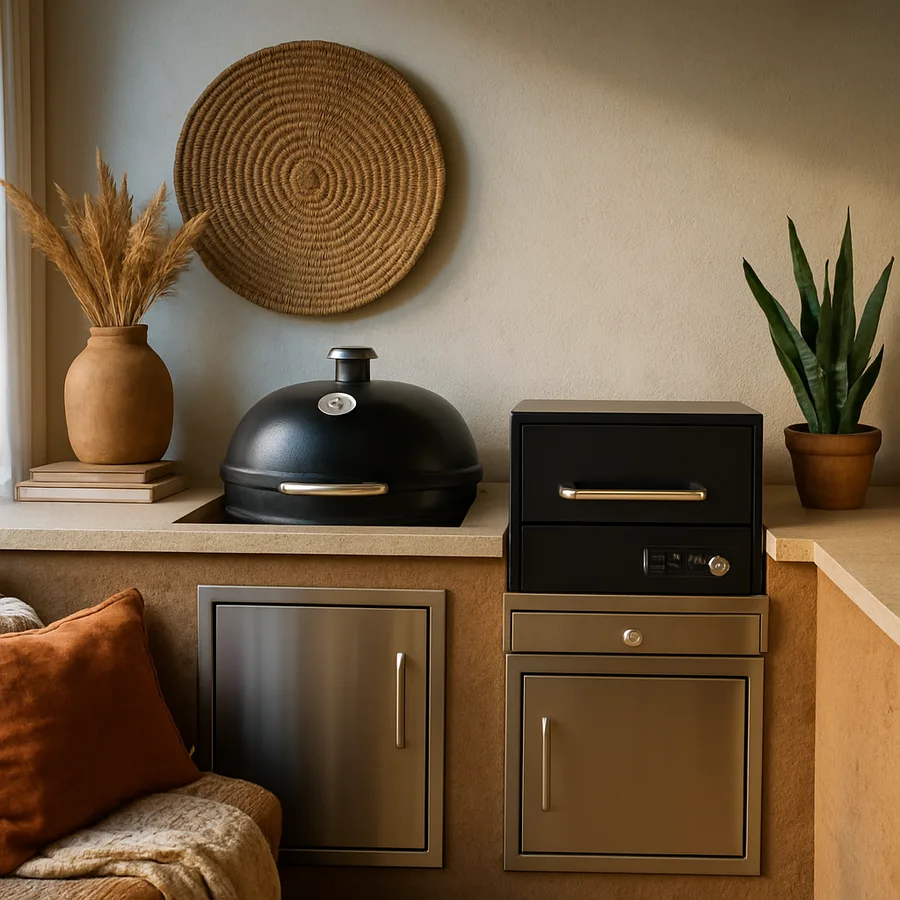
Building a smoker into an outdoor kitchen is a different conversation from buying a freestanding one. The decision becomes permanent the moment cabinetry is framed and stone is set, and the choice between charcoal and pellet fuel governs how the smoker functions, how it integrates with surrounding appliances, and how often it actually gets used. Both technologies can produce extraordinary barbecue. They reach that result through fundamentally different mechanisms, and matching the right one to a household's cooking patterns is the difference between an appliance that anchors the patio and one that becomes a ceremonial showpiece.
This guide compares built-in charcoal and pellet smokers across the dimensions that actually determine satisfaction: flavor profile, attention demand, installation complexity, code compliance, and lifetime cost. It draws on standards from the Hearth, Patio and Barbecue Association (HPBA) and on professional outdoor kitchen design practice. The aim is to help homeowners and designers make the specification decision with eyes open, before the slab is poured and the cabinet opening is committed.
Two Fuels, Two Cooking Philosophies
Charcoal smoking is the older art. A charcoal smoker burns lump charcoal or briquettes with added wood chunks for flavor, producing heat and smoke through combustion the cook manages directly. Temperature control comes from adjusting air intake and exhaust dampers; the cook learns to read the fire and respond to it. Sessions run long, often six to fourteen hours for traditional brisket or pork shoulder, and the cook stays involved throughout, checking temperature, adding fuel, and adjusting vents.
Pellet smoking automates the same chemistry. Compressed hardwood pellets feed from a hopper into a burn pot by way of an electric auger, with a controller modulating pellet flow and fan-driven combustion air to hold whatever temperature the cook sets. The cook turns a dial, sets a probe, and walks away. Modern pellet smokers hold temperature within five to ten degrees Fahrenheit across a fourteen-hour cook, a precision charcoal cannot match without constant attention.
The flavor difference is real but often overstated by partisans. Charcoal produces a slightly more aggressive smoke profile and a deeper bark, partly because lump charcoal burns hotter and partly because the cook can pulse temperature deliberately. Pellets produce a cleaner, more consistent smoke flavor that many professional barbecue judges describe as milder but more refined. Industry estimates suggest the majority of households cannot reliably distinguish well-executed brisket from either source in blind tasting, while a minority of dedicated enthusiasts can identify the difference every time. The cook's skill matters more than the fuel choice.
Built-In Charcoal: Tradition With Structural Demands
A built-in charcoal smoker is essentially a masonry or steel firebox engineered for repeated high-heat cycling, sealed into surrounding cabinetry with appropriate clearances and insulation. The construction details matter enormously. Charcoal combustion routinely exceeds 600 degrees Fahrenheit inside the firebox and produces significant ash, creosote, and grease byproducts. The surrounding cabinetry must tolerate this environment for decades.
Quality built-in charcoal smokers come from a small number of specialty manufacturers who build the firebox in heavy-gauge stainless or ceramic and provide engineered insulation jackets for direct cabinet integration. The kamado-style ceramic smoker, in built-in form, has become particularly popular because its ceramic body provides natural insulation and the airflow design lets temperatures hold for surprisingly long sessions with modest fuel use. Several manufacturers now offer purpose-built built-in kamados sized for standard cabinet openings.
Ventilation and clearances are non-negotiable. The HPBA publishes installation guidelines requiring specific clearance to combustibles around any solid-fuel appliance, and charcoal smokers generally need more clearance than gas grills because of the extreme firebox temperatures. The chimney or vent path also matters; smoke must exit cleanly without staining surrounding stone or pooling under any covering structure. Many built-in charcoal installations include dedicated overhead exhaust hoods, especially in partially enclosed outdoor kitchens.
Built-In Pellet: Automation Meets Cabinet Integration
Built-in pellet smokers solve a different design problem. The combustion temperatures are lower than charcoal, the smoke output is more controlled, and the cabinet integration is in some ways simpler. The challenge is electrical. A pellet smoker requires a dedicated grounded receptacle, a continuous power feed, and protection from the elements at the connection point. Many manufacturers now offer pellet smokers explicitly designed for built-in installation, with hopper access doors that integrate flush into cabinetry and ventilation requirements clearly specified.
Hopper placement is the layout decision that separates good pellet installations from frustrating ones. The hopper must be accessible for refilling without removing surrounding panels, and pellets must be storable nearby in dry conditions. Pellet quality degrades rapidly when exposed to moisture; bags of pellets stored outdoors in humid weather will swell, jam the auger, and damage the smoker. Cabinet designs that include a dedicated dry pellet storage compartment, separate from the appliance itself, prevent this entirely.
Pellet smokers also depend on continuous electricity. A power outage mid-cook ends the cook abruptly, sometimes with food temperature implications that require discarding the work. Households in areas with frequent outages, or those who simply want resilience, often pair pellet smokers with a small dedicated outdoor circuit on a generator-backed panel. This is rarely necessary but worth considering for those who plan long competition-style cooks.
Attention, Skill, and the Honest Use Question
The most consequential difference between charcoal and pellet for most households is attention demand. A pellet smoker runs unattended for hours. A charcoal smoker rewards or punishes the cook's attention throughout. This sounds like a clear win for pellet automation, and for many households it is. For others, the involved nature of charcoal cooking is precisely the point; the long Saturday tending the fire is a feature, not a bug.
An honest self-assessment matters here. How often does the household realistically smoke food? If the answer is monthly or more during the warm season, either technology will see enough use to justify itself, and the cook's preference for involvement or automation should drive the choice. If the answer is occasionally, perhaps six or eight times per year, automation tends to win because the cook is unlikely to develop the fire-management skill that makes charcoal rewarding. Many readers ask which is more forgiving for beginners, and the answer is unambiguously pellet; it shortens the learning curve from years to weeks.
Skill development on charcoal is a real and valuable journey for those who pursue it. A cook who has run dozens of long sessions on a charcoal smoker can produce barbecue that meaningfully exceeds the average pellet result, especially in the bark and ring qualities prized by competition judges. But that cook has invested years in the craft. Most households want excellent barbecue without becoming pit masters, and pellet smokers serve that goal reliably.
Code, Ventilation, and Built-In Safety
Both charcoal and pellet smokers are solid-fuel appliances under most code interpretations, though the regulatory treatment can vary by jurisdiction. Outdoor installations are generally less restrictive than indoor ones, but local codes still impose clearance requirements to combustible materials, including overhead structures, adjacent siding, and nearby vegetation. The HPBA installation guidelines, which most authorities reference, distinguish between fully outdoor installations and those under covered patios or pergolas, with the latter requiring greater clearance and often dedicated mechanical ventilation.
Carbon monoxide is the primary safety concern with any combustion appliance, and outdoor smokers under partial roofs deserve careful evaluation. Industry data published by the HPBA estimates that several hundred carbon monoxide incidents per year are associated with improper outdoor barbecue installations, almost all involving inadequate ventilation in semi-enclosed spaces. Building a smoker into a covered outdoor kitchen without proper exhaust is the most common cause; the solution is either to keep the smoker in a fully open area or to include a dedicated exhaust hood sized to the appliance.
Grease management is another safety detail. Both technologies produce grease that must drain away from combustion sources to prevent flare-ups and long-term cabinet contamination. Quality built-in smokers include integrated grease management systems, often a slide-out tray or a drain to an external collection point. Installations that overlook this detail develop chronic problems with grease pooling and stone staining within a few seasons.
Cost, Lifespan, and What the Numbers Suggest
Built-in charcoal smokers generally cost more upfront than equivalent pellet units, primarily because the firebox construction must tolerate higher temperatures and the unit count is lower across the market. Premium built-in kamados can exceed three thousand dollars before installation, while quality built-in pellet smokers often sit in the two thousand to three thousand dollar range. The installation cost adds significantly to either; cabinet modifications, ventilation, and electrical work for pellet units can match or exceed the appliance cost itself.
Fuel costs run modestly in either direction. Charcoal averages cheaper per cook for shorter sessions but adds up over long cooks where lump charcoal consumption is substantial. Pellets are predictable; a fourteen-hour brisket cook consumes a known quantity that the cook can budget. Both fuel types are widely available in most North American markets, though premium hardwood pellets and specialty lump charcoal may require online ordering for households outside major metropolitan areas.
Lifespan favors quality construction over fuel type. A well-built charcoal kamado from a reputable manufacturer often delivers fifteen to twenty-five years of reliable service with minimal maintenance, primarily because ceramic does not rust and the few moving parts are simple. A well-built pellet smoker typically delivers eight to fifteen years, with auger motors and controllers being the most common failure points. Both are field-serviceable on quality brands, and parts availability is generally good for major manufacturers.
Hybrid Approaches and the Both Option
Many premium outdoor kitchens now install both technologies, recognizing that they serve different cooking goals rather than competing for the same role. A built-in pellet smoker handles weeknight ribs and weekend pork shoulders with minimal attention, while a separate charcoal kamado or offset smoker handles weekend competition-style cooks when the cook wants the involvement. The combined footprint is larger and the cost higher, but for households serious enough about barbecue to specify a smoker in the first place, having both options often makes more sense than picking one.
The layout question for two-smoker installations matters. Both units should sit reasonably close together so that the cook can manage them from a single position during simultaneous use, and both need their respective ventilation and clearance accommodations. Some designers locate the pellet smoker in the main cabinetry for cosmetic integration and place the charcoal kamado on an adjacent island or hearth where its more dramatic presence and occasional flare-up potential are isolated from the main cooking surface.
For households just beginning their outdoor cooking journey, starting with one and adding the other later is also viable, provided the cabinet plan accommodates the future addition. A common approach roughs in the second appliance opening during initial construction, leaving it covered with matching stone or stainless until the second smoker is installed. This avoids the cost penalty of opening up finished cabinetry later.
Conclusion
The charcoal-versus-pellet decision for a built-in smoker is a question about how the household wants to cook, not just what flavor profile is preferred. Pellet smokers reward households that want excellent barbecue on a predictable schedule without dedicating hours to fire management. Charcoal smokers reward households that find the involvement itself meaningful and want the deepest possible flavor from the most traditional approach. Both, when properly specified and properly installed, produce results that satisfy across decades of use.
The construction conversation is more important than many homeowners initially recognize. Built-in installation imposes clearance requirements, ventilation considerations, and integration details that freestanding units sidestep. Working with a designer or installer who has built outdoor kitchens with the chosen smoker technology, rather than treating it as a standard appliance, prevents the most common problems around overheating cabinetry, grease accumulation, and inadequate combustion air.
The decision is also reversible only at significant cost. A built-in charcoal smoker cannot simply be swapped for a pellet unit without cabinet modifications, electrical work, and often new ventilation. Making the call before construction, ideally after spending time with both technologies on freestanding units to develop a genuine preference, prevents an expensive change of mind two years into ownership. Many outdoor kitchen designers explicitly schedule a fuel-trial phase before specifying the built-in smoker for exactly this reason.
Considering a built-in smoker for an upcoming project? Visit a hearth and patio dealer to handle both technologies in person, cook on each at least once before committing, document the realistic cooking frequency of the household, and then bring those notes to a qualified outdoor kitchen designer. Reference the Hearth, Patio and Barbecue Association installation guidelines and the National Kitchen and Bath Association outdoor kitchen standards before finalizing the cabinet plan, then build with confidence that the appliance will earn its place at the patio for decades.
More Articles You May Like



Comments
Post a Comment