Pet-Friendly Flooring That Resists Scratches From Dog Nails
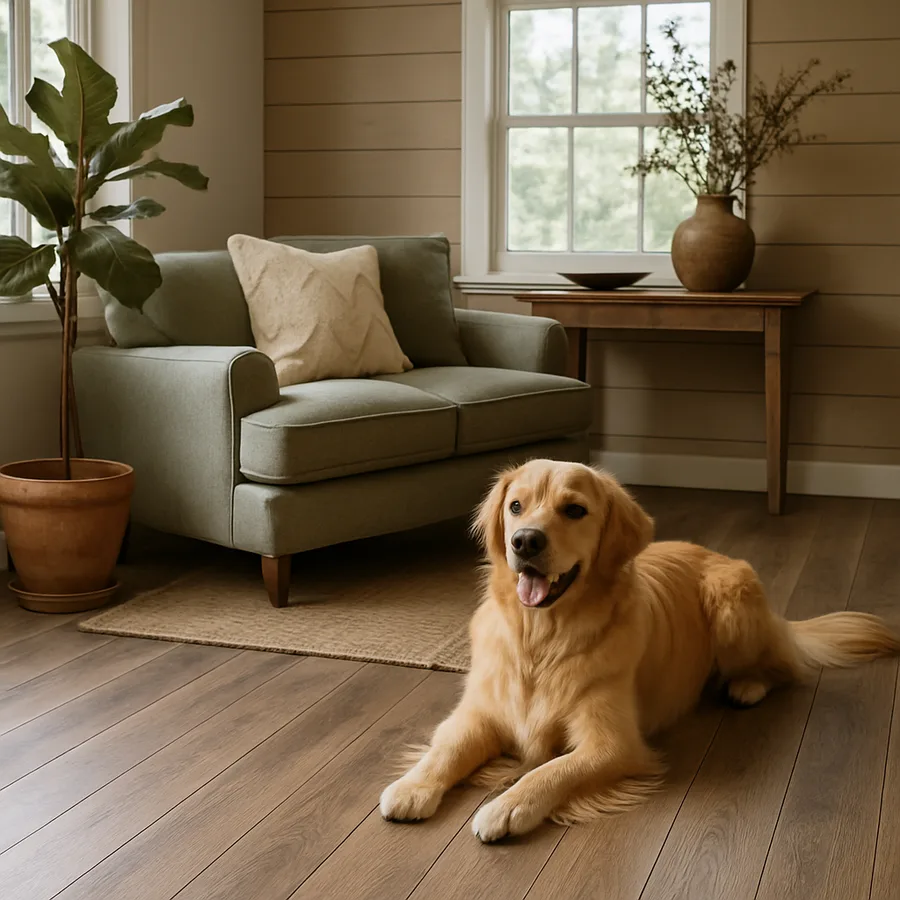
Anyone who has ever watched a sixty-pound retriever sprint across a hardwood hallway knows the unique sound of finish meeting claw. The aftermath is rarely quiet either: hairline scratches that catch low afternoon light, dull patches near doorways, and the occasional gouge that no amount of polishing will lift. For households with active dogs, the floor is not a backdrop, it is a working surface that absorbs daily impact from running, jumping, and the dragging of toys. Choosing the right material from the outset can save thousands in refinishing costs and prevent the constant low-grade anxiety of watching every paw print.
This guide breaks down which flooring categories truly hold up to canine claws, what to ignore in marketing language, and how to balance scratch resistance with comfort, warmth, and resale value. The goal is not to find a floor that survives dogs in spite of itself, but one that genuinely partners with the way pets live. Whether the home in question hosts a single small breed or a three-dog crew, the right surface choice will shape daily life for the next ten to twenty years.
Why Dog Nails Damage Floors More Than People Realize
Dog nails behave less like blunt objects and more like steel chisels under load. A medium-sized dog can transmit pressure exceeding several hundred pounds per square inch through a single nail tip during a lateral turn. According to the American Veterinary Medical Association, untrimmed nails increase joint strain and also amplify floor damage because the nail strikes the surface at a steeper angle. Even well-trimmed nails will mark soft finishes over time because the contact is repetitive, not occasional.
The hardness of a flooring material is measured on the Janka scale, which records the force needed to embed a steel ball halfway into the wood. Domestic red oak sits around 1,290 pounds-force, while Brazilian walnut, often called ipe, climbs above 3,600. Most pet-related scratches occur on materials below 1,500 Janka, which rules out softer choices like pine, fir, and many engineered products with thin wear layers. Yet hardness alone is not the full story, because the protective finish on top of the wood often determines what a homeowner actually sees.
How do scratches form on a finished surface in the first place? When a nail drags, it either compresses the finish layer or shears it. Aluminum oxide finishes, common on prefinished engineered planks, resist shearing far better than traditional polyurethane. The American Society of Interior Designers notes that finish technology has advanced more in the last decade than the substrate beneath it, which means a softer wood with an excellent factory finish can outperform a harder wood with a site-applied coating.
Luxury Vinyl Plank: The Pet-Owner Favorite
Luxury vinyl plank, often abbreviated LVP, has become the default recommendation for households with active dogs, and the reasoning holds up under inspection. The wear layer on premium LVP, typically twenty mil thick or greater, is engineered specifically to resist scratching, denting, and moisture intrusion. Brands aimed at the pet market, including several backed by warranties that explicitly cover claw damage, use a urethane-based topcoat infused with ceramic particles. The result is a surface that shrugs off most nail contact for the life of the floor.
Beyond scratch resistance, LVP brings practical advantages that matter daily. It is fully waterproof, meaning accidents and water bowl spills cannot warp the planks. It feels warmer underfoot than tile in winter, and modern textures convincingly mimic oak, hickory, and walnut. Installation is approachable for skilled homeowners because most products use a click-lock floating system over an underlayment. Expect to pay between three and seven dollars per square foot for the planks themselves, with installation adding two to four dollars more if hired out.
The trade-offs are real but manageable. LVP is petroleum-based, which raises legitimate concerns for environmentally conscious buyers, and the indoor air quality varies by manufacturer. Look for products certified by FloorScore or Greenguard Gold, which test for volatile organic compound emissions. Resale value is another consideration: while LVP is widely accepted now, hardwood still commands a premium in luxury markets. For the typical family home with one or more dogs, the daily quality-of-life gains usually outweigh the resale calculus.
Engineered Hardwood With the Right Wear Layer
Many homeowners assume that the only way to have real wood floors with dogs is to accept eventual damage. That assumption underestimates what modern engineered hardwood can do. The category covers a wide range, from budget products with paper-thin veneers to premium planks with three-millimeter sawn faces and aluminum oxide finishes rated to commercial standards. The right specification holds up impressively well to claws while offering the warmth and authenticity that vinyl cannot match.
The key specifications to evaluate are wear layer thickness, finish technology, and species hardness. Choose a wear layer of at least two millimeters, ideally three, which allows future refinishing if needed. For species, hickory at 1,820 Janka and white oak at 1,360 are sensible defaults, while exotics like Brazilian cherry push above 2,800. The National Wood Flooring Association maintains a species hardness reference that designers and homeowners can consult before specifying. Hand-scraped, wire-brushed, or distressed surfaces hide minor scratches dramatically better than smooth glossy planks, which is why these textures dominate the pet-friendly hardwood category.
Installation method also matters for longevity. Glue-down installation provides the most stable feel underfoot and reduces the hollow sound that floating floors can produce. Nail-down works over plywood subfloors and is preferred by traditional installers. Either approach should include moisture testing of the subfloor and acclimation of the planks for several days before installation, because dimensional movement is the leading cause of gaps and squeaks in finished floors. According to the National Association of Home Builders, properly installed engineered hardwood routinely outlasts its twenty-five-year warranty when humidity is controlled within the manufacturer's range.
Tile and Stone for Maximum Durability
For sheer scratch resistance, nothing beats porcelain tile, which is fired at temperatures above 2,200 degrees Fahrenheit and rated for impact and abrasion that exceed what any dog can produce. Glazed porcelain in particular is essentially impervious to claw damage, which is why veterinary clinics, grooming facilities, and high-traffic mudrooms specify it almost universally. The category has also moved far beyond the small white squares of older bathrooms, with large-format planks that convincingly imitate oak, walnut, and concrete.
The principal drawbacks of tile are temperature, hardness underfoot, and grout maintenance. Cold floors are uncomfortable in winter unless paired with radiant heat, which adds eight to fifteen dollars per square foot to the installation budget. The hardness that protects against scratches also punishes dropped dishes, knees, and the occasional senior pet whose joints prefer cushion. Grout lines collect dirt and pet hair, though epoxy grout solves most of the staining concern at a higher upfront cost.
Where does tile make the most sense in a pet household? Mudrooms, kitchens, laundry rooms, and entry zones are obvious candidates because they handle the wet, the muddy, and the high-impact moments of pet life. The American Animal Hospital Association recommends easily sanitized hard surfaces in feeding and grooming zones, which aligns naturally with porcelain or stone. For whole-home installations, weigh the durability gain against the loss of acoustic warmth that softer materials provide. Many homeowners settle on a hybrid approach, with tile in the wet and active zones and engineered hardwood or LVP elsewhere.
Materials to Approach With Caution
Some flooring categories that look pet-friendly in showrooms perform poorly in real households. Solid bamboo, despite marketing claims about sustainability and hardness, varies enormously in quality. Strand-woven bamboo can rate above 3,000 Janka, but conventional horizontal-grain bamboo often falls below 1,400 and shows scratches readily. Cork is comfortable and warm but compresses under nail pressure, leaving permanent indentations that the material cannot recover from.
Laminate flooring sits in an uncomfortable middle position. The decorative layer is durable against scratches because it is essentially a printed image protected by melamine resin, but the high-density fiberboard core swells if water reaches it, and the seams are vulnerable to leaks from water bowls and the inevitable accidents of puppyhood. Newer waterproof laminate products address this concern partially, but the category has largely been overtaken by LVP for pet households because vinyl handles moisture more reliably.
What about traditional site-finished hardwood with a polyurethane topcoat? This is the floor most affected by dog nails, particularly when the species is softer than red oak. The finish itself is the failure point, scratching long before the wood beneath. Refinishing is possible but disruptive and expensive, often costing three to five dollars per square foot and requiring the household to vacate for several days. If solid hardwood is non-negotiable for aesthetic reasons, specify a hardness above 1,500 Janka and apply at least three coats of a commercial-grade waterborne finish like Bona Traffic or a comparable product.
Practical Strategies Beyond the Material Itself
Even the most scratch-resistant floor benefits from a few household habits that extend its life and appearance. Regular nail trimming is the single highest-impact intervention; dogs whose nails clear the floor when standing put far less stress on any surface than those whose nails make audible contact. Most veterinarians recommend trimming every three to four weeks, with more frequent maintenance for breeds whose nails grow quickly or who do not naturally wear them down through outdoor activity.
Strategic use of rugs and runners reduces wear in predictable high-traffic zones. The hallway between the bedroom and the back door, the path from the kitchen to the food bowl, and the area around the front door account for a disproportionate share of floor damage in most pet households. Washable runners with non-slip backing protect these zones and can be replaced periodically as they wear, which is far cheaper than refinishing the floor beneath. Choose low-pile or flat-weave rugs that release fur during vacuuming rather than trapping it in deep loops.
Cleaning routine matters too. Grit acts as an abrasive between paws and floor, so a soft-bristle vacuum or microfiber dust mop used every few days does more to preserve a finish than any monthly deep clean. For LVP and tile, a damp mop with a pH-neutral cleaner handles routine maintenance. For hardwood, avoid water-based cleaning and use only the product recommended by the floor manufacturer, because the wrong solvent can dull or strip the protective layer prematurely.
Conclusion
Selecting flooring for a pet household is ultimately about matching the material to the way the home actually functions, not the way it looks in a curated photograph. Luxury vinyl plank earns its dominant position for good reason: it tolerates claws, water, and impact with minimal fuss across a wide range of price points. Engineered hardwood remains a defensible choice when species, finish, and wear layer are specified thoughtfully. Porcelain tile sets the upper bound on durability for zones where comfort is secondary to performance.
The pitfalls to avoid are predictable: softer woods finished on site, products marketed as pet-friendly without verifiable specifications, and any surface where the wear layer cannot withstand repetitive nail contact over a decade. A floor is one of the largest single purchases in any home renovation, and the cost of getting it wrong includes not only replacement but the daily friction of living with a surface that constantly shows damage. Take the time to handle samples in person, request manufacturer warranties in writing, and ask installers about their experience with pet-related claims.
For homeowners weighing options now, the practical next step is to bring home physical samples and test them honestly. Set them on the existing subfloor, walk on them with the dogs present, drag a key across the surface to simulate nail contact, and spill water to see how the seams respond. Cross-reference any final candidates against the species hardness data published by the National Wood Flooring Association and verify that finishes carry independent emissions certifications. The right floor will not announce itself in a showroom, but it will quietly do its job for years afterward.
Ready to take the next step? Schedule consultations with two or three flooring specialists in the local market, request samples of the top three candidates for in-home evaluation, and ask each installer for references from previous pet-owning clients. The investment of a few weeks in research consistently pays off across the multi-decade life of the floor, sparing both budget and sanity when the next puppy joins the household.
For deeper reference material on flooring durability and pet-related design choices, consult the resources published by the American Veterinary Medical Association, the ASPCA, and the American Society of Interior Designers, all of which publish guidance applicable to pet-friendly home design.
More Articles You May Like



Comments
Post a Comment