Patio Stone Selection Bluestone Versus Travertine Comparison
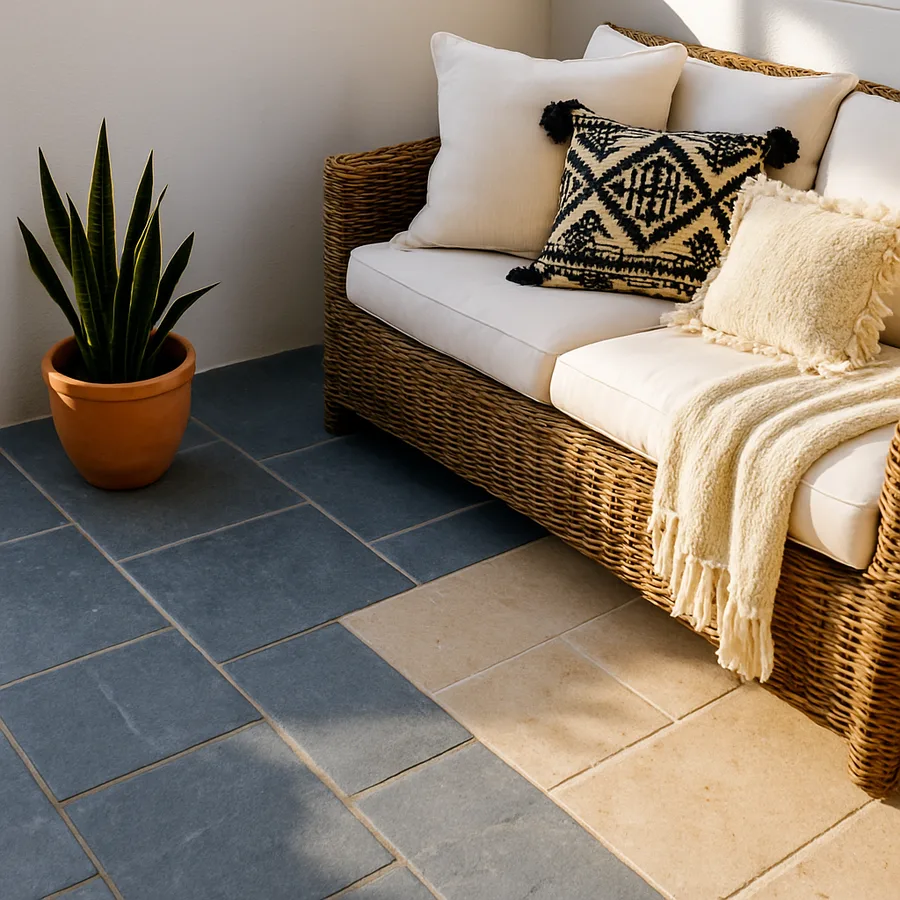
Bluestone and travertine sit at the top of most homeowners' patio shortlists for entirely different reasons, and the comparison between them is one of the most genuinely difficult choices in residential hardscape. Both are natural stone, both have decades of proven performance in outdoor applications, and both produce patios that age into character rather than degrading into eyesores. But they behave differently underfoot, respond differently to climate, and project entirely different aesthetic moods, and the homeowner who treats them as interchangeable will be disappointed by whichever one ends up installed.
This guide compares the two stones across the dimensions that actually matter for residential patio decisions: thermal comfort during peak summer, slip resistance when wet, durability through freeze-thaw cycles, cost across the full project budget, and visual character within different architectural contexts. The goal is not to declare a winner but to help you recognize which stone is the right answer for your specific patio, climate, and design intent.
What Each Stone Actually Is
Bluestone is a sedimentary sandstone, primarily quarried in Pennsylvania and New York, with smaller commercial quantities from Virginia and parts of Canada. The characteristic blue-gray coloration comes from feldspar and mica content within the quartz matrix, with significant natural variation that includes brown, lilac, and green tones across different quarry beds. The stone is exceptionally dense, with low water absorption typically below 1 percent, and it has been used in American building since the colonial era.
Travertine is a sedimentary limestone formed by mineral-rich spring water, with the major commercial sources in Turkey, Italy, Mexico, and Iran. The distinctive surface texture comes from gas bubbles that formed as the limestone precipitated, leaving characteristic voids that are either left visible or filled during processing. Travertine ranges from ivory and walnut to silver and gold colorations, with the lighter shades dominating residential patio applications. The Natural Stone Institute publishes detailed technical bulletins comparing the petrology and performance characteristics of both stones.
Both stones are quarried as large blocks and processed into either thermal-finished or natural cleft surfaces for outdoor patio use. The processing makes a substantial difference in performance, and an apples-to-apples comparison requires specifying the same finish family for both options. Honed and polished finishes exist for both stones but should not be used outdoors due to severe slip hazards.
Thermal Behavior In Summer Heat
Walk barefoot across a southern-exposure patio at noon in July and you will discover the most important practical difference between these stones. Travertine, being lighter in color and lower in density, runs significantly cooler underfoot than bluestone in direct summer sun. Surface temperature differentials of 25 to 40 degrees Fahrenheit are typical between an ivory travertine and a dark blue bluestone under identical solar exposure conditions, and the difference is unmistakable to bare feet and pets.
This thermal behavior matters most for patios that will see significant barefoot use, particularly around pools, in family-oriented households with young children, and in southern climates where summer surface temperatures regularly exceed comfort thresholds. The National Association of Home Builders reports that thermal performance has risen to become one of the top three patio material selection criteria in southern markets over the past decade, alongside slip resistance and freeze-thaw durability.
Bluestone holds heat far longer than travertine does, which can be either an asset or a liability depending on use patterns. A bluestone patio remains pleasantly warm into the evening hours on cool spring and fall days, extending the comfortable outdoor season meaningfully in northern climates. The same thermal mass that delivers this benefit makes the stone uncomfortable in summer afternoon sun, and the right choice depends heavily on which seasons you most want to optimize for.
Slip Resistance And Wet-Surface Safety
Both stones perform adequately for slip resistance in their appropriate outdoor finishes, but the margins differ in ways that matter for pool decks, kitchen-adjacent patios, and any surface that will see frequent wet exposure. Thermal-finished bluestone has a textured surface created by intense heat application that produces a coefficient of friction comfortably above the 0.5 threshold recommended by the American Disabilities Act for wet surfaces, and the surface maintains its slip resistance over decades of use.
Travertine in its tumbled or chiseled-edge finishes performs similarly well, but travertine that has been honed or sealed with a glossy finish becomes treacherously slippery when wet. The naturally porous surface of unfilled travertine actually enhances slip resistance compared to denser stones, but the same porosity makes the stone more vulnerable to staining and require more careful sealer selection. Always specify a penetrating sealer rather than a topical one for outdoor travertine use.
For pool deck applications specifically, both stones can work well when properly specified, but travertine is the more common choice in contemporary pool projects because of its cooler thermal behavior under wet feet. The combination of cool surface temperature, adequate slip resistance, and water-tolerant aesthetic has made travertine the dominant pool deck material in southern markets, where it now accounts for roughly half of new installations according to industry tracking data.
Climate Compatibility And Freeze-Thaw Performance
Freeze-thaw resistance is where the comparison gets technically interesting and where regional differences in stone behavior matter most. Bluestone's exceptionally low water absorption (typically 0.5 to 1.0 percent) makes it nearly indestructible in northern climates, with documented patio installations in New England and the Mid-Atlantic showing essentially no freeze-thaw degradation after a century of service. The stone is the gold standard for cold-climate residential patios.
Travertine's freeze-thaw performance is more complex and depends critically on the specific quarry source and the filled-versus-unfilled processing decision. Filled travertine uses cement-based resin to plug the natural surface voids, which improves both aesthetics and freeze-thaw performance because trapped water has nowhere to expand. Unfilled travertine in cold climates can suffer surface spalling within a decade as freeze-thaw cycles enlarge the surface voids.
Industry data from the Natural Stone Institute indicates that filled travertine installations in northern climates show acceptable performance through at least 25 years, while unfilled installations show significant degradation in roughly 30 percent of cold-climate cases within 15 years. This is not a reason to avoid travertine in northern markets, but it is a strong reason to specify filled travertine and a high-quality penetrating sealer rather than the budget alternatives.
Cost Across The Full Project Budget
Material cost comparisons can mislead because they ignore the substantial installation-cost differences between the two stones. Bluestone in standard 1.5-inch thermal-finished rectangular dimensions typically runs $8 to $14 per square foot for material, with the wide range reflecting quarry source and quality grade. Installation typically adds $12 to $18 per square foot for a properly built patio with appropriate base preparation, totaling $20 to $32 per square foot installed.
Travertine in the French pattern or rectangular layouts runs $6 to $12 per square foot for material, slightly less than comparable bluestone in most markets. Installation costs are similar to bluestone at $12 to $18 per square foot, putting total installed cost at $18 to $30 per square foot. The cost gap between the two stones is real but smaller than many homeowners assume, and it should not be the deciding factor in most projects.
For a representative 400-square-foot patio, total installed cost runs roughly $8,000 to $13,000 for bluestone and $7,000 to $12,000 for travertine. Both numbers exclude site preparation, drainage work, edge restraints, and any necessary excavation, which can easily add another $2,000 to $5,000 to either project. Have you budgeted for the full project rather than just the visible stone surface? And have you priced the sealer maintenance program that each stone will require over its service life?
Aesthetic Character And Architectural Compatibility
The aesthetic conversation often dominates patio decisions even when the technical factors should weigh more heavily, and there is no point pretending otherwise. Bluestone projects a refined, sophisticated, somewhat formal mood that suits traditional architecture, classical landscape design, and any setting where understated permanence is the desired reading. The stone ages beautifully over decades, developing a soft patina and subtle weathering that adds character without compromising structural integrity.
Travertine reads as warmer, lighter, more Mediterranean, and slightly more casual than bluestone, even at premium quality levels. The stone suits Mediterranean, Spanish colonial, and tropical architectural vocabularies particularly well, and it integrates beautifully with stucco walls, terracotta accents, and the broader earth-tone color palettes common in southern and southwestern residential design. Travertine in northern climates can read as architecturally incongruous unless carefully integrated.
Both stones offer enough variation in color and finish to suit a wide range of design intentions, but the underlying character of each material has limits. Forcing bluestone into a Mediterranean villa context or travertine into a traditional colonial setting will produce a patio that fights its architectural context, no matter how beautifully it is installed. The American Society of Landscape Architects offers extensive case studies showing both stones used in their natural contexts, and reviewing these visually before making a final selection is time well spent.
Pattern selection within either material adds another layer of aesthetic decision-making that deserves thoughtful attention. Bluestone laid in random rectangular pattern reads as more naturalistic and informal, while dimensioned ashlar grids project formality and architectural precision. Travertine in the French pattern, which combines four different module sizes in a repeating layout, has become so closely associated with travertine that other layouts can feel like missed opportunities. Each material has patterns that suit it best, and the patterns suited to one rarely translate gracefully to the other.
Edge treatment also influences the finished appearance more than most homeowners anticipate. A bluestone patio with a thermal-finished bullnose edge looks dramatically different than the same field with a sawn edge, and a travertine patio with chiseled tumbled edges reads as substantially more rustic than one with crisp sawn perimeters. Discuss edge treatment explicitly during the bidding process, request samples of both options if you are undecided, and make this decision deliberately rather than letting the contractor default to whichever style their crew is most comfortable producing.
Conclusion
Bluestone and travertine are both excellent patio materials, and neither is universally superior to the other. The right choice depends on a constellation of factors including climate, architectural context, intended use patterns, budget horizon, and personal aesthetic preference, and any sales pitch that simplifies this decision into a single recommendation should be treated with skepticism. Both stones have served residential patios beautifully for generations, and both will continue to do so for the foreseeable future.
For northern climate projects with traditional architecture and significant year-round use, bluestone remains the more conservative choice, offering proven freeze-thaw performance, refined aesthetic character, and the kind of permanence that justifies the price premium over budget alternatives. For southern climate projects, pool decks, and Mediterranean or contemporary architectural contexts, travertine offers superior thermal performance and aesthetic compatibility that often makes it the more practical choice despite the additional sealer maintenance burden.
The worst outcome in this comparison is not choosing the slightly suboptimal material between two excellent options; it is failing to specify the appropriate finish, fill status, or sealer treatment for whichever stone you select. Travertine specified incorrectly for a cold climate, or bluestone installed without proper base preparation, will disappoint regardless of which stone would have been the marginally better choice on paper. Specification matters more than selection in most cases.
Before you commit to either stone, request large physical samples from at least two suppliers, place them on your proposed patio location for at least a week including both wet and dry weather, and walk barefoot across them in afternoon sun if your climate makes that possible. That direct sensory testing will tell you more about which stone belongs on your patio than any specification sheet or showroom visit, and the modest time investment will protect you from a decision that you will live with for decades.
Maintenance commitment is the final factor that should weigh into the final decision, and homeowners who answer this question honestly tend to make better choices. Bluestone in northern climates can essentially be left alone after installation, requiring only occasional cleaning to remove organic debris and prevent moss growth in shaded conditions. Travertine demands re-sealing every two to four years depending on exposure and use intensity, and skipping this maintenance leads to progressive staining that becomes difficult to reverse. If your honest assessment of your own maintenance discipline is that you will forget the re-sealing schedule, that is a strong signal toward bluestone regardless of any other factor in the comparison.
More Articles You May Like



Comments
Post a Comment