
Fireplace TV Mount Above Ergonomic Versus Tradition Debate
Fireplace TV Mount Above Ergonomic Versus Tradition Debate
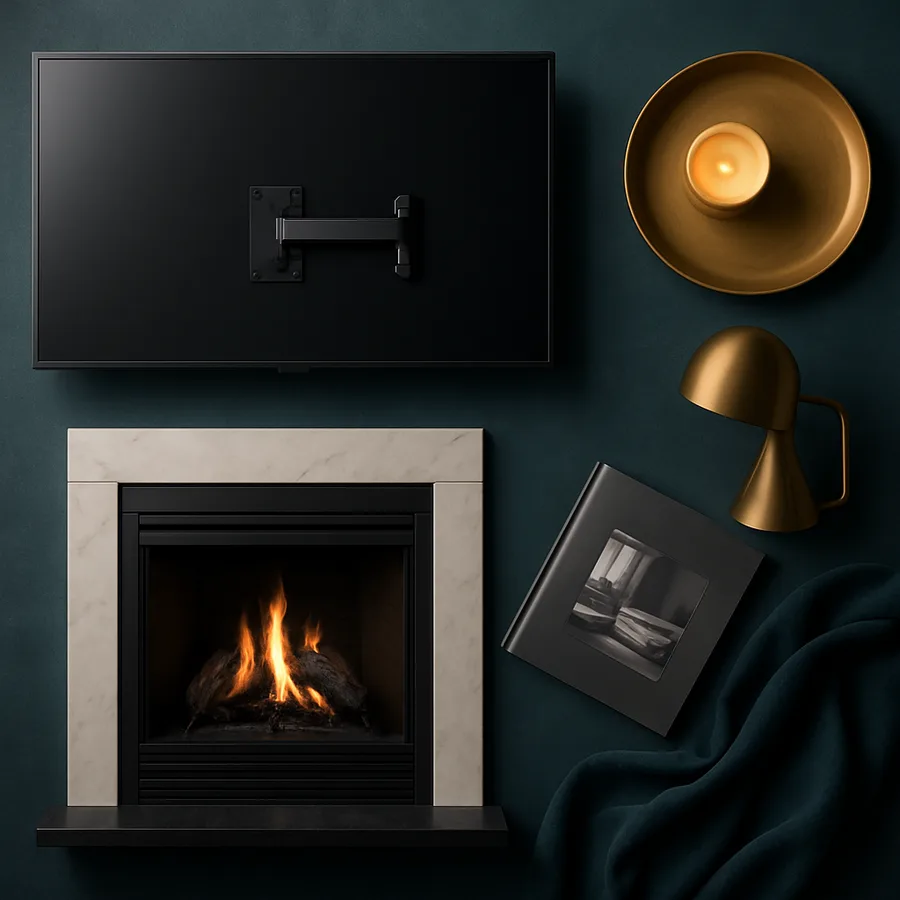
Few interior decisions provoke as much debate among designers, ergonomists, and homeowners as the question of whether a television belongs above a fireplace. On one side, the configuration is space efficient, visually centralized, and reads as a natural focal point in rooms that already have two competing ones. On the other side, it forces viewers to crane their necks upward for hours at a stretch and exposes sensitive electronics to heat plumes that were never imagined by their manufacturers. The American Academy of Ophthalmology has noted that sustained upward viewing angles greater than 15 degrees above horizontal can produce neck strain and dry eye symptoms within an hour of continuous use. Yet the National Association of Home Builders reports that 54 percent of new construction great rooms in the past three years have been designed with a TV niche directly above the firebox, suggesting that consumer preference is moving in the opposite direction of ergonomic guidance.
Why does this debate persist? Because rooms have to do many things at once, and the wall above the fireplace is often the only long uninterrupted surface available for a large screen. Whether you ultimately follow tradition and keep the TV elsewhere or embrace the contemporary preference for the over-mantel mount, the decision deserves to be made with full information rather than reflex. This article walks through both sides honestly, then offers the technical guidance you need to execute either choice well.
The Ergonomic Case Against Mounting High
The ergonomic argument starts with the geometry of the human neck. When seated on a typical sofa with eye height around 40 to 44 inches off the floor, and a television mounted with its center at 72 inches or higher to clear a mantel, the viewer is asked to tilt the head back by 18 to 22 degrees. That posture sustained for the duration of a feature film loads the cervical spine in ways that physical therapists call upper crossed syndrome, producing tightness in the suboccipital muscles and weakness in the deep neck flexors over time.
Eye strain compounds the problem. The eyelids close less frequently when the gaze is elevated, which accelerates tear film evaporation and produces the gritty, fatigued feeling that often follows long sessions of looking up at screens. Combined with the high contrast of a bright television in a dim room, the configuration is genuinely uncomfortable for many viewers, even if they cannot name the source of the discomfort.
There is also the picture quality consideration. Most modern televisions, particularly OLED and QLED panels, have optimal viewing windows that assume the viewer is roughly centered on the screen both horizontally and vertically. Off-axis viewing reduces contrast, washes out blacks, and shifts color temperature. A screen mounted high enough to clear a mantel pushes nearly every viewer outside that optimal window, sacrificing some of the picture quality they paid a premium for.
The Traditional Case Against The Configuration
Traditional interior designers have a different objection that is more architectural than ergonomic. A fireplace, particularly one with a substantial mantel and surround, is a piece of architecture with its own dignity. Stacking a flat black rectangle on top of it interrupts that architecture and forces two competing focal points into a single visual moment. Architectural Digest has long argued that the over mantel position is where art belongs, since paintings and mirrors at that height honor the proportions that classical surrounds were designed to support.
The over mantel niche has traditionally been treated as the most important art location in the house. From the gilded mirrors of French salons to the seascapes of New England parlors, the wall above the hearth has historically carried the most considered object in the room. Replacing that object with a television collapses a tradition of centuries into a single utilitarian decision, and many designers feel that loss keenly even when they admit the practical pressures driving the change.
There is also a social argument. A fireplace is a gathering point and an art object is an opening for conversation, while a television tends to dominate any room it occupies whether it is on or off. The difference shapes how the room is used in subtle but cumulative ways, and many families find that they socialize differently in rooms where the screen is not the inescapable focus.
The Heat Question And Manufacturer Guidance
Beyond ergonomics and aesthetics lies the technical question of heat. Televisions are sensitive electronics with operating temperature ranges typically capped at 104 degrees Fahrenheit. The Hearth, Patio and Barbecue Association reports that temperatures directly above an active wood burning fireplace can exceed 130 degrees Fahrenheit at the mantel surface, with the heat plume continuing to rise from there. Gas fireplaces tend to run cooler at the mantel but produce a more concentrated plume that can still damage electronics over time.
Manufacturers including Samsung, LG, and Sony explicitly warn against installation locations where ambient temperatures will exceed their specifications. Voiding the warranty is one consequence, but the deeper issue is that prolonged heat exposure shortens the lifespan of LCD backlights and OLED organic compounds even when the unit appears to be working normally. A television that should last eight years in a normal room may fail in three or four when mounted above a frequently used fireplace.
Mitigation strategies exist. A deep mantel that deflects the heat plume outward, a non-combustible heat shield integrated into the surround, and a recessed niche with its own ventilation can all reduce the temperature at the screen. Some homeowners simply choose not to run the fire when watching television, which is the simplest solution but also defeats much of the reason for combining the two in the first place.
Mount Selection And Viewing Geometry
If you decide to proceed with the over mantel installation, mount selection becomes critical. A pull-down articulating mount, sometimes called a swing-down or descending mount, allows the television to drop from its stowed position above the mantel to a lower viewing height when in use. These mounts add 600 to 1,500 dollars to the installation cost but dramatically improve the viewing experience and reduce the ergonomic objection.
A simple tilt mount is the budget alternative. Tilting the screen 10 to 15 degrees downward reduces the upward neck angle for seated viewers and slightly improves the off-axis picture quality. It does not solve the problem entirely, but it makes the configuration significantly more livable than a flat mount that aims the screen at the opposite wall rather than the sofa.
Whichever mount you choose, the rough-in needs to include in-wall conduit for power and HDMI, a recessed outlet so cables do not protrude, and ideally a low-voltage feed from a remote equipment closet so that the audiovisual gear can live somewhere with proper ventilation rather than crammed into the mantel.
Design Solutions That Soften The Trade Off
Several design moves can reduce the visual aggression of an over mantel television. The first is to integrate the screen into a deeper architectural composition such as a paneled wall, a wood slat surround, or a built in millwork frame. When the television is read as part of a larger feature wall rather than an object stuck onto the chimney, the eye accepts it more readily.
The second is to choose a television designed to look like art when not in use. Samsung's Frame line and several competing products display still images at low brightness and can pass as framed art at a quick glance. Better Homes and Gardens design editors have endorsed this category as a meaningful improvement over a glossy black rectangle, particularly when paired with a matching mat and frame profile.
The third is to commit to either a fully concealed solution or a fully exposed one, and avoid the half measures that read as indecision. A motorized lift cabinet that hides the screen entirely when not in use is one extreme; a confidently mounted screen integrated into a deliberate composition is the other. Anything in between tends to look apologetic.
Making The Decision For Your Room
What should you actually do? Start by measuring your seating distance and eye height, then calculate the actual upward angle that an over mantel installation would require. If the angle exceeds 20 degrees from horizontal, the ergonomic objection is serious and a different configuration deserves consideration. If your room layout makes any alternative impractical, an articulating mount is essentially mandatory rather than optional.
Consider how often the fireplace will actually be used. In climates and households where the hearth runs only a handful of evenings each year, the heat objection is largely theoretical. In a primary heating fireplace used dozens of evenings each winter, the cumulative thermal stress on the television is real and the configuration may genuinely shorten the screen's life.
Have you thought about resale? Real estate agents in many markets report that buyers now expect the over mantel mount and react negatively to its absence. That preference cuts against traditional design wisdom, but it is a data point worth weighing if you plan to sell within a decade.
Conclusion
The fireplace and television debate is not going to be resolved by a single rule that works for every room. Ergonomically, the over mantel position is genuinely compromised, and the data on neck strain and electronics damage is real rather than hypothetical. Architecturally, the configuration disrupts a centuries old tradition of treating the over hearth wall as the most important art moment in the house. Both objections deserve to be heard rather than dismissed.
At the same time, modern rooms are smaller, more multifunctional, and more screen centric than the parlors of the past. The choice to mount above the fireplace is often a rational response to a real spatial constraint rather than a failure of taste. When executed with an articulating mount, a thoughtful heat strategy, and a deliberate visual composition, the configuration can work well enough that the daily experience does not feel like a compromise.
The worst outcome is the unconsidered installation: a flat mount, a screen too high to watch comfortably, an active fireplace cooking the electronics from below, and a black rectangle dominating a wall that wanted to be a piece of architecture. That outcome is shockingly common in builder grade construction and avoidable with even a few hours of planning. The middle ground of an articulating mount, a heat shield, and an integrated millwork surround delivers most of the practical benefit while preserving most of the architectural dignity.
Whatever path you choose, take the time to view the room from your actual sofa before you commit. Hold a piece of cardboard at the planned screen height, sit down, and watch a few minutes of imaginary television. If your neck protests within the first scene, you have your answer. Talk with a qualified installer or interior designer before drilling the first hole, and you will save yourself the regret that comes from living with a permanent mistake.
Cable Management And Equipment Planning
Behind every visually clean over-mantel television lies a cable management plan that was either thought through during construction or improvised disastrously after the fact. The minimum requirements include a recessed power outlet directly behind the screen, an in-wall conduit running from the screen to the equipment location, and a path for low voltage cables that does not require fishing through insulation later. Plan all of this before the drywall closes, since opening it up later is expensive, disruptive, and rarely produces results as clean as the original planning would have.
The equipment closet itself deserves careful thought. A receiver, streaming box, gaming console, and disc player generate significant heat and benefit from active ventilation. Locating them inside a flanking cabinet with a louvered door or in a nearby closet with a small exhaust fan extends their lifespan and improves their performance. Hiding them inside a sealed compartment below the television creates a thermal trap that shortens equipment life and can produce intermittent failures that are frustrating to diagnose and expensive to address.
Universal remote programming closes the loop on a clean installation. A single button that powers on the television, the receiver, and the source device, then selects the correct input, eliminates the daily frustration of orchestrating multiple remotes. Modern systems running through phone apps or dedicated controllers cost a few hundred dollars and pay for themselves in family harmony within the first month of use, and they can be programmed to dim lights and lower shades for movie watching as well.
Acoustic Considerations And Sound Bar Integration
A television above a fireplace creates a specific acoustic challenge: the screen is too high for built-in speakers to reach the listener effectively, and the hard masonry of the surround reflects sound in ways that confuse rather than clarify dialogue. Most homeowners need a dedicated sound system to make the configuration enjoyable for movies and television, and the planning for that system should happen alongside the screen installation rather than as an afterthought tacked on after disappointment with the built-in audio.
A sound bar mounted directly below the television is the simplest solution. The bar should match the width of the screen for a balanced look and contain at least three driver channels plus a wireless subwoofer for genuine cinema quality. Premium sound bars from manufacturers such as Sonos, Bose, and Sennheiser approach the performance of dedicated component systems at a fraction of the visual footprint and the wiring complexity.
Have you considered in-ceiling or in-wall speakers? For homeowners who want the absolute cleanest visual result, distributed speakers hidden in the ceiling or wall provide surround sound without any visible hardware. The trade off is installation complexity and the difficulty of changing the system later, but for new construction or major renovation the result is worth the additional planning effort and the modest premium over a sound bar approach.


Comments
Post a Comment