Hearth Stone Selection Slate Versus Granite Versus Marble
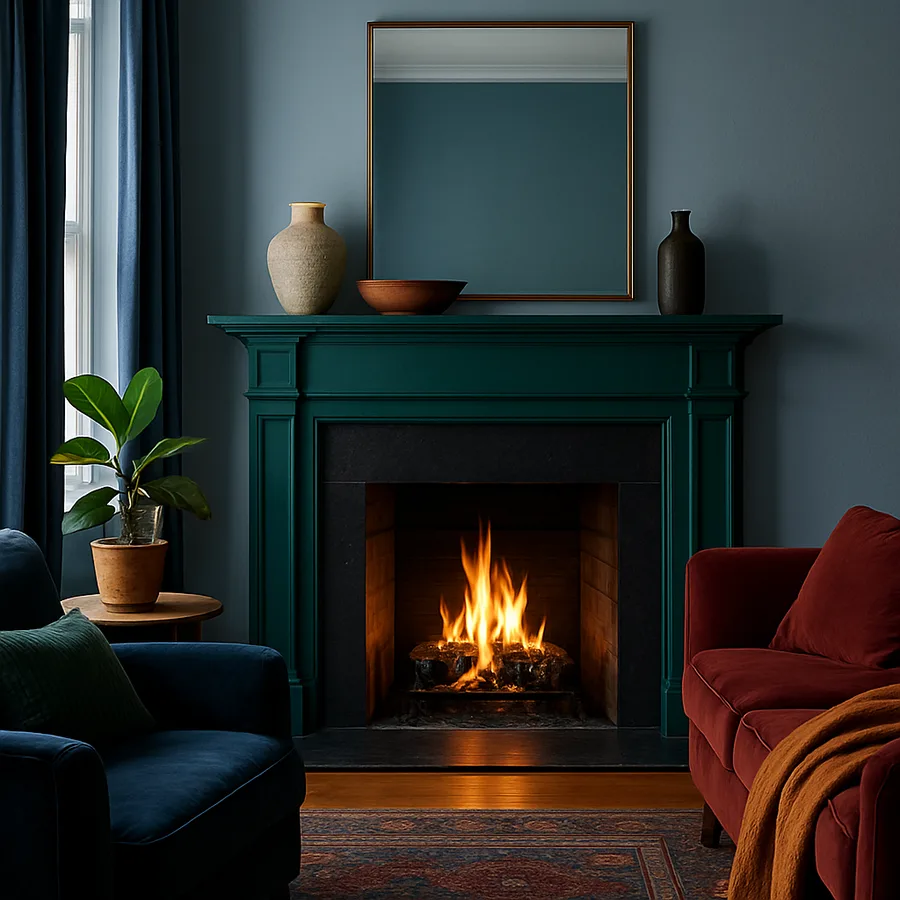
A hearth is more than the floor in front of a fireplace. It is a thermal shield, a safety boundary, a design anchor for the entire room, and often the single largest piece of natural stone in the house. The stone you choose will live with you through decades of falling embers, dropped pokers, and the cumulative weight of holiday gatherings. Picking the right material is not a casual decision, and the three materials that dominate the conversation, slate, granite, and marble, behave very differently under the conditions a hearth actually encounters.
This guide takes each of the three stones in turn and examines how it performs against heat, impact, staining, and the long arc of aging. It then steps back to compare them across cost, installation, and the design vocabulary each one supports. By the end, you should be able to walk into a stone yard with a clear sense of what you are looking for and why, and you should know which questions to ask the fabricator before committing to a slab.
What a Hearth Stone Actually Has to Survive
The hearth surface lives in one of the harshest microenvironments in the home. It absorbs radiant heat from the fire, catches falling embers and sparks that may exceed 1,000 degrees Fahrenheit at the moment of contact, and tolerates the impact of dropped logs, fireplace tools, and the occasional clumsy guest. It is also exposed to ash, soot, candle wax, food and drink during entertaining, and the constant foot traffic of family life. Any stone that earns a place on the hearth has to handle all of that without staining, cracking, spalling, or losing its visual appeal.
The Natural Stone Institute notes that hearth stones should ideally have low porosity, low thermal expansion, and high thermal shock resistance, because the combination of high heat and occasional water contact is the most common cause of natural stone failure on a hearth. Beyond those technical requirements, the stone needs to look good not only when freshly installed but also after decades of use, when minor wear and aging will inevitably show.
Have you ever seen a beautiful hearth marred by a single ring stain from a wine glass set down during a holiday party? That kind of damage is almost always the result of choosing a stone that was wrong for the working environment of a hearth rather than for the aesthetics of the moment. The right stone for your project is the one that matches both your design vision and the way you actually use your fireplace and the room around it.
Slate: The Forgiving Workhorse
Slate is a fine-grained metamorphic rock formed from compressed shale and clay. Its dense, layered structure makes it remarkably durable, naturally heat resistant, and uniquely capable of handling the demands of a hearth surface. Slate has been used as roofing, flooring, and hearth material for centuries, and the long track record speaks to its reliability in real-world conditions.
The strengths of slate are practical. It tolerates direct heat exposure without thermal shock cracking, it resists staining far better than most natural stones, and its naturally cleft surface hides minor scratches, soot marks, and wear that would be obvious on a polished material. Colors range from deep charcoal black through grey-greens, rusty reds, and multicolored heather slates with veining that varies from piece to piece. The character of each slab is genuinely unique, which is part of the material's enduring appeal.
The trade-offs are mostly aesthetic. Slate's natural cleft texture is wonderful in a Craftsman, Arts and Crafts, rustic, or mountain home, but it can feel out of place in a more formal or contemporary setting. Honed and gauged slate is available for a smoother look, but it loses some of the material's tactile personality in the process. Slate is also softer than granite, which means that while it resists heat beautifully, it can chip at sharp edges if a heavy tool is dropped on a corner. Cost is the most attractive part of the equation: hearth-grade slate typically runs 15 to 40 dollars per square foot for the stone itself, with fabricated and installed hearths landing in the 50 to 120 dollar per square foot range depending on edge detail and complexity.
Granite: The Durable Performer
Granite is an igneous rock formed from slowly cooled magma, which gives it a dense crystalline structure of feldspar, quartz, and mica. That composition makes granite among the hardest and most durable natural stones available for residential use, and it explains why granite has dominated kitchen countertops for the last several decades. The same qualities that make it perform well in kitchens make it equally well-suited to hearth applications.
The strengths of granite are extensive. It handles heat exposure without thermal shock when properly fabricated, it resists scratching from dropped tools, and it tolerates virtually any cleaning approach a homeowner might apply. Granite is also dimensionally stable, which means a properly installed slab will not warp, cup, or shift over time. Color options range from solid blacks and whites through dramatic veined patterns in browns, greens, blues, and reds, and the polished, honed, or leathered finish options let the same stone present very different visual personalities.
The considerations with granite are subtle. While the stone itself is exceptionally durable, granite hearths require sealing every two to three years in most installations to prevent staining from oils, wax, and acidic liquids. Granite is also heavy, and a large single-slab hearth may require structural reinforcement of the subfloor in older homes, particularly in second-story installations. Cost varies widely based on color and origin, with hearth-grade granite typically running 40 to 120 dollars per square foot for stone and 90 to 220 dollars per square foot installed. Exotic colors and book-matched slabs can push the upper end significantly higher, but mainstream blacks, greens, and browns deliver excellent performance at the lower end of the range. The Natural Stone Institute publishes performance specifications that fabricators reference when matching granite varieties to hearth applications, and a reputable fabricator can pull the data sheet for any specific stone you are considering.
Marble: The Timeless Statement
Marble is metamorphosed limestone, with a calcite or dolomite crystalline structure that produces the soft luster and complex veining that has made the stone synonymous with luxury for thousands of years. From Italian Carrara to American Vermont Danby to Greek Thassos, marble carries a design heritage that no other hearth material can match. When the design brief calls for elegance, refinement, or a formal aesthetic, marble is often the first material a designer considers.
The strengths of marble are entirely aesthetic and historical. The depth and movement of veining, the way light penetrates the surface to create a subtle glow, and the cool tactile quality of polished marble are simply not available in any other material at the same price point. Carrara whites, statuary whites, dramatic black-and-gold Portoros, and warmer Calacatta varieties each support different design vocabularies, but all share that signature marble character.
The trade-offs are significant and need to be understood clearly before committing. Marble is softer than granite and considerably more porous. It scratches more easily, etches from any contact with acidic liquids such as wine, vinegar, citrus, or even some cleaning products, and stains more readily than slate or granite. The Marble Institute of America, now part of the Natural Stone Institute, classifies marble as a Class A or B stone for hearth use depending on density, and recommends honed rather than polished finishes for hearth applications because the honed surface masks etching far better than polish does. Cost runs 50 to 200 dollars per square foot for stone, with exotic varieties such as Calacatta Gold or Portoro reaching 300 dollars or more per square foot. Installed hearth pricing typically lands between 120 and 350 dollars per square foot, with premium custom installations going considerably higher.
Heat Performance and Real-World Durability
All three stones tolerate the heat exposure of a properly designed fireplace, but they tolerate it in different ways. Slate has the lowest thermal expansion of the three, which means it handles rapid temperature swings without stress cracking even when a hot ember lands directly on the surface. Granite is also highly heat-resistant, but the variation between specific granite varieties is greater than most homeowners realize, and a few lighter-colored granites with higher quartz content can develop hairline stress cracks under repeated thermal cycling. Marble handles ambient hearth heat well but is the most vulnerable of the three to direct contact with hot embers, particularly polished marble where heat can cause visible burnishing or dulling of the surface finish.
Long-term durability tells a similar story. A well-maintained slate hearth can last fifty to one hundred years or more with minimal intervention, developing a soft patina that many homeowners find more attractive than the original installation. Granite typically delivers a similar lifespan with periodic resealing. Marble, while capable of lasting centuries in low-traffic applications, requires more active maintenance in a working hearth environment, and many marble hearths show meaningful wear within the first ten to twenty years of regular use.
Are you the kind of homeowner who actively maintains stone surfaces, periodically resealing and using stone-safe cleaners? If so, all three materials are viable options. Are you the kind who installs and forgets? In that case, slate is the most forgiving choice, granite is a strong second, and marble may be a source of long-term frustration unless used in a primarily ornamental fireplace that sees light actual use.
Choosing for Your Style, Budget, and Use Pattern
Match the stone to both your design vocabulary and your actual fireplace use. A primary heating fireplace that sees daily winter use, with logs being loaded and unloaded routinely and ash being cleaned out weekly, demands the durability of slate or a tough granite. An ornamental gas fireplace that produces minimal ash and sees occasional decorative use can support a marble installation that would be impractical on a heavily used wood-burning hearth.
Design fit matters as much as performance. Slate naturally pairs with rustic, Craftsman, transitional, and farmhouse aesthetics, and its cleft texture adds depth to rooms that lean toward natural materials and warm earth tones. Granite is the most stylistically flexible of the three, working well in everything from traditional to contemporary settings depending on color, finish, and edge profile. Marble brings formality and luxury, and is most at home in classical, traditional, French, Italian, and high-end contemporary interiors where the material's heritage and refinement reinforce the room's design intent.
Budget plays a real role as well. For roughly the same total project cost, you might install a generous slate hearth with a dramatic raised edge, a more modest granite hearth with high-end fabrication, or a small marble accent hearth on a primarily decorative fireplace. The right call is the one that respects your overall room budget, supports the way you actually live with the fireplace, and matches the design language of the surrounding space.
Conclusion
The choice among slate, granite, and marble comes down to a balance among heat performance, durability, maintenance commitment, design fit, and budget. None of the three is universally superior, and the wrong stone for one situation may be exactly right for another. Slate excels for daily-use wood-burning hearths in rustic and transitional rooms, granite delivers the broadest stylistic flexibility and the most predictable long-term durability across all fireplace types, and marble brings unmatched visual luxury at the cost of more demanding maintenance and reduced tolerance for hard use.
Before committing to any stone, pull samples from a local stone yard and live with them in your actual room for several days. Natural stone changes dramatically under different light conditions, and a slab that looks gorgeous under showroom lighting may read very differently in your living room at five in the afternoon. Photograph the samples at multiple times of day, look at them next to your other finishes, and consider how they will read alongside your furniture, your wall color, and your existing flooring.
Finally, work with a fabricator who specializes in fireplace installations rather than primarily in countertops. Hearth fabrication involves edge profiles, code-compliant clearances, and structural considerations that countertop specialists do not always handle confidently. A fabricator who understands the working environment of a hearth will guide you toward the right stone, the right finish, and the right edge detail for your specific fireplace and your specific home.
Start your selection this weekend: visit two or three local stone yards, pull samples of each material in colors you find appealing, and bring them home to evaluate in your actual room. With those samples in hand and the framework in this guide, you will be positioned to make a hearth choice that you will appreciate every time you light a fire, for decades to come.
More Articles You May Like



Comments
Post a Comment