Gravel Path Border Selection Steel Versus Stone
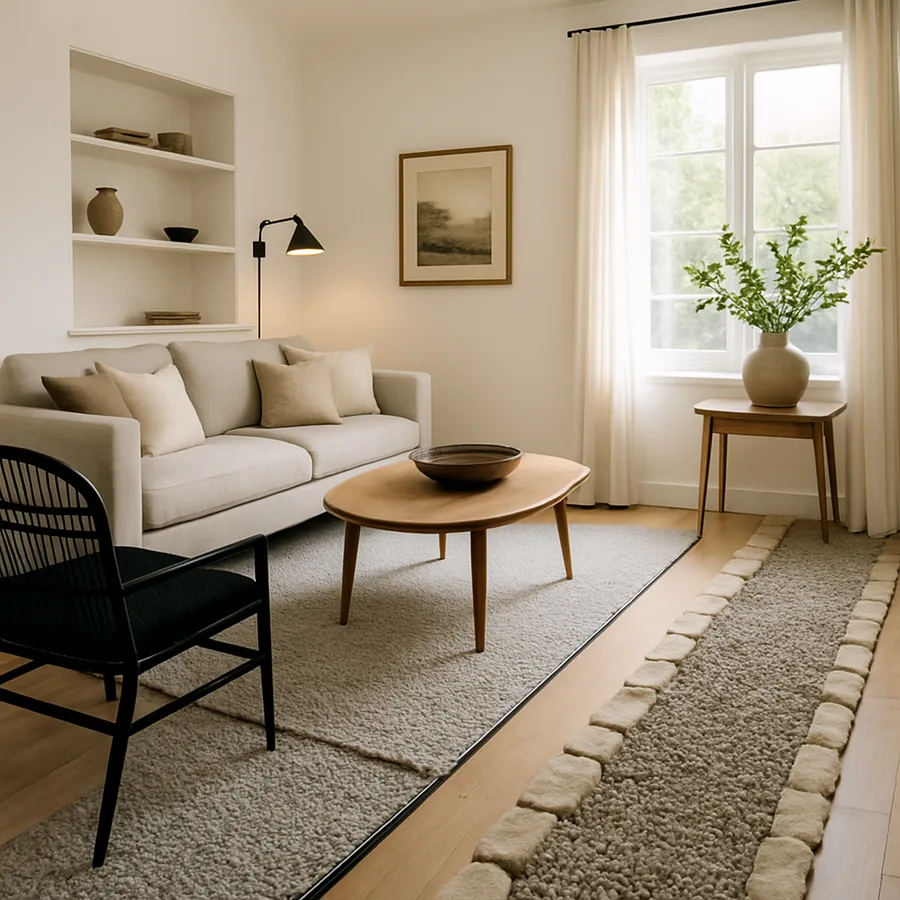
A gravel path without an edge is not really a path at all; it is a slow-motion landslide that migrates a few inches outward every year until the original geometry is unrecognizable and the surrounding lawn or planting bed is choked with stray pebbles. The border is what holds the entire idea together, and the choice between steel and stone edging will define the path's appearance, maintenance burden, and structural longevity for as long as it exists. Most homeowners default to whichever material their contractor happens to stock, and the result is rarely the right answer for the specific site.
The steel-versus-stone debate has intensified over the past decade as new corten and powder-coated steel products have entered the residential market alongside the cut and tumbled stone options that have served gardeners for centuries. Each material has matured significantly, each has documented strengths and real limitations, and the right choice depends on factors the average homeowner has never been asked to consider. Walking through those factors systematically before specifying any edging will save both money and regret.
Why Edging Matters More Than Gravel Selection
Gravel is a remarkably forgiving path material. Within the broad family of acceptable choices, decomposed granite, crushed stone, pea gravel, and crusher run all produce serviceable walking surfaces when properly compacted over a sound base. The differences between these materials are real but secondary; you can build a functional path from any of them. What you cannot do is build a lasting path without a robust edge to contain the material.
The physics is unforgiving. Each footstep that crosses the edge of an unbordered gravel path displaces a small amount of material outward, and over thousands of footsteps the path widens, the depth at the centerline decreases, and the maintained gravel pool that was once a crisp three-foot wide walkway becomes a vague four-and-a-half-foot smear with bare spots at the original margins. The American Society of Landscape Architects documents this migration in long-term studies of public path infrastructure, where unbordered gravel paths typically require complete renewal within seven to ten years compared to twenty-five-plus for properly edged installations.
Edging also performs a second function that gets less attention: it provides a clean visual line that gives the path geometric authority within the broader landscape. A bordered gravel path reads as deliberate and designed; an unbordered one reads as accidental. Have you ever noticed how the same gravel material can look elegant on one property and shabby on another? The difference is almost always the edge treatment.
Steel Edging Modern Materials And Real Performance
Modern landscape steel edging falls into three main categories: cold-rolled mild steel with a powder-coated finish, corten weathering steel that develops a stable rust patina, and galvanized or stainless steel for the most demanding applications. Mild steel with powder coat costs the least and performs adequately for five to ten years before the coating begins to fail and corrosion appears at any exposed cuts or impact points. Cold climates and salt exposure accelerate this timeline.
Corten steel has become the premium choice in contemporary landscape design, prized for its rich rust-brown coloration that develops over the first six to eighteen months and stabilizes into a self-protective oxide layer. Corten typically lasts forty to sixty years in residential applications without any maintenance, though it stains adjacent concrete or pale stone surfaces during the initial weathering period and should not be installed where this matters. Standard residential profiles range from 4 inches to 8 inches deep, with 1/8 to 3/16 inch wall thickness.
Installation is the steel category's clearest advantage. A two-person crew can typically install 50 to 75 linear feet per hour using stakes that drive through pre-punched holes every 24 inches. The material follows curves easily, accommodates grade changes gracefully, and integrates cleanly with hardscape transitions like driveway crossings. According to industry data tracked by the National Association of Landscape Professionals, steel edging now accounts for more than 40 percent of new residential edge installations on properties valued above $750,000.
Stone Edging The Traditional Workhorse
Stone edging covers a much broader range of materials and installation techniques than steel does. The category includes granite cobbles, belgian block, natural fieldstone, cut bluestone, and the various concrete cobblestone reproductions that have improved dramatically in appearance over the past decade. Each subtype carries distinct cost, installation, and aesthetic implications, and lumping them together obscures more than it reveals.
Granite cobble and belgian block are the most common premium stone edges, offering nearly indestructible service life and a timeless appearance that suits both formal and informal architecture. A typical 4-inch by 4-inch by 9-inch cobble weighs around 15 pounds, requires a concrete or mortared sand base for stability, and once installed will outlast nearly any other element of the landscape. Pricing typically runs $20 to $40 per linear foot installed depending on the cobble grade and the complexity of the curves.
Natural fieldstone produces the most rustic appearance and the lowest material cost but the highest installation labor, because each stone must be hand-selected and fitted to its neighbors. The result reads as evolved rather than designed, which suits cottage gardens, naturalistic plantings, and farmhouse architecture beautifully. The Natural Stone Institute provides detailed guidance on selecting fieldstone for outdoor use, including freeze-thaw resistance ratings that matter critically in northern climates.
Cost Comparison Across A Realistic Project
Consider a representative residential gravel path: 60 feet long, 4 feet wide, requiring 120 linear feet of edging total. The material and installation costs vary dramatically across the options. Powder-coated mild steel edging in 4-inch profile typically runs $8 to $12 per linear foot installed, putting total edging cost at $960 to $1,440. Corten steel in the same profile runs $15 to $22 per linear foot, or $1,800 to $2,640 for the project.
Granite cobble set in a concrete footing typically costs $25 to $45 per linear foot installed, totaling $3,000 to $5,400. Natural fieldstone runs $30 to $60 per linear foot due to the labor-intensive fitting work, putting the same project at $3,600 to $7,200. Concrete cobblestone reproductions split the difference at $15 to $25 per linear foot, or $1,800 to $3,000 total.
These numbers can mislead if read as one-time costs only. Steel edging requires no maintenance for its service life but eventually needs full replacement; cobble and stone edges may need occasional re-setting of individual units that have shifted but can serve indefinitely with that modest care. Over a fifty-year ownership window, the total cost of ownership often favors stone despite the higher upfront investment, particularly when measured against the corten steel that would need one or two complete replacements over the same period.
Installation Realities And DIY Feasibility
Steel edging is the clear DIY winner for homeowners who want to do the work themselves. The material arrives in 8 to 10-foot sections, the installation tools are limited to a drilling hammer for the stakes and a hacksaw or angle grinder for any field cuts, and a determined homeowner can install 100 linear feet in a long afternoon. The forgiving nature of the system allows minor adjustments after the gravel is placed without dismantling the edge.
Stone edging is significantly more challenging for the DIY approach, particularly for cobble or cut stone installations that require a stable concrete or mortared base. The work is heavy, the units are unforgiving once set, and any mistakes in the base preparation will telegraph through the finished edge for the life of the installation. Fieldstone is somewhat more forgiving because the irregular nature of the material accommodates approximation, but the labor involvement is substantial regardless.
The National Association of Home Builders reports that approximately 65 percent of steel edging installations on residential properties are now homeowner-installed, compared to fewer than 15 percent for cobble or cut stone edges. Those numbers reflect the practical reality of each system more accurately than any sales literature, and they argue for stone only when the budget supports professional installation or the homeowner has direct masonry experience.
Matching Edge To Architecture And Setting
The edge choice should harmonize with both the home's architecture and the surrounding landscape character, and this match matters more than any technical performance specification. Contemporary and modern homes almost always look best with steel edging, particularly corten, because the clean line and industrial material vocabulary reinforce the architectural intent. A cobble edge on a modern home reads as historically confused, no matter how beautifully it is installed.
Traditional, colonial, and federal homes generally call for stone edging that references the era and aesthetic of the architecture. Belgian block was the standard edge for nineteenth-century American walkways and remains the most contextually appropriate choice for homes built in or referencing that period. Cottage and farmhouse styles tolerate either fieldstone or simple cut stone edges, with the choice depending on the formality of the broader landscape design.
Have you considered how your edge choice will look in winter when surrounding plantings are dormant or covered in snow? The edge becomes the dominant visual element in the landscape for several months of the year in many climates, and a beautiful edge can carry the landscape through the off-season while a poorly chosen one becomes a depressing scar across the dormant garden. The ASLA Sustainable Landscapes initiative includes case studies that document seasonal edge performance across multiple climate zones.
The interface between the edge and surrounding lawn deserves particular planning attention because this transition is where most edge installations fail visually. Steel edging set with its top edge at mower-deck height allows the mower to ride along the edge and trim the grass cleanly, eliminating the need for string-trimmer touch-up. Stone edges set with a flush mowing strip of brick or concrete behind them serve the same function. Edges that sit either too high or too low relative to the lawn create perpetual maintenance friction and look untidy regardless of how beautiful the edge material itself may be.
Drainage at the edge is another underappreciated factor that affects long-term performance. Gravel paths shed surface water relatively well, but the interface between the path edge and adjacent soil can become a low spot where water collects, eroding both the edge support and the surrounding planting. Slight grade adjustment during installation, typically a quarter inch per foot of slope away from the edge, prevents this water trap from forming. The cost is essentially zero if planned during the original installation and substantial if retrofitted later.
Conclusion
The choice between steel and stone edging for a gravel path is more consequential than most homeowners realize and more straightforward than most contractors present it. Steel offers superior installation economics, contemporary aesthetic compatibility, and adequate service life for most residential applications. Stone offers timeless appearance, indefinite service life, and contextual harmony with traditional architecture, at a meaningful but defensible cost premium.
Neither material is universally correct, and the marketing language from either camp should be discounted accordingly. The right edge for your specific project depends on your architecture, your landscape style, your budget horizon, your DIY appetite, and your patience for the visual and physical changes each material will undergo over its service life. Working through those factors honestly will lead most homeowners to a clear answer relatively quickly.
The worst outcome is not choosing the wrong material between these two excellent options; it is failing to install any meaningful edge at all and watching a thoughtfully planned gravel path slowly dissolve into the surrounding landscape over its first decade. The presence of a real edge matters far more than the choice between the two leading options, and a homeowner working with a constrained budget should always prioritize a modest steel edge over no edge at all.
Begin your planning by walking the proposed path route and noting where it crosses lawn, planting beds, hardscape transitions, and grade changes. Each of these interfaces favors a different edge solution, and the right answer for your project may involve a single material throughout, or it may involve a thoughtful combination that addresses each transition on its own terms. Request bids that address each interface specifically, and select an installer comfortable with both material families before making the final material call.
More Articles You May Like



Comments
Post a Comment