Mantel Decor Off Season Versus Christmas Versus Summer
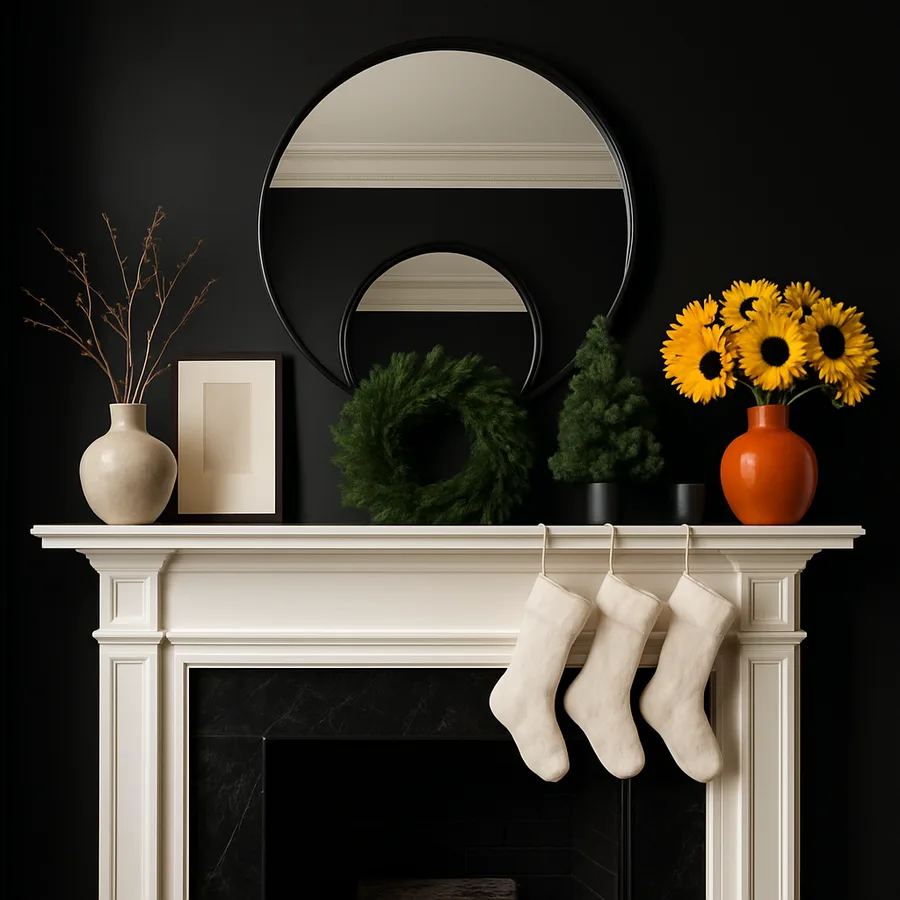
A mantel is the most photographed surface in most homes, and the way it is styled shifts the entire personality of the room. Yet many homeowners only think seriously about their mantel for a few weeks each December, leaving it to languish through long stretches of off season neglect. According to the American Society of Interior Designers, 71 percent of homeowners say they refresh their mantel decor only once a year, almost always for the winter holidays, even though the surface is visible to family and guests every single day. The National Retail Federation meanwhile reports that holiday home decor accounts for over 10 billion dollars in annual consumer spending, much of which lives on or above the mantel for six weeks before being boxed away.
What if the mantel were treated as a piece of evolving theater rather than a once a year display? This article compares three distinct seasonal strategies, the quiet sophistication of off season styling, the layered abundance of Christmas, and the airy lightness of summer, then offers concrete guidance for executing each well. The goal is not to prescribe a single right answer but to help you develop a year round vocabulary that keeps your mantel alive in every season.
The Principles That Apply To Every Season
Before getting into seasonal specifics, certain rules apply year round. The most fundamental is the rule of thirds for proportion: divide the mantel into three roughly equal vertical zones and place objects of decreasing height from one anchor point. Architectural Digest styling editors typically follow a tall anchor of 1.5 to 2 times the mantel height, a medium element at 1 to 1.25 times, and supporting elements that step down from there.
Negative space is as important as the objects themselves. A mantel crowded with small objects reads as cluttered no matter how lovely each piece is individually. Aim for at least 40 percent visible mantel surface between objects so that each item has room to breathe and the eye can register them as a composition rather than a pile.
Asymmetry usually outperforms symmetry on mantels. While a perfectly symmetrical arrangement looks formal and resolved, it also reads as static and can feel like a hotel lobby. A slightly asymmetrical arrangement with a tall element offset to one side and a horizontal balance from grouped objects on the other creates visual tension that engages the eye and invites a closer look.
Off Season Strategy The Long Stretch
For roughly nine months of the year, your mantel is neither dressed for Christmas nor styled for summer. This long off season is where most mantels fail, drifting into a tired collection of objects that no longer feel intentional. The fix is to develop an off season base that is genuinely beautiful in its own right, then layer seasonal accents on top of it for the more emphatic moments.
A successful off season base typically includes one architectural anchor such as a large framed mirror, painting, or piece of textile art, plus two to four supporting objects with sculptural weight. Materials that read well year round include unglazed ceramics, dark patinated bronze, weathered wood, and matte black metal. Color palettes that succeed across seasons tend toward warm neutrals, deep greens, and the occasional accent of a saturated color that complements the room.
The off season is also when texture does the most work. Without the visual fireworks of holiday lights or summer florals, the eye registers the surface qualities of the objects more keenly. A linen wrapped book, a rough stoneware vessel, and a piece of unpolished brass make a more interesting composition together than three glossy objects in the same colors, because the texture contrast carries the visual interest.
Christmas Strategy Layered Abundance
Christmas is the season when restraint can give way to abundance, but abundance is not the same as chaos. The most successful holiday mantels follow a deliberate color palette, often two primary colors plus one metallic, and layer materials within that palette to create depth. Better Homes and Gardens seasonal stylists frequently recommend committing to a palette and rejecting any object that does not serve it, even if the object is technically Christmas themed.
Greenery is the foundational layer. Whether fresh or high quality artificial, a flowing garland that drapes across the mantel and trails down at one or both ends establishes the seasonal mood instantly. Mix three or four greens such as cedar, pine, eucalyptus, and magnolia for textural variety, and tuck small pinecones or berries into the garland for natural color accents.
Stockings hang in front of the mantel and contribute to the composition whether they are filled or not. Hang them with weighted holders rather than nails, and vary their lengths slightly so the bottom line is a gentle wave rather than a rigid horizontal. Above the mantel, candles in varied heights flicker against the greenery and provide the warm light that makes holiday photographs so beloved.
Summer Strategy Light And Airy
Summer asks for the opposite mood from Christmas. Where holiday styling layers and accumulates, summer styling lifts and clears. The temperature in the room is higher, the days are longer, the windows are likely open, and the mantel should breathe with the rest of the space. Summer features in design publications consistently show mantels with fewer objects, lighter colors, and more transparent materials than their winter counterparts.
White, cream, pale blue, soft green, and natural wood form the dominant summer palette. Replace heavy candle holders with clear glass hurricanes that disappear into the background while still containing a flame. Swap dark ceramics for white stoneware or unglazed terra cotta. The mantel should feel lighter to the eye even though the actual weight of the objects has not changed.
Fresh elements come into their own in summer. A bundle of cut hydrangeas in a simple glass vessel, a small olive tree in a clay pot, or a bowl of lemons can become the entire composition, with the architecture of the surround carrying the rest of the visual weight. This is the season to lean on what is growing in your garden or available at your farmer's market, since summer flora rewards a low effort, high impact approach.
Transitional Moments And Shoulder Seasons
The transitions between major seasons are often where the most refined mantel styling lives. Early autumn, with its warming color palette but not yet committed Halloween theming, is a favorite of professional stylists. Late winter, after the Christmas decor comes down but before spring properly arrives, calls for a calm, almost monastic styling that lets the room recover from holiday abundance.
Early spring rewards a few cut branches forced into bloom indoors, such as forsythia, cherry, or magnolia. The vertical lines of the branches replace the missing winter greenery and signal the change of season without demanding a complete restyle. Place them in a tall vessel offset from center and let the rest of the mantel quiet down to support them.
Late summer transitions into early fall through small material shifts. Add a single pumpkin in a moody color such as deep green or pale blue rather than the orange cliche, swap glass hurricanes for ceramic ones, and bring in a small bundle of dried wheat or grasses. These micro changes refresh the mantel without committing to full autumn theming weeks before it feels appropriate.
Practical Storage And Year Round Workflow
A successful year round mantel program requires storage discipline. The objects that are not currently on the mantel need to live somewhere accessible, organized by season, and protected from damage. Many homeowners use clear bins labeled by season in a closet or basement, with delicate items wrapped individually and sturdier items grouped together.
Photograph each mantel arrangement before you take it down. The photographs become a reference library that helps you recreate or evolve arrangements over time, and they prevent the frustration of remembering that a particular grouping was lovely but not how it was actually composed. Over a few years the library becomes a genuinely useful personal styling resource.
Have you set calendar reminders for your seasonal transitions? Many stylists swap mantels four to six times a year, roughly at the equinoxes and solstices plus the holiday push. A reminder a week before each target date gives you time to gather fresh elements, dust the mantel itself, and stage the new arrangement without the stress of last minute scrambling.
Conclusion
A mantel is one of the highest leverage decorating surfaces in a home, and treating it as a year round canvas rather than an annual holiday project transforms the experience of living in the space. The off season base provides quiet beauty for the longest stretch of the year, Christmas layers abundance and warmth, summer lifts and lightens, and the transitional moments offer some of the most refined styling opportunities of all. None of this requires a large budget; it requires attention and a small library of well chosen base objects.
The most successful year round mantel programs are built on a foundation of restraint. Resist the temptation to add new objects every shopping trip, and instead invest in a handful of pieces with enough quality and presence to anchor compositions across seasons. A single beautiful pair of brass candlesticks, an arresting mirror, or a vessel with character can carry styling moments for decades, while a drawer of trendy seasonal trinkets often produces less satisfying results despite costing more cumulatively.
Style your mantel for yourself and your family before you style it for photographs or guests. The mantel is in your line of sight for thousands of hours each year, and the cumulative effect of looking at something you love compounds in ways that a Christmas Day photograph cannot capture. Choose objects that make you smile when you walk past them on an ordinary Tuesday.
Ready to refresh your own mantel? Start by clearing it completely, dusting the surface, and considering what mood you want the room to hold for the coming season. Pull a few candidate objects from around the house, arrange and rearrange them on the cleared mantel, and trust your eye. With a little practice and a few seasonal rotations under your belt, you will find that the mantel becomes one of your favorite small pleasures of home keeping.
Lighting The Mantel For Each Season
Lighting transforms a mantel composition more than any other single intervention, and the right lighting changes with the season. In the bright open feeling of summer, a mantel can be lit minimally or not at all, allowing daylight to do most of the work. In the dark months from late autumn through early spring, layered candlelight and warm fixture lighting bring the mantel to life during the long evenings when it is most visible and most appreciated.
Real candles in glass hurricanes or pillar holders offer the best light quality but require attention to safety and the smoke residue they leave on the wall above. LED candles have improved dramatically in the past few years and now produce a convincing flicker at a fraction of the safety risk, especially for households with children, pets, or busy schedules. A mix of real and LED candles in the same arrangement gives most of the magic with most of the safety, and the LED units can be set on timers so they come alive at dusk without intervention.
Picture lights mounted above the mantel art, sconces flanking the mantel, and concealed strip lighting tucked under the mantel cap can all contribute to the composition. Put every light source on a dimmer so the mantel can transition from a soft glow during a dinner party to a brighter wash during a board game evening. The flexibility is what keeps the mantel feeling alive across the rhythms of daily life rather than locked into a single mood.
Family Heirlooms And The Story Of The Mantel
The most memorable mantels in published interiors often include at least one object with deep family significance: a grandmother's clock, a piece of pottery brought back from a meaningful trip, a photograph in a tarnished silver frame. These objects anchor the styling in a story that no decorator can manufacture, and they distinguish a personal mantel from a generic one. Make space for at least one such object in every seasonal arrangement, even if it does not match the dominant palette.
Children's contributions deserve consideration too. A school project that the family particularly loves, a piece of handmade pottery, or a drawing in a simple frame can rotate onto the mantel for a season or a holiday and create memories that compound over years. The mantel becomes a record of the family's life rather than a display of purchased objects, and the difference shows in photographs decades later when those handmade pieces have acquired their own patina of time.
Resist the urge to keep mantel arrangements static because they finally feel resolved. The most beloved mantels evolve, and the evolution is part of what makes them beloved. Replace one object every month or two, refresh the styling at the equinoxes and solstices, and let the mantel become a living chronicle of the household rather than a frozen tableau that grows tired with familiarity and eventually fades into invisibility.
More Articles You May Like



Comments
Post a Comment