
Patio Furniture Cover Selection For Off Season Storage
Patio Furniture Cover Selection For Off Season Storage
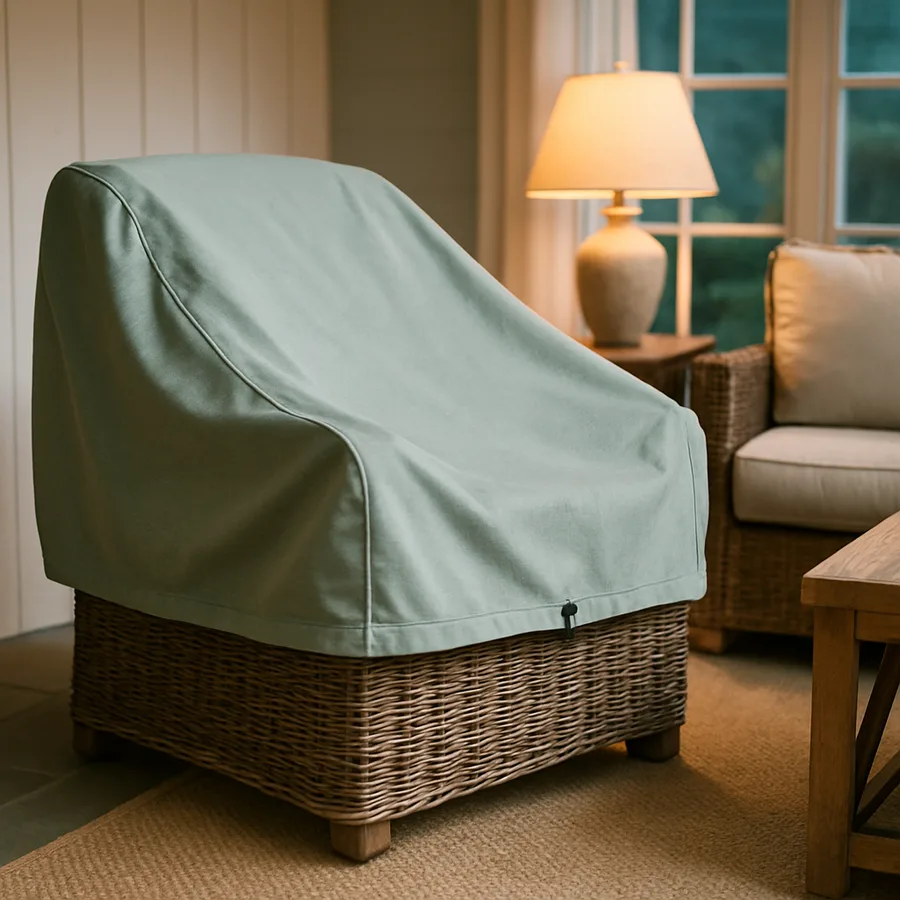
When the last pleasant evening on the deck fades into a memory and the first cold front rolls through, the question of how to protect outdoor furniture takes on a new urgency. The National Association of Home Builders reports that the average homeowner now invests between $1,800 and $4,500 outfitting a single outdoor living zone, and that figure climbs sharply when you factor in sectional sofas, dining ensembles, and modular fire-pit lounges. Protecting that investment through a long off-season is not a matter of throwing a tarp over the cushions and hoping for the best. It is a systems problem, and the system begins with the cover itself.
This guide walks through the practical decisions that separate a cover that genuinely preserves furniture from one that traps moisture, tears at the seams, or sails off in the first February gust. We will examine fabrics, fit, fastening, climate matching, and the small storage rituals that compound into years of additional service life. Whether you are protecting a single bistro set on a city balcony or a full lakeside spread, the principles below scale.
Why Generic Covers Fail Before Spring
The most common storage failure is not catastrophic damage but a slow accumulation of moisture between the cover and the furniture. Cheap covers made from coated polyethylene behave like a plastic bag: rain runs off the top, but condensation forms underneath, drips onto cushions, and seeds mildew. A study summarized by Better Homes & Gardens found that more than half of homeowners who reported off-season furniture damage attributed it to mildew or rust originating beneath the cover rather than from direct weather exposure.
The second failure mode is mechanical. A loose cover acts like a sail. Wind drives the fabric against sharp edges and weld points on metal frames, abrading the cover and gouging powder-coated finishes. When the cover finally rips, water pours directly onto bare wood, exposed cushion stitching, and unfinished welds. By the time you lift the cover in spring, the damage is already structural.
The third, quieter failure is UV degradation. Covers stored on furniture for six or seven months see significant sun exposure even in winter, and low-grade fabrics chalk, fade, and lose tensile strength rapidly. A cover that looks acceptable in November can shred under its own weight by March.
Understanding these three modes - trapped moisture, mechanical wear, and UV breakdown - is the foundation of every other decision in this guide.
There is also a fourth quieter failure that homeowners rarely diagnose correctly: rodent infiltration. Mice and squirrels treat a poorly secured cover as a five-star winter shelter, and the resulting nesting material, droppings, and chewed cushion piping can be more expensive than direct weather damage. A cover that drapes loosely to the ground, or that has any gaps at the bottom hem, is an invitation. A snug-cinched bottom rail with no ground contact is a closed door. This is the kind of detail that separates homeowners who recover their furniture intact in April from those who throw out their cushions and start over.
Fabric Weights And Coatings Decoded
Cover fabrics are typically rated in denier, a unit that measures yarn thickness. Higher denier generally means a thicker, more abrasion-resistant fabric, but denier alone is not the full story. A 600D polyester with a polyurethane backing and an outer DWR (durable water repellent) finish behaves very differently from a 600D fabric with only a single-side coating.
For most residential applications, look for these baseline specifications:
- 300D to 600D polyester with a polyurethane or acrylic backing for light-duty seasonal use on covered porches or screened lanais.
- 600D to 900D solution-dyed polyester for open patios with moderate weather exposure.
- 1000D and above marine-grade fabrics for coastal installations, alpine climates, or any furniture stored fully exposed through severe winters.
Pay equal attention to the coating. A polyurethane (PU) backing seals the weave and is the most common approach for mid-tier covers. Higher-end options use a vinyl laminate or PVC coating that resists abrasion better but can crack at very low temperatures. The premium tier uses solution-dyed acrylic - the same family as Sunbrella - which is breathable, exceptionally UV-stable, and resistant to mildew without relying on chemical treatments that wash out over time.
Seams matter as much as fabric. Double-stitched, taped, or heat-welded seams resist the constant flexing that wind delivers. Single-stitched seams on bargain covers begin to leak and unravel within a single season. When examining a cover in a showroom or unboxing one shipped to you, run your fingers along the seams: they should feel reinforced, not flat.
Color matters too, in ways that surprise first-time buyers. Dark covers absorb more solar heat, which accelerates fabric degradation in storage months that still have intense midday sun. Light covers reflect more heat and resist UV chalking, but they show pollen, sap, and bird droppings dramatically. The sensible compromise for most installations is a medium-tone color in a hue that matches your home's exterior - taupe, slate gray, or muted olive - that hides ordinary soiling without absorbing punishing solar heat.
Fit Geometry And Air Management
A correctly fitting cover sits close to the furniture but never flush against every surface. It needs a small, intentional gap for air to circulate. Manufacturers achieve this through internal support poles, integrated air vents, or shaped panels that maintain a slight dome over the seating surface so condensation can escape.
Have you ever lifted a cover in spring to find the cushions damp even though the fabric looked dry? That is almost always a venting problem. Mesh vents - usually located on the upper sides of the cover - let humid air migrate out as ambient temperatures swing. A cover with no vents at all is a moisture trap regardless of how waterproof the outer fabric claims to be. Look for at least two vents on covers that span sectional or dining furniture, and four or more on full-pit covers.
For fit, measure the furniture in three dimensions and add roughly two inches of slack to each. The cover should drape past the bottom rail of chairs and tables by four to six inches so water sheds away from feet and casters rather than pooling on the deck around them. On stackable chairs, plan for the stacked height plus a buffer for a top support pad or pool noodle that prevents the cover from sagging into a water-collecting bowl.
Securing Systems That Survive Winter Winds
Even the most beautifully tailored cover is worthless if a 40-mph gust strips it off the furniture in January. Securing systems fall into four categories: drawstrings, buckle straps, click straps, and tie-down anchors. The best covers combine at least two of these.
A bottom-hem drawstring cinches the cover under the furniture rail, which prevents wind from getting under and ballooning the cover skyward. Look for a positive lock toggle rather than a simple cord-and-knot system. Toggles hold tension over months; knots loosen.
Side buckle straps that wrap entirely around the furniture deliver the most secure hold for sectionals and large dining sets. These should be sewn into the cover at structural seam intersections, not glued or surface-stitched. If you can see the strap stitching pulling away from the fabric in the store, it will fail in your yard.
For exposed locations, supplement integrated systems with external anchors: water-fillable bag weights placed on the furniture before the cover goes on, or eyelet-and-cord tie-downs run to deck cleats. The American Society of Landscape Architects publishes design guidance on coastal and high-wind outdoor environments that reinforces a simple principle: redundancy is cheaper than replacement.
Matching The Cover To Your Climate
A cover that works beautifully in coastal Florida is the wrong cover for a Wisconsin lake house, and vice versa. Climate matching means matching the cover's strengths to the dominant threat in your environment.
Wet, mild climates (Pacific Northwest, the South, marine zones) demand maximum breathability. Mildew, not freeze damage, is the enemy. Acrylic or breathable polyester with generous venting outperforms heavy waterproof PVC, which traps moisture in these conditions.
Cold, dry continental climates (Upper Midwest, Mountain West) demand cold-stable fabrics. PVC and some vinyl coatings become brittle below freezing and crack at flex points. A heavyweight polyester with PU backing handles repeated freeze-thaw cycles without splitting.
High-UV climates (Southwest, high-altitude regions) demand solution-dyed fabrics with high UV resistance ratings. Surface-dyed materials chalk and fail within two seasons under intense sun even when used only for winter storage, because reflected glare off snow is itself a major UV source.
Coastal salt environments demand corrosion-rated hardware. The grommets, buckles, and zipper pulls on inexpensive covers rust within months near saltwater, and rust stains will telegraph through to any light-colored furniture beneath. Specify stainless or marine-grade plastic hardware in these zones, and rinse the cover periodically through the season with fresh water to flush accumulated salt.
Mixed-season climates - the temperate zones where winter shifts repeatedly between freeze, thaw, rain, and brief sun - are arguably the most demanding of all because the cover must perform across every failure mode. Here, breathable solution-dyed acrylic with reinforced PU backing and generous venting is the safest specification. Plan to spend more upfront and recover the cost across a longer service life than a single-purpose cover would deliver.
Storage Rituals That Multiply Cover Lifespan
The cover is only half the system. How you prepare furniture before covering it determines whether the cover protects pristine furniture or seals damp, dirty furniture in a sealed environment where small problems become large ones.
Start with a thorough cleaning. Cushions should be washed according to their care label, fully air-dried for at least 48 hours in low humidity, and inspected for any seam damage that should be repaired before storage. Furniture frames should be wiped down with appropriate cleaners - mild soap and water for most powder-coated aluminum, teak cleaner for hardwoods, and a vinyl-safe cleaner for resin wicker. Skipping this step locks pollen, food residue, and pollutants against the finish for the entire off-season.
Where space permits, store cushions indoors. A breathable cotton or canvas storage bag in a basement, garage, or interior closet provides better protection than even the best outdoor cover. The American Society of Interior Designers offers guidance on residential storage planning that highlights cushion preservation as one of the highest-return seasonal habits.
For furniture that remains outside, elevate it slightly off the ground with composite shims or risers. This breaks the capillary path that draws ground moisture up through wooden legs and prevents ice from welding chair feet to the deck. Stack what can be stacked, nest what can be nested, and reduce the total covered footprint as much as possible. Smaller cover area means less material flexing in the wind and less surface for moisture to migrate through.
Finally, build a mid-winter check into your calendar. A 15-minute walk-around in January to verify that straps are still taut, no branches have fallen on the cover, and no standing water has pooled in a low spot can save hundreds of dollars in spring repairs. Have you ever skipped this step and regretted it? Most homeowners have, exactly once.
Conclusion
Selecting a patio furniture cover for off-season storage is not about finding the most waterproof material or the lowest price. It is about matching fabric, fit, venting, and securing systems to the specific environment your furniture will sit in for the next six to eight months, then supporting that cover with the cleaning and preparation rituals that let it do its job.
The homeowners who get a decade of life out of a quality outdoor sectional are not lucky. They invest in solution-dyed or marine-grade covers sized correctly, use redundant securing systems, store cushions indoors when possible, and check on the setup periodically through winter. These habits compound. Each year of postponed replacement is hundreds or thousands of dollars saved, and the furniture that emerges in spring looks the way it did when you bought it.
If you are about to invest in covers this season, walk your patio with a tape measure tonight, note the dimensions of each piece, and identify the dominant climate threat in your region before you shop. Bring those specifications to whatever retailer or specialist you trust, and ask about denier, coating, venting, and seam construction by name. The right questions, asked before the purchase, prevent every category of failure described in this guide. Your future spring self will be grateful.


Comments
Post a Comment