
Cellular Shade Cordless Top Down Bottom Up Function
Cellular Shade Cordless Top Down Bottom Up Function
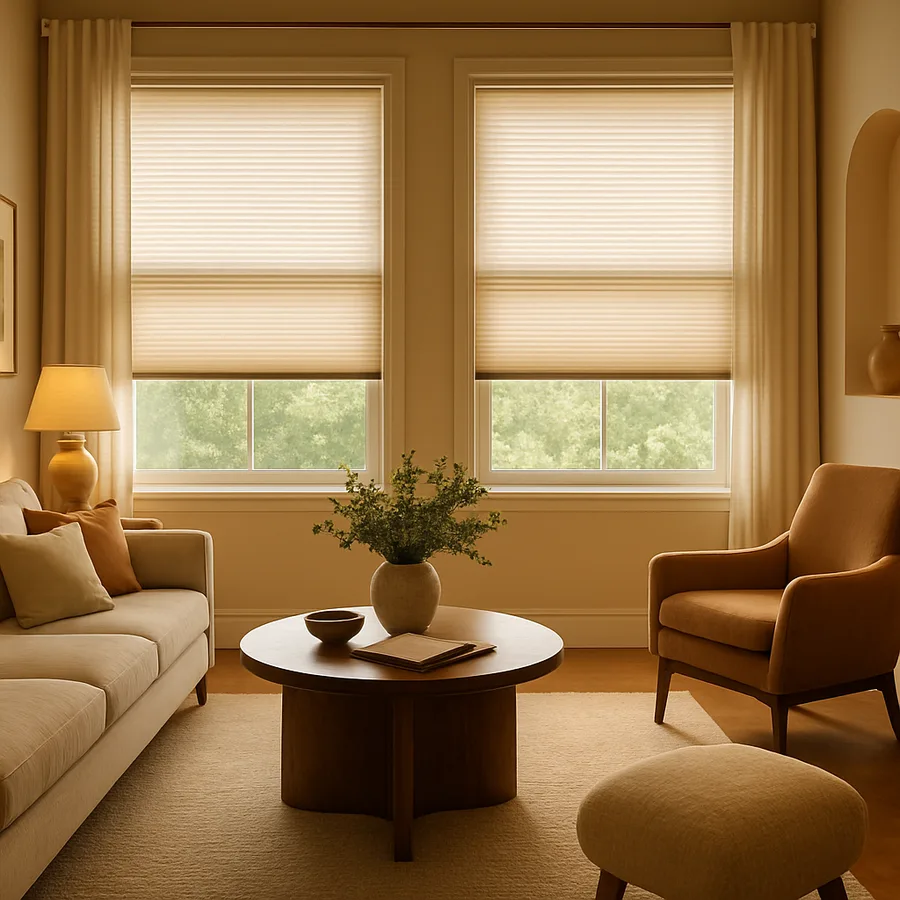
The cordless top-down bottom-up cellular shade is one of those window treatments that sounds like a marketing word salad until you live with one. Then it becomes the shade you wish you had put in every room. The function is simple in concept and slightly clever in execution: the shade can lower from the top of the window down, rise from the bottom of the window up, or both at once, leaving a horizontal band of glass exposed wherever you want privacy and light to coexist.
For a bathroom that looks out onto a neighbor's deck, a street-facing living room, or a ground-floor bedroom, that middle-band option is genuinely useful in a way a regular shade cannot match.
How The Mechanism Actually Splits The Shade In Two
A standard cellular shade has one bottom rail that travels up and down on a track of internal cords or a spring system. A top-down bottom-up cellular shade adds a second rail at the top of the cellular fabric and runs each rail on its own independent track. The bottom rail behaves like a normal cordless shade: you grasp it, push it up to raise it, pull it down to lower it. The middle rail (which is actually the "top" of the lower section) is what comes down from the top of the window when you grasp it and pull.
The cordless versions use two separate spring-tensioned mechanisms inside the headrail, one for each rail. There are no visible cords on the front of the shade or down the sides. You just grab whichever rail you want to move and push or pull it directly. The friction in each mechanism is calibrated so the rail stays wherever you let go.
This is different from a "duette" or top-down only shade. A pure top-down shade can only lower from the top. A top-down bottom-up does both. It is worth confirming exactly which one you are looking at when you shop because the prices are close and the names get conflated in product listings.
Where The Function Earns Its Keep
The middle-band trick is the whole point. Lower the top rail about a third of the way and raise the bottom rail about a third of the way and you have a privacy strip across the lower half of the window with daylight pouring in from above. In a bathroom, this means natural light at the ceiling while the toilet and shower are screened. In a ground-floor bedroom that faces a sidewalk, you get morning sun without pedestrians seeing your bed.
The cellular construction matters here too. Cellular shades trap air inside their honeycomb cells, which gives them genuine insulation value. The U.S. Department of Energy estimates that properly installed cellular shades can reduce unwanted solar heat gain through windows by up to sixty percent in summer and reduce winter heat loss by roughly ten percent. Pairing that insulation with the top-down bottom-up flexibility means you can manage privacy and temperature on the same shade without choosing between them.
The American Society of Interior Designers includes cellular shades in its general recommendations for energy-conscious window treatments because the cellular structure handles both light filtering and thermal performance in a single product, where most window coverings handle only one. The double-rail version extends that benefit to rooms where pure top-down would feel limiting.
The Honest Tradeoffs
Top-down bottom-up cellular shades cost more than single-direction cellular shades. Expect to pay roughly twenty to thirty-five percent above the equivalent bottom-up cordless cellular at major retailers. The added mechanism is real and so is the price.
The stack at the top of the window is also taller. Because the headrail has to house two spring systems instead of one, it can be an extra half inch to a full inch deeper. On a window where the top of the frame sits tight to a ceiling or crown molding, ask for the headrail specs before ordering so you do not visually crowd the window.
The other tradeoff is darkness. Even with both rails fully lowered to the windowsill, top-down bottom-up cellular shades do not block as much light as a single dedicated blackout shade because the middle rail breaks the seal where it meets the cellular fabric. If you need true blackout in a bedroom, layer this shade with a blackout drape or pair it with a separate blackout roller behind it. For a living room, kitchen, or guest room, the light leak is rarely a problem.
One more thing worth noting: heavier fabrics and very wide shades sometimes drift on the spring mechanism over time, meaning the rail you set at the halfway mark slowly slides down a few inches over an hour. Better-quality brands like Hunter Douglas, Levolor, and Bali calibrate this carefully and you should not see it. Budget brands and very wide custom orders are more prone to it. The Better Homes & Gardens window treatment buyer's guide is a good starting reference for comparing reputable brands at a glance: Better Homes & Gardens.
Which Rooms Should Get Them First
If you are not sure whether to order top-down bottom-up across the whole house or just a few key windows, prioritize the rooms where privacy and natural light fight each other. Ground-floor bathrooms top almost every list. Front-of-house bedrooms come second. Home offices with street-facing windows are third because video calls become much easier when you can drop the top down for daylight on your face without exposing your full background.
Living rooms benefit less, honestly, because in a living room you usually want either the full view or the full privacy, not the middle band. A standard cordless cellular shade saves money there.
A question worth answering before you order: in each room, can you stand at the window and reach both the top of the shade and the bottom comfortably? If you cannot reach the top rail to lower it from above, you lose half the benefit of the design. On tall windows, you may need a small extension wand (some manufacturers include one) or you may want to consider a motorized option instead.
If this is your first time specifying window coverings, get a free in-home measurement and quote from a local dealer before committing. Measuring for double-rail cellular shades has a small extra wrinkle compared to standard shades and a professional eye will catch sizing problems that a tape measure misses.

Comments
Post a Comment