Christmas Mantel Decorating Ideas Beyond the Traditional Garland
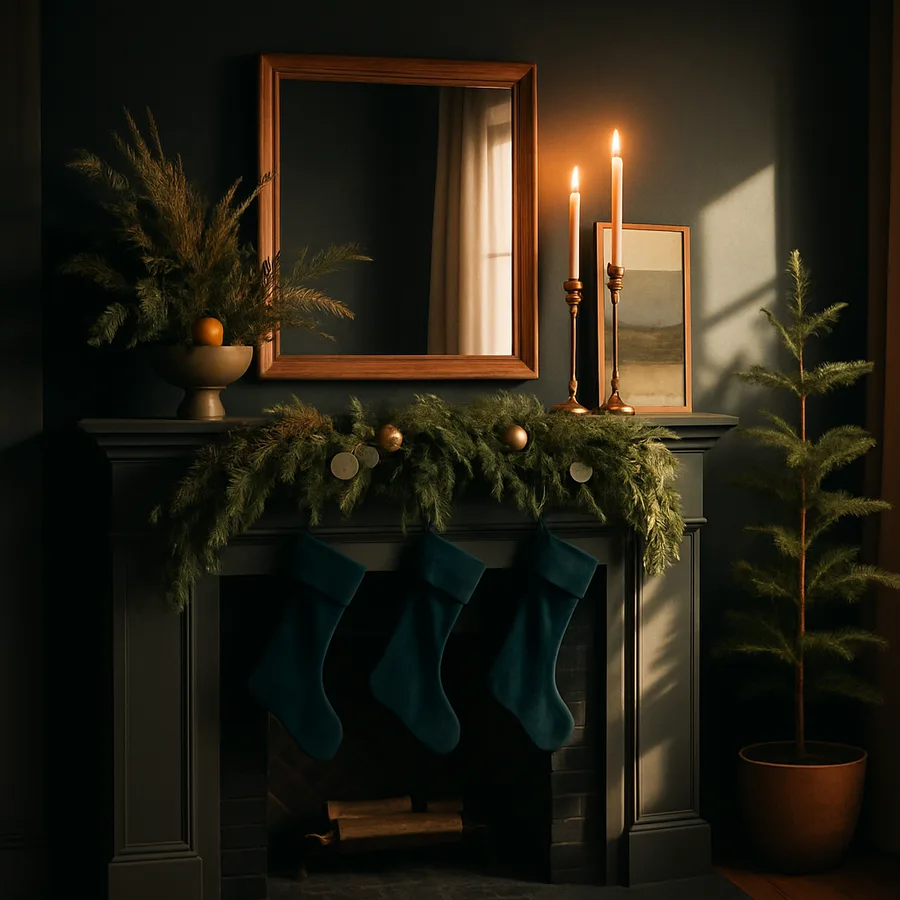
The fireplace mantel has been the anchor of Christmas home decor for generations, but the standard arrangement of a pine garland draped across the shelf with stockings hung below has become so ubiquitous that it risks disappearing into the background. When every mantel in the neighborhood looks identical, the focal point of your living room stops feeling special and starts feeling like an obligation. The good news is that breaking away from the traditional formula does not require a bigger budget or professional design skills. It requires a willingness to think about the mantel as a compositional canvas rather than a checklist of expected items.
According to the National Retail Federation, Americans spend an average of $902 on winter holiday decorations, gifts, and related items, with home decor representing a growing share of that total. A significant portion of that spending goes toward mantel decoration specifically, since the fireplace is the room's natural gathering point during the holiday season. Yet much of that investment produces identical results. The Better Homes and Gardens design team has observed that readers increasingly search for mantel ideas described as "modern," "minimal," and "non-traditional," signaling a broad appetite for alternatives to the garland-and-stocking default.
This article presents six distinct approaches to Christmas mantel styling, each with enough detail to execute immediately. Some are minimal and modern. Others are lush and maximalist but built with unexpected materials. All share a commitment to intentionality: every element on the mantel earns its place through visual contribution, not holiday habit. Whether your home is a contemporary apartment or a traditional colonial, at least one of these approaches will resonate with your aesthetic and transform your mantel into something genuinely worth noticing.
Before choosing an approach, take a clear-eyed look at your mantel's dimensions and surroundings. Is the shelf deep or shallow? Is there a mirror, artwork, or television above it? What color is the wall behind it? These practical details determine which arrangements will succeed in your specific space. A technique that looks stunning on a deep, wide mantel with a blank wall behind it may fall flat on a narrow shelf beneath a mounted television. Start with what you have, and let the space guide the style.
The Layered Art Gallery Mantel
Forget the single wreath or mirror above the mantel and instead create a layered gallery of frames, prints, and objects that lean against the wall in an intentionally casual arrangement. Start with a large piece at the back, either a framed print, a decorative panel, or an oversized mirror propped rather than hung. Layer two or three smaller frames in front of it, overlapping slightly so the arrangement feels curated rather than rigid. Choose artwork with a winter palette: charcoal sketches of bare trees, watercolor abstracts in silver and ice blue, or vintage botanical prints of evergreen branches.
The key to making this arrangement feel festive without feeling forced is the supporting cast of objects placed among and in front of the frames. Small brass or copper candleholders with tapered candles introduce warmth and verticality. A few pinecones, a sprig of dried eucalyptus, or a single magnolia leaf wreath leaning at the edge of the arrangement adds natural texture. The American Society of Interior Designers (ASID) has highlighted the layered-leaning gallery as one of the most versatile mantel trends, noting that it works across all design styles from farmhouse to mid-century modern.
What makes this approach distinctly Christmas rather than generic winter decor is the deliberate inclusion of two or three unmistakably seasonal elements: a small nutcracker figure, a single red ornament placed in a brass bowl, or a hand-lettered card with a holiday message tucked between frames. These specific references prevent the arrangement from reading as simply "winter" and anchor it in the Christmas celebration without overwhelming the sophisticated layered composition. The restraint is what makes it work.
For mantels with limited depth, use smaller frames and flatter objects. A collection of vintage Christmas postcards in mismatched frames, propped against the wall with a single beeswax taper candle at each end, creates the gallery effect in just four inches of shelf depth. Do not be afraid of negative space between groupings. The layered gallery mantel is about controlled asymmetry, and leaving breathing room between clusters prevents the arrangement from looking cluttered or chaotic.
The Natural Specimen Mantel
Nature provides some of the most beautiful Christmas decorating materials available, and building an entire mantel display from foraged, dried, and preserved natural elements creates a look that is simultaneously rustic and refined. Start with a foundation of dried branches. Birch branches offer striking white bark that reads as inherently wintry. Manzanita branches provide sculptural curves. Even bare deciduous branches from your own backyard, cleaned and lightly sprayed with a matte sealant, create architectural drama when arranged in a tall vase or propped directly on the mantel shelf.
Build outward from the branches with supporting natural textures. Pinecones of varying sizes, arranged in a loose cluster rather than a formal row, add dimension and earthy tone. Dried orange slices, threaded on twine or displayed in a shallow bowl, introduce warm color and a subtle citrus scent. Cotton bolls, preserved magnolia leaves, and bundles of cinnamon sticks tied with hemp cord round out the palette. The Society of American Florists reports that demand for dried and preserved botanical materials has increased by 28 percent since 2022, reflecting a broader cultural shift toward sustainable, reusable seasonal decor.
The color palette of a natural specimen mantel is inherently muted: whites, creams, browns, greens, and the warm amber of dried citrus. If this feels too subdued for your taste, introduce a single accent color through ribbon, candles, or small painted ornaments. Deep burgundy, forest green, or antique gold all complement the natural palette without competing with it. The discipline of a single accent color prevents the arrangement from becoming visually scattered and maintains the curated-collection quality that makes this approach distinctive.
Have you considered how a natural mantel display changes character as the season progresses? Fresh eucalyptus dries beautifully in place, transitioning from vibrant green to silver-sage over the course of December. Pinecones open further in warm indoor air. Dried orange slices develop a deeper amber tone. Unlike artificial decorations that look exactly the same from setup to takedown, a natural specimen mantel is a living display that evolves gently throughout the holiday period, rewarding close attention with subtle daily changes.
The Minimalist Statement Mantel
Minimalism and Christmas might seem like contradictory concepts, but a less-is-more approach to mantel styling can produce some of the most visually striking results of any technique. The minimalist mantel relies on a single dramatic element, or at most two or three carefully chosen objects, set against a clean background. A large-scale piece of holiday art, a sculptural wreath of unexpected materials, or a single oversized brass bell placed dead center on the shelf can carry the entire mantel when the surrounding space remains deliberately empty.
The psychological power of minimalism on the mantel comes from contrast. In a season defined by visual abundance, the room with one confident, bold focal point stands out precisely because it refuses to compete. Research from the Design Psychology Institute suggests that environments with fewer decorative objects but higher-quality individual pieces generate stronger positive emotional responses than environments saturated with many competing elements. Applied to mantel design, this means that one exceptional piece is worth more than twenty ordinary ones.
Choosing the right single statement piece requires understanding your room's scale and color temperature. A large matte black wreath made of painted twigs commands attention against a white wall. A cluster of three oversized mercury glass ornaments in varying sizes creates a focal point that reads as both modern and festive. A single piece of original art with a winter theme, hung precisely centered above the mantel with nothing on the shelf except two matching candlesticks, is quietly dramatic. The Architectural Digest holiday home tours consistently feature at least one room where minimalism outperforms maximalism through sheer confidence of composition.
If total minimalism feels too stark, the rule of three offers a structured compromise. Place three objects of different heights on the mantel: tall, medium, and short, grouped off-center rather than symmetrically. A tall candle hurricane, a medium sculptural object, and a small seasonal accent (a brass star, a porcelain bird, a single ornament on a stand) create a composition that feels complete without feeling crowded. Leave at least one-third of the mantel shelf completely empty to preserve the minimalist intention.
The Candlelight-Focused Mantel
Before electric lights became standard, candles were Christmas decoration. Reclaiming the candle as the primary mantel element creates a display that is warm, atmospheric, and deeply traditional in spirit while looking thoroughly contemporary in execution. The trick is quantity, variety, and arrangement. A single candle on a mantel is forgettable. Fifteen candles of varying heights, diameters, and holders transformed into a collected display is arresting.
Begin with a mix of candlestick styles. Brass, copper, black iron, clear glass, and ceramic holders in different heights create a collected-over-time aesthetic that feels personal rather than purchased as a set. Place the tallest holders at the back or at one end, and let the heights cascade irregularly across the mantel. Alternate between taper candles and pillar candles for textural variety. The National Fire Protection Association recommends keeping candle flames at least twelve inches from any combustible material, so measure your mantel-to-wall clearance before building a tall arrangement. Flameless LED candles with realistic flicker settings offer a safe alternative without sacrificing the visual effect.
Color choice in candles communicates the specific mood you want. Classic ivory and cream candles create a timeless, elegant atmosphere. Deep red and burgundy candles make a bold, traditional Christmas statement. Black candles against a white mantel produce a striking modern contrast. Mixing metallics, such as gold, copper, and champagne candles grouped together, creates a luxurious warmth that catches and multiplies firelight beautifully. Avoid mixing too many candle colors in one arrangement; two or three coordinating shades maintain visual cohesion.
Surround the candle collection with just enough supporting material to frame it without competing. A few sprigs of fresh rosemary or thyme laid along the mantel base add green fragrance and color. A thin scatter of gold leaf confetti or tiny brass stars beneath the candle bases catches light and adds festive sparkle at a subtle level. The candles should remain the clear protagonist of the display, with everything else serving as a supporting chorus. When lit in the evening, this mantel becomes the most photographed spot in your home.
The Collected Objects Mantel: A Personal Museum
Some of the most memorable mantels are those that tell a personal story through a curated collection of meaningful objects gathered over years. This approach treats the mantel as a seasonal display shelf where each item has a history: the wooden nativity set from a trip to Germany, the hand-blown glass ornament from a local artisan market, the vintage clock that belonged to a grandparent, the children's handmade Christmas cards from years past. The arrangement may look effortless, but it requires thoughtful editing to prevent sentimentality from overwhelming aesthetics.
The editing process is the critical skill. Most families have far more holiday objects than any mantel can comfortably display. Choose a maximum of seven to nine items for a standard-width mantel and five to seven for a smaller one. Select objects that vary in height, material, and texture but share at least one visual thread: a color, a material, a theme, or an era. A collection of all-wooden objects in natural and painted finishes, for instance, creates unity through material consistency even when individual items vary wildly in style and origin.
Arrange the collected objects using the triangle principle: create visual triangles by placing taller items at varying points along the mantel and filling in around them with shorter pieces. This prevents the flat, uniform line that results from placing same-height objects in a row. Lean a framed photo or vintage Christmas card at the back to add a vertical backdrop element. Place the most visually dominant piece slightly off-center to avoid the formality of symmetrical arrangements, which can feel rigid in a collection-style display.
What story does your holiday collection tell? Is it a story of travel, family tradition, handmade craftsmanship, or a specific color palette that has evolved over decades? Identifying the narrative helps you make editing decisions with confidence. If your collection tells the story of family Christmases, every item should connect to a specific memory or person. If it tells the story of artisan craftsmanship, every item should be handmade. A clear narrative gives the display coherence that viewers sense intuitively, even if they cannot articulate why the mantel feels so right. According to Houzz, personalized holiday displays generate three times more engagement in home tours than generic store-bought arrangements.
The Asymmetrical Modern Mantel
Symmetry has dominated mantel design for centuries, with matching candlesticks flanking a central mirror or clock being the textbook arrangement. Breaking that symmetry intentionally creates a modern, editorial quality that feels fresh and unexpected. The asymmetrical mantel places visual weight on one side, creates a deliberate imbalance, and uses that tension to draw the eye across the entire display rather than focusing on a single center point.
To execute this approach, anchor one end of the mantel with a tall, visually heavy element: a large vase with winter branches, a stack of decorative boxes, or a piece of sculptural pottery. Leave the other end either empty or occupied by a single small object that provides a visual full stop without matching the weight of the anchor end. The middle section bridges the two with a few objects of medium height and visual interest. The overall silhouette should be a declining slope or a curve, not a flat line or a V-shape.
This arrangement works exceptionally well beneath large artwork or a mounted television because it does not try to compete with or frame the above-mantel element symmetrically. Instead, the asymmetrical display creates its own compositional logic that coexists with whatever hangs above it. The National Association of Home Builders reports that 55 percent of newly built homes include a fireplace with a television mounted above it, making asymmetrical mantel design an increasingly practical skill for homeowners who want festive decor that does not clash with their media setup.
The Christmas character of an asymmetrical mantel comes from material and color choices rather than traditional holiday shapes. A cluster of matte ceramic ornaments in a shallow tray, a single branch of winterberry in a slim vase, or a grouping of metallic candles in graduated heights all signal the season without resorting to expected iconography. The restraint of asymmetry demands that every object justify its presence through visual contribution. If an item does not strengthen the composition, remove it. This discipline produces mantels that look editorial, intentional, and distinctly modern.
Conclusion: Making Your Mantel Meaningful This Season
The most beautiful Christmas mantels share a quality that has nothing to do with budget or professional design training: they reflect a deliberate choice. Whether you choose the layered gallery, the natural specimen collection, the minimalist statement, the candlelight focus, the personal museum, or the asymmetrical modern approach, the common thread is intentionality. You are making a decision about what your mantel communicates during the most visually charged season of the year.
Start by clearing your mantel completely. Remove everything, including the things that live there year-round. Look at the empty shelf and the wall above it with fresh eyes. Consider the scale, the color, and the architectural character of the fireplace surround. Then choose one of the six approaches outlined above, gather the materials, and build the arrangement from scratch rather than adding holiday items on top of existing decor. The clean-slate approach produces dramatically better results than incremental decoration.
Remember that the best mantel design accounts for how the display will be experienced, not just how it will be seen. Candles are experienced differently when lit versus unlit. Natural materials release scents that contribute to the room's atmosphere. Meaningful personal objects spark conversation when guests notice them. The mantel is not just a visual feature; it is a multisensory element of your holiday environment. Design it with that full sensory picture in mind, and you will create something that goes far beyond what any garland could achieve alone.
Pick one approach from this article that resonated with you and commit to executing it this season. Gather your materials this weekend, set aside an hour for arrangement, and photograph the result. You may discover that the mantel you create without a single strand of traditional garland is the one that finally makes your fireplace feel like the true heart of your holiday home.
More Articles You May Like



Comments
Post a Comment