Christmas Decor Off-Season Storage in Attic and Garage Bins
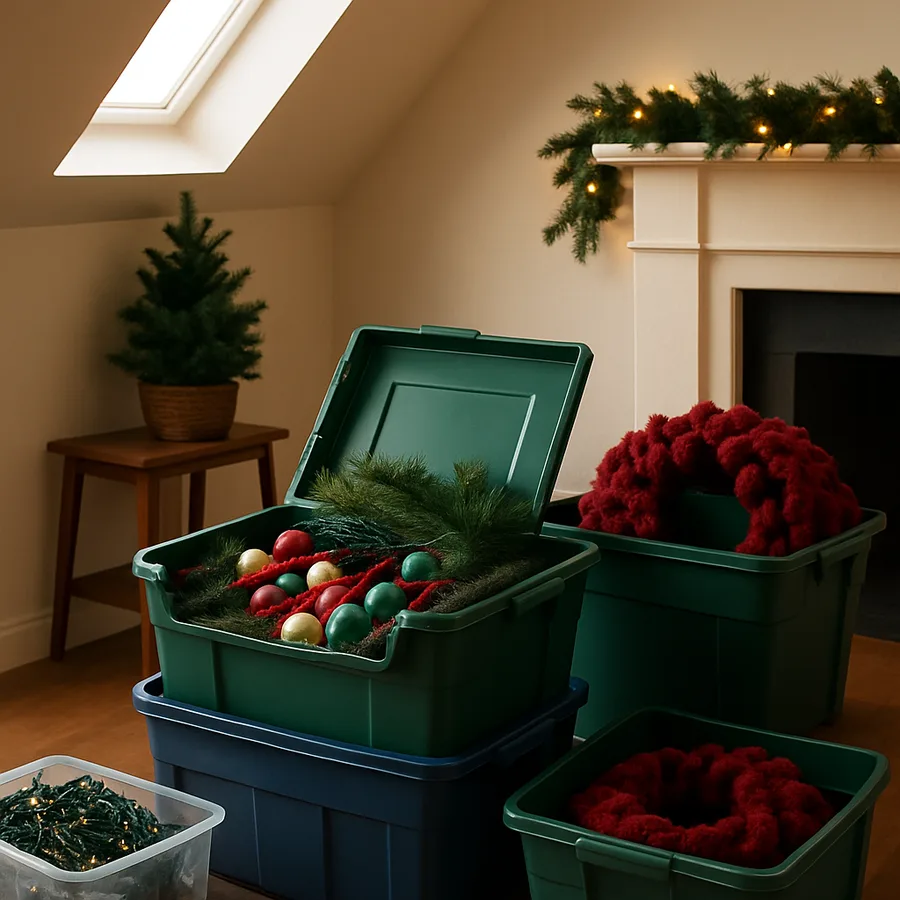
The week after the holidays is one of the most quietly stressful stretches of the year for many households. The tree comes down, the wreaths come off the doors, and suddenly you are surrounded by piles of fragile ornaments, tangled light strings, and bulky garlands with nowhere proper to put them. How you store this collection over the next eleven months determines whether next December begins with joy or with frustration. Smart off-season storage is not just about getting things out of sight. It is about preserving an investment, simplifying setup, and protecting the sentimental value of decorations that often span generations.
According to a recent survey by the National Association of Productivity and Organizing Professionals (NAPO), the average American household owns more than 130 individual Christmas decorations and replaces roughly 18 percent of them each year because of damage incurred during storage. That replacement cost adds up to billions of dollars annually across the country. The good news is that nearly all of this damage is preventable with a thoughtful bin system, the right attic or garage conditions, and a few simple labeling habits.
Choosing the Right Bins for Long-Term Holiday Storage
Not all storage bins are created equal, and the difference matters more than most homeowners realize. The temperature swings inside a typical American attic can range from below freezing in January to over 130 degrees Fahrenheit in July, according to data published by the Department of Energy. Cheap thin-walled bins crack under those conditions. Cardboard boxes warp, attract pests, and absorb moisture. The investment in heavy-duty plastic totes pays itself back in two or three seasons of saved decorations.
Look for bins with snap-tight or latching lids, ideally with rubber gaskets that create a seal against humidity, dust, and insects. Clear bins are vastly preferable to opaque ones because you can identify contents at a glance without unstacking the entire pile. A staffer at the Container Store noted in a recent organization workshop that homeowners who switch to clear stackable bins report 60 percent faster holiday setup the following year. That time savings translates directly into more enjoyment of the season.
Size matters too. Resist the temptation to buy the largest bins available. A 27-gallon tote stuffed with ornaments becomes too heavy to lift safely up an attic ladder, and overpacked bins lead to crushed decorations at the bottom. The sweet spot for holiday storage is the 16 to 20-gallon range, large enough to consolidate categories but light enough to maneuver safely. Reserve larger bins exclusively for lightweight bulk items like garlands, tree skirts, and inflatable decor.
Sorting and Categorizing Your Collection
Before any bins get filled, the entire collection needs to be sorted. This is the single step most homeowners skip, and it is the source of most January frustration. Pull everything down from the tree, off the mantel, and out of the closet, and lay it out across the dining table or living room floor. Group items by category: tree ornaments, wreaths, lights, garlands, mantel decor, table linens, outdoor inflatables, nativity sets, stockings, and tree toppers. Each category becomes its own bin or set of bins.
Within each category, do a hard edit. Broken ornaments, tangled lights that no longer work, and faded items that you did not actually display this year should be discarded or donated. NAPO professional organizers recommend the rule that if you did not use it for two consecutive years, it leaves the house. This single act of editing can shrink your collection by 25 percent and immediately make storage easier. Editors at Better Homes and Gardens note that homeowners who edit annually report dramatically lower setup stress than those who simply accumulate.
What about sentimental ornaments that you no longer hang but cannot bear to discard? Create a single dedicated memory bin for these items. Keep it small, store it deep in the system, and revisit it every few years. The act of giving these heirlooms their own home, separate from the active rotation, reduces the volume in your working bins without requiring you to part with meaningful pieces.
Specialty Storage for Fragile Ornaments
Glass and ceramic ornaments deserve their own dedicated solution. Stuffing them loose into a bin, even with crumpled paper, leads to chips and cracks within a few seasons. The ornament storage industry has matured significantly in the last decade, and there are now several excellent options. Compartmentalized ornament boxes with adjustable cardboard or plastic dividers are the gold standard, and most are sized to nest inside a standard 18-gallon tote.
For larger or oddly shaped ornaments, individual cell organizers work well. These look like miniature wine racks and protect each ornament in its own padded slot. Some homeowners prefer to wrap each glass ornament in acid-free tissue paper before placing it in a divided box, which adds another layer of protection and prevents finishes from rubbing off over time. Antique and heirloom ornaments especially benefit from this extra step, since their finishes are often more delicate than modern manufacturing.
String lights are the second great storage challenge. The cardboard reels they came on rarely survive more than two seasons. Better options include reusable plastic light reels, hook-and-loop cable wraps, or simply wrapping each strand around a piece of stiff cardboard cut to size. Whatever method you choose, do not stuff loose light strings into bins. The tangle that results next December costs more time to undo than the original storage saved. According to House Beautiful, untangling lights is the single most-cited reason homeowners delay holiday setup.
Climate Considerations for Attic versus Garage
Where you store your bins matters as much as how you pack them. Attics and garages are the two most common holiday storage zones, but they have very different climate profiles. Attics tend to run hotter and drier in summer, with extreme temperature swings that can damage candles, wax decorations, and adhesive-backed decor. Garages tend to run cooler but more humid, especially in regions with significant winter snow, which can lead to mildew on fabric items and rust on metal hardware.
If your attic is uninsulated, avoid storing anything wax-based, including candles, candle rings, and wax-dipped pinecones. The summer heat will warp and melt them beyond recognition. Battery-powered candles and decorations should also be stored elsewhere, since heat shortens battery life and can cause leakage that damages surrounding items. Reserve attic space for sturdy items like tree skirts, stockings, fabric garlands, and outdoor metal or hard plastic figurines.
Garages work better for wax items, electronics, and anything with batteries. The challenge in a garage is humidity control, which means bins with gasket seals are non-negotiable. Adding a few silica gel packets to each bin before sealing absorbs residual moisture and prevents mildew. Some organized homeowners go further and add cedar blocks to deter pests, an old technique still recommended by Architectural Digest for any long-term storage.
Labeling Systems That Actually Save Time
A labeling system is the difference between holiday storage that works and holiday storage that becomes another version of clutter. The best systems have three layers. The first is a simple category label on the front of every bin: Tree Ornaments, Outdoor Lights, Wreaths and Garlands, Mantel Decor, Table Linens. This is what you read when scanning the stack. The second layer is a top label, the same category but visible when bins are stacked on top of each other. Without top labels, you will always have to pull bins down to identify them.
The third and most powerful layer is a contents inventory taped inside each bin lid. This handwritten or printed list itemizes exactly what is inside, room by room or display area by display area. When you open the bin in December, you immediately know whether anything is missing or in the wrong place. When you pack up in January, the inventory tells you exactly what should go back in. This single habit eliminates the lost-ornament frustration that haunts so many holiday seasons.
Have you ever found yourself digging through three bins looking for the tree topper? The inventory system ends that problem permanently. NAPO organizers go a step further and recommend numbering bins, then keeping a master list elsewhere that maps each number to its contents. This is overkill for most households but invaluable for collections that include heirloom pieces or items insured under a homeowner policy.
Setup and Takedown Workflows for Smooth Seasons
The bin system is only as good as the workflows around it. Setup workflow begins with identifying the order in which decorations are deployed. Most households install lights first, then the tree, then mantels, then table decor, then wreaths and outdoor pieces. Stack your bins in the reverse of this order, so the first bin you need is on top. This small piece of planning saves hours over the course of a decade.
Takedown workflow is the mirror image. Take down outdoor decor first while weather permits, then table and mantel decor, then the tree, then lights last. Pack each category back into its labeled bin immediately rather than letting items pile up unpacked in a corner. This prevents the dreaded January phenomenon where decor sits in the dining room for two weeks because no one has the energy to deal with it.
Schedule a small annual maintenance window in mid-summer to check your storage zone. Open each bin briefly, look for signs of moisture, pest intrusion, or damage, and replace silica packets if needed. This 30-minute check protects thousands of dollars in decor and preserves irreplaceable family heirlooms. A small reminder on your calendar is all it takes.
Conclusion
Off-season storage is not the most glamorous part of decorating, but it is the part that determines whether next year feels effortless or overwhelming. The collections you spent years curating, the heirlooms passed down from family, the lights that bring the whole house alive, all depend on how they spend the eleven months between displays. A few hundred dollars invested in proper bins, dividers, and labeling systems pays itself back in years of preserved decor and reclaimed weekends.
The mistake most homeowners make is treating January packup as the end of the holiday season. In reality, it is the beginning of the next one. Every choice you make on the way out, the bin you choose, the way you wrap the lights, the label you write or skip, will be felt eleven months later when you need everything to come together quickly. Future you will thank present you for the extra fifteen minutes spent labeling properly.
Start small if the full system feels overwhelming. Pick one category, ornaments, lights, or wreaths, and upgrade just that storage this year. Once you experience the difference next December, you will naturally want to apply the same approach to the rest of your collection. This week, audit one shelf of your attic or garage and commit to upgrading one category of holiday storage before the season turns. Your next holiday season begins with the choices you make today.
Pest Prevention and Long-Term Material Care
Pest damage is one of the most underestimated risks in long-term holiday storage. Rodents, silverfish, moths, and beetles all view stored decorations as ideal nesting and feeding habitat, particularly fabric items, paper packaging, and any decor with food-based dried elements like cinnamon sticks, dried citrus, or popcorn garlands. The damage often goes undetected until the next December, when you open a bin to find chewed ribbon, holes in tree skirts, or shredded paper inserts. Prevention is dramatically easier than recovery.
The first line of defense is sealed bins with tight-fitting lids and intact gaskets. Even small gaps invite pests, so inspect lids annually and replace any that have cracked or warped. Cedar blocks, dried lavender sachets, and bay leaves all repel insects naturally without introducing harmful chemicals near valuable decor. Avoid mothballs in storage because the chemicals can leave permanent odors on fabric and discolor delicate finishes. According to advice published by House Beautiful, natural deterrents refreshed every six to twelve months provide protection equivalent to chemical alternatives without the residual smell.
Material-specific care extends storage life significantly. Faux greenery should be dusted before storage to prevent dust from settling permanently into the leaves. Metal ornaments benefit from a thin wipe of microfiber cloth to remove fingerprints, which can corrode silver and brass over many seasons. Linen tree skirts should be washed and fully dried before storage to prevent residual moisture from breeding mildew. Each of these small steps takes minutes during packup but extends decor lifespan by years, protecting both financial investment and sentimental value.
More Articles You May Like



Comments
Post a Comment