Whole House Humidifier Installation For Dry Winter Air
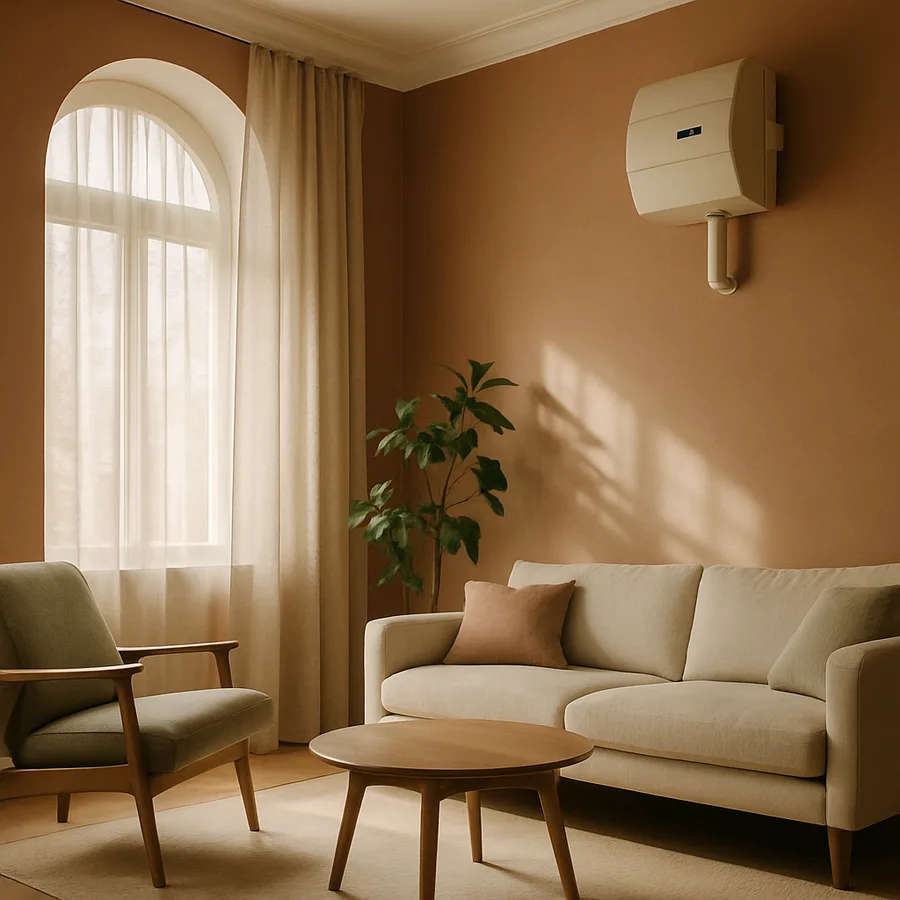
If you wake up in February with a dry throat, cracked lips, and a static shock every time you touch a doorknob, the underlying problem is almost certainly humidity, not temperature. Cold outdoor air holds very little moisture, and when your furnace heats that air to 70 degrees the relative humidity collapses, often to single digits inside the home. The American Society of Heating, Refrigerating and Air-Conditioning Engineers recommends keeping indoor relative humidity between 30 and 50 percent for comfort and respiratory health. A properly installed whole house humidifier brings your home back into that band without the tank-refilling routine of a portable unit.
This guide walks through the three main humidifier technologies, how to size the unit for your home, what the installation actually involves on a typical forced-air system, and how to integrate the humidistat control so the system runs only when it needs to. We will also cover the maintenance routine that most homeowners skip and that quietly turns a helpful appliance into a microbiology hazard if neglected.
Why Dry Winter Air Is A Whole House Problem
Outdoor air at 20 degrees Fahrenheit with 70 percent relative humidity contains a fairly small amount of actual water vapor. Bring that same air indoors and warm it to 70 degrees, and the relative humidity drops below 10 percent because warm air can hold so much more moisture before saturating. Every cubic foot of air that infiltrates through doors, windows, and ventilation drags down the moisture content of your interior. Even a well-sealed house exchanges a meaningful fraction of its air every hour, so the moisture loss is continuous as long as it is cold outside.
The effects show up in three places. Your respiratory system dries out first, and you wake with a sore throat and stuffy sinuses. Wood furniture and hardwood floors lose moisture next, and you start to see gaps open between floorboards and split lines develop in solid wood furniture. Finally, static electricity builds because dry air is a poor conductor and your body cannot dissipate small charges to the surrounding air. Each of these effects is reversible by adding moisture back to the air at the air handler.
Portable humidifiers can address a single bedroom but cannot keep up with whole-home demand. A 2,000 square foot home with eight-foot ceilings contains about 16,000 cubic feet of conditioned air. Replacing the moisture lost through normal infiltration during a cold snap requires several gallons per day. A whole-house unit delivers that water directly into the supply plenum where it mixes into the air stream during every furnace cycle.
The Three Humidifier Types You Will Choose Between
The first category is the bypass humidifier. A bypass unit installs on the supply or return plenum and uses a duct that connects the two sides of the furnace cabinet. When the furnace runs, a small fraction of warm supply air bypasses through a water-saturated evaporator pad and returns to the air handler carrying added moisture. Bypass units are inexpensive, simple to install, and rely on the furnace blower for airflow, so they only humidify when the furnace is actively heating.
The second category is the fan-powered humidifier. These look similar to bypass units but include a small dedicated fan that pulls air across the evaporator pad. The fan lets the humidifier run independently of the furnace blower, which means you can humidify on cold days when the furnace cycles infrequently. Fan-powered units typically deliver about 30 percent more moisture per day than equivalently sized bypass units, and they do not require a bypass duct, which simplifies the installation in tight mechanical closets.
The third category is the steam humidifier. Steam units boil water in an internal reservoir and inject pure water vapor directly into the supply duct. They produce far more moisture than evaporative units, they work regardless of whether the furnace is running, and they tolerate hard water better than evaporative pads. They cost more to buy, more to install, and more to operate because of the electrical heating element. For homes with hot water boilers, hydronic radiant systems, or very large square footage, steam is usually the right answer.
Sizing The Humidifier For Your Square Footage
Manufacturer sizing charts list capacity in gallons per day and match each model to a square footage range and a home tightness category. A loose 3,000 square foot home in Minnesota will lose far more moisture per hour than a tight 3,000 square foot home in Atlanta, so a single number cannot answer the sizing question by itself. Use the chart for your specific climate zone and home tightness, and round up if you are between sizes.
A rough rule of thumb for a moderately tight home in a cold climate is about 0.2 to 0.3 gallons per day per 100 square feet of conditioned floor area. A 2,000 square foot home needs roughly 4 to 6 gallons per day of evaporative output during peak winter conditions. Bypass humidifiers typically deliver 12 to 17 gallons per day at full output, fan-powered units 17 to 19, and steam units anywhere from 12 to 35 depending on the model. Most homes are over-sized by manufacturers to ensure the unit can catch up after periods of off-cycle.
Have you measured how leaky your home actually is? A blower-door test by a home performance contractor gives you the air change rate that drives humidifier load calculations. Even without that test, you can estimate by your construction era. Homes built before 1980 with original windows and weatherstripping fall into the loose category. Homes built after 2010 to current energy code typically fall into the tight category. Every retrofit window upgrade or insulation project moves you toward tighter and reduces your sizing requirement.
Installation On A Forced Air System
Start by shutting off power at the furnace disconnect and turning off the water supply you plan to tap for the humidifier. The typical install location is on the return plenum above the air handler, with the bypass duct running over the top of the furnace to the supply plenum. Mark a template on the sheet metal using the cardboard cutout that ships with the humidifier, drill a starter hole, and cut the opening with aviation snips or a reciprocating saw with a fine metal blade.
Mount the humidifier housing using self-tapping sheet metal screws and seal the perimeter with foil tape rated for HVAC use. The bypass duct collar on the opposite plenum gets the same treatment. Run the bypass duct between the two collars and secure each end with screws and tape. Slope the duct so any condensation drains back to the humidifier rather than pooling inside the duct, where it could rust out the sheet metal over a few seasons.
For the water supply, tap an accessible cold water line with a saddle valve or, better, a soldered tee with a quarter-turn shutoff. Saddle valves are easy but unreliable over many years. The drain line for evaporative units carries the runoff water that does not evaporate, and it needs to terminate at a floor drain, a condensate pump, or a utility sink. Steam units do not have a continuous drain, but they do periodically flush mineral buildup and need a temperature-rated drain line because the flush water is hot.
Wiring The Humidistat And Furnace Interlock
The humidifier connects to your furnace through two electrical paths. The first is a 24-volt control circuit that tells the humidifier when the furnace is calling for heat. On most modern furnaces this is the HUM terminal on the control board, and it energizes whenever the blower is running for heating. Connect the HUM terminal to one side of the humidifier solenoid valve, and connect the other side back to the common terminal.
The second path is the humidistat itself, which can be a simple manual dial mounted on the return duct or a smart sensor that lives in your living space. A duct-mounted manual humidistat senses return air humidity and opens the water solenoid when the room falls below the setpoint. A smart wall humidistat senses the air people actually breathe and gives better real-world control. Wire the humidistat in series with the HUM signal so that the solenoid only opens when both the furnace is running and the setpoint is below target.
Set the initial target at 35 percent and adjust from there. If you see condensation forming on the inside of double-pane windows in the morning, dial down by 5 percent. If your skin still feels uncomfortably dry at the upper end, you have either a leaky envelope or an undersized unit. Have you considered using a portable hygrometer to verify the humidistat reading? Cheap hygrometers vary by 10 percent or more, and a calibrated reference helps you trust your settings.
Maintenance That Most Owners Skip
Evaporative humidifiers need a new water panel or wick at least once per heating season, and twice per season in hard water areas. The mineral deposits that build on the panel block airflow and prevent water from evaporating efficiently, so an old panel slowly chokes the unit. Mark a calendar reminder for early November every year and order a spare panel along with the reminder so the part is on hand when you need it.
Steam humidifiers use cylinder cartridges that fill with mineral scale over time. Most steam units monitor cylinder conductivity and notify the homeowner when the cylinder needs replacement, but the cylinders are not cheap, often 80 to 150 dollars each. To extend cylinder life, consider installing a small reverse osmosis or deionization filter upstream of the humidifier. Some steam manufacturers actually require softened or RO water to honor the warranty, so read the install manual carefully.
Check the drain line every spring after shutting the system down for the summer. A blocked drain holds standing water inside the humidifier housing and creates a microbial habitat that you do not want connected to your supply ductwork. The Environmental Protection Agency and ENERGY STAR both publish indoor air quality guidance that emphasizes humidifier maintenance as a meaningful factor in respiratory health, particularly for households with asthma or allergies. Dry the housing, leave the cover ajar during the cooling season, and inspect the evaporator pad before reinstalling in the fall.
Conclusion
A whole house humidifier transforms winter comfort in a way that portable units cannot match, and the installation is within reach for a confident homeowner with basic sheet metal and wiring skills. The hardware cost falls in a wide range from a couple hundred dollars for a basic bypass unit to well over a thousand for a high-output steam system, but the comfort, health, and material protection benefits scale with the investment. Wood floors, fine furniture, and respiratory comfort all benefit from stable 35 to 45 percent indoor humidity throughout the heating season.
The most common mistake is treating the humidifier as a set-and-forget appliance. Annual panel replacement, periodic drain checks, and humidistat calibration are not optional, and the consequences of skipping them range from poor performance to microbial growth in the supply ductwork. Build the maintenance into your seasonal HVAC routine. Pair the humidifier service with your furnace inspection in October and your air conditioner inspection in April, and you will rarely have an unpleasant surprise.
If you are still on the fence about which technology fits your home, walk through your mechanical room with the unit type in mind. A tight space with a single furnace and no nearby water lines favors a fan-powered evaporative unit. A larger or split system with multiple zones and unforgiving water chemistry favors steam. A simple ranch with an accessible return plenum and soft municipal water is the textbook bypass install. Sketch your room and your supply runs, take the sketch to a reputable HVAC supplier, and ask for a sizing review before you commit to a model. Reach out to your local utility too, because some offer winter-comfort rebates that materially change the project economics.
For deeper reading on indoor humidity targets, mold prevention thresholds, and equipment certification, see EPA mold guidance, ASHRAE standards, and the ENERGY STAR humidifier resources. Their materials are free, frequently updated, and worth keeping bookmarked as you plan and live with the system.
More Articles You May Like



Comments
Post a Comment