Smart Lock Installation Versus Traditional Deadbolt Comparison
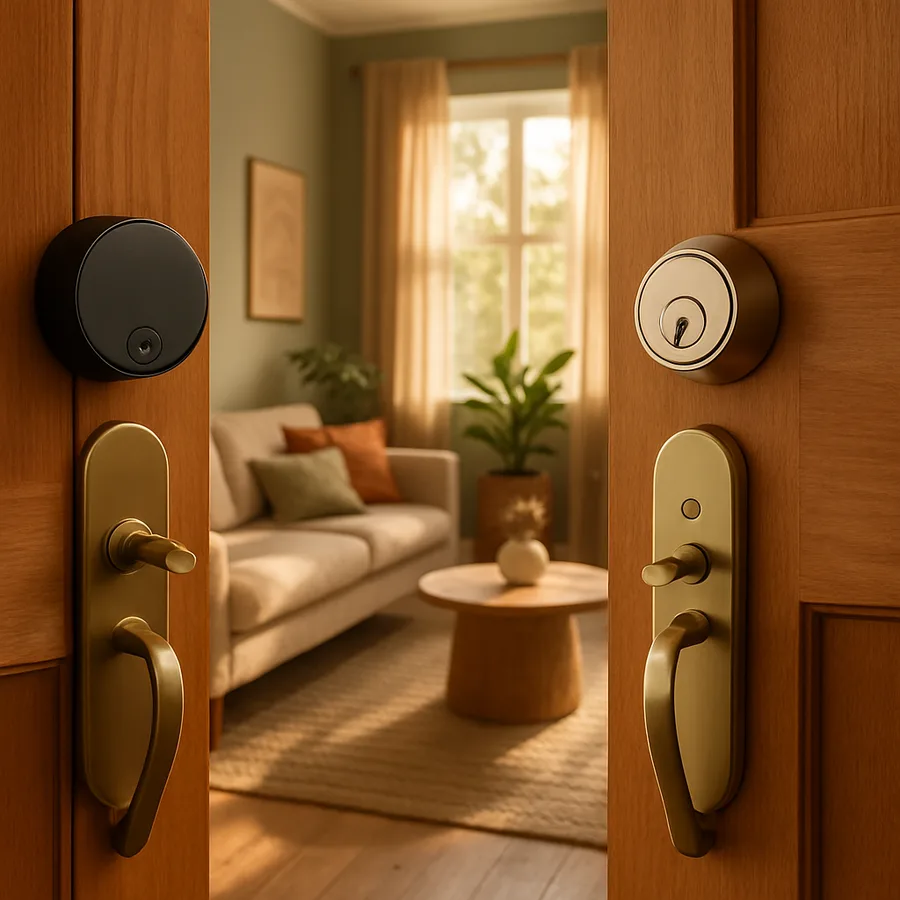
The front door is the most heavily used hardware in the average home, and the choice between a smart lock and a traditional deadbolt shapes everyday convenience as much as it shapes household security. A decade ago, this comparison was largely academic, because smart locks were expensive, unreliable, and incompatible with most home automation platforms. Today, smart locks have matured into a sophisticated category that offers tangible benefits over their mechanical predecessors, while traditional deadbolts have evolved into a remarkably refined product that still has compelling advantages for many households.
This article compares the two categories across the dimensions that matter most to homeowners, from security to power management to long-term maintenance, and helps you decide which is the right choice for your situation. The analysis draws on standards published by trade organizations including the National Association of Home Builders and the security ratings established by the Builders Hardware Manufacturers Association. By the time you finish, you should be able to walk into a home improvement store with a clear sense of what you need and why.
Security Comparison and Standards Ratings
Security is the most important reason any homeowner installs a lock, and the comparison between smart and traditional begins with the underlying mechanical bolt. Both categories use the same ANSI grading system, which classifies residential deadbolts in three grades. Grade One offers commercial-level resistance, Grade Two offers heavy residential resistance, and Grade Three offers basic residential resistance. A reputable smart lock and a reputable traditional deadbolt at the same grade offer equivalent mechanical resistance to forced entry.
Where the two diverge is in pick resistance and key control. Traditional deadbolts from premium manufacturers offer high-security cylinders with patented keyways that resist picking and prevent unauthorized key duplication. The best traditional cylinders carry independent certifications that recognize their resistance to picking, bumping, and drilling. Smart locks typically rely on a standard pin tumbler cylinder for the optional physical key, which means the physical override on most smart locks is less pick-resistant than a dedicated high-security mechanical lock.
On the other hand, smart locks introduce categories of security that traditional locks cannot offer. They eliminate the risk of lost or copied keys, they log every entry and exit, and they can be rekeyed instantly if a household member changes. They also alert homeowners to door activity in real time. The U.S. Consumer Product Safety Commission notes that residential burglaries declined steadily through the past decade, and while many factors contributed, the increased adoption of monitored security including smart locks plays a measurable role.
Daily Convenience and Access Sharing
Day-to-day convenience is where smart locks pull decisively ahead of traditional deadbolts. A homeowner can grant temporary access to a contractor for a specific morning, share an entry code with a dog walker, or arrive home with hands full of groceries and unlock the door without searching for keys. The mental load of remembering keys, of finding them in a bag, of waiting on the porch in bad weather, disappears entirely.
Access sharing is particularly valuable for households that host guests, employ service providers, or maintain a vacation rental. Each user can have a unique code or a unique smartphone credential, and access can be revoked instantly when no longer needed. Compare this to a traditional system that relies on physical key copies, which once distributed cannot be retrieved or invalidated short of rekeying the cylinder.
For households with elderly residents or family members who struggle with manual dexterity, a smart lock can be operated with a tap on a phone or with a code typed on a touch screen, both of which require less fine motor control than turning a key. Have you ever watched an aging parent struggle to align a key with a deadbolt cylinder in cold weather? A smart lock with biometric or code access removes that friction without compromising the security of the home.
Power, Connectivity, and Reliability
The most significant drawback of smart locks is their dependence on power and on network connectivity. Most smart locks run on batteries that require replacement every six to twelve months depending on usage and connectivity protocol. A neglected battery eventually fails, and a smart lock without power reverts to its mechanical override key, which the homeowner has hopefully not lost. Traditional deadbolts have no such dependency. They operate identically in a hurricane, a power outage, or a network failure as they do on a calm afternoon.
Connectivity choice matters more than most consumers realize. Bluetooth-only smart locks work reliably for nearby unlocking but cannot be operated remotely from outside the home unless paired with a separate bridge. Wi-Fi-enabled smart locks consume more battery power but offer true remote access. Z-Wave and Zigbee smart locks integrate elegantly with broader home automation hubs and consume less battery, but they require a compatible hub to be useful for remote access.
Reliability has improved dramatically over the past several years. Industry surveys suggest that more than eighty percent of smart lock owners report no significant operational problems within the first three years of ownership, but the remaining minority experience failures that range from minor app glitches to outright lockouts. Traditional deadbolts, by contrast, have a failure rate so low that most homeowners never replace one before they remodel the door it sits in.
Installation Process and DIY Suitability
Installation is essentially the same for both categories, because smart locks are designed to retrofit into the standard door preparation that traditional deadbolts have used for decades. The door requires a two and one eighth inch cross-bore for the lock body and a one inch edge bore for the latch, both of which are present on virtually every residential entry door manufactured in the past forty years. If your existing door already wears a traditional deadbolt, installing a smart lock requires removing the old hardware, sliding the new mechanism into place, and securing it with the supplied screws.
The differences appear in the configuration phase. A traditional deadbolt installation ends when the keys turn the cylinder smoothly. A smart lock installation continues into pairing the lock with a smartphone application, configuring user profiles, setting auto-lock timing, choosing notification preferences, and potentially integrating with a broader home automation system. The configuration phase adds an hour or so to the project but is well within the abilities of any homeowner comfortable with smartphone applications.
Both categories install easily without professional help on standard doors. Where a professional installer earns their fee is on non-standard doors, on doors that need rebore work, or on installations that involve multiple locks integrated with a security panel. For a straightforward single-lock replacement on a standard prehung door, a confident homeowner can complete the work in under an hour.
Cost, Lifetime, and Total Ownership
A quality traditional deadbolt costs between fifty and two hundred dollars depending on grade and finish, and it lasts essentially forever with periodic cleaning and lubrication. The cylinder may need to be rekeyed every five to ten years or after a change in household composition, but the body of the lock continues to function reliably for decades. Total lifetime cost of ownership is low and predictable.
A quality smart lock costs between one hundred fifty and four hundred dollars depending on features and connectivity, plus the recurring cost of batteries every six to twelve months. The lock body lasts somewhere between five and ten years before either the mechanism wears or the firmware reaches end-of-life support from the manufacturer. Replacement is straightforward but more frequent than for a traditional lock. Total lifetime cost is meaningfully higher, but the convenience and access features may justify the difference for many households.
Battery cost over the life of a smart lock typically totals about fifty to one hundred dollars in alkaline cells, or modestly less if the homeowner uses rechargeable lithium cells. Some smart locks support a temporary nine-volt jump or a USB-C power assist for emergency unlocking when the internal batteries fail, which mitigates the lockout risk but does not eliminate the annoyance of finding a dead lock at an inconvenient moment.
Choosing the Right Option for Your Home
The right choice depends on lifestyle, household composition, and security priorities. Homeowners who travel frequently, who host short-term guests, or who manage rental properties almost always benefit from a smart lock because of the remote management features. Households with multiple regular users, with service providers, or with members who frequently lose keys also benefit substantially from the unique-credential model that smart locks provide.
Conversely, homeowners who live in older properties with non-standard doors, who prioritize maximum mechanical security, or who live in areas with unreliable power or network connectivity may find that a traditional high-security deadbolt better serves their needs. The simplicity of a mechanical system is itself a form of resilience, and a well-chosen traditional lock can deliver excellent security without any of the dependencies of a connected device.
A growing number of households split the difference by installing a smart lock at a primary entrance for convenience and traditional deadbolts on secondary doors for redundancy. This hybrid approach captures most of the convenience benefits of smart locks while maintaining the mechanical fallback of traditional hardware at less critical access points. Are there entrances in your home where one approach makes more sense than the other? Most homes benefit from intentional consideration door by door rather than a single uniform choice.
Conclusion
Smart locks and traditional deadbolts each excel at different things, and the comparison is not a contest where one category should clearly defeat the other. The right answer is shaped by the specific home, the specific household, and the specific use cases that dominate daily life. A homeowner who lives alone, never travels, and never lends keys to anyone may find a high-grade traditional deadbolt perfectly adequate. A family with three teenagers, a dog walker, and frequent overnight guests will likely find a smart lock indispensable.
Whichever category you choose, install hardware that carries a credible third-party rating. The grading system established by the Builders Hardware Manufacturers Association in cooperation with industry partners provides a reliable filter against poorly built products, and reputable manufacturers stand behind their hardware with multi-year warranties. The few dollars saved on a budget lock are rarely worth the security and reliability sacrificed.
Take a moment this weekend to inventory the locks on every external door of your home and ask yourself whether each one serves you well. Are there entrances where you would benefit from remote access? Are there entrances where the existing hardware is simply old and tired? A door-by-door notebook entry that captures the current lock model, the approximate age, and any operational complaints turns a vague upgrade idea into an actionable plan.
Whichever direction you choose, plan to keep at least one mechanical key hidden in a trusted location off the property, whether you select a smart lock or a traditional deadbolt. The key is your fallback when batteries die, when a network outage prevents app access, or when a household member needs entry without their phone. A neighbor you trust, a small lockbox secured in a discreet location, or a relative who lives nearby all serve as reliable redundancies that cost very little to arrange.
Walk every door tonight with a notebook and you will have a clearer sense of the upgrade plan that fits your home, your budget, and the way your household actually lives. The investment of a single quiet evening in this inventory pays dividends for the entire ownership period of every lock in the household.
More Articles You May Like



Comments
Post a Comment