Whole House Dehumidifier For Damp Basement Climate Control
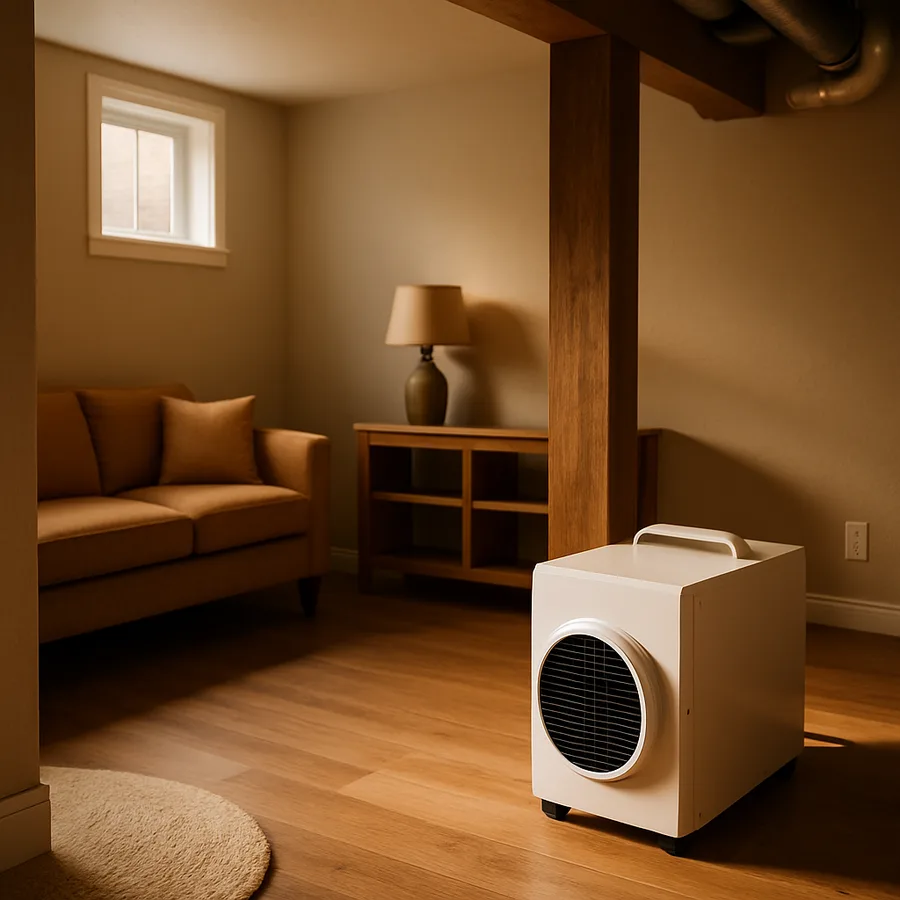
A basement that smells musty in July is telling you something specific. The air at floor level is hovering above 65 percent relative humidity, the cool concrete and joist surfaces are sweating, and microbial growth has reached a level where you can smell it. Portable dehumidifiers running in the corner can address one room, but they cannot keep up with the moisture load of an entire below-grade level and they leave the rest of the house unprotected from migrating humid air. A whole house dehumidifier integrated with your existing HVAC system solves the problem permanently and quietly.
This guide covers the choice between ducted whole-home units and high-capacity basement-only units, the sizing math for typical homes, the drainage and electrical realities of the install, and the control strategies that keep the unit working with rather than against your air conditioner. We will also discuss the indoor air quality benefits that go beyond comfort, including mold suppression and dust mite reduction.
Why Basements Trap Humidity Year Round
Basements stay cool because they are surrounded by earth that holds roughly 55 degrees Fahrenheit year-round in most of the contiguous United States. Cool surfaces in warm humid weather condense moisture from the air, just like a glass of iced tea on a summer porch. That condensed water film feeds mold, mildew, and dust mites, and the basement air becomes a continuous source of musty odor that migrates upward through the stack effect into the rest of the home.
Summer is the peak season, but basements can be damp year-round. In winter, warm humid air from showers and cooking finds its way down through floor penetrations and condenses on cold rim joists and basement walls. In spring and fall, outdoor relative humidity often exceeds 70 percent, and any infiltration through foundation cracks brings that moisture in. Have you ever noticed water beading on a cold water pipe in the basement during summer? That is the same physics that is wetting your floor joists and structural lumber.
The U.S. Environmental Protection Agency sets a target of below 60 percent relative humidity to suppress mold growth, and the practical comfort target is closer to 50 percent. Most damp basements run from 65 to 80 percent during summer without active dehumidification. Closing that gap requires removing real pints of water per hour from the air, and the only way to do it continuously and reliably is with a properly sized, properly drained dehumidifier integrated into the home.
Ducted Whole Home Versus Basement Only Units
A ducted whole-home dehumidifier connects to your existing supply or return ductwork and conditions air for the entire house. It is the right choice if your basement is connected to the upper floors through open stairways or an open floor plan, because moisture migrates between levels and conditioning only one zone leaves you fighting infiltration. Ducted units typically deliver 70 to 130 pints per day and require a dedicated electrical circuit and a permanent drain or condensate pump.
A free-standing basement dehumidifier is the right choice if your basement is a closed mechanical and storage zone, sealed off from the living levels above by a closed stairwell door and a tight floor system. These high-capacity units look like large portable dehumidifiers but include a permanent drain hookup, a remote humidistat, and far more reliable long-term construction than the consumer-grade portables sold at big box stores. Expect to spend two to three times the price of a portable for a unit that lasts five times as long.
Some installations combine both. A ducted unit handles the upper floors and shoulder seasons, while a separate basement unit handles the moisture-heavy below-grade space during peak summer. This dual approach is common in larger homes with finished basements used as recreation or guest space, and it lets you set different relative humidity targets for different parts of the home. A wine cellar might run at 60 percent, a finished basement at 50 percent, and the upper floors at 45 percent.
Sizing The Unit Honestly
Dehumidifier capacity is rated in pints of water removed per 24 hours under a specific test condition, historically 80 degrees and 60 percent relative humidity. The latest DOE rating method, which took effect in 2019, tests at 65 degrees and 60 percent, which is closer to actual basement conditions and yields lower published numbers than the older standard. When comparing units, confirm you are comparing the same rating standard or you will end up oversizing or undersizing significantly.
A reasonable starting point for a damp basement is 70 pints per day for a 1,500 square foot below-grade space with no active water intrusion. Add capacity for known moisture sources: a vented dryer exhaust nearby, an unsealed sump pit, a finished bathroom with a shower, or an attached crawl space. Subtract capacity if you have already addressed the foundation with exterior drainage, interior dimple membrane, or a properly sealed sump cover. AHAM, the Association of Home Appliance Manufacturers, publishes sizing tables that map square footage and dampness level to recommended capacity.
For whole-home ducted units serving 2,500 to 4,000 square feet of conditioned space, expect 90 to 130 pints per day depending on climate zone. Coastal humid climates need the higher end. Interior continental climates can usually run mid-range. Have you measured the actual humidity in each part of your home during a typical August week? A 20-dollar hygrometer at each level gives you data that turns sizing from a guess into a calculation.
Installation Mechanicals And Drainage
Choose the installation location based on access to ductwork, electrical, and drainage. The ideal spot is within a few feet of the air handler so that the duct connections are short and well-insulated. Hang the unit from joists using vibration-isolating hardware. Spring isolators or rubber pucks under each mounting foot prevent the slight hum of the compressor and fan from telegraphing up into the floor above.
Ducted units typically pull air from the return plenum, dehumidify it, and discharge it back into the supply plenum. Use insulated flex duct rated for the unit's airflow to prevent condensation on the exterior of the duct, which is a common rookie mistake. Some installations pull from a dedicated return grille in the basement and discharge into the supply plenum, which preferentially dries the basement air while still mixing it into the whole-home circulation.
Drainage is non-negotiable. The dehumidifier removes 50 to 130 pints of water per day during peak operation, and that water needs somewhere to go. A gravity drain to a nearby floor drain is the simplest answer. If gravity is not available, install a condensate pump rated for the unit's volume and run the discharge line up and out to a laundry drain, an exterior daylight point, or a sump pit. Insulate the drain line where it passes through warm spaces because condensation will form on the cold pipe and drip on whatever is below.
Controls, Integration, And Setpoint Strategy
A simple dehumidifier control is a single humidistat that turns the unit on when the room exceeds the setpoint and off when it drops below. A smart control adds time-of-day scheduling, integration with your thermostat, and remote control through a phone app. Smart controls are worth the modest premium because they let you coordinate the dehumidifier with the air conditioner so the two appliances are not fighting each other.
Modern air conditioners remove moisture as a side effect of cooling, but only when they are actively running. On a mild humid day in May or September, the AC may not run enough to dehumidify, and that is when a dedicated dehumidifier earns its keep. Set the dehumidifier to a humidity setpoint slightly higher than the thermostat's target so that the AC handles cooling-driven dehumidification first and the dedicated unit picks up the slack on mild humid days.
Integrate the unit with the air handler fan if your thermostat supports it. Running the fan at low speed during dehumidifier operation distributes the dried air through the whole home and keeps temperature stratification from creating cold pockets in the basement. The ENERGY STAR dehumidifier program publishes efficiency tiers, and integrated dehumidifiers in the top tier use roughly 15 percent less energy than baseline units for the same moisture removal, which adds up over a long humid season.
Maintenance, Indoor Air Quality, And Long Term Care
Wash the air filter monthly during the active season. A clogged filter restricts airflow, reduces moisture removal capacity, and forces the compressor to work harder. Most ducted dehumidifiers use a permanent washable filter that lasts the life of the unit if you treat it gently. Replace the filter only when it shows physical damage or when the unit specifies a service interval.
Inspect the evaporator coil at least once a year. Dust accumulates on the cold coil surface and reduces heat transfer efficiency. A soft brush attachment on a vacuum, used while the unit is powered off, removes the accumulated dust without bending the fins. While you have the cover off, check the drain pan and clean it with a mild bleach solution to prevent algae growth in the pan and at the drain inlet.
The indoor air quality benefits extend beyond simple comfort. Dust mites cannot survive below about 50 percent relative humidity, so a properly run dehumidifier reduces allergen load in the entire home. Mold growth on basement walls, bare concrete floors, and stored cardboard slows dramatically when the relative humidity stays below 60 percent. Recent surveys cited by the EPA indicate that homes with active humidity control report substantially fewer respiratory complaints among occupants with asthma and allergies than otherwise similar homes without active control.
Conclusion
A whole house dehumidifier is one of the few mechanical upgrades that meaningfully improves indoor air quality, structural longevity, and occupant comfort simultaneously, and it does so quietly in the background once installed. The investment is real, but so is the return: dry basement air, suppressed mold growth, lower allergen load, and consistent comfort during shoulder seasons when the air conditioner is not running enough to dehumidify on its own. For a homeowner who has been losing the battle with a damp basement for years, the change after install is dramatic and immediate.
Pick the unit type that matches your home layout. Ducted whole-home units are right for open floor plans where moisture migrates freely between levels. Free-standing basement units are right for closed mechanical zones used as storage or workshop space. Combination installs make sense in larger finished homes with diverse humidity targets. In every case, size honestly, drain reliably, and integrate the controls with your existing thermostat so the system works as one coherent climate machine rather than as competing appliances.
Audit your current basement humidity this weekend. A cheap hygrometer at the bottom of the stairs, one near the floor drain, and one in the highest mechanical chase will tell you how much of a problem you actually have. If any reading runs above 60 percent for more than a few days in summer, you have a real load that no portable can handle long-term. Take the readings to an HVAC professional or to a qualified dehumidifier supplier and request a sizing review. Pair the install with a foundation inspection to confirm there is no active water intrusion masking as humidity, because no dehumidifier in the world can keep up with a leaking foundation crack.
Talk to your neighbors and friends who have already added whole-home dehumidification to their basements. Real-world reports from similar climate zones often clarify which capacity tier and which brand families perform reliably year after year, and which units develop common service issues after a few seasons. Local HVAC contractors who specialize in indoor air quality projects can also provide warranty-backed install packages that include a manufacturer-certified startup and a multi-year service plan, which is often the right path for homeowners who would rather hand off the project than tackle the duct cutting themselves.
For technical depth on indoor humidity targets, mold thresholds, and equipment certification, consult the EPA mold resources, the ASHRAE indoor environmental quality standards, and the ENERGY STAR dehumidifier program. These references are kept current, free to access, and well worth a careful read before you finalize your equipment choice.
More Articles You May Like



Comments
Post a Comment