Whole House Surge Protector Installation For Home Electronics
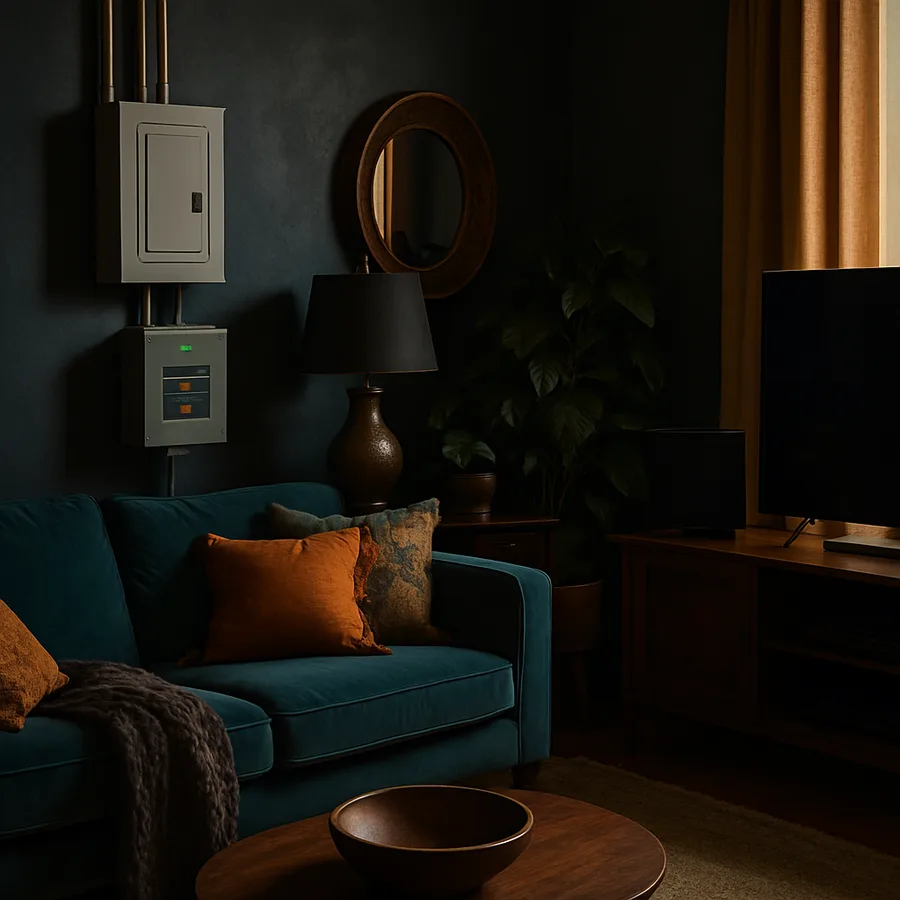
Most homeowners only think about surge protection after a thunderstorm fries a television or a power blink wipes out a refrigerator's control board. By then the damage is done, and the replacement cost has already eclipsed what a proper whole house surge protector would have cost in the first place. Modern homes are full of sensitive electronics, from variable-speed HVAC drives to gaming consoles to smart appliances, and every one of them is vulnerable to transient voltage spikes traveling down the service entrance from the utility grid.
A whole house surge protective device, or Type 1 or Type 2 SPD in code language, is installed at or near the main electrical panel so that surges are shunted to ground before they reach the branch circuits feeding your equipment. Combined with point-of-use protection at sensitive devices, it forms the layered defense the electrical industry has recommended for decades. This guide walks through how surges happen, what to look for in an SPD, what a clean installation actually involves, and how to verify the work afterward.
What A Power Surge Really Is And Why Homes Need Protection
A power surge is a brief spike in voltage above the normal 120 or 240 volt sine wave your panel expects. Lightning is the dramatic example, but most surges actually originate inside your home from large motor loads switching on and off, such as an air conditioner compressor, a well pump, or a heat pump reversing valve. The Insurance Information Institute reports that lightning-related home claims average several thousand dollars per incident, and many of those claims involve electronics damaged not by a direct strike but by induced surges traveling through wiring.
Sensitive electronics are far less tolerant of overvoltage than they used to be. According to the Institute of Electrical and Electronics Engineers, transients above 6,000 volts can occur at residential service panels, and devices with modern switch-mode power supplies, LED drivers, and microprocessors can be degraded by repeated lower-level events long before they catastrophically fail. That slow degradation is why a perfectly fine TV one summer might develop strange flickering the next. Have you noticed appliances behaving oddly after storms in your neighborhood?
The National Fire Protection Association publishes the National Electrical Code, which since the 2020 edition has required surge protection for dwelling unit services in most jurisdictions. That code shift reflects broad recognition that whole house surge protection is no longer optional infrastructure.
Utility-grid switching events are another underestimated source. When a utility re-routes power around a downed line, opens a recloser, or brings a substation back online, transients ripple through the distribution network. Those events are often invisible to homeowners other than a momentary light flicker, but they can carry hundreds of volts above normal for milliseconds at a time. Over years, repeated low-grade transients quietly age the capacitors and rectifiers inside everything from a furnace control board to a wall-mounted smart thermostat. A whole house SPD intercepts that constant background stress.
Types Of Surge Protective Devices Explained
The industry classifies SPDs into types based on where in the system they are installed. A Type 1 SPD is rated for installation on the line side of the service disconnect, meaning between the utility and the main breaker. A Type 2 SPD is installed on the load side of the service disconnect, which is the most common residential location. Type 3 SPDs are point-of-use devices like quality plug strips with surge protection built in. A Type 4 classification covers component assemblies typically used inside equipment.
For most homes, a Type 2 SPD mounted in the main panel is the right starting point. It is straightforward to install, accepts a wide range of surge currents, and is covered under most manufacturer warranties when paired with point-of-use protection at sensitive equipment. Look for a unit listed to UL 1449, which is the standard the National Electrical Manufacturers Association recognizes for SPD performance and safety. The listing label will indicate the device's voltage protection rating, or VPR, and its surge current capacity in kiloamps.
Joule rating, while widely advertised, is only part of the story. Pay closer attention to the VPR, which represents the let-through voltage during a defined surge test, and the surge current rating, which describes how much current the device can divert without failing. Lower VPR and higher kA ratings generally indicate better protection.
Sizing And Selecting The Right Unit
Selecting a whole house unit starts with the panel's main breaker amperage and your service voltage. Residential SPDs are typically labeled for 120/240 volt single-phase service with 100, 200, or 400 amp main panels. Beyond that, focus on three numbers: the surge current rating in kA per phase, the VPR, and the warranty terms. A reasonable midrange unit offers around 40 kA per phase and a VPR around 1.2 kV or lower. Premium devices push surge current capacity to 80 kA or more.
Some manufacturers include a connected equipment warranty that reimburses for damaged electronics if the SPD fails to protect, often up to a stated dollar limit. Read the fine print carefully. Most warranties require the SPD to be installed by a licensed electrician with photographic evidence, registered within a specific window, and used with separately protected point-of-use devices for sensitive equipment. Skipping any of those steps voids the coverage when you would most need it.
Consider whether the device has audible and visual status indicators. A green LED that turns red after the SPD has absorbed too many events is a small feature with outsized value because it tells you when the unit needs replacement. Without that indicator you have no easy way to know whether the device is still functional or has quietly become a paperweight.
Step-By-Step Installation Overview
Installing a whole house SPD is straightforward for a licensed electrician, but it is not a casual do-it-yourself task. Work inside a load center exposes you to lethal voltages that remain present on the line lugs even when the main breaker is off. If you are not trained and equipped to work safely in a live panel, hire a professional. With that caveat made, here is what a clean job looks like so you can verify quality.
The electrician shuts off the main breaker, confirms absence of voltage on the load side, and identifies two adjacent open breaker slots. The SPD is mounted into those slots, with its leads kept as short and straight as possible. Long, looped leads add inductance, which raises the let-through voltage during a fast transient and reduces the SPD's effectiveness. The ground or neutral lead lands on the grounding bus per the manufacturer's instructions, not on a random screw.
After mounting, the panel cover is replaced and the main breaker re-energized. The installer verifies the SPD's status LEDs, confirms each phase indicator is green, and labels the panel directory so the next person who opens it knows what is installed. Many jurisdictions also require a permit and an inspection. Check with your local authority having jurisdiction before assuming the work can be done quietly.
Layered Protection: Combining Panel And Point-Of-Use Devices
A whole house SPD reduces a 6,000 volt transient to perhaps 600 to 1,000 volts at the panel, which is much safer but still too high for the most sensitive electronics. That is why a layered approach matters. Plug your home theater, gaming PC, network gear, and major appliances into Type 3 point-of-use surge protectors rated for the equipment they serve. Together, the layers cooperate to clamp transients down to safe levels at the device.
The Electrical Safety Foundation International recommends this layered strategy specifically because no single device can handle every surge profile. A direct lightning strike, a utility switching event, and a refrigerator compressor turning off all create different waveforms. Layered protection covers a wider range than any one device alone, and the failure of one layer does not leave everything exposed.
Do not forget data and signal lines. Cable, satellite, DSL, and Ethernet runs can carry surges directly into expensive equipment, bypassing the protected power side entirely. Use surge protectors that include coax and RJ45 pass-through ports for any device with external signal connections. A surge that backfeeds through an unprotected cable line is a common way a "protected" router or modem still ends up damaged.
Telephone lines deserve the same attention even in a fiber and cellular world. Many homes still have copper phone pairs entering at a network interface device, and lightning travels those copper conductors readily. If you have alarm panels, fax machines, or legacy intercoms connected, ensure that interface includes proper bonding and surge protection at the building entrance. The local fiber or cable entrance also requires bonding to the home's grounding electrode system. Without that bond, a single direct strike can blow past every internal SPD because the entire system lacks a unified reference to earth.
Maintenance, Testing, And When To Replace
Surge protectors are not "set and forget" forever. Every transient they absorb consumes a portion of the metal oxide varistors inside, and after enough events the device degrades or fails. Most quality SPDs have an end-of-life indicator that goes from green to red or off when the protective elements are spent. Check that indicator at least every quarter and after any major storm in your area.
Keep a small log of when the SPD was installed and any noticeable surge events such as nearby lightning strikes, utility outages, or panel work. If your unit ever shows a fault indication, replace it promptly. Continuing to rely on a failed SPD is the same as having no protection at all, except more expensive because you have a false sense of security.
Expect a quality whole house SPD to last roughly five to ten years under normal conditions, and noticeably less in regions with frequent severe thunderstorms or volatile utility service. Coastal and high-elevation areas often see more transient activity, and SPDs installed there should be checked more aggressively. Some premium devices include surge counters that log how many events have been absorbed, which is genuinely useful diagnostic data when deciding whether to extend service or replace early. Treat the SPD as a wear part, like a smoke detector battery, not a lifetime appliance.
Have you considered scheduling SPD checks alongside your smoke alarm battery routine? Bundling the two makes it more likely the inspection actually happens. Some homeowners also pair SPD replacement with their utility's standard meter swaps or any electrical service upgrade, which is a natural moment for a fresh device. The point is to build the check into a recurring rhythm rather than rely on memory.
Conclusion
A whole house surge protector is one of the highest-leverage upgrades you can make to a modern home. For a few hundred dollars in parts and labor, you protect a homeful of electronics, appliances, and HVAC controls from a category of failure that quietly racks up costs over the life of the structure. With the current National Electrical Code requiring SPDs for new and replaced dwelling unit services, alignment with code is also alignment with insurance expectations and resale appeal.
The most effective installations are not necessarily the most expensive ones. Choose a UL 1449 listed device with a meaningful surge current rating, a low voltage protection rating, clear status indicators, and a serious connected equipment warranty. Pair it with quality point-of-use protectors at sensitive equipment and signal-line protection at coax and Ethernet entry points. Each layer is modest on its own, but together they form a defense that is hard to penetrate.
If you are ready to take the next step, contact a licensed electrician for a panel inspection and an SPD installation quote, and ask specifically about permits, lead length, and warranty registration. While you wait, walk through your home and note every device you would hate to lose, then add a point-of-use protector to each one. Protection is one of those investments you only fully appreciate the day it quietly saves a thousand dollars of equipment while a neighbor calls the appliance repair company.
More Articles You May Like



Comments
Post a Comment