Fireplace Tools Set Modern Versus Traditional Style
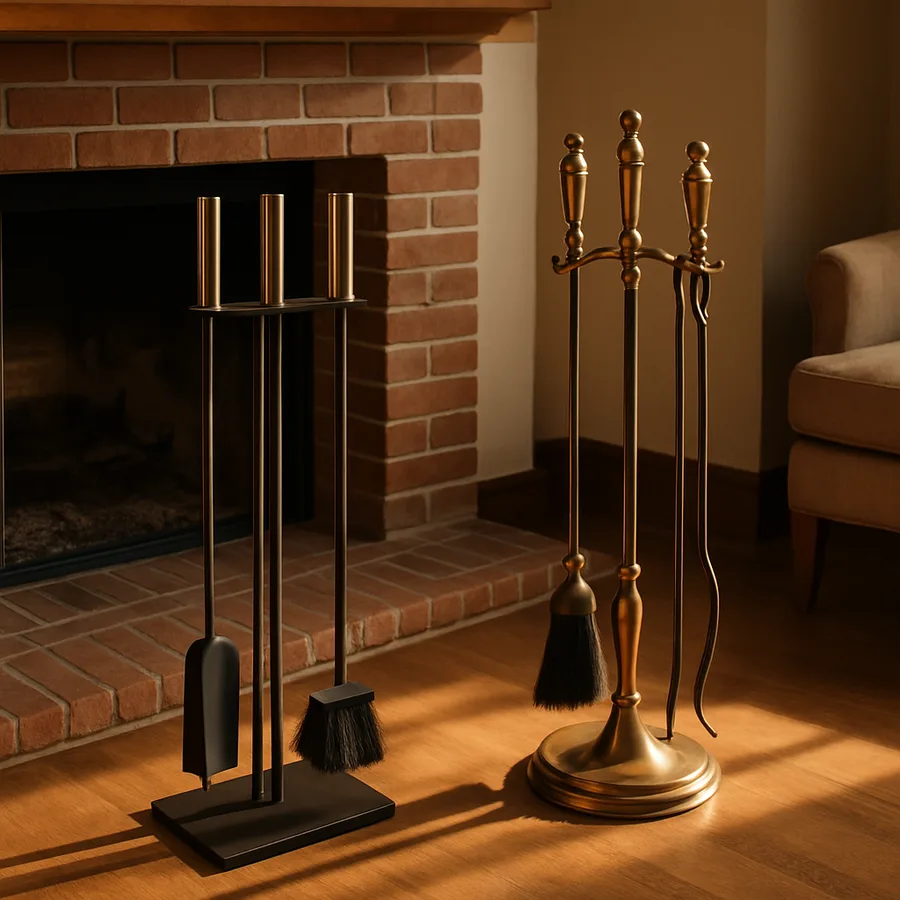
The humble fireplace tools set, usually a poker, brush, shovel, and tongs hanging from a stand, has quietly become one of the most contested objects in contemporary interior design. Walk into any furniture showroom and you will see the divide immediately. On one side, blackened iron forms with classic ball-and-spike finials. On the other, sleek brass tubes, blade-thin stands, and almost sculptural arrangements that look more like art than tools. Choosing between modern and traditional styles is not just a matter of taste, it is also a question of material durability, ergonomics, and how the set will read against the rest of the room.
This guide walks through the practical differences between the two styles, the questions buyers should ask before spending two hundred or two thousand dollars, and the design moves that help either style succeed. By the end, you should have a clear framework for matching a tools set to your hearth, your decor, and how often you actually use the fireplace.
Understanding the Anatomy of a Fireplace Tools Set
Before debating style, it helps to know what a complete set contains and what each tool actually does. The poker is the long, straight tool with a hook or point used to rearrange burning logs. The brush sweeps ash from the hearth, and the shovel lifts that ash into a metal container for disposal. The tongs grip and reposition logs without burning your hands, and most sets include a stand that holds everything upright beside the firebox.
Some traditional sets add a bellows for blowing air onto coals, a feature that has largely disappeared from modern designs because contemporary fireplaces tend to have better draft engineering. Specialty sets aimed at wood-stove owners may include an ash bucket with a tight-fitting lid, since the Environmental Protection Agency warns that hot ash retains live embers for up to four days and is a frequent ignition source for accidental fires.
The question to ask yourself first is not what style you want, but how often you actually use your fireplace. Daily wood-burners need durable, ergonomic tools that survive constant heat exposure. Occasional users who light a fire three or four times a year can prioritize aesthetics with much less concern about wear.
One often-overlooked piece is the ash bucket lid. Many homeowners purchase decorative ash buckets without realizing that an unlidded container of warm ash is one of the leading causes of accidental house fires reported by local fire departments each winter. Even ash that feels cool to the touch can hold live embers for days. If your tools set includes an ash bucket, confirm that it has a tight-fitting metal lid, and store it on a non-combustible surface well away from the structure when full. This single habit prevents more residential fires than almost any other hearth practice.
Traditional Tools Sets: Materials, Origins, and Aesthetic Logic
Traditional fireplace tools have changed very little since the eighteenth century. The classic format, forged or cast iron with a coal-black patina, descends directly from English manor-house hearths and was carried into American homes during the Colonial Revival movement of the early twentieth century. The forms are heavy, the finials are decorative, and the stands almost always feature curved feet and a finial on top.
The material logic is straightforward. Wrought iron and cast iron can sit inches from an active firebox without warping, deforming, or discoloring. Brass and copper accents on traditional sets are typically used for finials and handles, where the metal is exposed to room temperature rather than radiant heat. The Hearth, Patio & Barbecue Association notes that well-made traditional sets routinely last fifty years or more, which is one reason they show up so often in antique shops and estate sales.
Aesthetically, traditional sets pair best with rooms that already lean toward classic, transitional, or rustic vocabularies. Wood-paneled libraries, stone manor great rooms, English country cottages, and farmhouse interiors all welcome the visual weight of a heavy iron set. Trying to insert a traditional set into a minimalist white-box interior usually creates a visual conflict that no amount of styling will resolve.
Modern Tools Sets: Form, Function, and the New Material Vocabulary
Modern fireplace tools emerged in the mid-twentieth century, when designers like Pierre Forsell and Carl Aubock began treating hearth accessories as sculpture rather than utility. Today's modern sets continue that lineage with brushed brass tubes, blackened steel rods, leather-wrapped handles, and stands that often eliminate the central post entirely in favor of a low base or wall-mounted bracket.
The functional trade-offs are real. Thin brass tubes look stunning, but they can dent if dropped and can tarnish over decades if not occasionally polished. Powder-coated steel resists heat well but can chip if scraped repeatedly against firebrick. The American Society of Interior Designers has published guidance suggesting that for modern sets, buyers should always ask about the substrate metal beneath any finish, since a thin brass-plated steel tool will behave very differently from a solid brass tool over years of use.
Where modern sets shine is in contemporary, Scandinavian, Japandi, and minimalist interiors, where their restraint amplifies rather than competes with the rest of the room. A polished brass set against a plaster wall and a single oak armchair can carry significant visual weight despite its slim profile. Have you ever noticed how a single well-chosen modern tool set can elevate an otherwise plain hearth into a focal point? That is the entire point of contemporary hearthware.
Care and maintenance also differ from traditional sets. Brushed brass develops fingerprints and water spots more visibly than blackened iron, which means modern sets in highly visible locations may benefit from monthly wipe-downs with a soft microfiber cloth. Powder-coated steel is more forgiving, but small chips in the coating can expose bare metal that rusts over time, particularly in humid coastal climates. A small bottle of touch-up paint matched to the original finish, kept with the tools themselves, lets you repair minor damage in seconds rather than watching it grow into a visible flaw across the seasons.
Side-by-Side: Durability, Ergonomics, and Daily Use
Strip away the aesthetics for a moment and compare the two styles on pure function. Traditional iron sets are heavier, which makes them harder for elderly users or anyone with grip-strength limitations to manipulate comfortably. A typical traditional poker weighs between two and three pounds, while a modern brass or steel poker may weigh under one pound. For daily use, the lighter modern set is genuinely easier on the wrists.
However, traditional tools have an ergonomic advantage in grip surface area. The thick wrought-iron handles offer better purchase with thick gloves on, which matters on cold nights when you may not want to remove your gloves to tend the fire. Modern sets with slim cylindrical handles can be slippery with gloves and require precise finger placement to control the tool tip.
Heat tolerance is roughly equivalent between high-quality examples of both styles, but cheaper modern sets sometimes use lacquered or painted finishes that can blister if the tools are leaned against the firebox face. Inspect any modern set for a clearly stated heat rating before purchase, and treat the absence of that rating as a warning sign. Will the set survive a decade of weekly winter fires, or will it look tired after the third season?
Worth noting: handle temperature during use varies considerably between the two styles. Traditional iron handles, being thick and solid, conduct heat slowly and stay cool to the touch through extended fire-tending. Thin modern metal handles can warm noticeably during long sessions, particularly if the tool tip has been resting near hot coals. Sets with wood or leather-wrapped grips solve this problem regardless of style era, and they are worth the small additional cost for any household where the tools see real weekly use rather than occasional ceremonial appearances.
Matching Tools to Your Hearth, Mantel, and Surround
The most common design mistake is choosing a tools set in isolation, without considering how it relates to the andirons, log holder, screen, and surround materials nearby. A set that looks beautiful in a catalog can clash badly if the existing andirons are a different metal or finish. Designers generally recommend matching at least two of the three primary hearth accessories, meaning the tools, the screen, and the log holder, in the same finish family.
Mantel material also matters. A reclaimed-wood mantel calls for warmer metals, antique brass, hammered copper, blackened iron, while a clean concrete or limestone mantel can support cooler finishes like brushed steel or matte black. Marble mantels are surprisingly flexible and accept almost any metal finish, which is one reason they remain a perennial favorite in luxury renovations tracked by the National Association of Home Builders.
One additional consideration is the visual weight ratio between the hearth surround and the tools set. A massive stone surround can swallow a slim modern set visually, while a delicate plaster surround can be overwhelmed by a heavy traditional iron set. Designers typically aim for a tool-set scale that registers clearly from the seating area without dominating the surround itself. Standing across the room from your hearth, the tools should read as a deliberate accent rather than either an afterthought or a competing focal point. Adjust your selection accordingly if the proportions feel off when you bring a candidate set home.
Budget Bands and Where Quality Actually Hides
Fireplace tools sets span an extraordinary price range. Big-box retailers sell complete sets for fifty dollars, while high-end maker studios charge two thousand dollars or more for a single bespoke set. The quality differences are real, but they do not scale linearly with price. The biggest jump in quality usually happens around the one hundred fifty to three hundred dollar range, where you start seeing solid metal construction rather than hollow stamped pieces, real wood or leather handles rather than plastic, and stands with weighted bases that do not tip easily.
Above three hundred dollars, you are mostly paying for design provenance, finish detail, and brand. Those are legitimate reasons to spend, especially if the set will be a visible part of the room for decades, but they are not necessary for basic durability or function. The sweet spot for most homeowners falls somewhere between two hundred and four hundred dollars, regardless of whether they choose modern or traditional styling.
One trap to avoid is the matched-set discount fallacy. Big-box retailers often package a full five-piece set at a price that looks like a bargain compared to buying individual tools, but the components are frequently lower-grade than even modestly priced stand-alone pieces from specialty makers. If you find yourself drawn to a discount bundle, inspect each piece individually for weight, joinery, and finish quality. A two-piece curated set of a quality poker and tongs plus a separately purchased ash brush will almost always outperform a four-piece bargain bundle over a decade of use.
Conclusion
The choice between modern and traditional fireplace tools is ultimately a choice about how you want your hearth to feel in the room. Traditional sets bring weight, history, and a sense of inherited craftsmanship. Modern sets bring restraint, geometry, and a quieter functional presence. Both can be beautiful, both can be functional, and both can last decades if you buy from a reputable maker and care for them properly.
The worst outcome is choosing a set that fights with the rest of your decor or that fails after a few seasons because of poor materials. The best outcome is a set that looks intentional, feels right in your hand on a cold night, and gradually develops the patina of a well-loved tool. Either style can deliver that experience when chosen thoughtfully.
Before you order, take a phone photo of your hearth, mantel, and existing accessories, then carry that image with you while shopping. Compare finishes in person whenever possible, since photos rarely capture the true tone of brass or the depth of a blackened steel patina. Take an afternoon, visit a hearth specialty showroom, and handle the tools before you buy. That single hour will save you from regret and from the surprisingly common experience of returning a set that looked perfect online but wrong in your living room.
For further reading on tool selection and hearth safety, see the Hearth, Patio & Barbecue Association resource library, the EPA Burn Wise program for clean-burning best practices, and the American Society of Interior Designers for design context.
More Articles You May Like



Comments
Post a Comment