Peephole Door Camera Smart Versus Traditional Lens
Peephole Door Camera Smart Versus Traditional Lens
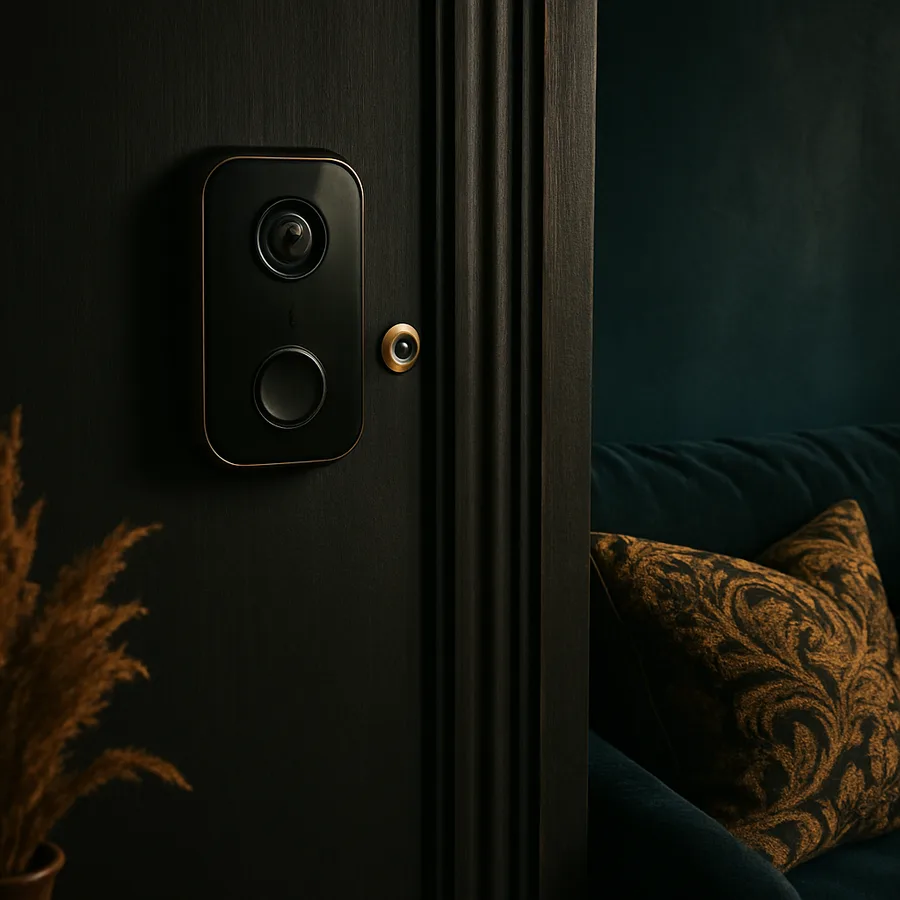
The humble peephole has been a front-door fixture for centuries, and for most of that time the decision was simple: a small brass tube with a wide-angle lens that let you peek into the hallway or porch before opening the door. Today that choice has split into two distinct products - the traditional optical peephole and the smart peephole camera - and the gap between them in capability, cost, and complexity is larger than most homeowners realize.
This guide compares the two options across the dimensions that actually matter: image quality and field of view, security against tampering, privacy considerations, installation effort, power and connectivity demands, and total cost over time. By the end you will have a clear sense of which fits your home, your habits, and your appetite for technology.
How Each Option Sees the World
A traditional peephole is a passive optical device. Light from outside passes through a wide-angle lens - typically 160 to 200 degrees - and reaches your eye on the inside. There is no electronics, no power, no recording. What you see is what is there in real time, and only you can see it because the lens is at your eye.
A smart peephole camera replaces or supplements the optical lens with a small image sensor connected to a screen, an app, or both. Some smart peepholes mount on the interior side of the door and use the existing peephole hole to thread a sensor through. Others replace the peephole entirely with a thicker camera assembly that includes its own optics, a small LCD screen on the interior face, motion sensors, and wireless connectivity. Image data flows to your phone, to a local hub, or to cloud storage depending on the model.
The headline difference in capability is that a smart peephole can see when you are not there. Motion at the door triggers a notification, a recording, or both. Traditional peepholes require you to be physically present and consciously looking. For households where the front door is unattended for much of the day, this gap is enormous.
Image Quality and Field of View Compared
A quality optical peephole offers excellent clarity in the moment. The image is naturally lit by ambient porch light, has no latency, and preserves true color and depth perception. You can read facial expressions, see what someone is holding, and judge distance accurately. The field of view depends on the lens; better units reach 200 degrees, which captures essentially the entire visible area in front of the door.
Smart peepholes vary widely. Premium units use 1080p or higher sensors with HDR processing and 160-degree fields of view, producing images that compete favorably with quality optical peepholes during the day. Budget units suffer in low light, exhibit noticeable distortion at the edges, and introduce visible compression artifacts when streaming over wireless. Night vision is the great equalizer - smart peepholes with infrared illumination see in conditions where optical peepholes show essentially black.
According to a 2023 review by the Electronic Security Association, smart peephole cameras outperformed optical peepholes for after-dark visitor identification by a margin of roughly four to one in controlled lighting tests. For households in unlit or dimly lit hallways, the smart unit's IR illumination is a meaningful security improvement.
Tampering, Reverse Viewing, and Physical Security
Traditional peepholes have a quietly serious vulnerability: reverse viewing devices. Small inexpensive tools sold as locksmith aids let someone outside reverse the lens and see through to the inside of your door, including a partial view of the room beyond. A determined burglar can sometimes confirm whether a home is occupied or whether a chain lock is engaged. Modern anti-reverse peepholes solve this with a one-way prismatic lens, but many older homes still have lenses that pre-date the fix. If you have an older brass peephole, hold a small mirror outside it and see whether you can make out anything inside; if you can, replace the unit.
Smart peepholes are immune to reverse viewing because the interior side is a screen or a sealed module, not an optical path. However, they introduce different vulnerabilities. The camera assembly is electronic and can be defeated by tampering - covering the lens, cutting power, or jamming wireless signals. Quality units include tamper alerts that notify you when the device is covered or removed, partially closing this gap.
Have you ever wondered whether your peephole works against you? A surprising number of homeowners have never tested theirs. Walk outside, close the door, and have a family member check whether you are visible through the lens or its reverse. The exercise takes two minutes and may surprise you.
Privacy and Data Considerations
A traditional peephole captures no data. There is nothing to be hacked, nothing to be subpoenaed, and nothing that requires a privacy policy to read. For households that value digital simplicity, this is a real benefit.
Smart peepholes record. Some record only when motion is detected; some record continuously; some record only when you tap a button. Recordings live either on a local memory card, on a hub inside your home, or in the manufacturer's cloud. Each storage model has different privacy implications, and the differences matter.
Cloud recording offers the most reliable access - you can review footage from anywhere - but it places video of your front door, including images of every visitor and neighbor who walks past, on a third-party server. Local recording keeps data in your home but typically requires more setup and can be lost if the device is stolen or destroyed. The Federal Trade Commission has published consumer guidance on connected camera privacy, and reviewing your chosen manufacturer's data retention and law-enforcement disclosure policies is worth the fifteen minutes it takes.
Several jurisdictions have begun requiring that audio recording be disclosed by visible signage. If your smart peephole records audio (many do), check your local rules and consider posting a small notice near the door.
Installation, Power, and Connectivity
Installing a traditional peephole takes about ten minutes. Drill a hole at the correct height (typically 56 to 64 inches from the floor), thread the lens through, tighten the interior collar, and you are done. No power, no apps, no firmware. The peephole works the day you install it and continues working unchanged for decades.
Installing a smart peephole varies. Battery-powered models with motion-detection use rechargeable batteries that typically last two to six months depending on activity. Wired models need power, which usually means tapping the doorbell circuit or running new low-voltage wiring - a job that adds installation cost. Either way, the device must connect to your home wireless network reliably, and front doors are often at the edge of wireless coverage. Test signal strength at the door before purchasing; weak wireless leads to missed notifications and frustration.
Firmware updates are an ongoing concern. Smart peepholes receive periodic updates from the manufacturer, and a model whose updates stop after a few years may become insecure or simply stop working when the cloud service is retired. Choose brands with a documented update commitment, and be aware that the lifespan of a smart peephole is generally five to seven years before replacement, compared with effectively unlimited lifespan for a quality brass optical peephole.
Total Cost Over Five and Ten Years
A quality traditional peephole costs $20 to $80 once. There are no subscriptions, no batteries, no replacements. Over ten years the total cost of ownership is essentially the purchase price.
A quality smart peephole costs $120 to $300 for the device, plus $0 to $120 per year for optional cloud storage, plus the cost of replacement when the device reaches end of life. Over ten years a typical smart peephole costs roughly $300 to $1,500 total, depending on subscription choices and how many times you replace the device.
Is the smart peephole worth the additional spend? For households that benefit from remote notifications, after-dark visibility, and recorded evidence of who came to the door while you were out, the answer is usually yes - but it depends on lifestyle. A retiree at home most of the day gets less marginal value from a smart unit than a dual-income household with frequent deliveries. The National Fire Protection Association and the Builders Hardware Manufacturers Association publish guidance on door hardware safety standards that apply to both options.
Use Cases Where Each Option Clearly Wins
Rather than rehearse the comparison in the abstract, it helps to picture concrete households and the choice that fits each. These patterns appear repeatedly in real installations, and seeing yourself in one of them often settles the question.
The first pattern is the at-home household with strong privacy preferences. A retired couple, a work-from-home freelancer, or a household with young children at home much of the day generally gets little marginal value from remote notifications because someone is always there to hear the doorbell. For this household, a quality anti-reverse-viewing optical peephole is genuinely the better choice. It is simpler, cheaper over a decade, and produces no data that needs to be managed. The National Crime Prevention Council emphasizes that being home and aware is itself one of the strongest residential deterrents, and an optical peephole supports that awareness without complication.
The second pattern is the dual-income household with significant delivery volume. Both adults are away during the day, deliveries arrive when no one is home, and the porch sees enough traffic that capturing footage is genuinely valuable. For this household, a smart peephole pays for itself in the first incident - a stolen package recovered through video, a contractor's arrival confirmed remotely, or simply the reassurance of seeing the front porch from a phone during a workday. Choose a model with reliable local recording in addition to cloud backup so a network outage does not erase a critical event.
The third pattern is the renter in an apartment or condo with limited install options. Apartment doors often already have a peephole at a fixed location, and most leases prohibit drilling new holes. Smart peepholes that replace the existing peephole hardware without enlarging the hole are ideal here - installation takes minutes, removal at move-out restores the original peephole, and the renter retains the smart device for the next home. A 2024 survey from the National Multifamily Housing Council found that smart-door upgrades were among the most common renter-installed devices, second only to smart locks.
The fourth pattern is the security-conscious household in a high-traffic urban location. Frequent visitors, deliveries, and unknown foot traffic at the door make both visual and recorded awareness valuable. The right setup here is often both - a smart peephole camera for recorded events and a small auxiliary optical peephole for the quick "who is that" check that smart screens cannot match for speed. The redundancy ensures one always works when the other fails.
Have you placed yourself in one of these patterns yet? Most households fit cleanly into one of the four. If you are between two, lean toward the simpler option - almost everyone underestimates the maintenance burden of any connected device, and a peephole you can ignore for ten years has a quiet appeal that no app can replicate.
Conclusion
Traditional peepholes excel at what they have always done: a quick, private, unrecorded look at who is standing on the other side of the door at the exact moment you choose to look. They are simple, reliable, and inexpensive over a lifetime. For households that want a low-tech entry and have someone home most of the time, an anti-reverse-viewing optical peephole remains an excellent and arguably underrated choice.
Smart peephole cameras solve a different problem. They let you see the door from anywhere, capture footage of visitors when you are out, illuminate dark hallways, and integrate with the rest of a smart home. They cost more upfront and over time, depend on networks and firmware, and surface privacy questions that the old brass tube never raised. For active households with significant deliveries or any history of front-door incidents, the additional capability typically justifies the additional complexity.
Both options can coexist. Several homeowners install a smart peephole camera for capability and remote notifications, while keeping a small optical peephole on the same door for quick in-person checks. This combination preserves the immediacy of looking through a real lens with no boot-up delay, while gaining the remote awareness of a camera. The cost is modest, and the redundancy means a dead battery or a wireless outage does not leave you unable to see who is at the door.
Ready to upgrade? Decide first whether your primary need is in-person privacy or remote awareness. That single question separates the two products more cleanly than any feature comparison. Then test wireless signal strength at the door, look honestly at your lighting at night, and choose accordingly. The right peephole - smart, traditional, or both - should make your daily entry feel safer rather than more complicated.
Comments
Post a Comment