Prayer Room Design Quiet Corner For Daily Practice
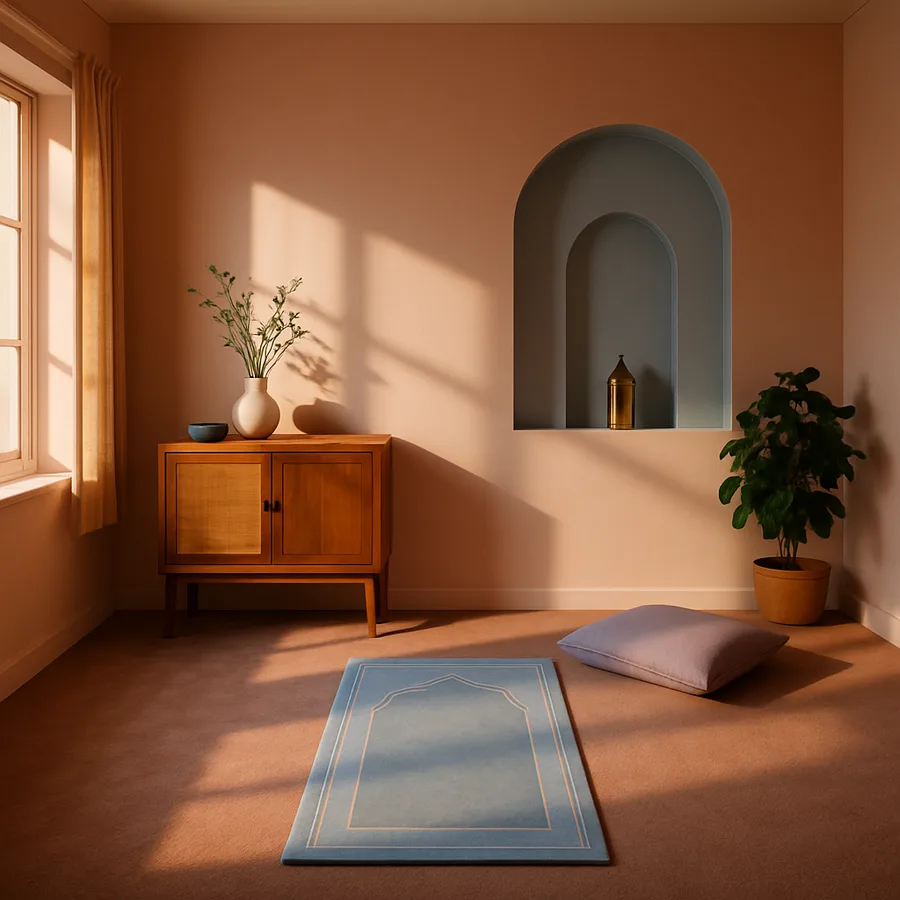
Across nearly every spiritual tradition - Christian, Muslim, Jewish, Hindu, Buddhist, Sikh, and the many syncretic and contemplative practices that sit between them - the home has long held a designated place for prayer. In contemporary American homes, that practice is often compressed into a bedside or a folded prayer rug stashed in a closet, but a dedicated prayer room or even a thoughtfully designed quiet corner can transform daily devotion from something squeezed in to something the household revolves around.
According to a 2023 Pew Research Center report, roughly 45% of U.S. adults pray daily, and design surveys conducted by the American Society of Interior Designers have noted a sustained uptick in client requests for dedicated meditation and prayer rooms during home renovations. The challenge is that most homes were not architected with a prayer space in mind. This guide walks through how to carve one out of what you have, regardless of square footage or tradition.
Defining The Purpose Before Defining The Space
Before measuring a single wall, name what the room will be used for. A space designed for kneeling Catholic devotional prayer needs a sturdy kneeler and an unobstructed view of a crucifix or icon. A space designed for the five daily Muslim prayers needs clear floor space oriented toward Mecca, ideally with a clean prayer rug stored within reach. A space designed for Hindu puja needs an elevated altar for deity images and offerings. A space designed for silent contemplative practice across traditions needs a cushion, a candle, and very little else.
The dimensions and furniture follow the practice, not the other way around. A common design error is to build a generic "spiritual room" with a Buddha statue, a cross, a Star of David, and a mandala on the same wall. This rarely serves any one practice well. If the household holds more than one tradition, design for one practice per surface or rotate seasonally. The room should feel specific, not pan-religious.
Ask honestly: How often will this room be used, by whom, and at what times? Is the practice always at dawn, or also at midday? Will the room host shared prayer for a family, or is it for solitary devotion? These answers determine everything from cushion count to lighting setup. Have you ever measured how many minutes a day your current prayer or contemplative practice actually receives?
Location, Orientation, And Acoustic Privacy
The single most important quality of a prayer room is acoustic privacy. The space must be quiet enough that the practitioner can hear the words being spoken, sung, or whispered without straining. Choose a room as far from the kitchen, laundry, and main living area as the home allows. A room above a basement utility area is usually quieter than one beside a busy hallway. A converted closet with a solid-core door provides better sound isolation than most spare bedrooms.
Orientation matters in several traditions. Muslim prayer requires facing the qibla, the direction of Mecca, which in the contiguous United States is generally northeast. Many Christian and Jewish traditions favor east-facing orientation toward the rising sun. Hindu puja typically orients toward the east or north. Confirm the correct orientation before committing to where the altar or focal wall sits, because reversing it later is disruptive.
Soundproofing does not require a recording studio. Heavy curtains over the door, a rug pad under the area rug, weather stripping around the doorframe, and a small upholstered piece of furniture absorb most ambient household sound. Acoustic panels disguised as fabric-covered art further dampen reverberation if walls are bare. The House Beautiful design archive has documented how layered textiles in small rooms reduce reverberation by 30 to 50%, which is the difference between a room that echoes a whispered prayer and one that absorbs it warmly.
The Focal Wall And Sacred Imagery
Every prayer room benefits from a single focal wall. This is the wall the practitioner faces during prayer and the wall that anchors the room visually. Keep it disciplined: one primary piece of imagery - an icon, a calligraphic verse, a framed scripture passage, a deity image, a cross - at eye level when seated or kneeling. Surround it with negative space. Crowding the focal wall with secondary images dilutes attention and turns devotion into shopping.
Lighting on the focal wall should be intentional and warm. A small framed wall sconce or a picture light positioned above the primary image creates a gentle pool of focus that draws the eye and feels reverent. Avoid harsh overhead spots, which create unflattering shadows on the imagery and a stage-like atmosphere. The light should feel like dawn, not a museum.
If imagery is not part of the tradition - as in many strict Islamic and some Protestant settings - replace it with calligraphy, a framed verse in beautiful typography, or simply a textured natural material like a slab of wood or stone. The focal wall does not require an image; it requires a center. A single beautiful textile hung as a tapestry can serve this role gracefully and is easy to swap seasonally.
Floor Treatment, Cushions, And Furniture
Most prayer practices happen at or near the floor, which means the floor itself becomes furniture. A natural fiber rug - wool, cotton, jute, or sisal - over a wood or cork subfloor provides cushion, warmth, and a clear visual zone for practice. Choose a rug roughly six by nine feet for a single practitioner; larger if the family prays together. The rug pad underneath should be 100% felt or natural rubber; thin foam pads disintegrate quickly under repeated kneeling.
For Muslim households, a dedicated prayer rug (sajjada) is unrolled atop the larger rug for each prayer and rolled away between sessions. Store the prayer rug in a basket or on a small shelf near the entry to the room so it is always at hand. For Christian or contemplative practice, a small kneeler or prie-dieu, a low bench, or a meditation cushion suits seated or kneeling postures. The piece should be specific, comfortable for ten to thirty minutes of use, and easy to set aside when not in use.
Avoid synthetic carpeting and high-gloss flooring. The first traps dust and feels institutional; the second is cold and shows every scuff. Aged wood, cork, and natural stone all develop a quiet patina under daily use and reinforce the sense that the room is alive with practice rather than staged for show.
Materials, Color, And The Sensory Environment
Color in a prayer room should support the emotional register of the practice. Many traditions favor white or off-white walls for clarity and the sense of being washed clean. Deeper colors - navy, forest green, terracotta, ochre - can work in larger rooms and lend a sense of enclosure and warmth, especially in northern climates with weaker natural light. Avoid high-saturation reds, oranges, and pinks; they raise heart rate and undermine the meditative state most prayer aims to cultivate.
Materials should feel honest and aged well. Wood, linen, wool, cotton, stone, ceramic, and brass each carry a history that reinforces continuity. Plastic and glossy synthetics, even when well-designed, tend to feel transient and out of register with the deep time most prayer practices invoke. Two stats from the broader interior design literature reinforce this: a Better Homes & Gardens homeowner survey found that 78% of respondents associated natural materials with feelings of calm, and the American Lung Association has repeatedly linked low-VOC paints and natural fibers to better indoor air quality, which matters in a room used daily for sustained breathing practices.
Scent is the underdiscussed sensory layer. Beeswax candles, frankincense or sandalwood incense, dried herbs in a small bowl, or simply fresh air from an opened window each carry tradition and signal to the nervous system that the practice has begun. Pick one scent or a small rotation tied to seasons or feast days, and use it consistently. The brain associates scent with state more rapidly than any other sense.
Ritual, Maintenance, And Multi-Use Realities
Few households can afford a room used only for prayer. The reality is that most prayer rooms double as guest rooms, home offices, or reading rooms. The design challenge becomes signaling clearly when the room is in prayer mode and when it is in everyday mode. A folding screen, a curtain that draws across the altar, or a beautiful cloth that covers the focal imagery between sessions all serve this purpose. The act of uncovering becomes part of the ritual.
Daily maintenance is light: a quick dust of the altar, refilling water if present, fresh candle if the previous one is spent, opening a window for fresh air, and the simple act of taking off shoes before entering. Many traditions require ritual cleanliness for the space itself, so dust, footwear residue, and clutter are not just aesthetic concerns but practical ones. A small handheld broom or sweeper kept just inside the door makes this a one-minute habit rather than a chore.
Plan a deeper monthly clean: vacuum the rug, wash any cushion covers, polish brass or wood surfaces, dust framed imagery with a soft brush, replace dried flowers, and inspect candle holders for wax buildup. A seasonal refresh - swapping textiles, rotating altar objects, repainting if needed - keeps the space from sliding into the visual exhaustion that affects any room used daily for years.
Conclusion
A prayer room is, at its most modest, a corner with a cushion, a candle, and a single image. At its most ambitious, it is a fully appointed sanctuary with calligraphy on the walls, an heirloom rug on the floor, and a window placed precisely to catch the dawn. Both versions are valid. The variable that matters is not square footage or budget but specificity of purpose. A square of floor used daily for prayer is more meaningful than an unused 200-square-foot meditation suite.
Across traditions, the same design principles hold: acoustic privacy, a single intentional focal wall, natural materials that age gracefully, dimmable warm light, and storage solutions that keep the space ready for practice at a moment's notice. The room should feel slightly austere by ordinary decorating standards, because what completes the room is the practitioner's attention, not the furniture.
If the household holds multiple traditions, choose either one room per practice - a Christian prayer corner in one part of the home, a Muslim prayer area in another - or a single contemplative space with rotating focal imagery. Either solution respects each tradition more than a syncretic mash-up that flattens them all. Have you talked with your household about which approach will actually be used six months from now?
Designers working on prayer-room commissions often observe that the rooms with the longest active lives are not the most expensively appointed but the ones whose layouts align most precisely with the practitioner's body and schedule. The kneeler is the right height. The altar is the right depth for the eyes to rest on without strain. The rug is soft enough for thirty minutes of seated prayer but firm enough for prostrations. The light comes from the side at the right hour. These ergonomic considerations sound prosaic, but they determine whether the room becomes a daily resort or a guilty reminder of intention abandoned. Walk the space with your own body before signing off on dimensions. Sit, kneel, prostrate, stand, bow. The room must fit your practice the way a well-tailored garment fits a body, and adjustments made before installation cost far less than adjustments made after.
The deepest reward of a well-designed prayer room is not the room itself but the rhythm it instills. A space ready for practice is a space that gets practiced in, and a practice repeated daily over years rewrites the texture of a household. Subscribe to Interior Bliss for more guides on designing rooms that support spiritual and contemplative life, and share this article with anyone who has been meaning to set aside a corner of their home for daily prayer but has not yet begun.
More Articles You May Like


Comments
Post a Comment