Meditation Room Setup Floor Cushion And Altar Arrangement
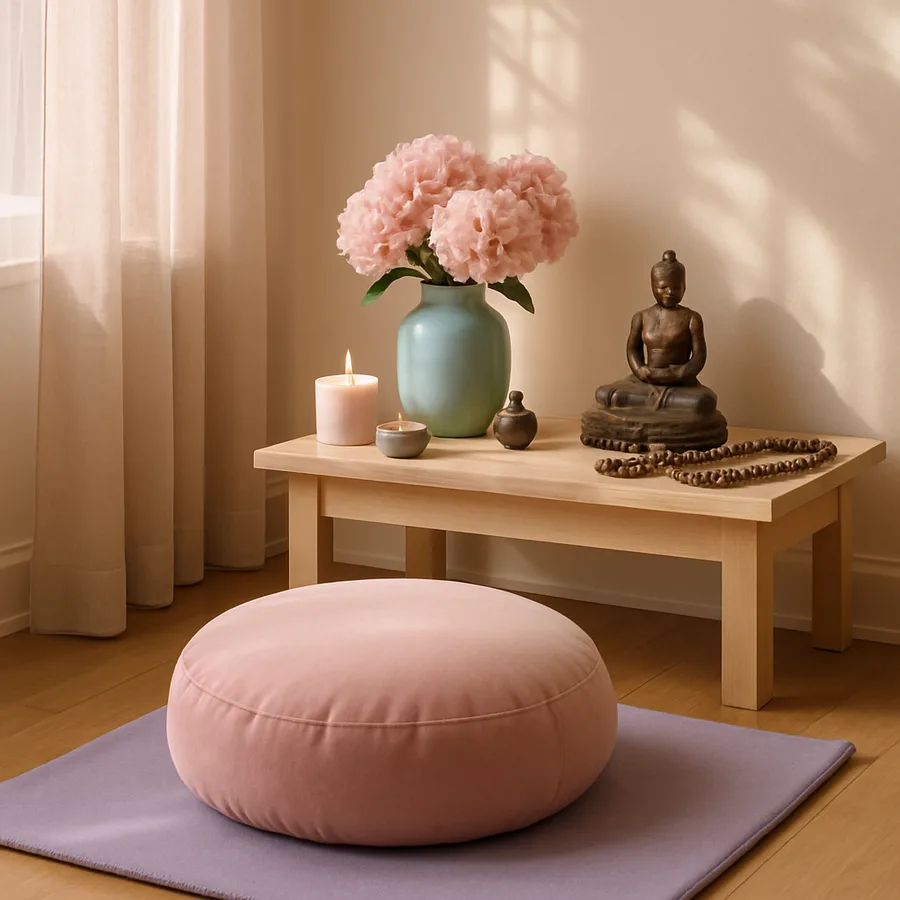
A dedicated meditation room transforms a household from a place of constant activity into a space that also honors stillness. Whether you have a spare bedroom, an unused nook beside a staircase, or a sun-filled corner of a studio apartment, the principles of designing for contemplation remain the same: reduce visual noise, invite natural light, and arrange the floor cushion and altar so the body settles before the mind does. According to the American Psychological Association, more than 76% of U.S. adults reported experiencing physical symptoms of stress in the past month, and a quiet domestic refuge can be one of the simplest, most powerful interventions a household makes.
Designers at the Better Homes & Gardens editorial team and contributors to Architectural Digest consistently emphasize that meditation spaces succeed when they are specific rather than generic. A floor cushion is not a beanbag; an altar is not a console table. Each object earns its place. This guide walks through that intentionality, from cushion height to altar orientation, while keeping the aesthetic warm enough to live with day after day.
Choosing The Right Floor Cushion For Your Body And Practice
The single most important decision in a meditation room is the cushion itself. A zafu, the traditional round Japanese cushion, lifts the hips above the knees so the pelvis can tilt forward and the spine can stack naturally. Most adults find a fill height of six to eight inches comfortable; taller bodies or those with tight hips often need nine to ten inches. The zabuton, a flat rectangular mat placed beneath the zafu, cushions the knees, ankles, and the tops of the feet, which become surprisingly sore on bare floors after only ten minutes.
Buckwheat hull fill is the gold standard because it shifts to match your body but does not flatten under weight the way cotton batting does. Kapok is a softer alternative for those who find buckwheat too firm. If you sit in a kneeling posture, a seiza bench with a slight angle reduces ankle strain. For those with knee injuries, a sturdy meditation chair with a forward-tilted seat preserves the same spinal alignment without requiring a floor posture at all. Have you considered which posture your body will actually be able to hold for twenty minutes a day, six months from now?
Color matters more than people assume. Saturated reds and oranges can subtly raise heart rate during long sits, while muted neutrals - oatmeal, slate, charcoal, deep moss - disappear into the background so attention can rest on breath rather than upholstery. A natural linen or undyed cotton cover also washes well, which matters because cushions absorb skin oils and need laundering every few weeks.
Floor Layout, Orientation, And The Geometry Of Stillness
Once the cushion is selected, the next question is where it sits. Place the cushion so the practitioner faces either a blank wall, a window with a calm view, or the altar itself. Avoid orienting toward a doorway; the nervous system never fully relaxes when the body senses unpredictable foot traffic behind it. A minimum of three feet of clear floor on each side of the cushion gives space for prostrations, gentle stretches before sitting, and the simple psychological relief of not feeling boxed in.
Many practitioners follow a loose Vastu or Feng Shui orientation, facing east toward the rising sun or north for clarity. Others choose orientation purely by where the best light falls at their practice hour. Both are valid. What matters is consistency: returning to the same spot, in the same direction, at roughly the same time, builds a powerful associative cue that shortens the runway between sitting down and dropping into focus.
If the room is small, define the meditation zone with a single low-pile wool rug rather than crowding the cushion with side tables and lamps. A pool of warm light from one floor lamp, a folded blanket within reach for cooler mornings, and nothing else is a more sophisticated layout than three accent chairs and a bookshelf.
Altar Arrangement Principles And The Five-Element Approach
An altar is not religious by necessity; it is a focal point that gives the eye somewhere intentional to land. A useful framework borrowed from East Asian and South Asian traditions is the five-element approach: earth, water, fire, air, and space. Earth might be a smooth river stone or a small ceramic bowl. Water is represented by a shallow dish refilled each morning. Fire is a candle, ideally beeswax or soy in a stable holder. Air is incense, a feather, or simply a small open vessel. Space is the deliberate emptiness around the objects.
The altar surface should sit low enough that, when seated on the cushion, the eyeline rests gently downward at roughly a fifteen-degree angle. This downcast gaze is used in Zen and Tibetan traditions because it calms the optic nerve without inducing sleep. A reclaimed wood plinth, a low Parsons-style bench, or even a sturdy stack of art books covered with a linen runner all work beautifully. Avoid glossy lacquer; matte surfaces absorb light rather than throwing distracting reflections.
Choose three to five objects, no more. A small framed photograph of a teacher, a deity, an ancestor, or simply a landscape that evokes vastness; a single fresh flower or sprig of greenery changed weekly; a bell or singing bowl to mark the beginning and end of practice; and one object of personal symbolism. Rotate seasonal items - a dried maple leaf in autumn, a sprig of cedar in winter - so the altar registers the passage of time and resists becoming wallpaper to the eye.
Light, Sound, And Air Quality As Invisible Architecture
Lighting in a meditation room should be layered and dimmable. Harsh overhead fixtures are the enemy of practice; they activate the sympathetic nervous system and flatten the textures that make a small space feel inhabited. Aim for a warm color temperature between 2200K and 2700K. A single dimmable floor lamp with a linen shade, a salt lamp for ambient glow, and the candle on the altar are usually enough. Blackout-lined curtains in natural fiber let you control morning glare without making the room feel like a hotel during the day.
Sound is the dimension most often neglected. Hard floors and bare walls bounce traffic noise and HVAC hum directly into the practitioner's ears. A wool rug, heavy curtains, an upholstered ottoman in a corner, and even a small bookshelf filled with cloth-bound books all act as acoustic dampers. For homes near busy streets, a white-noise machine or a small fountain producing a steady trickle masks intermittent sounds far better than trying to ignore them. Researchers at Smithsonian Magazine have covered how steady acoustic backgrounds reduce cognitive load, which is exactly the conditions you want for sustained attention.
Indoor air matters too. The Environmental Protection Agency reports that indoor air can be two to five times more polluted than outdoor air, largely because of off-gassing from synthetic furnishings and inadequate ventilation. Open a window for ten minutes before practice when weather permits, choose low-VOC paint, and consider a HEPA air purifier sized for the room. A few easy-care plants - snake plant, pothos, peace lily - quietly improve the air and soften corners.
Color, Texture, And Materials That Settle The Nervous System
Color psychology in a meditation room runs counter to most decorating instincts. The goal is not to make the room "interesting" but to make it disappear, so that interior experience can come forward. Warm whites, oatmeals, soft greys, sage, terracotta in low saturation, and deep navy are all reliable. Saturated jewel tones can work if used sparingly, but accent walls in vivid color will read louder during a long sit than they do during a quick walk-through.
Texture compensates for the restraint in color. Layer a jute or sisal area rug under a softer wool overlay; pair a linen meditation cushion with a slubby silk altar runner; place a rough ceramic bowl next to a polished river stone. The hand learns the room through these contrasts even when the eyes are closed, and a tactile environment is more grounding than a purely visual one. Natural materials - wood, stone, wool, linen, cotton, clay - also age gracefully, picking up patina rather than scratches.
Avoid plastic where possible. Even small plastic objects can introduce a subtle visual coldness, and they are the materials least likely to feel meaningful five years into a practice. If budget is a constraint, secondhand wood furniture sanded and oiled with a food-safe finish nearly always reads more sophisticated than new particleboard. Would your future self thank you for the materials you are choosing today?
Maintenance, Ritual, And Living With Your Space
A meditation room is not finished when the last cushion is placed; it is finished and refinished every morning. The simplest sustaining ritual is a two-minute reset before practice: fluff the cushion, light the candle, refill the water bowl, dust the altar with a soft cloth, and crack the window. This brief sequence cues the nervous system that practice is beginning, and it keeps the room from sliding into the entropy that claims so many well-intentioned spaces within a year.
Plan a seasonal deeper clean four times a year. Wash the cushion covers, wipe the altar with a natural cleanser, replace any spent candles, dust the tops of frames and lamp shades, and rotate seasonal altar objects. A study cited by the House Beautiful design archive found that occupants of well-maintained, clutter-light homes reported markedly lower cortisol levels in the evening, so the upkeep itself becomes part of the practice.
Respect the room's purpose. Resist the temptation to store laundry, exercise gear, or paperwork in this space, even temporarily. The moment a meditation room becomes a multi-purpose room, its psychological signal weakens. If square footage forces shared use, designate a closing ritual - folding the cushion away, draping a cloth over the altar - that visually resets the space between functions.
Conclusion
A meditation room is the most quietly radical design project most people will ever take on. It asks the household to allocate square footage not for hosting, productivity, or display, but for inwardness. The floor cushion and altar are the two organizing objects, and when they are chosen with care - the right zafu height for your body, an altar arrangement that honors the five elements, lighting and acoustics that disappear into the background - the room becomes a stable anchor for daily practice. Everything else in the home gets easier when one room is reserved for stillness.
The most common mistake is over-design. Practitioners borrow from temples, retreat centers, and Pinterest boards and pile symbolic objects until the altar looks like a gift shop. Pare back. Three or five intentional objects, a single cushion, one rug, one lamp, one window. The space should feel slightly under-decorated by ordinary living-room standards because the practitioner brings the rest. Your attention, breath, and posture complete the design every time you sit down.
Begin small if a dedicated room is out of reach. A corner of a bedroom, a landing at the top of stairs, even a deep closet with the door removed can become a meaningful practice space when the cushion and altar are treated with the same respect as any other architectural commitment. Practice does not require a perfect room, but a thoughtful room makes practice easier to begin and harder to abandon.
One final consideration worth naming: the meditation room rewards investment in invisibles more than in surfaces. A new coat of warm-tone paint matters less than a quiet HVAC zoning solution that keeps the room's airflow gentle and steady; an expensive altar matters less than a doorframe sealed against hallway noise; a designer cushion matters less than the simple discipline of sitting on it for ten minutes a day. The aesthetic surface of the room can be modest, even monastic, so long as the invisible infrastructure of stillness has been respected. Many practitioners find that a few hundred dollars spent on acoustic improvement and a properly fitted cushion outperforms several thousand spent on visual flourishes. The room is, in the end, an instrument; tune it for what it has to do, not for how it photographs in glossy magazines or on social media feeds that reward novelty over depth.
If this guide sparked even one idea, take the next step this week: clear a square of floor, place a single cushion, set one candle and one stone in front of it, and sit for ten minutes tomorrow morning. Bookmark Interior Bliss and subscribe to our newsletter for more design rituals that turn ordinary rooms into restorative ones, and share this article with anyone in your life who has been meaning to start a meditation practice but never quite found the corner to begin.
More Articles You May Like



Comments
Post a Comment