Yoga Studio Home Mirror Wall And Mat Storage Setup
Yoga Studio Home Mirror Wall And Mat Storage Setup
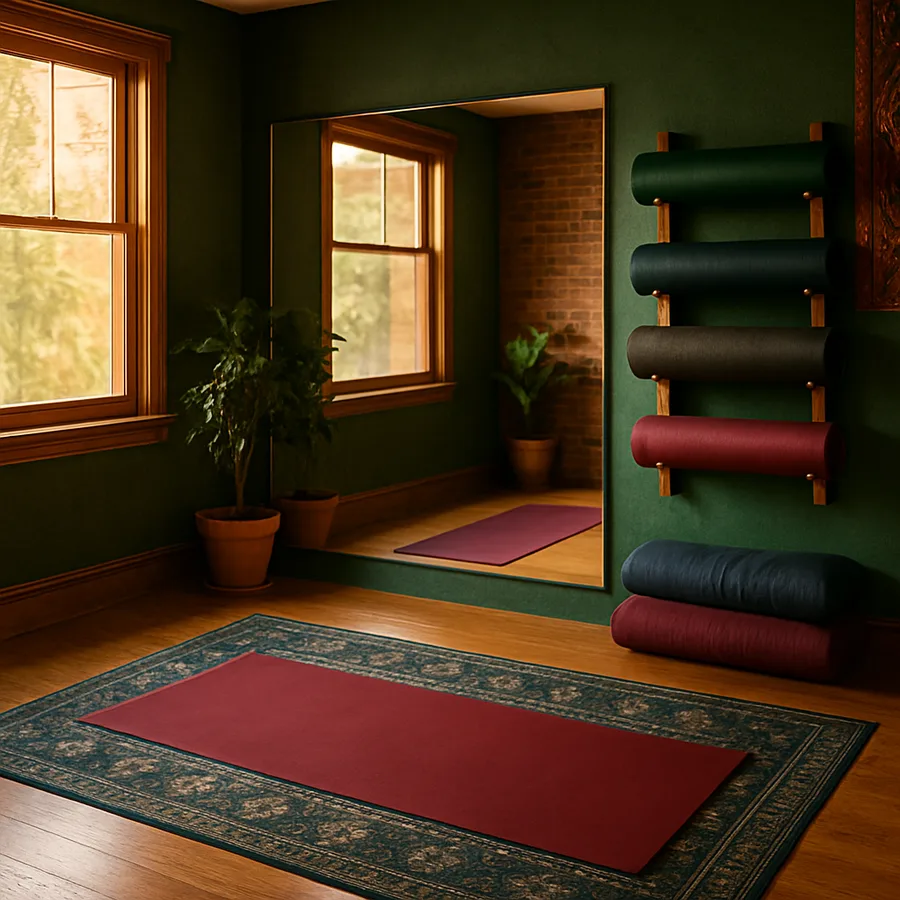
A home yoga studio is one of the highest-utility room conversions a household can undertake. According to a 2022 survey commissioned by Yoga Alliance and Yoga Journal, more than 36 million Americans practice yoga, and roughly two-thirds of those practitioners now do at least some of their sessions at home. That shift, accelerated by the pandemic and sustained by streaming classes, means the spare bedroom, finished basement, or sunroom is increasingly being asked to function as a real studio - not just a place to unroll a mat on the carpet between piles of laundry.
The two architectural decisions that make or break a home studio are the mirror wall and the mat storage system. Get those right and the rest of the room can be remarkably simple: clean floor, good light, a few well-chosen props. Get them wrong and the room will feel either like a dance studio or a gym closet, and the practice will quietly migrate back to the living room. Have you actually unrolled your mat in your current setup more than three times this month?
Why A Mirror Wall Matters More Than People Think
Yoga teachers debate mirrors. Traditionalists argue mirrors pull attention outward when the practice is meant to draw it inward. They are right, in part. But for the home practitioner without a teacher physically present, mirrors serve a function no mantra can replace: they allow real-time alignment feedback. Is the front knee tracking over the ankle in Warrior II? Is the back heel grounded? Is the spine actually neutral in plank, or has the lower back collapsed? A mirror answers these questions instantly.
The compromise most home practitioners settle on is a mirror that can be either looked into or visually ignored. A full mirror wall on the side of the room - not in front of the mat - gives a peripheral check without becoming the focal point. When the practitioner faces forward, the mirror is in the periphery; when alignment needs checking, a quarter turn brings it into view. This layout preserves the inward orientation of the practice while still giving the safety benefit of visual feedback.
Designers featured in Architectural Digest home gym features consistently use this side-wall configuration, often pairing it with a softer-finish wall on the opposite side to keep the room from feeling clinical. The goal is a studio that feels like a sanctuary first and a feedback tool second.
Choosing And Installing The Right Mirror
Forget closet-door mirrors and over-the-door dressing mirrors. They distort, ripple, and reflect back a wavy version of your pose that is actively unhelpful. Invest in glassless mirror panels or genuine glass mirrors rated for studio use. Glassless mirrors are made of a polished reflective film stretched over a frame; they are lightweight, shatterproof, and ship in panels that can be combined into a wall-sized surface. They are also the standard in commercial dance studios because they survive impact.
Genuine glass remains the gold standard for clarity. Look for mirrors at least one-quarter inch thick, with a distortion-free guarantee. Standard sizes are 60 inches wide by 84 inches tall; two or three panels side by side with seams flush create a continuous wall. Have a professional install with mastic adhesive and J-bar safety supports at the bottom. Do not rely on adhesive alone; the bottom support catches the mirror if the adhesive ever fails.
Mount the mirror so its bottom edge sits between four and eight inches off the floor. Lower than that and dust accumulates; higher than that and seated postures cannot be checked. The mirror should run from that low point up to approximately seven feet, which captures the full standing reach of nearly all practitioners. If ceiling height permits, going to eight feet allows comfortable handstand and inversion checks.
Flooring That Supports Mats, Joints, And Standing Postures
The flooring conversation is usually skipped in favor of the mirror conversation, but it matters more for injury prevention. Hardwood and engineered wood floors with a slight cushion underlay are the most versatile choice. They provide enough give for kneeling postures, do not slide under a properly textured mat, and clean easily. Avoid high-pile carpet entirely; the inconsistent surface makes balance postures genuinely dangerous and traps sweat and dust.
Cork flooring is an underrated alternative. It is warm underfoot, naturally antimicrobial, sustainable, and forgiving on joints. Bamboo offers similar benefits at a different price point. For a basement studio, interlocking EVA foam tiles with a wood-grain top layer are an inexpensive way to gain joint support without committing to a permanent renovation. Whatever the choice, the floor must be flat. A subfloor that slopes even a quarter inch over six feet will show up in tree pose immediately.
Mat choice interacts with floor choice. A natural rubber mat with a textured top grips wood and cork floors beautifully but will stick uncomfortably to vinyl. A polyurethane top layer on a rubber base is the most popular high-end combination because it offers extraordinary grip even when wet with sweat. Two stats worth knowing: the Yoga Journal annual gear review consistently rates mats with at least 4mm of cushioning as preferable for daily home practice, and the Better Homes & Gardens wellness team notes that practitioners with chronic knee discomfort report meaningful relief after switching to 5mm or 6mm mats.
Mat Storage Systems That Keep The Room Clean
A mat tossed in the corner is the visual cue that ends a home practice. Once the room starts to look like storage, it stops looking like a studio, and the brain stops associating it with practice. The solution is to make storage so easy and so visually clean that putting the mat away takes less effort than leaving it out. Three storage systems work consistently well.
The first is a wall-mounted vertical rack. A simple wood or powder-coated steel frame with three to five slots holds rolled mats upright like wine bottles in a rack. It takes about 12 inches of horizontal wall space, looks intentional, and lets mats air out fully between sessions, which prevents the mildew smell that plagues rolled-up neoprene. This is the gold standard for households with more than one practitioner because each person can claim a slot.
The second is a basket or trunk solution. A tall woven seagrass basket holds two or three rolled mats and a couple of blocks; a flat blanket trunk along one wall holds folded blankets and bolsters with a flat surface on top for water bottles and journals. This works particularly well in studios that double as guest rooms because everything visually reads as furniture rather than equipment.
The third is a built-in nook. If the studio sits in a converted closet or alcove, a custom shelf with vertical mat slots, a top shelf for blocks and straps, and hooks below for bolsters and blankets creates a complete prop wall that disappears behind a door or curtain when not in use. This is the most expensive option but transforms a room with one elegant move.
Props, Lighting, And The Supporting Cast
Beyond the mirror, the mat, and the storage system, a complete home studio needs a small, considered set of props. Two cork or foam blocks per practitioner; one cotton strap; one bolster for restorative work; two wool or cotton blankets for warmth and seated lift; and an eye pillow for savasana. That is enough for nearly any home practice short of advanced Iyengar work. The instinct to accumulate gear is the same instinct that ruins meditation rooms; resist it.
Lighting should be dimmable and layered. Overhead recessed lights with a warm dimmer for general practice, a single floor lamp with a linen shade for evening yin sessions, and an unobstructed window if possible. Morning light is the single greatest asset a yoga room can have. If natural light is limited, full-spectrum bulbs in the 2700K to 3000K range approximate it without the cold blue cast of standard LEDs. Are your current lights making the room feel like a yoga studio or like a hallway?
Sound completes the room. A small Bluetooth speaker tucked on a shelf, oriented toward the practice space, handles streamed classes and ambient music. Hard mirror walls amplify sound, so a wool rug on the non-practice end of the room, or an acoustic panel disguised as wall art, prevents the studio from echoing like a tiled bathroom during a class.
Maintenance, Hygiene, And Building The Habit
Mirror walls smudge. Plan to wipe them down once a week with a microfiber cloth and a vinegar-water spray or a streak-free glass cleaner. Mats need daily attention: a quick wipe with a 50/50 water and white vinegar spray, plus a few drops of tea tree oil, kills the bacteria and odor that build up from skin contact. Once a month, deep-clean mats by laying them flat in a bathtub of warm water with mild soap, rinsing thoroughly, and air-drying flat - never in a dryer, which destroys the texture.
Floors get swept or vacuumed every few days; hardwood and cork floors should be damp-mopped weekly with a wood-safe cleaner. Blankets and bolster covers go in the wash monthly. The American Society of Interior Designers, through ASID's wellness design resources, has long emphasized that perceived cleanliness in a wellness space is strongly correlated with actual use; rooms that smell faintly of cedar and clean cotton get practiced in, while rooms that smell of stale neoprene do not.
Finally, build a closing ritual that resets the room in under two minutes. Roll the mat tightly and slide it into the wall rack; stack blocks and strap on the top shelf; fold the blanket; dim the lights; close the curtain. The studio is ready for tomorrow morning before tonight's practice has fully cooled. This small ritual is the single highest-leverage habit for sustaining a home practice over months and years.
Conclusion
A home yoga studio is not built by a single big purchase. It is built by a sequence of small, correct decisions: side-wall mirror rather than front-wall mirror, distortion-free panels rather than closet-door mirrors, a vertical rack rather than a corner pile, cushioned natural flooring rather than carpet, a tight prop list rather than an accumulating collection. Each decision is modest. Together they produce a room where practice is the path of least resistance rather than an obstacle course.
The mirror wall, installed at the right height with safety supports, will outlast the household's first three streaming subscriptions and become a permanent architectural improvement to the home. The mat storage system, whether a wall rack or a built-in nook, is what separates a room used twice a week from a room used daily. Both improvements raise the home's resale appeal for the increasing share of buyers who prioritize wellness amenities.
Consistency, not gear, makes the practice. But the right room makes consistency easier. A studio that takes ninety seconds to set up and ninety seconds to put away will be used. A studio that takes ten minutes to clear and ten minutes to reset will be abandoned by week six. Design for friction reduction, and the room will earn back its square footage many times over.
One additional point worth raising for homeowners weighing this project against simply continuing to roll out a mat in the living room: a dedicated studio almost always increases the frequency and length of practice in measurable ways. Practitioners who have shifted from shared spaces to dedicated rooms report longer average session lengths, more consistent weekly cadence, and a higher likelihood of completing a full sequence rather than truncating it when interrupted. The room becomes a commitment device. The same psychological mechanism that makes a home gym more effective than a corner of the bedroom applies here, and arguably with greater force because yoga's emphasis on quiet attention is more easily disrupted by household noise than weightlifting is. Track your own session count for the first month after setting up the room; the data tends to surprise even skeptics.
Ready to begin? Pick one wall this weekend, measure for mirrors, and order a single wall-mounted mat rack. Subscribe to Interior Bliss for room-by-room wellness design guides delivered weekly, and share this article with the friend who has been streaming yoga classes from their living room floor for two years now.
Comments
Post a Comment