Cup Pull Cabinet Hardware Brass Versus Black Finishes
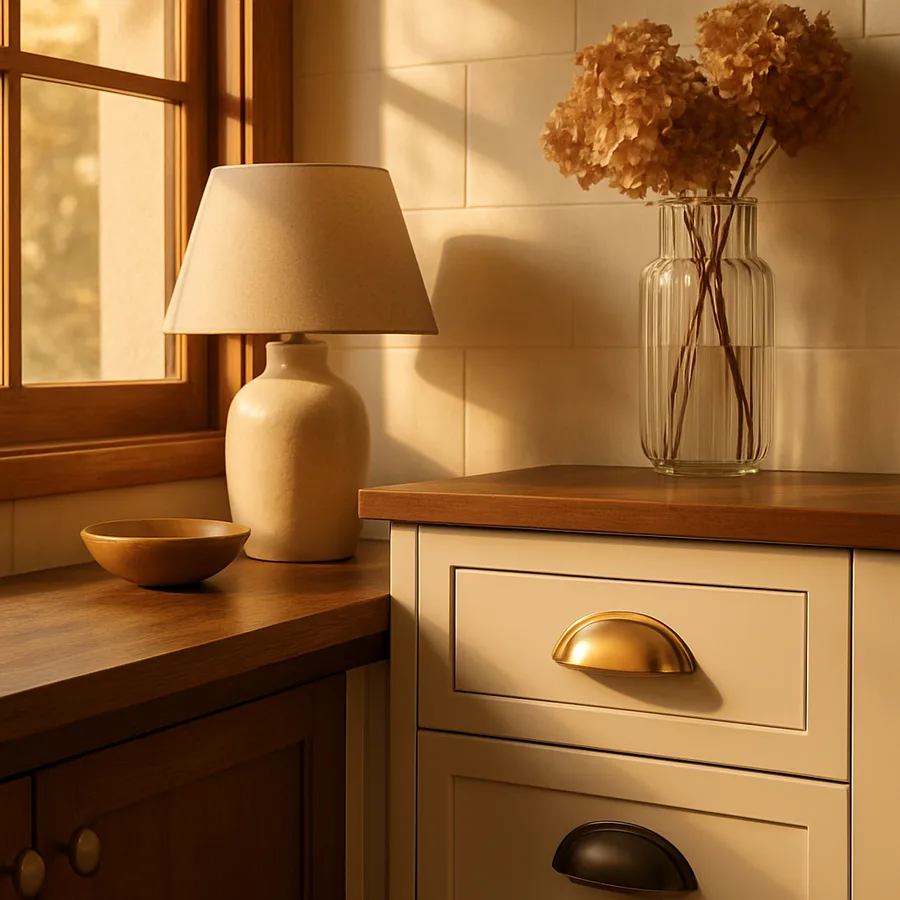
Cup pulls are one of those small hardware details that quietly carry an enormous amount of design weight. Drop them onto plain shaker cabinets and the kitchen instantly reads as more considered. Choose the wrong finish and the same cabinets feel mismatched in ways that no amount of paint or styling will fix. The two dominant finishes today - brass and black - represent fundamentally different aesthetic directions, and selecting between them deserves more thought than most homeowners give it.
This guide walks through the visual personality of each finish, durability and wear patterns in real kitchen conditions, coordination with countertops and faucets, the regional and stylistic contexts where each shines, and the practical realities of installation and replacement. By the end you will know not only which finish to choose, but why - and how to defend that choice to a partner, contractor, or designer with confidence.
The Personality of Each Finish
Brass cup pulls bring warmth, history, and gentle contrast to a cabinet face. The yellow-gold tone reads as classic, slightly traditional, and quietly luxurious. Aged or unlacquered brass develops a living patina - darker in the recesses, brighter on the high spots where fingers regularly land - and over years that variation becomes part of the kitchen's character. Polished brass, by contrast, stays bright and reflective with regular care, projecting more formality and shine.
Black cup pulls bring structure, definition, and modern edge to a cabinet face. The deep monochrome tone reads as clean, graphic, and often slightly industrial. Matte black absorbs light and recedes visually, letting the cabinet color and the countertop become the focal points. Gloss black, less common in cup pulls but available, reflects light and feels more dramatic. Black finishes also forgive certain shortcomings - minor cabinet imperfections that brass would highlight tend to disappear against black hardware.
The choice is rarely about which finish is objectively better. It is about which mood you want the kitchen to project. A kitchen with brass cup pulls feels like the inviting heart of a slightly traditional home; the same kitchen with black cup pulls feels like the sharp focal point of a slightly modern one. Both are valid; only one is right for your particular space.
Durability and Wear Patterns Over Years of Use
Cup pulls take more daily abuse than most cabinet hardware. Fingers slide in and grip the underside of the pull thousands of times per year, depositing oils and trace acids from food and skin. Whichever finish you choose, plan for visible wear over a five-to-ten-year horizon.
Brass wears gracefully. Lacquered brass eventually loses its coating in high-touch areas, and the underlying metal begins to patina unevenly. Many homeowners initially see this as failure, then come to appreciate the variation. Unlacquered or "living finish" brass skips the awkward intermediate stage and patinas honestly from day one - the recesses darken, the gripping surfaces stay brighter, and the cumulative effect after a few years looks intentional. Polished brass can be brought back to factory shine with metal polish if you prefer that look, accepting that you will repolish periodically.
Black finishes vary enormously in durability. Powder-coated black is the most robust common finish for kitchen hardware, resisting wear for many years when properly applied. Painted or sprayed black finishes wear faster, particularly along the gripping edges of cup pulls, where exposed underlying metal eventually shows through as small bright spots. Oil-rubbed bronze marketed as black is a hybrid - the finish wears intentionally to reveal copper undertones, which some homeowners love and others dislike.
A 2023 finish-durability study by the Kitchen Cabinet Manufacturers Association found that cup pulls in heavy-use kitchens showed visible finish wear at roughly twice the rate of knobs in the same space, because cup pulls concentrate hand contact on a smaller surface area. Whichever finish you choose, expect cup pulls to age faster than other hardware in your kitchen.
Coordinating With Countertops, Faucets, and Appliances
Cup pulls do not live alone. They share the visual field with countertops, backsplash, faucets, lighting fixtures, and appliance handles. The coordination question is rarely "what looks good in isolation" - it is "what looks good against everything else."
Brass cup pulls pair beautifully with warm-toned countertops: cream-veined marble, honed limestone, beige quartz with subtle gold flecks, butcher block, and travertine. Against cool-toned countertops like pure white quartz or gray granite, brass can feel slightly orphaned unless other warm elements (warm wood floors, copper pendants, brass faucet) tie it back in. The traditional rule of thumb is that brass should reappear in at least one other place in the room - a faucet, a light fixture, a small accessory - to feel intentional rather than accidental.
Black cup pulls pair well with both warm and cool countertops, which is part of their appeal. Against white quartz, black hardware creates strong graphic contrast that feels modern and confident. Against natural wood or warm stone, black hardware adds definition without competing for attention. Black faucets, black pendants, and stainless steel appliances all coordinate cleanly with black cup pulls. Brass appliances and fixtures with black hardware can work, but the contrast becomes the design - go all in on the mixed-metal look or pick one direction.
Have you considered how your hardware will look against your specific countertop in real lighting? Designers regularly recommend ordering one or two cup pulls in each candidate finish, placing them on a sample of your actual countertop, and viewing them in morning, afternoon, and evening light before committing to the full order. Twenty dollars of samples can prevent a far more expensive mistake.
Style Contexts Where Each Finish Excels
Certain kitchen styles strongly favor one finish over the other, and recognizing your style's defaults makes the choice easier.
English country, Georgian, Federal, traditional farmhouse, and transitional kitchens typically default to brass. The warmth of the metal matches the historical references these styles draw on. Polished brass works in more formal traditional kitchens; aged or unlacquered brass works in farmhouse and country variations. Black hardware in these styles can work but requires deliberate handling - usually paired with additional brass accents elsewhere to keep the kitchen from feeling stylistically split.
Modern, industrial, Scandinavian, and modern farmhouse kitchens typically default to black. The graphic clarity of matte black hardware matches the simpler lines and cooler palettes these styles favor. Brass hardware in these styles is possible - the recent revival of mixed metals has made warm-toned hardware common in otherwise modern spaces - but it shifts the kitchen's center of gravity toward traditional, which may or may not be what you want.
Mediterranean, Spanish revival, and tuscan kitchens historically favor warmer metals, often brass, copper, or oil-rubbed bronze. Black can appear in these styles but is less common, and pure matte black hardware often looks contemporary in ways that fight the warmer architectural cues.
Mid-century modern kitchens split. Original mid-century hardware was often satin brass or chrome rather than the bright polished brass popular today, and pure matte black hardware did not exist in the era. For period-accurate restorations, neither modern brass nor modern black is a perfect match; for inspired-by mid-century kitchens, either can work depending on the surrounding palette.
Installation, Sizing, and Spacing Details
Cup pulls install through two screws that pass through the drawer face from the back. Standard center-to-center measurements are 3 inches, 3.75 inches, 4 inches, and 5 inches, and these are not interchangeable. If you are replacing existing hardware, measure the spacing carefully before ordering. If you are installing new, decide on size before drilling.
For drawer fronts up to 18 inches wide, a single centered cup pull at 3 to 3.75 inch spacing usually looks right. For drawers between 18 and 30 inches, 4 inch spacing balances visual weight against the larger front. For oversized drawers above 30 inches, consider either a longer pull at 5 inches or two cup pulls placed symmetrically. Have you checked whether your current cabinet drilling will work with the new pulls? Many homeowners discover late in the process that their existing holes do not match the new hardware's spacing, requiring either touch-up filler and re-drilling or a complete drawer-front change.
Mounting height matters too. Cup pulls typically sit roughly one-third of the way down from the top edge of the drawer front, though some designers prefer centering them vertically on small drawers. Consistency across the room matters more than the specific choice - pick a rule and apply it everywhere.
Cost, Sourcing, and Long-Term Replacement
Cup pulls range from roughly $4 for basic budget hardware up to $40 or more per pull for solid cast brass from established hardware houses. The middle range - $10 to $20 per pull - buys solid quality from reputable manufacturers in either finish. Avoid anything under $6 per pull for a kitchen you plan to live in for more than a few years; cheap pulls bend, finishes fail, and the cost of replacing pulls is mostly your time, not the hardware.
For sourcing, look beyond the home centers. Specialty hardware retailers, salvage yards, and direct-from-manufacturer outlets offer significantly better quality at competitive prices. Many designers buy their cup pulls from boutique houses that produce solid brass or stainless-steel-cored powder-coated black pulls priced similarly to lower-quality big-box options. The National Kitchen and Bath Association publishes resources on selecting durable hardware, and the Kitchen Cabinet Manufacturers Association maintains guidance on compatibility between hardware and modern cabinet finishes.
Plan for one round of replacement over a decade in a heavy-use kitchen. The finish you choose should still be available in five to ten years if you want to replace damaged pulls without rebuying the entire set. Established hardware lines from major manufacturers offer this continuity; trendy boutique lines often do not.
Mixing With Knobs and Other Hardware Across the Kitchen
Many designers use cup pulls only on drawers and reserve knobs or bar pulls for upper cabinets. This mixed-hardware approach has practical reasons - cup pulls work beautifully for the horizontal motion of opening a drawer and less beautifully for the swing of a cabinet door - and it opens additional finish questions. Should the upper-cabinet knobs match the drawer cup pulls exactly, or can they vary?
The simplest, lowest-risk path is identical finish across all hardware in the room: brass cup pulls on drawers paired with brass knobs on uppers, or black cup pulls with black knobs. This reads as intentional and gives the eye a calm baseline. The next step is matching finish but varying form - a brass cup pull and a brass round knob - which works well in most kitchens. A more advanced move is mixing two finishes deliberately, such as aged brass cup pulls on lower drawers and matte black knobs on upper cabinet doors. This works when done with conviction and a clear logic but easily looks accidental when done timidly.
The appliance handles add another consideration. Stainless steel appliances pair cleanly with either finish; black stainless leans toward black hardware; integrated panel-front appliances disappear and let the cabinet hardware become the dominant visual rhythm. Look at your appliance plan as part of the hardware decision, not a separate one.
Conclusion
Choosing between brass and black cup pulls comes down to honest answers to four questions: what mood do you want the kitchen to project, what style of architecture and cabinetry are you working with, what countertops and other finishes will the hardware share the room with, and how do you feel about visible wear over time. When those answers align cleanly, the choice often makes itself. When they conflict, lean toward the finish that matches your countertop and existing hardware, because those elements are the hardest to change later.
Whichever finish you choose, invest in quality. Solid brass or solid steel with a quality finish coat will outlast hollow plated alternatives by a wide margin, and the price difference is small compared with the cost of installation labor. A kitchen with thirty cheap cup pulls feels cheap; the same kitchen with thirty good ones feels considered, even if no individual pull is showy.
Remember that finish trends shift on roughly ten-year cycles. Brass was unfashionable in the 1990s, returned dominantly in the 2010s, and remains strong today. Black was rare until the late 2010s and has surged in popularity in modern and modern-farmhouse kitchens. Either choice will read as current today; either may read as dated in fifteen years. Choose what you genuinely like rather than what is trending, because you live with the kitchen daily and your taste is what should drive the result.
Ready to decide? Order one cup pull in each finish, tape them to a drawer in your kitchen, and live with them for a week. Look at them in morning light, in evening light, when you are tired, and when you have guests over. The right one will start to feel obviously correct, and the wrong one will start to feel slightly off. Trust the recognition and order the full set with confidence.
More Articles You May Like



Comments
Post a Comment