Zinc Countertops in Bistro and French Cottage Kitchen Designs
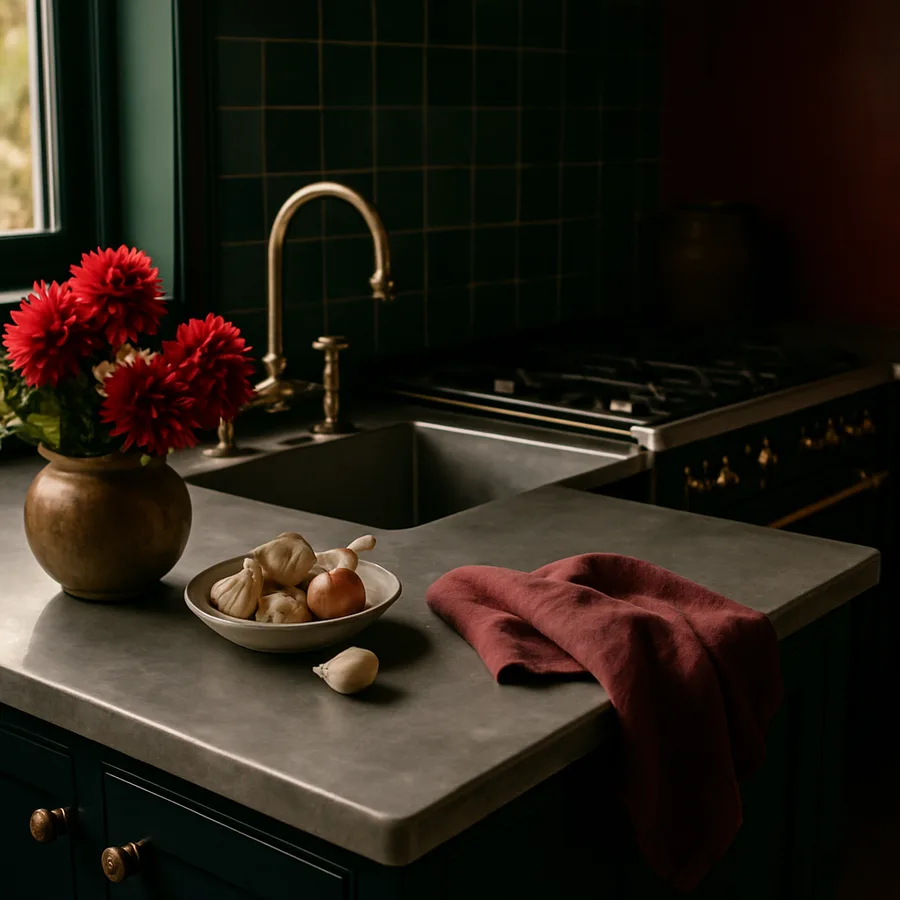
Walk into any neighborhood bistro in the Marais or a Provencal cottage kitchen reimagined for slow weekends, and one detail tends to anchor the room: a softly glowing zinc countertop, dimpled with use and warmed by years of wine, espresso, and bread flour. Zinc has been the working surface of Parisian bars since the late 19th century, and its quiet revival in residential kitchens has been one of the most interesting materials stories of the past decade. For homeowners drawn to the unhurried elegance of European cottage and bistro design, no other surface tells the same story.
This guide explores zinc as a residential countertop material, with particular attention to the design contexts in which it shines: French bistro islands, cottage prep kitchens, and butler's pantries that aim for an heirloom feel from the day they are installed. We will look at how zinc is fabricated, how it ages, how it compares to other reactive metals like copper and pewter, and what to expect from a real installation. Where appropriate, we draw on guidance from the National Association of Home Builders and the National Kitchen and Bath Association, both of which have published material on metal countertop selection and care.
The Bistro Origins of Zinc and Why They Still Matter
The story of zinc countertops in commercial kitchens begins around 1880, when Parisian bar owners began replacing their wooden bar tops with formed sheets of rolled zinc. The metal was inexpensive at the time, easy to fold and seam, and remarkably tolerant of spilled wine and the constant wiping that bar service required. Within a generation, the zinc bar had become so iconic that the French word "zinc" itself became slang for any neighborhood drinking establishment. According to historical retail data cited by the French Federation of Craft Trades, more than 40,000 such bars operated across France by 1925.
What made zinc work in commercial settings still makes it work residentially. The metal develops a surface oxide layer when exposed to air, which protects the underlying material from further corrosion. That oxide layer is what gives aged zinc its signature soft, dusky gray patina, somewhere between gunmetal and pewter, with subtle warm undertones depending on the alloy. Unlike copper, which oxidizes toward green, or steel, which rusts orange, zinc's patina settles into a stable, neutral palette that flatters almost every surrounding finish.
The visual quietness of zinc is precisely what makes it suitable for cottage kitchens. Where a polished granite or quartz surface announces itself, zinc whispers. It absorbs light rather than reflecting it. It accepts marks, ring stains, and the occasional ding as part of its evolving character. For homeowners who want a kitchen that looks like it has always been there, even when it is brand new, no other material delivers the same effect.
Material Specifications and Fabrication Process
Residential zinc countertops are typically fabricated from sheets between 14 and 16 gauge in thickness, wrapped over a marine-grade plywood substrate. The zinc itself is rarely pure; most countertop applications use an alloy that includes small percentages of titanium and copper to improve workability and reduce brittleness. This alloy, often referred to as architectural zinc, is the same material specified for European standing-seam roofing, and it carries a long track record of weather and wear performance.
The fabrication process is closer to metalworking than to stone cutting. A skilled fabricator templates the substrate first, then folds and crimps the zinc sheet over the edges, soldering seams where necessary. Edge profiles are typically square or slightly eased, often wrapped under the substrate by an inch or so to create a seamless visual line. Have you ever wondered why zinc countertops always seem to have such soft, hand-formed edges? It is because they are quite literally hand-formed, by tradespeople whose closest professional relatives are roofing artisans.
Seams in larger installations are usually soldered with a lead-free, food-safe solder that creates a barely visible line. According to a 2023 specification report from Architectural Record, approximately 92 percent of high-end residential zinc installations use a single-piece top whenever the slab dimensions allow, with seams introduced only when the run exceeds 10 feet. Talk through this with your fabricator early, because the substrate work, the seam strategy, and the edge wrap all influence pricing and timeline.
The Patina Cycle in a Working Kitchen
Zinc arrives from the fabricator in one of two finishes: a bright, almost mirror-like polished surface or a pre-aged matte finish that approximates several years of use. Whichever you choose, the surface will continue to evolve from the day it is installed. The first weeks bring scattered fingerprints and small water rings as the surface oxidizes unevenly. By month three, those marks blur into a more uniform haze. By month twelve, the countertop has developed what zinc enthusiasts call its character coat, a soft and consistent patina that no longer changes dramatically with everyday use.
Acidic foods accelerate the patina locally. A lemon wedge left on the surface for an hour will leave a darker mark. A splash of red wine wiped up after dinner may leave a faint tide line. A puddle of vinegar from a pickling session will etch a more pronounced ring. None of these are damage in any structural sense, but they are visible, and they are part of the appearance the material is known for. Homeowners who want a flawless, unchanging surface should not specify zinc.
Watching a zinc surface evolve is one of the genuine pleasures of owning the material. Many homeowners describe the first six months as a period of mild anxiety followed by gradual delight, as the patchy early oxidation gives way to the soft, unified glow that defines mature zinc. Designers who have specified the material for several clients consistently report that the second installation goes more smoothly because expectations are calibrated from the start. If you have access to a friend or colleague who already lives with a zinc countertop, a single afternoon visit will tell you more about the material than any showroom sample.
For those who do want to slow the patina or reset it occasionally, zinc responds to a gentle paste of baking soda and water, applied with a soft cloth and rinsed thoroughly. This will lighten visible marks and restore some uniformity, though it will not return the surface to its original brightness. A rarely used countertop, or one that primarily serves as a buffet or dry bar, will patina more slowly than a working prep surface, which is part of why zinc is so popular for islands that mainly host gatherings rather than daily food prep.
Designing the French Cottage and Bistro Palette
Zinc partners beautifully with the textures of a true cottage kitchen. Painted shaker cabinetry in soft creams, sage greens, mineral blues, and warm whites all flatter the dusky gray patina. Unlacquered brass hardware develops its own patina on a similar timeline, deepening from polished gold to a softly tarnished honey tone over a year or two. Aged oak floors, terracotta pavers, and unpolished limestone backsplashes all push the room further into the European cottage idiom.
For a more bistro-leaning interpretation, designers often pair zinc with darker cabinetry, often deep green or near-black, with white subway tile, brass rail systems, and pendant lights with milk glass shades. The contrast between the moody cabinetry and the soft glow of the zinc creates a Parisian cafe atmosphere even in a suburban American kitchen. According to the NKBA, French-influenced kitchens have ranked among the top three most-requested style references in custom residential remodels for three consecutive years.
Lighting is where these kitchens are made or broken. Zinc reflects warm light beautifully and can look cold or industrial under cool 4000K bulbs. A combination of warm 2700K pendant fixtures over the island and similarly warm under-cabinet lighting brings out the honeyed undertones in the patina. If you have ever stood in a perfectly lit Parisian cafe at dusk, you know exactly what this lighting feels like, and it is achievable at home with thoughtful fixture selection.
Practical Care, Cleaning, and Long-Term Maintenance
Daily care for zinc could not be simpler. Warm water and a soft cloth, with a single drop of mild dish soap if needed, handle nearly every cleaning situation. Avoid abrasive scrubbing pads, abrasive cleansers, and acidic specialty cleaners, all of which will strip the patina unevenly. After cleaning, dry the surface with a soft towel to prevent water spots, especially around the sink area where droplets tend to linger.
For deeper cleaning, the same baking soda paste mentioned earlier serves as the universal solvent for sticky residues, dried-on food, and stubborn stains. Apply gently with a soft cloth, rinse, and dry. Some owners apply a thin coat of food-safe beeswax once or twice a year to enhance the soft glow of the patina, though this is purely optional and many fabricators advise against waxing because it can complicate future repair work. The NAHB notes that metal countertops, including zinc, generally require less ongoing maintenance than natural stone or unsealed wood.
Heat protection matters more with zinc than with stone. The metal will not crack from a hot pan, but high heat can leave permanent darkening and, in extreme cases, can warp the substrate. Always use trivets for hot cookware. Sharp knives should not be used directly on the surface, both because the metal will scratch and because the edge of a good knife will dull on it. Use a cutting board, ideally end-grain wood, which complements the zinc visually as well.
Periodic touch-up service from the original fabricator is worth budgeting for in the long run. Roughly every five to seven years, depending on the intensity of kitchen use, a fabricator can refresh the surface by lightly sanding any deeply marked areas, re-soldering any seam separations, and reconditioning the patina to a more uniform appearance. The service is generally inexpensive relative to the original installation and extends the visual life of the countertop almost indefinitely. Building this expectation into the project from day one prevents the slow drift toward replacement that often catches homeowners by surprise around year ten of an unmaintained installation.
Cost, Sourcing, and Finding the Right Fabricator
Zinc countertops occupy the upper-middle of the residential countertop market in terms of installed cost, generally falling between mid-tier quartz and high-end marble. As of recent industry pricing data published by Remodeling Magazine, a typical installed cost falls between $150 and $250 per square foot in major metropolitan markets, with custom edge profiles, complex layouts, and integrated drainboards pushing prices higher. About 60 percent of that cost is fabrication labor, so finding a skilled metalworker is more important than chasing the lowest material price.
Sourcing the right fabricator can be the hardest part of a zinc project. Many traditional stone shops do not work in metal, and many sheet metal shops do not specialize in food-contact countertops. Look for fabricators who explicitly list zinc in their portfolio, ideally with several years of completed residential projects. Ask to visit a previous installation to see the patina in person, ideally one that is at least two years old. Have you ever toured a finished kitchen and immediately understood why a designer chose a particular material? Zinc kitchens reveal themselves this way.
Lead time for a custom zinc installation typically runs six to twelve weeks from final template to install. This is significantly longer than stone and quartz, which can be turned in two to four weeks, so plan accordingly within your overall renovation schedule. The longer lead time reflects the handcrafted nature of the work and is a fair trade for the material's distinctiveness.
Conclusion
Zinc rewards homeowners who want their kitchen to feel like it has always been there. The patina is the point, the fabrication is genuinely artisanal, and the partnership with cottage and bistro design palettes is essentially unmatched. For the right project, no other surface will deliver the same combination of European character, daily livability, and quiet aesthetic depth.
The trade-offs are real and should be discussed openly with any client considering the material. A zinc countertop will scratch, mark, ring, and patina, all on its own schedule. The aesthetic only works for homeowners who view those marks as part of the design rather than as flaws to be eliminated. For the client who wants a perfect, unchanging surface, quartz or polished granite remains the better answer.
If you are exploring zinc for an upcoming kitchen, butler's pantry, or bar project, start by visiting a fabricator's showroom and handling slabs at different ages. Bring home a small sample, place it in your kitchen for a few weeks, and see how the surface evolves and how the light treats it morning and evening. The right answer will become clear quickly. Reach out to a vetted local fabricator this month to begin templating; the lead times mean that a kitchen you commission now will be ready by mid-summer entertaining season.
More Articles You May Like



Comments
Post a Comment