Wine Bar Cabinet Design With Stemware Hooks and Cork Storage
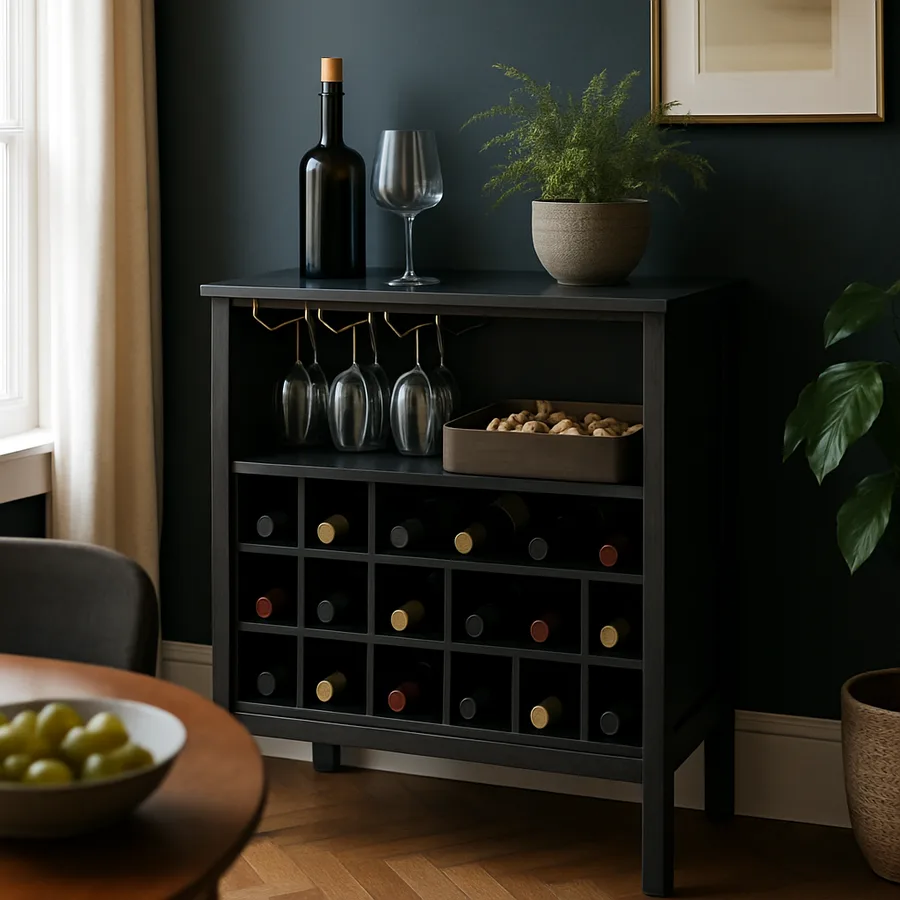
Wine consumption in American homes has shifted from special-occasion ritual to weekly habit, and the furniture has shifted with it. The freestanding wine rack tucked into a corner has given way to integrated wine bar cabinets with built-in stemware hooks, climate-controlled bottle storage, and decorative cork displays that turn a hobby into a design statement. According to the National Kitchen and Bath Association (NKBA), dedicated wine storage now appears in roughly 45% of new kitchen and dining renovations, a figure that has more than doubled over the past decade.
What sets a beautifully designed wine bar cabinet apart from an ordinary cabinet is the way it balances three competing demands: bottles must be stored properly to preserve flavor, glassware must be displayed without becoming dusty or cluttered, and the entire piece must function as furniture worthy of the dining room. Get any one of those three wrong and the cabinet becomes either a glorified pantry or a museum piece nobody actually uses. Get all three right and the cabinet becomes the centerpiece of the room.
This guide explores six design moves that turn a standard cabinet into a true wine bar, from selecting the right cabinet form to styling the cork display that completes the composition. Each section addresses a different dimension of the build, and together they offer a complete framework for the project.
Choosing the Right Cabinet Form for Your Home
Wine bar cabinets come in three primary forms, each suited to a different room and lifestyle. The freestanding hutch is the most traditional and works beautifully in dining rooms with enough wall space to accommodate a piece that is typically 36 to 48 inches wide and 72 inches tall. The built-in cabinet integrates into existing millwork and disappears into the room's architecture, making it a strong choice for kitchens and butler's pantries. The compact base cabinet is the most flexible option, ideal for smaller spaces or for homeowners who want a wine bar without committing to a full hutch.
Scale and proportion matter enormously. A cabinet that is too small reads as an afterthought against a long dining wall, while one that is too large dominates the room and creates a top-heavy feel. As a general rule, the cabinet should occupy between one-third and one-half of the longest wall in the dining area, with at least 36 inches of clearance in front for opening doors and serving without bumping into chairs. Plan the layout with painter's tape on the floor before committing to a purchase or build.
Material choice should harmonize with your existing dining or kitchen furniture. Walnut, oak, and rift-cut white oak are perennial favorites because they age beautifully and pair with both traditional and modern interiors. Painted finishes in deep navy, forest green, or charcoal feel current and dramatic, while natural wood feels warmer and more timeless. Architectural Digest regularly features both approaches in their dining room coverage, so the choice ultimately comes down to your existing palette and personal preference.
Designing Stemware Hooks That Work and Wow
Stemware hooks are the unsung hero of a great wine bar cabinet. They free up shelf space, protect delicate glasses from dust accumulation, and turn the glassware into a visual feature rather than hidden inventory. The most common configuration mounts the hooks to the underside of an upper shelf or to a dedicated rack inside the cabinet, with each hook spaced 3 to 4 inches apart to accommodate the widest part of the glass bowl without crowding.
Material and finish should echo the cabinet hardware for a coherent look. Brushed brass, matte black, and polished chrome all work depending on the cabinet's overall design language. Plan for at least 12 to 18 hooks, which accommodates a starter set of 4 to 6 red wine glasses, 4 to 6 white wine glasses, and 2 to 4 champagne flutes or coupes. Serious collectors will want more, but this baseline serves the vast majority of homes.
Have you considered how the act of removing a glass from a stemware hook differs from pulling one off a shelf? The former feels ceremonial, almost like reaching for an instrument, while the latter feels routine. Better Homes & Gardens (BHG) has noted that small ergonomic and emotional details like this consistently distinguish high-satisfaction renovations from forgettable ones. The hooks cost very little, but they change the daily experience of the cabinet in ways that compound over years. For more on built-in beverage features, see the BHG kitchen design archive.
Storing Bottles Properly Within the Cabinet
Wine bottle storage is where function takes the lead. Bottles with natural cork closures must be stored on their sides to keep the cork moist, since a dried-out cork allows oxygen in and ruins the wine. Plan for diagonal or horizontal racks with capacity for 24 to 60 bottles depending on your collection size. Wood, metal, and acrylic racks all work, with wood being the most traditional and forgiving of irregular bottle shapes.
Climate is the other critical consideration. Wine ideally lives between 55 and 65 degrees Fahrenheit with relative humidity around 60 to 70%. Most home wine bar cabinets cannot maintain these conditions perfectly, but you can get close by placing the cabinet on an interior wall away from direct sunlight, kitchens with frequent heat, and exterior walls that fluctuate with weather. For collections valued above a few thousand dollars, a built-in climate-controlled wine refrigerator is worth the investment, and many can be integrated directly into the cabinet for a seamless look.
Group bottles within the rack by region, varietal, or drinking window to make selection intuitive. Wine Spectator has long advocated for organized cellaring, noting that disorganized collections often lead to wines being forgotten and aged past their peak. The same logic applies on a smaller scale within a home wine bar. Label each shelf or section with a small chalkboard tag or brass nameplate to reinforce the organization. For ongoing wine education and storage guidance, see Wine Spectator's editorial library.
Designing a Cork Storage Display
The cork display is the most underrated styling opportunity in any wine bar cabinet. A clear glass jar or shadow box filled with corks from bottles you have shared with friends, family, and travels becomes a visual diary of memorable evenings. Each cork tells a story, and collectively they add warmth, texture, and personality that no purchased decoration can replicate. Have you ever noticed how the most personal homes always feature collections of small, sentimental objects rather than mass-produced art?
Choose a clear glass vessel with a minimum capacity of 50 to 100 corks, which represents roughly a year or two of casual collecting. A simple cylindrical apothecary jar works beautifully, as does a square shadow box mounted on the cabinet's side panel. The transparency lets light pass through the corks, casting subtle warm-toned shadows that change throughout the day. Replace the vessel as the collection grows, scaling up to a larger jar or adding a second vessel.
For an extra layer of meaning, write the date and occasion on memorable corks before adding them to the jar. A fine-point permanent marker works well and the writing fades subtly over years, mirroring the way memories themselves soften. The American Society of Interior Designers (ASID) often points to these kinds of personalized displays as the difference between a house that looks designed and a home that feels lived in. The distinction matters, and corks are an unusually powerful tool for closing the gap.
Lighting and Hardware That Elevate the Cabinet
Lighting transforms a wine bar cabinet from utility to showcase. Interior LED strip lights installed at the top edge of each shelf wash the bottles and glassware in warm light, creating a glow that draws the eye across the room. Most modern cabinets include built-in lighting wiring during construction, but retrofitting is straightforward with battery-powered or plug-in strip lights. Aim for warm-temperature bulbs in the 2700 to 3000 Kelvin range to flatter both the wine and the glassware.
Hardware deserves equal consideration. Pulls, knobs, and hinges should match the stemware hook finish for a coherent look, and they should feel substantial in the hand. Cheap hardware is one of the fastest ways to undermine an otherwise beautiful cabinet, while quality hardware elevates a modest cabinet into something memorable. Plan to spend a meaningful portion of your hardware budget on the pulls, since they are touched dozens of times per week and significantly shape the cabinet's perceived quality.
The National Association of Home Builders (NAHB) has noted that small detail upgrades like cabinet hardware and interior lighting consistently rank among the highest-return renovation choices, often delivering perceived value far in excess of their cost. Around 68% of homeowners surveyed in recent kitchen remodel studies rated lighting as one of the three most impactful elements of their renovation, ahead of countertops and cabinetry color. The same principle holds for wine bar cabinets specifically.
Maintaining and Refreshing the Cabinet Over Time
A well-built wine bar cabinet should last decades, but it requires ongoing attention to perform at its best. Wipe down stemware weekly to prevent dust accumulation, since dust on glasses dulls their sparkle and signals neglect to anyone who notices. Inspect bottle racks monthly for sediment leaks or mold, particularly in humid climates. Replace LED bulbs as they dim, even before they fail completely, since the warm glow is what makes the cabinet sing.
Refresh the styling seasonally. In autumn and winter, lean into deeper red wines displayed prominently and add a small bowl of nuts or chocolate beside the cabinet for spontaneous tasting. In spring and summer, rotate to lighter whites and rosés with a chilled storage spot designated for the bottles you actually pull most often. The seasonal rotation keeps the cabinet from feeling static and reflects how your drinking habits actually shift throughout the year.
Document your collection in a small notebook or a dedicated wine app. Track tasting notes, drinking dates, and bottles you want to try, and keep the notebook on a designated shelf within the cabinet. Over years, the notebook becomes its own design object and serves as a reference for future purchases. Friends inevitably pick it up during gatherings, and the conversations that follow tend to be far richer than the ones that happen around a less considered piece of furniture.
Conclusion
A great wine bar cabinet is an exercise in balance: function and beauty, storage and display, restraint and personality. The most striking cabinets in design publications consistently demonstrate the same principle, which is that the cabinet's job is to serve the wine, not to overwhelm it. Every design choice should be evaluated against that standard, from the size of the stemware hooks to the color of the LED lighting to the placement of the cork display.
Begin your own project by inventorying what you already own. How many bottles do you typically have in storage at any given time? How many wine glasses? How many corks have you saved without quite knowing where to put them? The answers to those questions shape every subsequent decision, from the cabinet's footprint to the hook count to the size of the cork jar. Most homeowners discover that they need either more or less storage than they initially assumed.
Beyond the aesthetics and the function, a wine bar cabinet is an invitation to host. The act of pulling a glass from a hook, selecting a bottle from the rack, and pouring with ceremony elevates an evening with friends in ways that a kitchen-counter pour simply cannot match. Friends comment on the cabinet, ask about the bottles, and stay longer at the table because the entire ritual feels considered. That hospitality dividend is the deepest reward of designing the cabinet with care.
Take one concrete step this week. Sketch a rough layout on graph paper, order a set of matching stemware hooks, or simply start collecting corks from every bottle you open from now on. The best wine bar cabinets are not assembled in a single weekend. They are layered over months and years as your collection grows, your taste evolves, and your hosting style refines. That ongoing process is exactly what gives the finished cabinet its soul, and it is the reason wine bar cabinets continue to anchor dining rooms in homes across every region of the country.
More Articles You May Like



Comments
Post a Comment