Antique Armoire Repurposing as Bar Cabinets and Linen Storage
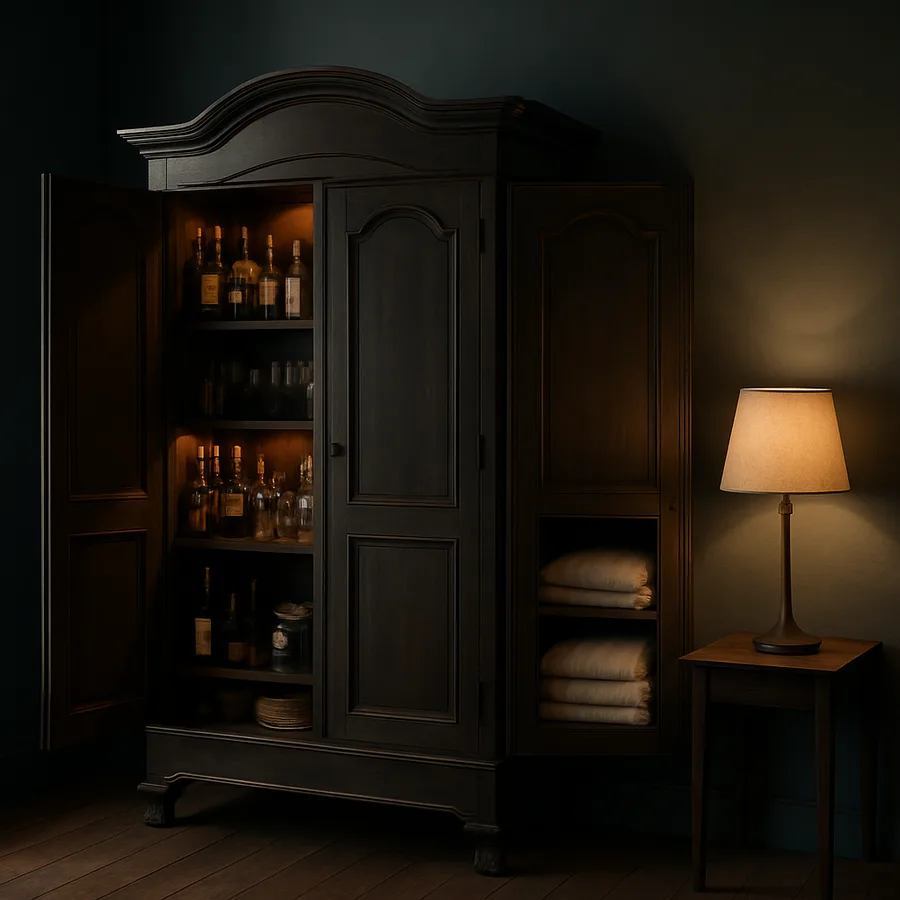
The antique armoire is one of the most undervalued pieces of vintage furniture in the current market. Built originally as a freestanding wardrobe in eras before built-in closets existed, the armoire was rendered functionally obsolete by 20th-century construction. The result is a flooded secondary market where genuinely beautiful 19th-century French, English, and American armoires sell for a fraction of what comparable case goods would cost new. According to the American Home Furnishings Alliance, demand for vintage and antique storage furniture has risen meaningfully over the past several years, but supply still outpaces buyer interest in many regional markets.
This is the buyer's opening. With a modest investment in conversion work, an antique armoire becomes one of the most useful pieces in a contemporary home: a fully outfitted bar cabinet for entertainers, or a deep, breathable linen and storage cabinet for households that have run out of closet space. Both conversions preserve the piece's structural integrity, can be reversed if a future owner wants the wardrobe function back, and add capability that the original design never anticipated.
Why the Armoire Is the Best Vintage Buy on the Market
To understand why armoires are undervalued, look at the construction. A typical 19th-century European armoire was built from solid hardwood, often walnut, oak, or cherry, with hand-cut dovetail joints, mortise-and-tenon door frames, and panels held in place by floating tongue-and-groove construction that allows the wood to expand and contract seasonally without splitting. This is furniture engineering that mass-market manufacturers stopped producing decades ago because it is too labor-intensive to be profitable at retail price points.
The piece's bulk is what scares modern buyers off. A standard French armoire stands seven to eight feet tall, measures four to five feet wide, and weighs several hundred pounds. It will not fit through a standard interior doorway assembled, and most armoires were originally built to be disassembled for transport via knock-down construction with wedged keys at the joints. Buyers who do not understand this assume the piece will not fit their home and walk away. Knowledgeable buyers walk in.
Have you measured the doorways and stairwells in your home recently? Most armoires can be disassembled into the cornice, the two side panels, the back, the doors, the base, and the interior shelving. Reassembly takes two people and an afternoon. If your home was built in the past century, you almost certainly have a path for the disassembled components even if the assembled piece would not fit.
The publication Architectural Digest has run several features on vintage armoire conversions in the past few years, and the consistent through-line is that the conversion cost plus the purchase price still comes in well below the price of a comparable new bar cabinet or storage piece from a premium manufacturer. The math favors the vintage path.
Planning the Bar Cabinet Conversion
The bar cabinet conversion is the more dramatic transformation, and it rewards careful planning. Start by inventorying what the cabinet needs to hold. A functional home bar typically requires vertical storage for tall bottles (gin, vodka, whiskey), horizontal or angled storage for wine, upright glass storage (rocks, wine, coupe, highball), a work surface for mixing, and small drawer storage for tools, napkins, and citrus prep.
The original armoire interior was designed for hanging clothes and folded linens, which means it almost certainly contains a hanging rod near the top and one or two horizontal shelves below. None of this serves bar function. The conversion strategy is to remove the hanging rod entirely, replace the existing shelves with adjustable shelving on metal pin supports, and install a pull-out or fixed work surface at counter height.
The work surface is the critical detail. A pull-out shelf at 36 inches from the floor matches standard counter height and gives you a usable mixing station that disappears when the doors close. Marble, soapstone, or a bar-rail edged hardwood are all appropriate materials. Avoid laminate, which will read as cheap against the patina of the original case.
Glass storage on the door interiors is the move that separates an amateur conversion from a professional one. Stemware racks mounted to the inside of each door hold wine glasses upside down, keep them dust-free, and present them at a downward angle when the doors open. The racks are inexpensive, install with eight screws, and dramatically increase usable interior volume.
Lighting, Wiring, and the Details That Sell the Conversion
Interior lighting transforms a converted armoire from "old wardrobe with bottles in it" to "home bar." Battery-powered LED puck lights with motion sensors are the simplest path. They install with adhesive backing, require no wiring, and turn on automatically when the doors open. A set of four to six pucks, distributed across the upper interior and behind the bottle shelves, supplies enough light for evening use without harsh shadows.
For a more permanent solution, hard-wired LED strip lighting can be routed through a small hole drilled in the back panel and connected to a low-profile transformer hidden behind the cabinet. This requires basic electrical work and is a job most homeowners should hire out. The visual difference is meaningful: continuous strip lighting under each shelf creates the floating-shelf effect seen in commercial bar design and turns the cabinet interior into a focal point even when the work surface is not in use.
A back panel mirror is a third tier of detail. Mirrored backs were standard in European armoires of certain periods and styles, and they double the visual depth of the bar interior while making the bottle collection look more abundant. If your armoire does not have an original mirrored back, a custom mirror cut to fit and applied with mirror mastic is a reversible modification.
Have you thought about how the cabinet will look when closed during a dinner party? The closed armoire should read as architecture, not as a piece waiting for the next pour. This is why the door interior storage and concealed lighting matter so much. The conversion should be invisible from outside the cabinet.
The Linen Storage Conversion: Quieter but Equally Useful
Not every household needs a bar, but nearly every household runs out of linen storage. The conversion path here is simpler and less expensive than the bar cabinet, and the resulting piece is one of the most genuinely useful items in a home. Quality linens want to live in a cool, dry, dark, breathable environment, and an antique wood armoire delivers all four conditions better than a modern closet.
The conversion involves removing any hanging rod, installing fixed shelving at sheet-set intervals, and lining the interior with a breathable fabric. Cedar lining is the traditional choice because it deters moths, but cedar's strong scent transfers to fabrics over time. A better contemporary choice is unbleached linen or cotton tacked to the interior panels, which protects the wood from snags, gives the linens a soft surface to rest against, and can be washed periodically.
Shelf spacing matters. Folded king-size sheet sets are roughly eight to ten inches tall, queen sets slightly less. Plan for shelves at twelve-inch vertical intervals to allow for easy retrieval without compressing the stacks. A bottom drawer or pull-out basket holds table linens, which benefit from being stored flat and unfolded between dinners.
Lavender sachets, cedar blocks, or similar moth deterrents should be replaced annually. The Better Homes and Gardens editorial team has consistently advocated for natural moth deterrents over chemical mothballs, which leave a persistent smell on textiles and are increasingly recognized as harmful to indoor air quality. A handful of well-sourced lavender bundles changed seasonally outperforms mothballs by every relevant measure.
Preserving the Finish: What to Touch and What to Leave Alone
The single most common mistake in armoire repurposing is over-restoration. A buyer brings home a beautiful 19th-century walnut armoire with an original wax finish, panics about the surface scratches and dull patches, and refinishes the exterior. The result is an armoire with the surface character of a contemporary reproduction and roughly half its original value.
Patina is irreplaceable. A century of waxing, light wear, and gentle sun exposure produces a surface depth that no contemporary finishing technique can replicate. The conversion work should leave the exterior almost entirely untouched. Address only the conditions that actively threaten the piece: loose joints, lifting veneer, active woodworm, and structural damage.
The American Society of Interior Designers publishes guidance on antique furniture care that consistently emphasizes minimum-intervention principles. The standard is the same in museum conservation: stabilize what is at risk, leave the rest alone. A well-applied paste wax once or twice a year is the only ongoing maintenance most armoire exteriors require.
The interior is a different conversation. Because the conversion is changing function, interior modifications are appropriate and even necessary. New shelving, new hardware for adjustable shelves, new fabric lining, and new lighting are all defensible interventions because they serve the new use. The principle to follow is reversibility: every modification should be undoable by a future owner who wants to restore the original wardrobe function.
Sourcing, Pricing, and Making the Math Work
The armoire market splits into three tiers. Country and provincial pieces, typically French, Italian, or Eastern European, in pine, oak, or fruitwood, are the most affordable. Expect to find good examples in the regional auction market for under fifteen hundred dollars, sometimes well under a thousand. Formal urban pieces in walnut or mahogany, with carved cornices and finer hardware, run higher. Signed or attributed pieces from notable cabinetmakers can run into significant five-figure territory and are properly the province of dealers.
For most repurposing projects, the country and provincial tier is the sweet spot. The construction quality is excellent, the visual character is strong, and the price leaves room for the conversion budget. House Beautiful has profiled a number of homes built around exactly this strategy: a single substantial vintage piece anchoring a room, with the conversion budget treated as part of the furniture cost.
Conversion costs vary widely. A bar cabinet conversion with adjustable shelving, a marble pull-out work surface, stemware racks, and battery-powered lighting can be completed for one to two thousand dollars in materials and labor if you hire a competent local cabinetmaker. Hard-wired lighting and a custom mirrored back add several hundred to a thousand dollars more. A linen storage conversion runs much less, often under five hundred dollars in materials with most labor handled by the homeowner.
What to avoid at the buying stage: armoires with significant active woodworm (look for fresh, light-colored bore dust under the piece), warped doors that no longer close flush, missing or heavily damaged feet, and structural cracks running across multiple panels. Cosmetic surface damage is fine and often desirable. Structural damage is not.
Conclusion
The antique armoire conversion is one of the most reliably successful furniture projects a homeowner can undertake. The starting material is a robust, beautifully constructed case piece available at a fraction of new-furniture pricing. The conversion path is well-established, reversible, and respects the integrity of the original. The finished piece is more useful and more visually distinctive than anything available new at any reasonable price point.
The bar cabinet path is the showier conversion and the one that most rewards detailed planning. Adjustable interior shelving, a pull-out marble work surface, door-mounted stemware racks, and concealed LED lighting transform the interior into a fully functional home bar that closes invisibly into a piece of architecture. The linen storage path is quieter but equally valuable, particularly for households that have run out of closet space and want their textiles stored in conditions that actually preserve them.
Both paths share the same conservation principle: leave the exterior alone, modify the interior thoughtfully, and ensure that every change is reversible. Patina is the most valuable thing the piece brings to your home, and it cannot be replicated. The conversion adds capability without subtracting character.
If you have been considering a major furniture purchase for storage or entertaining, spend an afternoon at a regional auction preview or estate sale before you order anything new. The right armoire for your home is almost certainly available within a few hours' drive at a price that makes the conversion math work. Bring a tape measure, a flashlight, and a willingness to look past the dust. The piece you find will outlast you.
More Articles You May Like



Comments
Post a Comment