Bathroom Mirror Cabinet Combos With Hidden Storage Inside
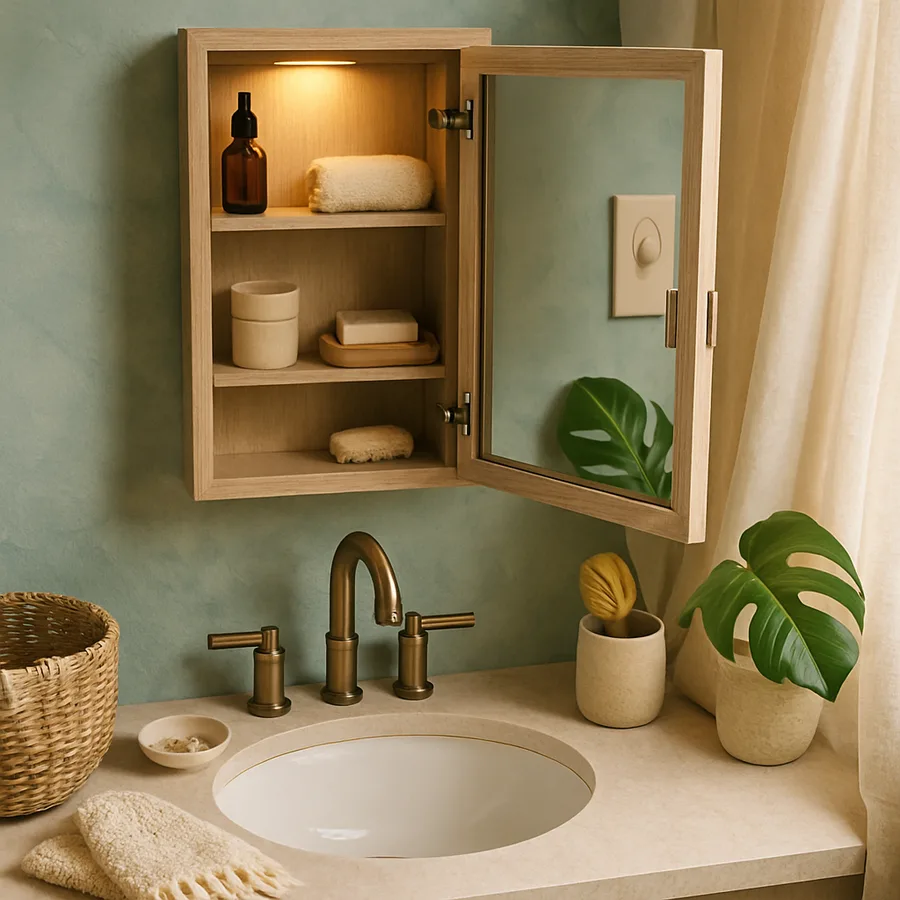
The bathroom is the smallest room in most homes and, by any honest measure, the hardest to organize. A typical family bathroom holds toothpaste, floss, razors, cotton swabs, prescription medications, skincare, hair products, first-aid supplies, nail clippers, thermometers, contact lens solutions, and a few dozen other small items that collectively defy neat arrangement. The mirror cabinet combo, sometimes called a medicine cabinet or a mirrored cabinet, solves this problem by stacking two necessary functions, reflection and storage, into a single footprint on the wall above the vanity. Done well, it disappears. Done poorly, it becomes a source of daily frustration for years.
Demand for these pieces has surged recently. A 2025 bathroom renovation survey from the National Kitchen and Bath Association (NKBA) found that 71% of bathroom remodels now include a mirrored cabinet, up from 54% five years prior. The increase reflects several converging trends: smaller urban bathrooms that cannot accommodate freestanding storage, growing interest in minimalist aesthetics that prefer concealed clutter, and the rise of integrated lighting technology that transforms the cabinet into a multi-function fixture. A thoughtfully chosen combo can add 15 to 30 square feet of effective storage in a bathroom without consuming a single inch of floor space.
Understanding the Anatomy of a Modern Mirror Cabinet
A modern mirror cabinet is more architectural element than accessory. It consists of a recessed or surface-mounted enclosure, one or more mirrored doors, internal shelving that may be fixed or adjustable, and increasingly an integrated lighting system, often with LED strips concealed behind the mirror or along its edges. Higher-end models include anti-fog heating elements, motion-activated interior lights, and hidden electrical outlets for razors, electric toothbrushes, and waterpiks.
The distinction between recessed and surface-mounted is the most important decision a homeowner makes early in the process. A recessed cabinet sits inside the wall cavity, projecting only a half inch or so past the drywall. A surface-mounted cabinet projects 4 to 6 inches outward, like a shallow box attached to the wall. Recessed units look cleaner and save counter space but require cutting into the wall and confirming that no studs, plumbing, or electrical lines conflict. Surface units are faster to install and work in any wall, including tile or exterior walls where recessing is impractical.
Interior organization is the feature that separates a usable cabinet from a disappointing one. Look for adjustable glass shelves rather than fixed wood shelves; bathrooms generate moisture, and wood shelves eventually warp, while glass shelves are easier to clean and do not trap odors. Also look for at least one shelf that is at least 4.5 inches deep, enough to accommodate tall skincare bottles without forcing them to lean.
Sizing, Layout, and Vanity Alignment
Mirror cabinet sizing is governed by the vanity below it, not by the wall behind it. The cabinet's total width should equal the vanity width or fall slightly short of it, never exceed it. If your vanity is 36 inches wide, target a cabinet in the 30 to 36 inch range. A cabinet wider than its vanity creates a visual top-heavy effect and often conflicts with adjacent walls, light fixtures, or windows. Designers affiliated with the American Society of Interior Designers (ASID) consistently rank misaligned mirror-to-vanity proportions as one of the top five bathroom design mistakes.
Height placement is equally precise. The bottom edge of the cabinet should sit approximately 6 to 10 inches above the highest point of the faucet or the countertop, whichever is higher. Lower than 6 inches and the cabinet interferes with backsplash hardware and soap dispensers; higher than 10 inches and the top shelves become unreachable for anyone under 5 foot 6. A 2024 ergonomic study published by the Human Factors and Ergonomics Society found that bathroom cabinet shelves above 72 inches from the floor went unused by 89% of survey respondents, effectively wasting that storage.
For couples or shared bathrooms, consider a two-door cabinet with independent storage sides. Each person can claim half, which dramatically reduces morning friction. Triple-door cabinets, popular in larger master bathrooms, offer a third dedicated section for shared items like first-aid supplies and spare toothbrushes. A reader question worth asking honestly: how often do you and your partner argue about counter clutter? The answer usually points to whether a single or multi-door cabinet fits your life.
Recessed vs Surface-Mounted: The Installation Trade-Off
Recessing a cabinet into the wall is a commitment. You will need to open the drywall, frame a stud opening to match the cabinet's rough-in dimensions, and confirm with a stud finder or contractor that no hidden plumbing vent stacks, electrical conduit, or load-bearing framing occupies the space. In older homes, particularly those built before 1978, there is also a possibility of lead paint in the affected wall, which triggers EPA RRP rule requirements if the bathroom is in a pre-1978 home and a child under six lives there. Licensed contractors certified through the Environmental Protection Agency (EPA) lead-safe program can navigate these requirements.
Surface mounting avoids all of this complexity. The cabinet attaches to the wall with heavy-duty anchors or stud screws, and installation typically takes 30 to 90 minutes with basic tools. The trade-off is visual: the cabinet projects outward, creating a shadow line and slightly reducing the usable counter space below. In small bathrooms with limited counter real estate, even a few inches of projection can feel intrusive.
A middle-ground option gaining popularity is the semi-recessed cabinet, which sits partially in the wall and partially on the surface, typically projecting 2 to 3 inches outward. Semi-recessed units offer a cleaner look than fully surface-mounted while requiring less invasive wall work than fully recessed. Expect to pay a 15 to 25 percent premium over comparable surface-mounted units.
Integrated Lighting and Electrical Features
The modern mirror cabinet is increasingly a lighting fixture as well as a storage piece. Integrated LED strips along the perimeter of the mirror provide task lighting for shaving, makeup application, and skincare routines, replacing or supplementing traditional wall sconces. The best integrated lighting uses color temperatures in the 3000K to 4000K range, which flatters skin tones while providing enough color accuracy for makeup work. Lights above 5000K look clinical and age skin harshly; lights below 2700K make foundation application nearly impossible.
Some cabinets now include anti-fog heating pads behind the mirror surface, which keep a clear central viewing area even during hot showers. These features draw minimal electricity, typically under 20 watts, but they require a hardwired connection, which means either tapping into existing bathroom circuitry or running new wiring. The National Electrical Code, maintained by the National Fire Protection Association (NFPA), requires ground-fault circuit interrupter (GFCI) protection on any bathroom circuit, and mirror cabinet wiring must comply.
Interior outlets, tucked inside the cabinet for charging electric toothbrushes and razors, are another increasingly common feature. They keep unsightly cords off the counter and reduce exposure to water. A growing number of units also include integrated USB-C ports, which future-proof the cabinet as personal electronics shift away from traditional plugs. Have you counted how many charging devices already live on your bathroom counter? The number usually surprises homeowners and makes the case for interior outlets.
Safety: Glass, Medications, and Child Access
Mirror cabinets raise three distinct safety concerns that often go unaddressed until something happens. The first is glass quality. Cabinet doors and interior shelves should ideally use tempered glass, which fractures into small rounded pieces rather than sharp shards if broken. The Glass Association of North America (GANA) maintains standards for decorative and safety glass, and tempered products are usually labeled with a small etched mark in a corner. Annealed glass, the standard non-safety variety, is cheaper but significantly more dangerous if a cabinet door slams or breaks.
The second concern is medication storage. Mirror cabinets are still commonly called medicine cabinets, and many families do store prescriptions and over-the-counter medications inside. The American Academy of Pediatrics has long recommended that all medications be stored in locked containers out of the reach of children, and a standard mirror cabinet at adult eye level generally qualifies as out of reach for young children. However, unlocked cabinets are accessible to curious older children, and any household with teenagers should consider at least one lockable compartment for controlled substances.
The third concern is humidity-induced deterioration. Bathrooms are the most humid rooms in a home, and the mirror silvering on cabinet doors can develop black spots, called desilvering, within five to ten years if the backing is not moisture-resistant. Look for cabinets with copper-free silvering and sealed door edges; these can outlast budget cabinets by a decade or more. A U.S. Department of Energy bathroom ventilation guideline recommends an exhaust fan sized at 1 CFM per square foot of bathroom area, which also dramatically extends the life of any mirror cabinet inside the room.
Styling the Cabinet So It Does Not Look Like a Cabinet
The hallmark of a well-designed mirror cabinet is that it reads as a mirror first and a cabinet second. The most successful installations hide the door hinges, use push-to-open latches rather than visible knobs, and align the mirror surface flush with any surrounding tile or wall so no shadow line betrays the storage inside. This is where higher-end cabinets earn their price premium; budget models often have visible hinges, prominent knobs, and clumsy frame proportions that announce the cabinet function loudly.
Frame choice also matters for the cabinet to blend rather than obtrude. A frameless cabinet, where the mirror extends edge to edge with no visible surround, looks the most like a plain mirror and works best in contemporary and minimalist bathrooms. A thin metal frame in matte black, brushed nickel, or aged brass introduces warmth and works well in traditional, transitional, and industrial bathrooms. Thick wood frames are less common but effective in rustic, farmhouse, and coastal bathrooms, particularly when the wood tone matches or deliberately contrasts with the vanity.
Reflections inside the cabinet can be styled too. When the doors open, what you see matters. Cabinet manufacturers like Robern and Kohler now offer optional mirrored interior walls, which reflect light into the cabinet and make contents easier to find. Organizers from brands such as iDesign and The Container Store can be used inside to group small items by category, transforming cluttered shelves into a curated display visible every morning.
Conclusion
A bathroom mirror cabinet combo is one of the highest-leverage renovations available to any homeowner, not because it is dramatic, but because it quietly solves a problem that every bathroom has and no other furniture category addresses as efficiently. The cabinet reclaims countertop space, organizes dozens of small items, conceals clutter from guests, adds task lighting, and in the most current models integrates charging outlets, anti-fog heating, and motion-activated interior illumination. It does all of this within the footprint of a mirror that was going on the wall anyway.
The trade-offs are real but manageable. Recessed installations demand more upfront planning and usually a contractor. Surface installations are easier but project outward. Electrical features require GFCI-protected circuits and licensed installation in most jurisdictions. Glass quality and cabinet construction vary widely across price points, and the cheapest options tend to desilver, warp, or fail within a few years. A mid-range cabinet from an established manufacturer, properly installed, will outlast most other bathroom fixtures.
When you evaluate options, start with the size of your vanity and the height of your tallest user, then map internal storage to your actual daily items rather than generic assumptions. A cabinet perfectly sized to hold exactly what you use every day, with adjustable shelves to accommodate occasional purchases, is worth significantly more than a larger cabinet whose extra volume never gets used. Measure twice, plan once, and you will live with the result for a decade or more with complete satisfaction.
Ready to reclaim your bathroom counters and hide the clutter for good? Explore Interior Bliss's expert-curated collection of mirror cabinet combos, download our free bathroom storage assessment worksheet, and join our newsletter for monthly renovation tips, product reviews, and exclusive subscriber discounts.
More Articles You May Like



Comments
Post a Comment