Coffee Bar Setup at Home With Espresso Machine and Beans Storage
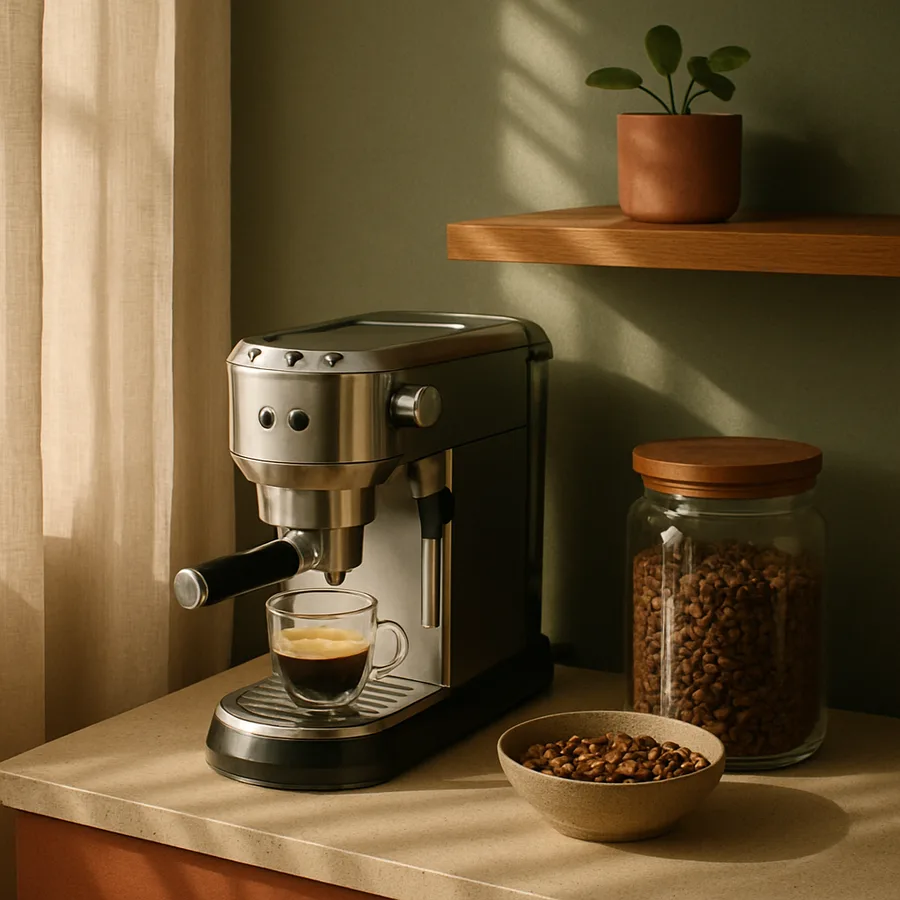
The morning ritual of pulling a perfect espresso shot has migrated from neighborhood cafes into the heart of the American home. According to the National Coffee Association, more than 66% of Americans drink coffee daily, and a growing share of that consumption now happens at custom-designed home coffee bars. What was once a simple drip pot tucked beside the toaster has evolved into a designated zone with display-worthy machinery, sculptural beans canisters, and lighting that flatters both the cup and the kitchen. Have you walked into your kitchen lately and wondered why your coffee corner looks like an afterthought? You are not alone, and the fix is far more achievable than you might think.
A well-planned home coffee bar rewards you in three ways: it shaves precious minutes from your morning routine, it telegraphs hospitality to overnight guests, and it adds a layer of sensory richness to a room that often gets treated as purely utilitarian. Designers from the National Kitchen and Bath Association (NKBA) increasingly include dedicated beverage zones in their renovation briefs, and homeowners are following suit by carving out 24 to 48 inches of countertop specifically for the espresso machine, grinder, and beans storage. The goal is not to mimic Starbucks but to honor the craft of coffee with surfaces, storage, and styling that feel intentional.
This guide walks through six core design moves that turn a cluttered counter into a pro-grade brewing station, then closes with a styling checklist you can execute this weekend.
Choosing the Right Location for Your Coffee Bar
Location is the single most important decision in any coffee bar build, and yet it is the one most homeowners rush. The ideal spot sits within six feet of a water source for the espresso machine, has at least one dedicated 20-amp electrical outlet, and lives outside the main cooking triangle so morning brewing does not collide with breakfast prep. Many designers featured in Architectural Digest recommend tucking the coffee bar into a butler's pantry, a former desk nook, or the dead space between the refrigerator and a side wall. These locations create a destination room within a room and free up your primary kitchen workspace.
If you are building from scratch, ask your contractor to rough in a recessed shelf cavity that is 36 inches wide by 24 inches deep. This footprint accommodates a prosumer-grade espresso machine, a separate grinder, and a small landing zone for cups. If you are working with an existing kitchen, a freestanding cabinet or a repurposed sideboard can deliver the same effect without demolition. The NKBA notes that nearly half of recent kitchen remodels include some form of dedicated beverage station, a sharp rise from a decade ago.
Lighting deserves equal attention. A single warm-toned pendant suspended 32 inches above the bar creates a halo effect that flatters both the machinery and the morning ritual. Add an under-cabinet LED strip set to roughly 2700 Kelvin to wash the counter with light that mirrors the glow of a real cafe. The combination feels theatrical without being precious.
Selecting the Right Espresso Machine for Your Space
The espresso machine is the sculpture at the center of your coffee bar, so it deserves to be chosen with the same care you would give a piece of art. There are four broad categories worth considering: manual lever machines for purists, semi-automatics for hands-on hobbyists, super-automatics for convenience seekers, and capsule systems for the lowest-friction option. Each category lives at a different price tier and demands a different amount of counter real estate, ranging from compact 9-inch capsule machines to 18-inch dual-boiler beasts that anchor entire rooms.
For most home coffee bars, a semi-automatic machine in stainless steel or brushed black hits the sweet spot between performance and visual impact. Pair it with a separate burr grinder rather than relying on a built-in unit, because freshly ground beans deliver a measurably better cup. Wine Spectator and other beverage publications have noted that the same principle of grinding immediately before extraction applies whether you are dealing with espresso, drip, or pour-over methods. Freshness is non-negotiable.
Color and finish matter more than most buyers realize. A polished chrome machine reads as classic Italian cafe, a matte black machine feels modern and architectural, and a copper or brass accent finish nods to vintage and farmhouse aesthetics. Match the machine to your kitchen's hardware finishes for a coherent look, or pick a deliberate contrast color to make the espresso machine the room's focal point. Either approach works, but indecision results in a coffee bar that feels accidental rather than designed.
Designing Beans Storage That Doubles as Decor
Beans storage is where most home coffee bars fall apart visually. Plastic bags clipped shut with binder clips and dollar-store canisters lined up unevenly will undercut even the most beautiful machine. The fix is to invest in three to five matching airtight containers, each holding a different roast or origin, and to display them in a deliberate composition rather than a random row. Glass canisters with bamboo lids have become a designer favorite because they reveal the beans themselves, turning the coffee into part of the visual story.
Freshness, however, must come before aesthetics. Light, oxygen, heat, and moisture are the four enemies of roasted coffee, and clear glass canisters violate the first rule unless you store them inside a closed cabinet between uses. The compromise many homeowners adopt is to display beans in clear vacuum-seal canisters with one-way valves that bleed off carbon dioxide while blocking incoming oxygen. These containers cost roughly twenty to forty dollars each and extend bean freshness from one week to nearly a month.
Label each canister with the roast date and origin using a small chalkboard tag or a brass nameplate. This step transforms beans storage from utilitarian shelving into a curated tasting menu and signals to guests that you take the craft seriously. Better Homes & Gardens (BHG) regularly highlights this approach in their kitchen feature stories because it elevates a small detail into a complete design moment. For inspiration on countertop curation, see how BHG's kitchen design archive handles dedicated beverage zones in real renovations.
Curating Cups, Saucers, and Drinkware Display
The cups you choose are the most personal layer of the coffee bar, and they offer the easiest opportunity to express style without major investment. Open shelving above or beside the espresso machine lets you stack 6 to 12 cups in a way that reads as a small ceramic library. Mix demitasse cups for espresso, larger ceramic mugs for cappuccinos, and one or two double-walled glass mugs for visual contrast. The goal is variety with a unifying thread, whether that thread is a color palette, a single ceramicist, or a shared geometric form.
Hooks installed on the underside of an upper cabinet create a hanging display that frees up shelf space and adds a layer of vertical interest. Brass or matte black cup hooks are inexpensive and install in minutes, but they completely change the rhythm of the wall. Have you considered turning your mug collection into a daily-use art installation rather than tucking it behind closed doors? Many designers featured by the American Society of Interior Designers (ASID) argue that everyday objects deserve to be seen and that hiding them behind cabinet doors strips a kitchen of its personality.
Saucers and small plates for biscotti or shortbread can be stored vertically in a slim plate rack mounted to the backsplash. This detail nods to old European cafes where saucers were always within arm's reach of the barista. A small detail, perhaps, but the cumulative effect of cups, saucers, hooks, and plate racks is a coffee bar that feels both functional and curated. For deeper guidance on residential beverage zones, see the ASID design resources.
Adding Accessories and Tools That Complete the Setup
Once the machine, beans, and cups are in place, the supporting cast of tools elevates the bar from amateur to enthusiast. A wooden tamper with a turned handle, a brass milk pitcher, a knock box for spent grounds, and a small tray for cleaning brushes all signal that this is a working bar, not a showroom. Group these tools on a dedicated tray or inside a shallow drawer organized with custom dividers. The grouping matters because it creates a visual rhythm and prevents the counter from looking like a cluttered hardware store.
Water quality is an often-overlooked accessory category. A small under-counter filtration system or even a countertop pitcher with a high-quality filter dramatically improves espresso flavor and extends machine life by reducing scale buildup. Many espresso enthusiasts recommend testing your tap water with a total dissolved solids meter and adjusting accordingly. The investment is modest, typically under one hundred dollars, but the impact on every cup you pull is significant.
Finally, do not neglect the small luxuries: a brass scoop for measuring beans, a glass syrup bottle for vanilla or hazelnut, a small ceramic dish for sugar cubes, and a cloth napkin folded beside the saucers. These touches cost very little but communicate hospitality. Around 79% of homeowners surveyed by remodeling industry sources say they entertain at home more often after upgrading their coffee bar, suggesting that the social return on this investment is real.
Maintaining and Refreshing Your Coffee Bar Over Time
A coffee bar is not a static installation. Beans get consumed, machines need descaling, and your taste in roasts will evolve. Build a maintenance rhythm that keeps the bar performing at its best. Plan to descale your espresso machine every three months, replace water filters according to the manufacturer's schedule, and deep-clean the grinder burrs every month. These small acts of maintenance preserve both flavor and the machine's resale value, which can hold up surprisingly well over five to seven years for prosumer brands.
Refresh the styling seasonally. Swap in heavier ceramic mugs and darker beans canisters for fall and winter, then rotate to lighter porcelain demitasse cups and pale wood accents for spring and summer. Add a small vase of fresh herbs or a single flower stem to introduce a living element. The National Association of Home Builders (NAHB) notes that small seasonal updates in high-traffic zones like coffee bars deliver disproportionate emotional value to homeowners, even when the underlying architecture stays the same.
Document your favorite recipes and dial-in settings in a small leather notebook kept on the bar. This is part nostalgia, part practical reference, and entirely charming when guests pick it up and flip through. The notebook becomes its own design object and reinforces the idea that this corner of the kitchen is a space for craft, ritual, and quiet pleasure.
Conclusion
A great home coffee bar is built one decision at a time, from the location to the machine to the smallest brass scoop. The most successful bars share a common quality: they treat coffee as a craft worthy of design attention rather than a chore to be hidden. When you commit to that mindset, the morning routine transforms into a ritual you actually look forward to, and the kitchen gains a destination that draws people in.
Start by auditing your existing setup with fresh eyes. Where is your espresso machine living right now, and is that location helping or hurting the experience? Are your beans being stored in a way that protects flavor and looks beautiful, or is there room for improvement? Walk through each of the six design moves above and identify the single highest-impact change you could make this month. Most homeowners report that even one focused upgrade, such as replacing all beans canisters with matching glass jars, completely changes how the bar feels.
Beyond the aesthetics, a thoughtful coffee bar is an invitation to slow down. In a culture that prizes speed, having a designated zone where the only acceptable pace is the rhythm of an espresso pull is its own quiet rebellion. Friends linger longer, mornings feel less rushed, and the act of brewing becomes meditative. That payoff is harder to measure than square footage or resale value, but it is the reason this design trend continues to grow year after year.
Ready to start your own build? Pick the location this week, sketch a simple layout, and order one matching set of beans canisters as your first concrete step. The rest of the bar will reveal itself as you live with the space and learn what your daily ritual actually requires. The best coffee bars are not designed all at once. They are layered, refined, and loved into being over months and years, and that is exactly what makes them feel so personal when you finally sit down with the perfect cup.
More Articles You May Like



Comments
Post a Comment