Textured Peel-and-Stick Wallpaper: Grasscloth and Linen Looks
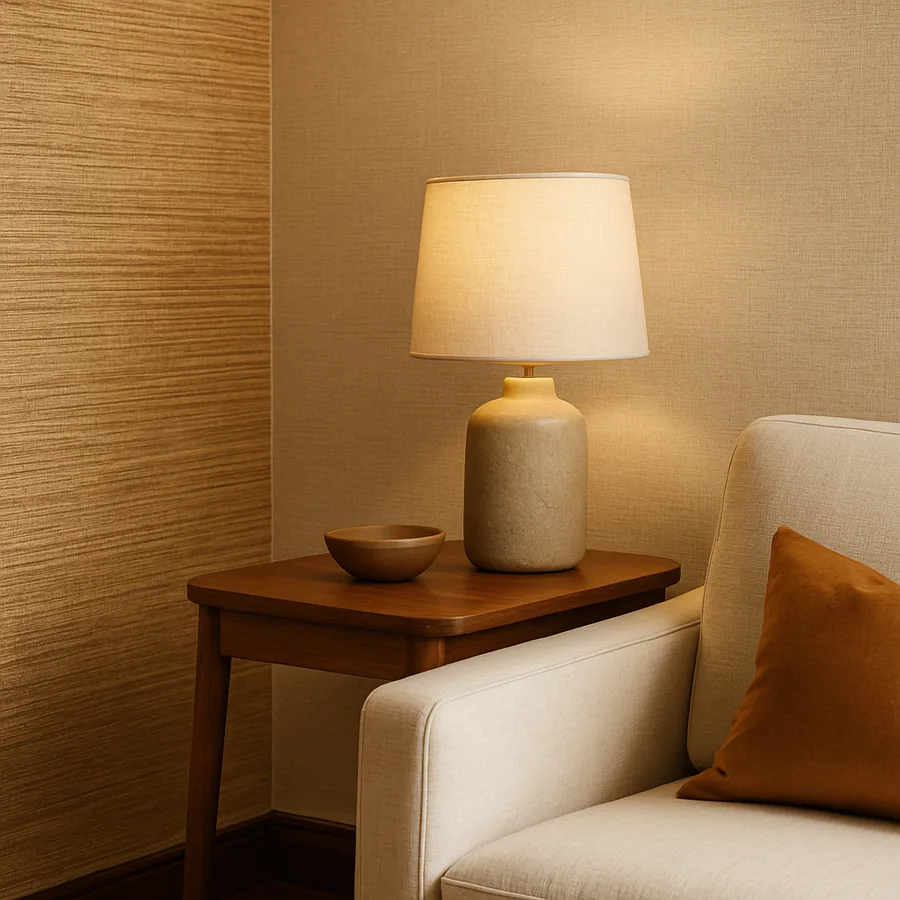
For decades, traditional grasscloth was the connoisseur's choice in wallpaper, prized for its irregular weave, its warm earthen tones, and its unmistakable hand-applied character. It was also expensive, fragile, and notoriously difficult to install. A single panel could cost upward of two hundred dollars, professional installation was effectively required, and the natural fibers stained at the slightest splash. The new generation of textured peel-and-stick wallpaper changes that calculation. Modern printing techniques and embossed substrates now reproduce grasscloth and linen looks convincingly, removably, and at a fraction of the cost.
The change is more significant than it sounds. According to a 2024 wallcovering industry report referenced by Architectural Digest, the textured peel-and-stick segment grew approximately 34 percent year over year, outpacing every other category in the removable wallpaper space. That growth reflects two converging desires. Renters and budget-conscious homeowners want the look of high-end natural-fiber wall coverings, and even owners who could afford the real thing increasingly want the practicality of removability. A textured peel-and-stick gives both groups the visual richness without the maintenance burden.
What Real Grasscloth and Linen Bring to a Room
Before evaluating the imitations, it helps to understand what makes the originals special. Real grasscloth is woven from natural fibers like jute, sisal, hemp, or sea grass, glued onto a paper backing. The weave is hand-laid, which means no two panels are identical. The variation is the appeal. A grasscloth wall has a quiet visual movement, a subtle horizontal play of light and shadow that flat painted walls cannot replicate. Linen wallpaper offers a similar quality with a finer weave, lending itself to more formal interiors.
Both materials add what designers call visual warmth. The fibers absorb light rather than reflecting it, which softens a room and makes it feel layered. House Beautiful has long championed grasscloth for dining rooms and primary bedrooms, two spaces where a quiet textural backdrop supports the more decorative elements like art, lighting, and furniture. The American Society of Interior Designers has noted in member surveys that natural-fiber wall coverings consistently rank among the top three finishes for projects valued above the median.
The drawbacks of the real material are equally real. Natural fibers stain, fade in direct sun, can host allergens, and require professional installation because the seams are visible no matter how carefully you align them. Real grasscloth also off-gasses very little, which is a benefit, but it absorbs cooking odors readily, which is a problem in open-plan homes. The peel-and-stick version sidesteps every one of these limitations.
How Modern Printing Reproduces the Look Convincingly
The convincing reproductions on the market today rely on a combination of three techniques. First, high-resolution photographic capture of actual woven grasscloth or linen creates the base image. Second, embossed substrates introduce a physical three-dimensional texture that catches light the way real fibers would. Third, matte non-reflective inks suppress the plastic shine that betrayed earlier generations of textured prints.
The result is a wallpaper that fools the eye at conversational distance and only reveals itself as printed when you stand within arm's reach. For most rooms in most homes, that is exactly enough authenticity. The major brands have invested heavily in this category. Tempaper has released several grasscloth-look collections in collaboration with established designers. Chasing Paper offers a linen-look line that reads particularly well in soft neutral tones. Wallshoppe, a smaller brand favored by editorial designers, has built a reputation for some of the most photo-realistic textured peel-and-sticks on the market.
Have you ever stood in front of a wall and asked yourself whether the texture was real? That moment of uncertainty is the new benchmark for textured peel-and-stick, and several products now hit it. The technology has crossed a threshold where the conversation is no longer whether the imitation is convincing but which imitation suits your specific room.
Where Grasscloth Looks Best in a Modern Home
Grasscloth-look wallpapers shine in spaces where you want warmth and quiet sophistication. Dining rooms top the list. The horizontal weave reads beautifully under candlelight and pendant lighting, and the warm earthen palette flatters wood furniture, brass fixtures, and ceramic dishware. Primary bedrooms come second, especially behind a headboard, where the texture frames the bed without competing with linens or art.
Home offices and libraries are increasingly fertile ground for grasscloth looks. The slightly muted tone reduces glare on screens, and the textural quality adds gravitas to a Zoom background that flat paint cannot match. Better Homes and Gardens ran a feature on home office wall treatments noting that textured wallpapers, including grasscloth looks, were among the most photographed and shared categories in remote-work interior content over the past year.
Entryways and powder rooms work too, though for different reasons. The entryway version benefits from the welcoming warmth of natural-fiber tones. The powder room version uses a small space to create an immersive, hospitality-grade moment that surprises guests. The American Society of Interior Designers has profiled hospitality designers who treat the powder room as a place to deliver maximum impact in minimum square footage, and a textured wallpaper is one of the most efficient ways to do that.
Where Linen Looks Outperform Grasscloth
Linen-look peel-and-stick has a finer texture and a more uniform weave, which makes it better suited to contemporary and minimalist interiors where grasscloth would feel too rustic. A pale gray linen-look wallpaper in a modern living room reads as quiet sophistication, while the same room with grasscloth might feel slightly out of period. Linen also pairs more naturally with cooler color palettes, blue-gray paints, white oak floors, and the kind of upholstery favored by Scandinavian-influenced design.
Bedrooms benefit from linen-look wallpapers in a different way than they do from grasscloth. Where grasscloth adds warmth, linen adds calm. The finer weave is less assertive, allowing the bedding, art, and lighting to remain the visual focal points. For a room intended to support sleep and recovery, that quietness is an asset.
Linen also takes color beautifully. While grasscloth looks tend to cluster in warm earth tones, linen-look papers come in everything from chalky white to deep navy, slate gray, blush, and sage. Schumacher and Wallshoppe both offer expanded color palettes specifically in their linen-look lines, which speaks to where the design market is moving.
Installation Considerations Specific to Textured Papers
Textured peel-and-stick wallpapers behave slightly differently from their flat counterparts during installation, and ignoring the differences leads to visible mistakes. The embossed surface means the paper is a fraction stiffer than smooth peel-and-stick, which makes it less forgiving when you try to reposition. Plan to commit to your placement on the first attempt rather than pulling the panel off and re-laying it. Repeated repositioning can also stress the embossed texture and create a visible flat spot.
Pattern matching is more demanding. With a flat geometric or floral print, a small misalignment is obvious because the eye sees the broken pattern. With a grasscloth or linen look, the eye sees broken texture, which is somehow even more noticeable to most viewers. Take your time aligning the texture at the seam, working from the top down rather than rushing to commit the entire panel.
Lighting at install time matters too. Raking light from a window or a single bright lamp will reveal every micro-imperfection during installation, which is actually helpful. Do not install in dim conditions and assume the result is perfect. Bring a clip lamp or work during midday when natural light reveals the work. After installation, the same lighting that revealed imperfections will showcase the texture beautifully, which is part of why the category is so popular for spaces with strong natural light.
Cost, Durability, and Longevity Compared to Real Grasscloth
Real grasscloth costs anywhere from four to twelve dollars per square foot for the material alone, before installation labor, which typically doubles the project cost. Professional installation is effectively mandatory because seams are unforgiving and adhesive tends to bleed through the natural fibers if not handled correctly. A typical accent wall in real grasscloth runs eight hundred to two thousand dollars all in.
Textured peel-and-stick costs roughly one to three dollars per square foot, installs without professional help, and removes cleanly. The same accent wall in textured peel-and-stick runs one hundred fifty to four hundred dollars including supplies. The math heavily favors the modern alternative for any project where removability matters or budget is constrained.
Durability deserves a fair comparison. Real grasscloth, properly cared for, can last twenty to thirty years on a wall. Textured peel-and-stick is rated by most manufacturers for five to ten years, though many users report installations holding well beyond that. For renters, the comparison is irrelevant because you are unlikely to occupy a single rental for ten years. For homeowners, the question becomes whether the lower commitment is itself a feature, allowing you to refresh the look every few years rather than committing to a single material for decades. Both Apartment Therapy and House Beautiful have weighed in on this trade-off, and reader surveys consistently show that even homeowners value the optionality of removability.
Conclusion
Textured peel-and-stick wallpaper in grasscloth and linen looks has reached a level of authenticity that makes it a serious option even for projects where budget is not the constraint. The combination of high-resolution photographic capture, embossed substrates, and matte non-reflective inks produces walls that read as genuinely textural at conversational distance. For renters, the affordability and removability are decisive. For homeowners, the lower commitment is increasingly seen as a feature rather than a compromise.
The question to ask before starting a project is not whether the imitation is convincing but which look suits your room. Grasscloth brings warmth and works in dining rooms, libraries, primary bedrooms, and powder rooms. Linen brings calm and pairs naturally with contemporary palettes, contemporary furniture, and rooms intended for rest. Both reward careful pattern matching at the seams and benefit from installation in good light, where the texture can be assessed honestly rather than discovered only after the work is done.
The brands worth shortlisting include Tempaper, Chasing Paper, Wallshoppe, and Schumacher's licensed peel-and-stick collections. Each has strengths, and ordering a single sample from two or three before committing is the right way to choose. Samples cost a few dollars and they answer questions that no online photograph can.
Ready to bring textural warmth to a room that feels flat? Identify the wall that will benefit most from a quiet backdrop, order three samples from different brands, and tape them up side by side for a week. The one that looks best in your light, against your furniture, and across changing times of day is the right one. Subscribe to our newsletter for new release alerts, brand comparisons, and seasonal pattern guides curated by our editorial team.
More Articles You May Like



Comments
Post a Comment