Over-the-Door Organizers for Linen Closets With Limited Depth
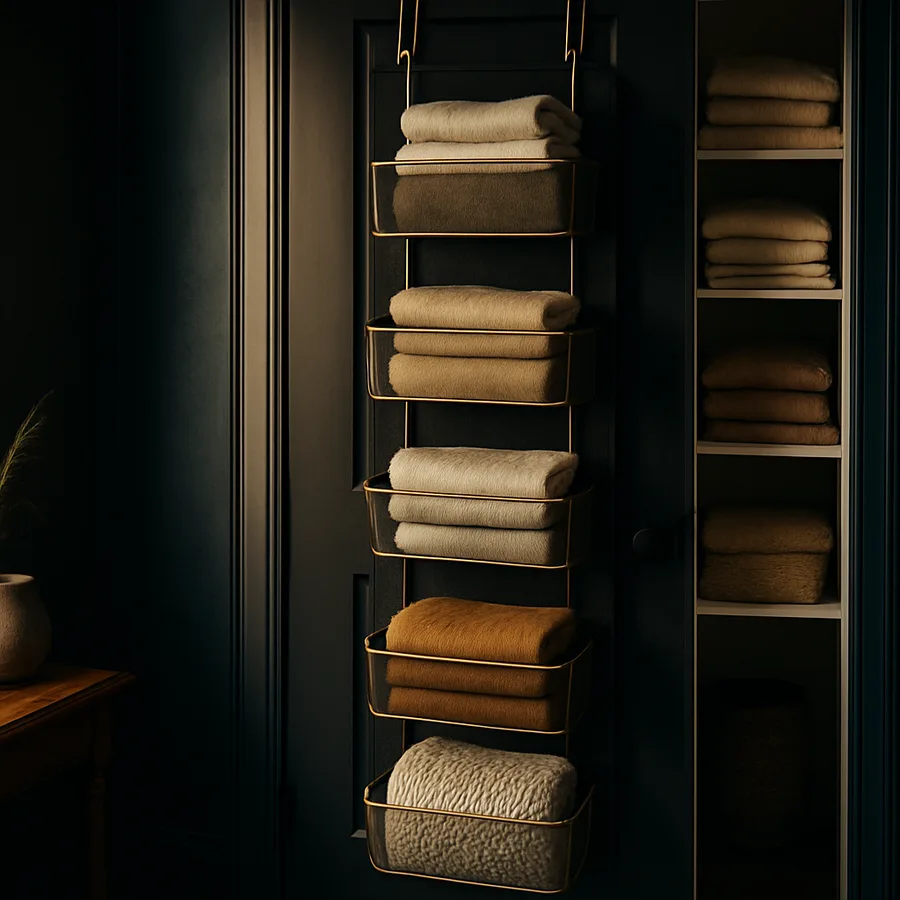
A shallow linen closet with only 10 to 14 inches of usable depth is one of the most common storage challenges in older homes, mid-century ranches, and compact apartments. A conventional shelf at that depth cannot hold a folded king comforter, cannot fit most bath towels without overhang, and often cannot accept standard wire baskets without clearance issues. The door itself, however, offers a completely unused vertical plane that can dramatically expand practical capacity. Over-the-door organizers convert this idle real estate into fully functional storage, typically adding 20 to 35 percent more usable capacity without consuming any floor or shelf space. The The Container Store reported in a 2024 sales summary that over-the-door products are the single fastest-growing closet accessory category, with sales increasing 47% between 2020 and 2024.
This guide covers how to pick the right over-the-door system for a shallow linen closet, the clearance measurements you must verify before buying, which organizer styles hold up under weight and daily use, and how to combine door storage with shelf storage for a cohesive system. It also addresses door-mounting concerns like paint damage, hinge stress, and the hidden limits of hollow-core doors. If you have been staring at a shallow closet and feeling like there is no good solution, the door itself is probably where the answer lives.
Measuring Door Clearance Before You Buy Anything
Every over-the-door organizer starts with two critical measurements: the door thickness and the gap between the door and the nearest obstruction when closed. Most residential doors are either 1-3/8 inches thick (interior hollow-core or solid-core) or 1-3/4 inches thick (exterior or upgraded interior). Over-the-door hooks are typically sized for one or the other, and a hook sized for 1-3/4 that you try to use on a 1-3/8 door will rattle loose during daily open-and-close cycles.
Even more important is the door-to-shelf gap, which is the distance between the back face of the door when closed and the front edge of the nearest shelf. A deep over-the-door organizer needs at least 4 inches of this gap for a shallow pocket system, 5 to 6 inches for a wire basket system, and 7 to 8 inches for a bin-style system. If your shelves sit 3 inches behind the door, most over-the-door solutions will not work and you need a slimline option specifically rated for low clearance.
Have you measured your closet's door-to-shelf gap yet? Most people have not, and it is the single measurement that determines which organizer styles will actually fit. Close the door, open it gently, and hold a ruler horizontally at the hinge side where the shelf is closest. Record that gap in inches, plus an additional quarter inch of safety margin for paint thickness and dust. The National Association of Productivity and Organizing Professionals teaches this clearance measurement as step one in any door-mounted storage consultation.
Organizer Styles and Their Real-World Capacity
Over-the-door organizers fall into four main styles, each suited to different linen and household needs. Pocket organizers, typically made of clear vinyl or fabric with 18 to 24 small pockets, are excellent for washcloths, small toiletries, medicine bottles, and folded hand towels. They cost between 15 and 45 dollars and add remarkable capacity for small items that otherwise scatter across shelves.
Wire basket organizers use 3 to 6 shallow wire baskets mounted on a hanging frame, each basket holding 3 to 5 rolled hand towels or a stack of folded washcloths. These work beautifully for linen organization because they mimic shelf storage but on the door plane, keeping items visible and accessible. Real Simple's 2023 linen closet feature highlighted this style as the best overall pick for families, citing its balance of capacity, visibility, and durability.
Solid plastic bin organizers and caddies offer deeper storage for bulkier items like toilet paper rolls, cleaning supplies, or rolled beach towels. They are heavier and block more airflow, but they hide unsightly items effectively. Finally, hook-rack organizers with 6 to 12 small hooks are perfect for hanging small linen-adjacent items like robes, laundry bags, or wet washcloths from a shower. Williams Sonoma Home and Pottery Barn both sell attractive versions of each style in the 40 to 120 dollar range.
Door Construction and Weight Limits You Cannot Ignore
Not every closet door can support an over-the-door organizer safely. Hollow-core doors, common in mid-grade residential construction, have a cardboard honeycomb interior and limited weight capacity, typically around 20 to 40 pounds when distributed across the full door width. Solid-core doors and solid wood doors can support 50 to 100 pounds or more, making them suitable for heavier bin-style systems.
The American Society of Interior Designers has published residential storage guidelines that explicitly warn against exceeding door weight ratings, noting that overloaded doors can sag at the hinges, warp permanently, or rip the door frame. A good rule of thumb is to weigh the empty organizer, estimate the loaded contents conservatively, add 20 percent as a safety margin, and verify the total stays well under the door's rated capacity. If you do not know your door's rating, assume hollow-core and plan conservatively.
Hinge stress is a related concern. Even within weight ratings, a heavy organizer on the door side furthest from the hinges creates a lever arm that can loosen hinge screws over time. The fix is simple: every 6 to 12 months, tighten all hinge screws with a screwdriver, and if screws have stripped, replace them with slightly longer wood screws that bite into fresh wood. This two-minute maintenance extends door life dramatically. Have you checked your hinge screws this year? Most homeowners go a decade without tightening them, which contributes to the slow door sag that eventually leads to scraping and latch misalignment.
Protecting Paint and Preventing Damage
Over-the-door hooks can scratch, dent, or chip painted door edges if the metal rests directly against the finish. The fix is a set of small felt pads or silicone bumpers placed between the hook and the door, which cost a few dollars at any hardware store and prevent virtually all cosmetic damage. The Martha Stewart home team has demonstrated this simple pad trick in multiple home organization features, noting that the addition of pads also reduces rattling during door open-and-close cycles.
Permanent over-the-door mounts, which use small screws into the door face rather than hooks over the top, offer a more stable installation but create permanent holes that are noticeable if you ever remove the system. These should generally be avoided in rental properties and in any home where resale considerations matter. If you do mount permanently, pre-drill pilot holes slightly smaller than the screws to prevent splitting, and keep the removed hardware and patched paint touch-up in a labeled bag for future reference.
Consumer Reports has noted that 30% of renters who install permanent over-the-door hardware report deposit deductions at move-out, so the hook-style approach remains the safer default for tenants. For homeowners who prefer permanence, the cleaner mount is worth the small tradeoff.
Coordinating Door Storage With Shelf Storage
An over-the-door organizer is most useful when it handles a specific category of items that would otherwise clutter the shelves. Rather than duplicating shelf storage, assign the door a distinct role. Common successful pairings include putting washcloths and hand towels on the door, reserving shelves for bath towels and sheet sets. Or putting cleaning supplies and toiletries on the door, keeping shelves linens-only.
Think about frequency of access. Items you reach for multiple times per day belong on the door, where they are visible and grabbable as soon as the door swings open. Items accessed weekly or less belong on shelves, where they can be tucked behind other items without causing daily friction. This access-frequency logic, endorsed by the NAPO professional organizer curriculum, is one of the most reliable predictors of whether an organization system will survive long-term.
Do not try to hide everything on the door. A fully opaque door organizer creates a visual wall that can feel heavy and crowded when the door opens. Mix clear-pocket zones with opaque-bin zones so the overall composition feels varied and the contents are partially visible. The Good Housekeeping Institute's organization guide has recommended this mixed-transparency approach for years, noting that visual variety reduces the psychological weight of dense storage walls.
Specific Use Cases That Work Especially Well
Certain households and certain item categories benefit disproportionately from over-the-door linen closet storage. Apartments with tiny linen closets under 14 inches deep gain the most because the door may add more capacity than the shelves themselves. Families with small children benefit from pocket organizers that put bath toys, small towels, and changing supplies at parent eye level. Older adults managing medications can dedicate a pocket organizer to clearly labeled daily and weekly pill containers, a use case endorsed by the AARP home safety guidelines.
Households with guest accommodation responsibilities can dedicate an entire door organizer to guest linens, toiletries, and extra washcloths, simplifying the last-minute guest preparation routine to a single door-opening motion. Houseguests who stay for extended periods can even be given a small dedicated pocket section to keep their own personal items during the stay, which respects privacy while making the linen closet multi-purpose. Real estate agents staging homes for sale frequently use a single elegant pocket organizer on the primary bathroom closet door to signal organized, thoughtful living, a staging detail noted by Zillow's home presentation guide.
For particularly shallow closets, consider a slim-profile over-the-door mirror with integrated storage pockets on the back side. This is a two-for-one fix that adds a dressing mirror to the hallway while still converting the back of the door into organized storage. IKEA and West Elm both sell variations in the 100 to 300 dollar range.
Small vacation rentals and short-term properties benefit from a specific variation as well. A single over-the-door caddy stocked with guest-ready toiletries, folded hand towels, and basic supplies makes turnover cleanings faster for hosts because everything is visible and countable in one glance. Airbnb superhosts and professional cleaning services frequently rely on this approach to reduce the time required to verify supply levels between stays, and it is a pattern that translates well to guest bathrooms in larger family homes too.
Finally, remember that lighting transforms how a door organizer functions day to day. A small battery-powered motion light installed at the top of the closet casts useful light across the door organizer the instant the door opens, eliminating the dim-closet struggle that causes people to grab the wrong item. These lights cost under 25 dollars, install with adhesive backing in under five minutes, and extend the practical usefulness of every inch of door storage below them.
Conclusion
The back of the linen closet door is the most consistently under-used vertical plane in the average home. For a modest investment, typically between 20 and 80 dollars, an over-the-door organizer converts this dead zone into genuine, high-frequency storage that dramatically improves the function of a shallow closet. The measurement discipline is simple: door thickness, door-to-shelf gap, door weight rating, and hinge condition. Verify those four numbers and the path to a working system is clear.
If you have been treating your linen closet as a shelf-only system, try the door conversion this weekend and pay attention to how your daily routines change. Most households find that within two weeks, three to five small frictions they barely noticed previously have disappeared, simply because washcloths or toiletries now sit at eye level on the door instead of hiding in a back corner of a shelf. The combined effect on household calm is larger than the price tag would suggest.
Start by measuring your door and your gap, then pick an organizer style that matches your capacity needs and weight constraints. Install the hooks with felt pads to protect the paint, load the system gradually, and refine placement over the first week. Pick up one over-the-door organizer on your next errand run, install it tonight, and see how much more your shallow linen closet can hold. The room gained is almost always larger than you expect, and the payoff shows up on the very first morning.
More Articles You May Like



Comments
Post a Comment