Teen Bedroom Closet Organization With Visible Outfit Display
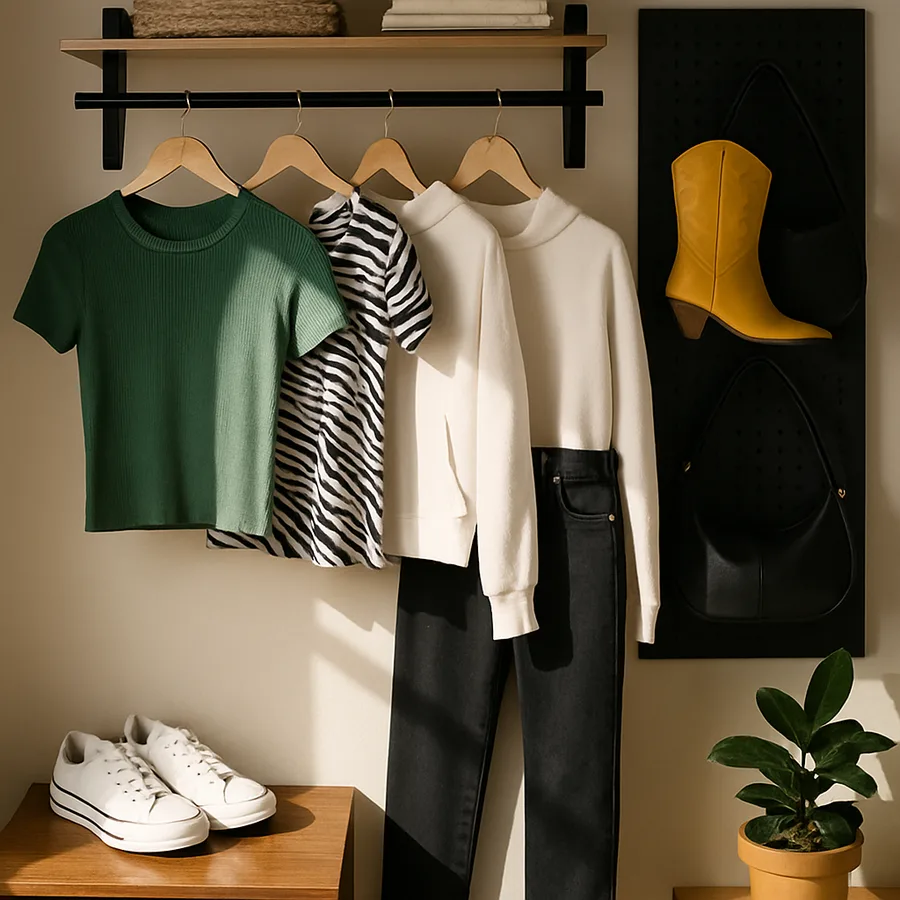
The closet is the single piece of bedroom infrastructure that gets touched the most times per day and almost always gets the least design attention. For a teenager, the morning closet experience can set the entire emotional tone of the school day. A cluttered, dim, jumbled closet creates a feeling of overwhelm before the first cup of tea has even been poured, while a closet that displays outfits like a boutique turns getting dressed into a small daily pleasure. The shift from storage closet to display closet is the single most underrated upgrade in the modern teen bedroom.
This is not about extravagance or about turning a closet into a luxury walk-in fantasy. It is about applying retail merchandising logic to a small, often awkward space so that what your teen owns becomes visible, accessible, and emotionally inviting. When a closet hides ninety percent of a wardrobe behind a single closed door, the teen wears the same five outfits on rotation, complains they have nothing to wear, and the rest of the wardrobe slowly becomes archeology. Visible display fixes that pattern immediately, and the techniques scale from a tiny reach-in to a generous walk-in without major renovation.
Audit the Wardrobe Before You Reorganize Anything
The fastest way to fail at closet organization is to start with hardware. The right starting point is a wardrobe audit that establishes what is actually in the closet, what gets worn, and what has been quietly hibernating. Pull every item out, lay it on the bed, and have your teen sort into three piles: love and wear weekly, like and wear sometimes, and haven't touched in six months. This sounds tedious and takes about ninety minutes for a typical teen wardrobe, but it is the foundation that every later decision depends on.
The third pile is the conversation. Some items are seasonal and belong in deep storage rather than the active closet. Some no longer fit and should be donated, sold, or handed down. Some are aspirational and reveal what your teen wishes they were wearing more often, which is useful intelligence for the display strategy. Have you noticed your teen consistently reaches for the same hoodie even when there is a closet full of options? That is not laziness, it is a closet that has failed to surface the alternatives.
Once the audit is done, count what remains. The number of hangered items, folded stacks, and shoe pairs determines the linear inches of rod and the cubic feet of shelving you actually need. Most teen closets are sized for an imaginary average wardrobe rather than the real wardrobe in the room. The American Society of Interior Designers (ASID) has long recommended measuring actual contents before specifying any closet system, and the same wisdom applies whether you are spending fifty dollars or five thousand. Survey data from the National Association of Home Builders has shown that organized storage routinely ranks among the top features teens and young adults want, ahead of square footage of the room itself.
Layout: The Three-Zone Closet
Every visible-display closet, regardless of size, divides into three zones. The first zone is everyday rotation, which holds the items worn at least weekly. This zone gets the prime real estate at eye level and within easy arm reach. The second zone is occasion and weekly variety, which holds items worn less often but still actively chosen. The third zone is off-season and rare, which holds items in storage mode but not yet ready to leave the wardrobe entirely.
The everyday rotation zone is where display happens. Treat it like a boutique sales floor. Garments hang facing forward in coordinated outfits rather than lined up sideways by category. Shoes sit on a single open shelf at eye level rather than in a tumbled pile on the floor. Accessories live on hooks or trays that make them visible at a glance. This zone should hold roughly seven to ten complete outfits, which is enough variety for a school week with a couple of options for weekend or special occasions, without becoming overwhelming to scan.
The middle zone holds the next layer of the wardrobe in a more traditional but still tidy configuration. Garments hang sideways, sorted by category and color. The bottom or top zone, depending on closet shape, holds off-season items in clear bins or zip-top bags that protect against dust without hiding the contents entirely. Labeling these bins is essential because what gets hidden gets forgotten, and forgotten items either get rebought or become regrets. Visibility is the entire point, which is why even the storage zone uses transparent containers rather than opaque ones.
Hardware Choices That Make Display Possible
The right hardware turns a regular closet into a display closet without major renovation. Start with matching hangers in a single style and color across the entire closet. This single change has an outsized visual impact, because mismatched hangers create a chaotic top line that makes even an organized closet read as messy. Velvet slim-line hangers are the consensus choice because they hold knits without slipping, occupy minimal rod space, and look intentional in any color, though wood hangers are a beautiful upgrade if budget allows.
Front-facing display rods are the secret weapon. A short rod mounted perpendicular to the main rod, projecting outward into the closet space, lets your teen hang four to six outfits face forward like a clothing rack at a boutique. This visible-front display is what separates a storage closet from an inviting wardrobe. Architectural Digest has profiled multiple designer teen rooms over the past few seasons, and the front-facing display rod appears in nearly every one because the photography simply works better when garments face the camera.
Open shelving for shoes, folded knits, and bags makes the contents glance-able. Cubbies sized to standard shoebox dimensions are flexible and inexpensive. Drawer dividers turn a single drawer into a dozen organized compartments, which prevents the merge of socks, undergarments, and accessories into the dreaded mystery layer at the bottom. Lighting on motion sensors transforms the closet experience by automatically illuminating contents when the door opens, and battery-operated puck lights make this upgrade possible even in rentals where no electrician is available.
The Outfit Capsule Approach
The smartest way to use a visible display closet is to compose actual outfit capsules rather than displaying random garments. Take the everyday rotation zone and build complete looks: top, bottom, layer, shoes, and accessories grouped together either on a single hanger system or on adjacent hooks and shelves. Each capsule is a ready-to-wear outfit that requires zero morning decision-making. This is exactly how high-end retail stores compose mannequins and end-cap displays, and it works for the same reason: human brains are not great at visualizing combinations from disconnected parts.
Five to seven capsules is the right number for the everyday rotation zone. Any fewer and the teen feels limited, any more and the decision fatigue returns. Capsules can be themed by mood or by activity. A school day capsule, a weekend capsule, a sports practice capsule, a date or going-out capsule, and a lazy-day capsule cover the full range of a typical week. Refresh the capsules every two to four weeks to align with weather, social calendar, and the natural drift of taste. Have you watched your teen change outfits three times before walking out the door? Capsule display almost always solves that problem within a week.
For accessories, dedicate a small visible zone with hooks for jewelry, a tray for sunglasses, and a slim shelf for daily-carry items like a wallet, lip balm, or a favorite scrunchie. The American Academy of Pediatrics (AAP) has noted that morning routines with high decision load measurably affect teen mood and school readiness, and reducing wardrobe decision fatigue is one of the easiest wins available. The capsule approach essentially pre-makes the morning decisions during a calmer evening sorting session.
Color, Light, and the Boutique Effect
A boutique closet feels different from a storage closet largely because of color rendering and lighting. The interior of most builder-grade closets is painted the same flat white as the rest of the room, which absorbs light and renders fabric colors muddy. A simple upgrade is to paint the closet interior in a color that flatters clothing. Soft warm whites, pale cream, or even a moody deep tone like forest green or charcoal can transform how garments read on display. The warm whites let true colors pop, while the moody tones turn the closet into a jewel-box display.
Lighting inside a closet is almost always inadequate from the factory. The single overhead bulb mounted at the top of the closet throws shadows directly onto the contents below, which is exactly the wrong geometry for finding a specific shirt. Replace it with linear LED strips along the underside of each shelf, which cast even, downward light on the garments below. Battery-powered or rechargeable strips with motion sensors make this a renter-friendly upgrade. Aim for a color temperature of 3500K to 4000K, which renders fabric colors close to natural daylight without the institutional feel of cooler bulbs.
Mirrors inside or adjacent to the closet are the final boutique touch. A full-length mirror mounted on the inside of the closet door turns the closet into a fitting room and eliminates the need to walk to a separate mirror to test an outfit. The Better Homes and Gardens (BHG) editors have featured countless teen closet makeovers, and the inclusion of a thoughtfully placed mirror almost always shows up in the before-and-after that genuinely changes the room. Consider three angled mirrors rather than a single flat one if budget and space allow, because seeing the back and sides of an outfit dramatically improves the styling decisions teens make.
Maintenance Systems That Actually Stick
A beautifully reorganized closet that is not maintained will revert to chaos within six weeks. The maintenance systems that survive a teen's life are minimal, visible, and built into existing routines rather than added as new chores. The single most effective system is the one-in-one-out rule, applied loosely. When a new garment enters the everyday rotation zone, an existing garment moves to the middle zone or out of the closet entirely. This prevents the rotation zone from creeping outward and ruining the display effect that made the closet inviting in the first place.
The Sunday evening reset is the second sustainable habit. Fifteen minutes spent rehanging stray items, refreshing the outfit capsules for the coming week, and returning shoes to the display shelf is enough to maintain the system indefinitely. Pair this with a podcast or favorite playlist and the chore becomes a calming ritual rather than a battle. Many teens actually enjoy the visual gratification of a freshly reset closet, especially when the reset takes minutes rather than hours.
The laundry system needs to integrate with the closet. A double hamper inside or near the closet, with one side for darks and one for lights, eliminates the friction that makes teens drop dirty clothes on the floor. A small basket for items that need air drying or a quick steam handles the in-between layer that traditional laundry systems ignore. Friction is the enemy of every storage system, and a closet that requires extra steps to maintain is a closet that will be abandoned. Treat every step in the daily clothing cycle as a candidate for friction reduction, and the closet stays beautiful with surprisingly little effort.
Conclusion: Treat the Closet Like a Storefront and Watch It Transform
The visible-display closet is not a luxury, it is a fundamentally different relationship between a teenager and their wardrobe. By applying boutique merchandising logic to a small, often overlooked corner of the bedroom, you turn a daily source of frustration into a daily source of confidence. The hardware is largely affordable, the layout principles work in any closet shape, and the maintenance systems take less time than the chaos they replace. This is the kind of upgrade that a teen will not consciously thank you for, but that quietly improves their mornings for years.
Begin with the audit, because every later decision depends on knowing what is actually in the wardrobe. Then layer in the three-zone structure, the front-facing display rod, the matching hangers, the closet lighting, and the capsule-based outfit composition. The transformation can happen in a single weekend with a modest budget, and the visual impact is dramatic enough that your teen will want to maintain it. Architectural Digest and BHG have both documented closet makeovers that achieve this look on rental-friendly budgets, so the techniques here are proven to work outside the realm of luxury custom builds.
This week, sit with your teen and run the wardrobe audit together. Make it a low-pressure conversation rather than a project review. Ask what they wish they wore more often, what they own but never reach for, and what would make mornings feel calmer. Their answers will tell you exactly which capsules to compose first, and the closet that emerges will reflect their actual life rather than a generic template. A boutique closet is not about more space, it is about more intention, and intention is something every closet has room for.
More Articles You May Like



Comments
Post a Comment