Tea Station Built-In With Hot Water Tap and Mug Display
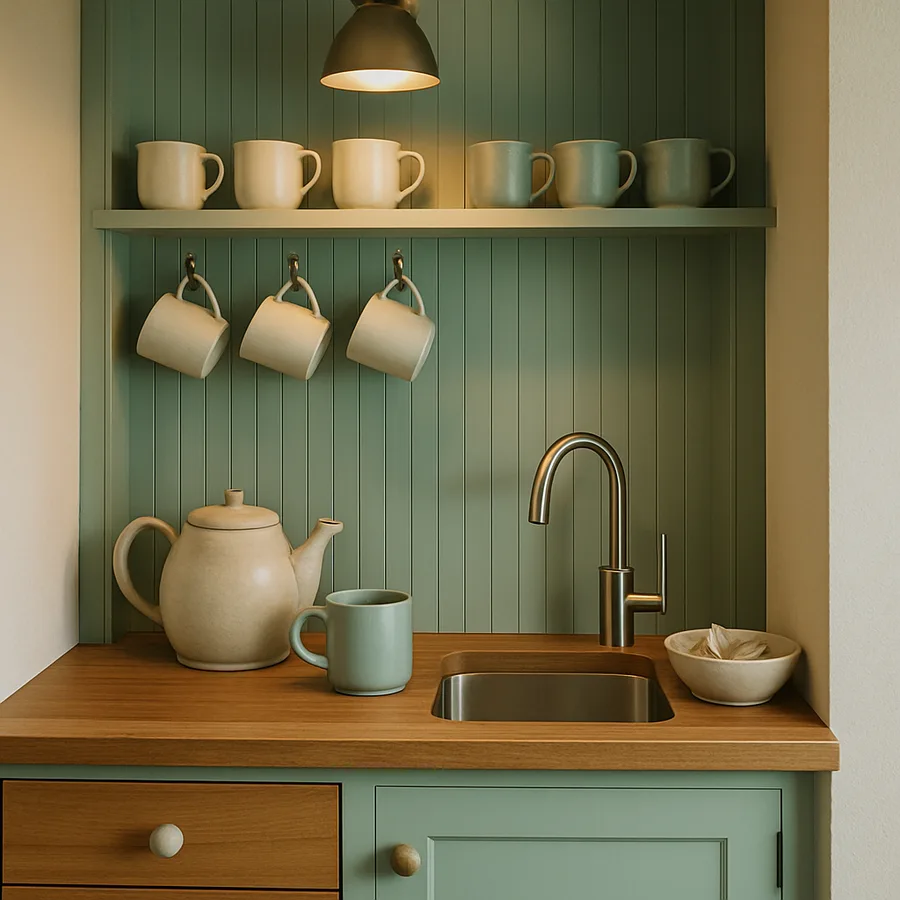
Tea consumption in American homes has quietly tripled over the past two decades, with the Tea Association of the USA reporting that more than 84% of millennials drink tea regularly. As the ritual has expanded, so has the appetite for designing a space worthy of it. The freestanding electric kettle and the dusty box of tea bags have given way to built-in tea stations with instant hot water taps, curated tin collections, and mug displays that read more like ceramic libraries than utility shelves. If your kitchen still treats tea as an afterthought, this is the moment to reconsider.
A purpose-built tea station achieves something that a kettle on the counter never can: it telegraphs that brewing tea is a moment worth pausing for. The hot water tap removes the wait, the mug display adds personality, and the storage choices reveal the breadth of your collection without descending into clutter. Designers from the National Kitchen and Bath Association (NKBA) have noted a sharp uptick in clients requesting hot water taps as standard fixtures in renovations, mirroring the rise in beverage-zone design more broadly.
This guide explores how to plan, install, and style a tea station that feels equal parts apothecary, library, and cafe. Each section covers a different layer of the build, and together they give you a roadmap from initial sketch to final styled detail.
Why an Instant Hot Water Tap Changes Everything
The instant hot water tap is the technological centerpiece of any modern tea station, and it deserves first consideration because it dictates the plumbing and electrical layout of the entire build. These taps deliver water at roughly 200 degrees Fahrenheit on demand, which is the ideal temperature for black, oolong, and herbal teas. For green and white teas that require slightly cooler water, you simply add a small amount from the cold tap or wait thirty seconds for the cup to cool. The convenience is genuinely transformative for daily tea drinkers.
Installation requires a small under-counter tank, typically holding around half a gallon, that connects to your existing cold water line and a 120-volt outlet. The tank heats and maintains water continuously, drawing modest electricity comparable to a small refrigerator. Most reputable brands offer four-stage filtration that improves taste dramatically and protects the heating element from scale. Plan to budget between four hundred and twelve hundred dollars for the tap and tank combination, depending on finish and capacity.
Have you ever counted how many minutes per week you spend waiting for a kettle to boil? For a household that drinks four cups of tea daily, that adds up to nearly an hour per week of standing around. The hot water tap reclaims that time, and more importantly, it removes the friction that often causes tea drinkers to default to coffee on busy mornings. Architectural Digest has covered the rise of these taps in luxury kitchen renovations, and they are now beginning to appear in mid-range projects as well.
Planning the Layout and Footprint
A well-designed tea station occupies between 18 and 36 inches of linear counter space, depending on whether you want a compact corner moment or a full destination zone. The minimum footprint includes the hot water tap, a landing area for one mug, and a small tin or two for tea. The expanded version adds open shelving for mug display, a drawer for accessories, and a built-in basket or jar for sweeteners and stir sticks. Decide which version fits your home before you commit to a location.
Adjacency matters as much as footprint. Place the tea station near the breakfast nook or the morning-light side of the kitchen so that the act of brewing tea is paired with a comfortable place to drink it. If your kitchen has a butler's pantry, that secondary space is often the perfect home because it keeps the tea ritual separate from the noise of cooking. Avoid placing the station too close to the cooktop, where steam, splatter, and heat can damage delicate tea tins and mugs over time.
Counter material under the station should be heat-resistant and easy to clean. Quartz, granite, and soapstone all perform well, while butcher block requires more vigilance against water rings. Plan for at least one electrical outlet within reach for charging an electric tea timer or a small warmer plate, and consider whether you want a small recessed niche in the backsplash to display especially beautiful tins or a single antique teapot. These small architectural details elevate the station from functional to memorable.
Designing the Mug Display
The mug display is where personality enters the tea station, and it is also where most homeowners overthink the styling. The simplest approach is open shelving with two or three rows of mugs arranged by size or color. Slightly more advanced is a system of brass or matte black hooks installed under an upper cabinet, allowing mugs to hang in a row that adds vertical interest and frees up shelf space for tea tins. Either approach works, and the choice often comes down to ceiling height and the visual weight of your existing cabinetry.
Curate the collection rather than displaying every mug you own. A coherent mug display includes 8 to 16 cups in a unified palette or material, perhaps all stoneware in earth tones, all porcelain in whites and creams, or a deliberately eclectic mix tied together by similar handle shapes. Mix sizes intentionally, including small teacups for matcha, medium mugs for daily black tea, and oversized mugs for cozy weekend infusions. The variety tells a story about how you actually drink tea throughout the week.
Lighting transforms a mug display from storage into installation art. A discrete LED puck light or a thin under-shelf light strip washes the cups in warm light, casting subtle shadows that flatter the ceramic forms. Better Homes & Gardens (BHG) regularly features tea station installations where lighting is the difference between a forgettable shelf and a magazine-worthy moment. The investment in lighting is small, often under fifty dollars, but the visual return is enormous.
Storing Tea Beautifully and Functionally
Tea storage is where freshness and aesthetics intersect. Loose-leaf tea in particular is sensitive to light, oxygen, and moisture, so containers must seal tightly and ideally block UV light. Opaque tin canisters are the gold standard for serious tea drinkers because they protect flavor for six months or longer. Glass jars are visually beautiful but should live inside a cabinet between uses or be reserved for tea bags, which are individually wrapped and less vulnerable to environmental damage.
Group your tea collection by type to make selection intuitive. Black teas live together, green teas in their own row, and herbal infusions in a third group. Label each container with the tea name and the date you opened it, since most loose-leaf teas peak within four to six months of opening. Use a small chalkboard tag, a brass nameplate, or even a discrete vinyl letter sticker. This level of organization signals seriousness and makes guests feel welcomed into a real ritual rather than a vague offer of "want some tea?"
Have you considered how many varieties you genuinely drink versus how many you have impulse-purchased and forgotten? Most tea drinkers find that a curated collection of 8 to 12 varieties serves them better than a sprawling shelf of 30. Edit ruthlessly. Keep the teas you actually reach for and either gift the rest or move them to a secondary storage area. Wine Spectator applies a similar philosophy to wine storage, arguing that a focused collection delivers more pleasure than a vast but ignored cellar. The same logic applies here.
Adding Accessories That Complete the Ritual
The accessories are what transform a functional tea station into a sensory experience. A wooden tea scoop, a small ceramic spoon rest, a glass infuser for loose leaf, and a brass timer are the foundational tools. Group them on a small tray or in a shallow drawer with custom dividers, both to protect them and to create a visual moment that reinforces the station's intentionality. The tray or drawer becomes its own design vignette.
A teapot is optional but powerful. Even if you mostly brew single cups, a beautiful cast iron or porcelain teapot displayed on the counter announces that this is a place where tea is taken seriously. Choose one that complements your kitchen's color palette and keep it dust-free with weekly attention. For households that entertain, consider a second smaller pot reserved for guests, since hospitality often turns on these small thoughtful gestures.
Finally, do not neglect the supporting cast: honey in a small glass jar with a wooden dipper, a tin of shortbread or biscotti, fresh lemon slices kept in a covered dish during the day, and a folded linen napkin. The American Society of Interior Designers (ASID) often emphasizes that the difference between a functional space and a memorable one lies in these tertiary details. They cost very little but signal generosity to anyone who enters the kitchen. For more on residential beverage zones, see the ASID design library, and for kitchen layout fundamentals, the Architectural Digest kitchen archive remains a strong reference.
Maintaining the Station Over Time
A built-in tea station has a longer lifespan than most kitchen features because it has no moving cooking parts and few fragile components. The hot water tap, however, requires periodic descaling, typically once or twice per year depending on water hardness. Most manufacturers include a flushing kit and clear instructions, and the process takes under an hour. Skipping this step shortens the tank's life and degrades water taste, so build it into your seasonal home maintenance calendar.
Refresh the styling at least twice per year. In cooler months, lean into darker mugs, heavier teapots, and warming herbal blends like chai and rooibos displayed prominently. In warmer months, rotate to lighter porcelain, cold-brew tea pitchers, and floral or citrus-forward blends. The National Association of Home Builders (NAHB) consistently identifies seasonal styling as one of the highest-return decorating habits because it keeps spaces from feeling stale without requiring renovation.
Document the teas you love, the ones you have tried, and the ones you want to try in a small notebook kept on the station. This becomes part diary, part reference guide, and entirely charming when guests pick it up. Over years, the notebook itself becomes a record of your evolving palate and of the friends who have joined you for a cup. The station outlives its trends, but the rituals it supports only deepen with time.
Conclusion
A tea station built around an instant hot water tap and a curated mug display does more than streamline brewing. It announces that the household values ritual, hospitality, and quiet attention to small daily acts. The investment in plumbing, shelving, and styling pays back in moments of calm that compound over years, which is the kind of return that does not show up on a spreadsheet but absolutely shows up in how a home feels.
If you are ready to begin, start by walking your kitchen with fresh eyes and identifying the location that best fits your daily flow. Is there an underused corner, a desk nook, or a butler's pantry that could host the station without major demolition? Sketch a simple footprint, list the three most important features for your tea ritual, and use that brief to guide the build. Most homeowners who design their own tea stations report that the planning phase is half the pleasure, because it forces them to clarify what they actually want from the space.
Beyond the aesthetics and the convenience, a tea station is an invitation to slow down. In a kitchen often optimized for speed, a designated zone for steeping is a small architectural argument in favor of patience. Friends and family notice the difference, even if they cannot articulate it. The conversations that happen over a beautiful cup of tea brewed in a well-designed station tend to last longer and go deeper than the ones that happen over a paper cup grabbed on the way out the door.
Take the first concrete step this week. Order one set of matching tea tins, audit your mug collection and edit it down to your favorites, or schedule a contractor consultation to discuss the hot water tap. Each of these moves is small on its own, but together they begin the layering process that turns a simple corner into a destination. A great tea station is not built in a weekend. It is built in the months of small refinements that follow, and that ongoing process is exactly what makes it feel so deeply personal when you finally settle in for the perfect cup.
More Articles You May Like



Comments
Post a Comment