Stone Veneer Fireplace Surrounds Vs Real Stone Cost and Look
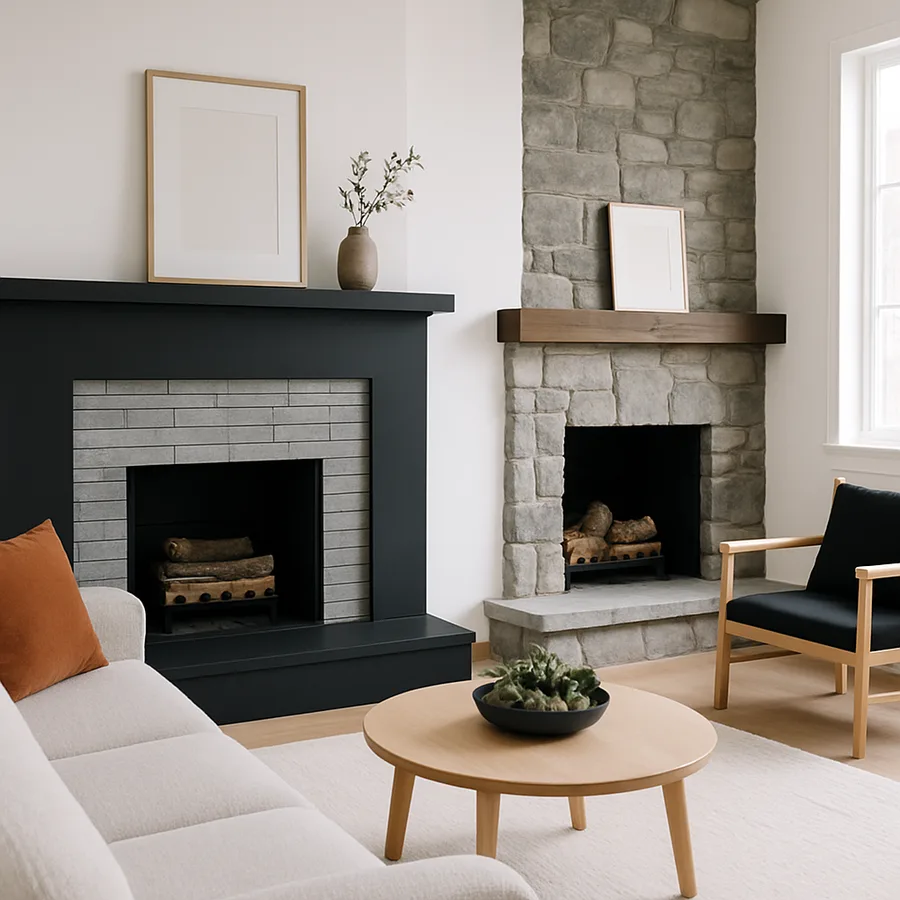
The fireplace is the architectural anchor of any room that contains one, and the surround material defines whether that anchor reads as a design statement or as a missed opportunity. Real stone surrounds have been the gold standard for centuries because of their weight, density, and the way actual mineral surfaces catch light differently than any manufactured product. Stone veneer surrounds have evolved dramatically over the past two decades and now offer compelling visual and economic alternatives, but the gap between the best veneer and the worst is enormous, and the gap between veneer and real stone is real and visible.
This guide walks through the actual cost differences across three project scales, the visual and tactile distinctions that separate categories, the structural and installation realities that often determine the choice for homeowners, and the long-term durability and resale considerations that matter when the surround will be in place for the next forty years. The goal is to help you make a clear-eyed decision between the convenience and savings of veneer and the irreplaceable presence of full-thickness stone.
What Counts as Real Stone, What Counts as Veneer
Real stone, sometimes called full-bed stone or full-thickness stone, is quarried natural rock cut into pieces ranging from three to six inches thick. The pieces are heavy (typically 12 to 18 pounds per square foot installed), require a structural footing or reinforced framing to support the load, and are installed using traditional masonry techniques with full mortar beds and metal ties anchoring back to the framing. The resulting wall behaves like masonry, it stores heat, dampens sound, and develops a patina over decades that is unique to that piece of stone.
Stone veneer divides into two distinct subcategories that homeowners frequently confuse. The first is natural thin stone veneer, which is genuine quarried stone sliced to a thickness of three-quarters of an inch to one and a half inches. It is the same material as full-bed stone, just sliced thinner, and it carries the identical visual and tactile qualities at a fraction of the weight (8 to 12 pounds per square foot) and at substantially lower material cost. From three feet away, natural thin veneer is indistinguishable from full-bed stone.
The second is manufactured stone veneer, which is cast from lightweight concrete in molds taken from real stone faces. Quality varies enormously across manufacturers and product lines. The best manufactured veneers from established brands look convincing at five feet of viewing distance and weigh only 7 to 9 pounds per square foot, while the worst products have repeating face patterns, plasticky surfaces, and color saturation that no real stone exhibits. The Natural Stone Institute publishes detailed comparison guides that contractors and architects use to evaluate product authenticity.
The Real Cost Comparison Across Three Project Scales
For a small fireplace surround (40 square feet, roughly a standard mantel-height treatment around a builder fireplace), expect manufactured stone veneer at $1,200 to $2,400 fully installed, natural thin stone veneer at $2,400 to $4,000 fully installed, and full-bed real stone at $4,800 to $8,000 fully installed. The full-bed pricing assumes the existing structure can support the load; if structural reinforcement is needed, add $1,500 to $4,000.
For a medium project (90 square feet, floor-to-mantel surround with a raised hearth), the numbers scale roughly proportionally with some efficiencies of scale. Manufactured runs $2,500 to $5,000, natural thin veneer runs $4,800 to $8,500, and full-bed stone runs $9,500 to $16,000. For a large statement fireplace (180 square feet, floor-to-ceiling treatment in a great room with a substantial hearth and possibly flanking columns), manufactured runs $5,000 to $9,500, natural thin veneer runs $9,000 to $16,500, and full-bed stone runs $18,000 to $35,000 or more depending on stone selection and project complexity.
The labor split matters too. Manufactured veneer can be installed by a competent tile setter or finish carpenter, which keeps labor rates in the $50 to $80 per hour range. Natural thin veneer benefits from an experienced mason who understands stone selection and joint composition, pushing labor to $75 to $110 per hour. Full-bed stone almost always requires a journey-level mason, plus possibly a structural inspection, with labor at $90 to $150 per hour and longer installation timelines. The American Institute of Architects consistently flags fireplace masonry as one of the highest-skill residential trades.
Visual and Tactile Differences You Can Actually See
The most honest test of any stone product is to view it from three distances: 18 inches (touch range), six feet (seated viewing range), and 15 feet (across-the-room range). At 18 inches, full-bed stone shows mineral crystals, fossil inclusions, and surface texture that no manufactured product replicates. Natural thin veneer matches this completely because it is the same material. Manufactured veneer fails this distance test except in the very best products, where careful color blending and texture variation hide most of the manufacturing artifacts.
At six feet, natural thin veneer and full-bed stone are visually identical. Manufactured veneer becomes harder to identify but still gives away its origin through subtle pattern repetition (look for identical stones appearing twice in a four-foot radius) and through color uniformity that real stone rarely exhibits. At 15 feet, even budget manufactured veneer can read as authentic if installed with varied joint widths and selective face orientation. Most rooms view fireplaces primarily from the six-to-15-foot range, which is why manufactured veneer remains popular despite its tactile limitations.
The other major sensory difference is acoustic. Full-bed stone walls dampen sound noticeably, contributing to the quieter feel that high-end homes often have. Natural thin veneer dampens slightly less because the substrate behind it is hollow framing. Manufactured veneer dampens least, because it is the lightest of the three. In rooms with hardwood floors and minimal soft furnishings, the acoustic difference between full-bed and manufactured installations is genuinely audible. Have you stood in a room with a real stone fireplace and noticed how it changes the room's voice?
Structural Realities That Often Decide the Choice
The single most common reason homeowners choose veneer over real stone is structural. Full-bed stone at 12 to 18 pounds per square foot becomes 1,000 to 1,500 pounds for a modest 80-square-foot surround, and 3,000 pounds or more for a floor-to-ceiling great-room installation. This load must be carried by a structural footing, typically a reinforced concrete pad poured into the basement floor or onto a properly designed slab, that extends the full footprint of the stonework.
In new construction or major renovations, designing in a stone footing is straightforward and adds modest cost. In existing homes without basements, or in homes where the fireplace location is on a slab without provision for additional load, the cost and disruption of adding a footing can exceed the cost of the stonework itself. Demolishing and re-pouring a portion of slab, then reframing around it, easily adds $5,000 to $15,000 to a project. This is the moment when natural thin veneer becomes the obvious choice, same look, no footing required.
For second-floor fireplaces, gas-only fireplaces in modular installations, and any retrofit into an existing finished room, thin veneer (natural or manufactured) is almost always the right choice unless the homeowner is willing to undertake significant structural work. The National Association of Home Builders structural guidelines provide clear frameworks for evaluating which installations require additional support, and a structural engineer's evaluation costs $300 to $800, a small price relative to the project total.
Long-Term Durability and How Each Material Ages
Full-bed stone, properly installed, is essentially permanent. It outlives the building it is installed in. The mortar joints may need repointing every 40 to 80 years depending on climate and use, and the surface may darken slightly with age and woodsmoke exposure, but the stone itself does not fail. Resale appraisers routinely assign full credit for full-bed stone fireplaces decades after installation, and the patina is typically considered a feature rather than wear.
Natural thin veneer ages essentially identically to full-bed stone because the surface material is the same. The thinner profile means slightly faster heat loss through the wall (modest impact unless the fireplace is the room's primary heat source) and modestly higher vulnerability to impact damage at corners. Repointing follows the same long timeline as full-bed installation. After 30 years, a natural thin veneer installation is indistinguishable from a full-bed installation in both appearance and condition.
Manufactured veneer has a more complex aging story. Premium manufactured products from established companies hold up well for 25 to 40 years with minimal maintenance, color stays stable, surfaces remain intact, and joints stay tight. Budget manufactured products can fail much sooner: color fading in direct sunlight, surface chipping at corners, and visible repair patches that never quite match the original face. The Brick Industry Association tracks performance data on cementitious veneer products, and the recurring observation is that long-term performance correlates strongly with manufacturer reputation rather than per-square-foot price at purchase.
Design Considerations Beyond Material Choice
Stone selection drives most of the visual outcome regardless of which material category you choose. Ledger stone (long thin horizontal pieces stacked tightly with minimal mortar showing) reads as contemporary and works well in modern transitional rooms. Random ashlar (rectangular pieces of varied sizes laid in irregular but mostly horizontal patterns with visible mortar joints) reads as traditional and works in farmhouse, craftsman, and traditional interiors. Cobblestone or rounded river stone reads as rustic and lodge-like and works best in cabin, mountain modern, and certain coastal styles.
Color matters more than most homeowners realize. Warm-toned stone (buff, gold, brown, warm gray) reads as inviting and pairs well with warm wood floors and traditional furniture. Cool-toned stone (cool gray, blue-gray, charcoal) reads as contemporary and pairs well with painted millwork and modern furniture. Mixing warm and cool tones within a single installation requires real design skill, most successful blended installations have a dominant temperature with the other temperature as a 15 to 25 percent accent, never an even mix.
The mantel and hearth detailing often matter as much as the stone itself. A heavy reclaimed timber mantel signals different values than a stone-only ledge or a clean painted shelf. Hearth height and depth influence how the fireplace functions as seating and as a sculptural element. The American Society of Interior Designers case study archives consistently show that the most successful stone fireplaces integrate stone selection, mantel material, and hearth proportions as a single design decision rather than treating them sequentially.
Conclusion: Choosing the Right Stone for the Fireplace You Will Live With
The decision between real stone and stone veneer is rarely as simple as "real is better." For new construction or major renovations where structural footings can be designed in from the start, full-bed stone delivers irreplaceable presence and lifetime durability that justify the premium for clients in the upper price tier. For retrofits, second-story installations, and projects where the budget is bounded, natural thin stone veneer delivers 95 percent of the visual impact at 50 to 65 percent of the cost, and is genuinely the right answer for most homeowners.
Manufactured veneer earns its place in budget-constrained projects where the alternative is no stone at all, and in installations viewed primarily from across the room where the tactile differences matter less. The key is selecting from premium manufacturers, accepting the long-term realities of the material, and detailing the installation carefully, varied joint widths, selective face orientation, and quality grout work, so the wall reads as deliberate craft rather than as budget compromise.
Before committing to any approach, request physical samples of at least three products in each category you are considering, install them temporarily on a piece of plywood propped against your fireplace location, and view them at all three distances under your actual lighting conditions at multiple times of day. Take photos with your phone and live with the samples for at least a week. Ready to begin your fireplace project? Schedule consultations with at least two masons and one finish carpenter, request line-item bids that separate materials from labor, and ask each contractor for references from completed projects you can visit in person, the ten hours invested in this evaluation will save you from a forty-year regret.
More Articles You May Like



Comments
Post a Comment