Bidet Attachment vs Bidet Seat: Cost and Feature Comparison
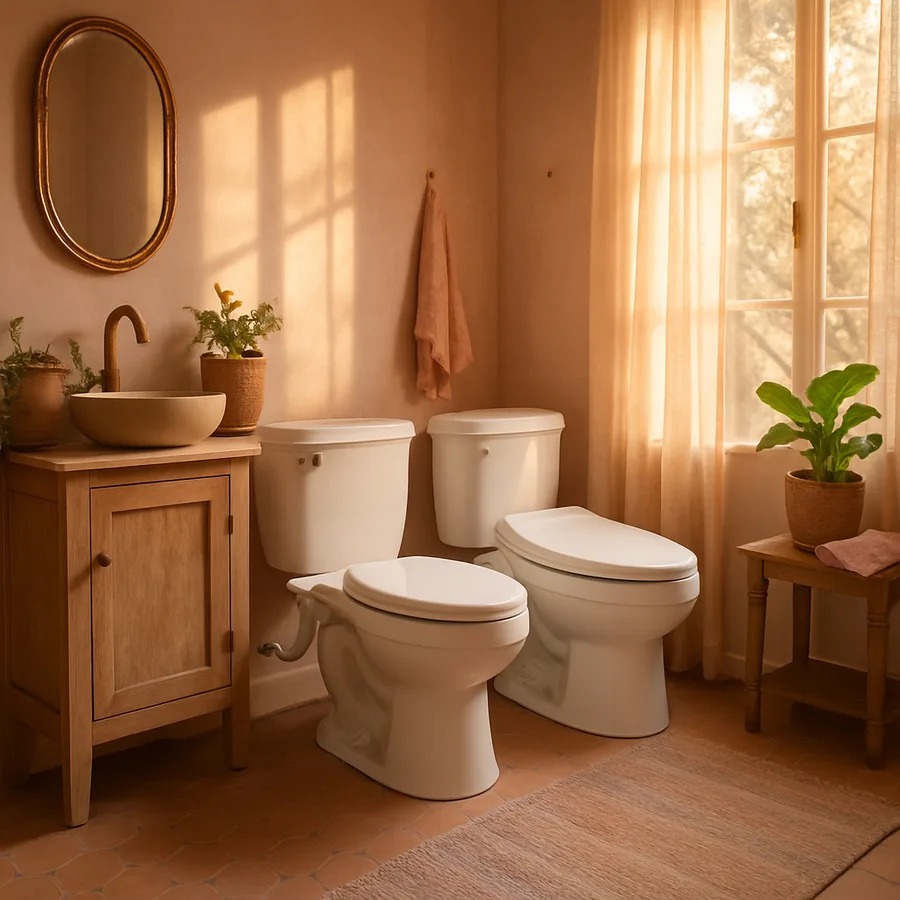
Walk into any U.S. home center bathroom aisle today and you'll see two dramatically different products marketed under the same general label. On one rack, slim plastic bidet attachments tuck under your existing toilet seat for as little as thirty-five dollars. A few feet away, full bidet seats - some electric, some not - replace the seat entirely and run anywhere from $90 to well over $900. Same general function, wildly different price brackets, and the marketing language often obscures rather than clarifies the differences. So which one actually belongs in your bathroom?
This comparison breaks down both categories on the dimensions that matter most: total installed cost, feature depth, install effort, daily-use comfort, longevity, and resale value if you ever sell the home. According to Consumer Reports, the gap between the cheapest acceptable bidet attachment and the cheapest acceptable bidet seat is roughly $60 - but the gap between a bare-bones attachment and a full-featured electric seat can easily exceed $700. Knowing where on that spectrum your household sits before you visit the store saves both money and regret.
Defining Each Category Precisely
A bidet attachment is a thin plate, usually three-eighths to half an inch thick, that sandwiches between your existing toilet seat and the porcelain bowl. It uses the existing seat-bolt holes for mounting, taps the cold water supply with a T-valve identical to the one used by a full bidet seat, and provides a spray nozzle controlled by one or two large dials on the side. The simplest attachments offer cold water only with a single rear spray; the better ones add a second hot-water inlet (drawn from under the bathroom sink) and a separate front-spray nozzle.
A bidet seat is a complete replacement for your existing toilet seat. The hardware is integrated into the seat assembly itself, including the spray nozzles, the hose connections, and on electric models the heating elements, the dryer, the deodorizer, and the control electronics. Non-electric bidet seats start around $90 and use the same kind of cold-water-only or hot-and-cold-mix arrangement as a quality attachment, but with the controls integrated into a side panel and with retracting nozzles that hide when not in use.
The two categories share the same plumbing interface - both use the same T-valve splice into the toilet's cold supply line - but diverge dramatically in what they offer the user. The simplest mental model is to think of an attachment as a bolt-on accessory and a seat as a replacement appliance. That distinction drives everything else in the comparison.
Total Installed Cost
Bidet attachments price out roughly as follows in the current U.S. market: $35 to $50 for a cold-water single-spray model, $50 to $90 for a cold-and-warm dual-temperature model with two spray nozzles, and $90 to $130 for the highest-end attachments with adjustable spray pressure and self-cleaning nozzles. Installation is typically free if you do it yourself in fifteen to twenty minutes, or roughly $75 to $125 for a plumber to handle as part of a longer service call.
Bidet seats span a wider price range and break naturally into three tiers. Non-electric replacement seats run $90 to $200, mid-tier electric seats with heated water and a basic dryer fall between $300 and $550, and premium electric seats with tankless heaters, multi-stage temperature, user memory presets, and high-end build quality range from $550 to $950. Add roughly $200 to $400 if your bathroom needs a new GFCI outlet to power an electric model - a non-trivial line item that many first-time buyers overlook.
The total installed cost picture, then, looks like this: a basic warm-water bidet attachment lands around $100 installed by the homeowner, while a full premium electric bidet seat installed by the homeowner with a new GFCI outlet from an electrician sits closer to $1,300. That's a 13x spread for what is sometimes marketed as the same general improvement, and it underscores the importance of matching the product to your actual usage. Consumer Reports' bathroom-fixture coverage repeatedly emphasizes that the highest customer-satisfaction scores cluster in the mid-tier electric seat range, not at either end of the spectrum.
Feature Depth and Daily Comfort
Here the gap between the two categories becomes most visible. A bidet attachment offers, at most, two spray nozzles (rear and front), one or two pressure settings, and one or two temperature settings. The temperature, when present, is determined by how much hot water you let the dual valve mix in - there's no thermostatic regulation, which means a cold snap that drops your inbound water temperature by five degrees lands directly on you. The controls are mechanical knobs, no presets, no electronics.
A premium electric bidet seat, by contrast, can offer five or six distinct functions: rear wash, front wash, oscillating wash, pulsing wash, dryer, and deodorizer. Water temperature is electronically regulated to a precise stage you select, independent of your inbound water temperature. Spray pressure is variable across five or more settings, nozzle position is adjustable, the seat itself is heated to a precise temperature, the lid soft-closes, and per-user memory presets recall every setting at a single button press. The American Society of Interior Designers (ASID) notes in its accessibility-first guidance that the per-user preset capability is what makes a bidet seat a genuine aging-in-place upgrade rather than just a comfort feature.
Have you actually thought about how each member of your household will interact with the controls? An attachment is honest about its simplicity - you turn one or two knobs and that's it. A premium electric seat requires a brief learning curve and a willingness to read a short manual, but rewards that effort with vastly better day-to-day comfort and a fixture every household member will actually enjoy using. The middle ground - a non-electric replacement seat - splits the difference, with a bit more polish and integrated controls but without heated water or a dryer.
Install Effort and Real-World Reliability
Install effort is closer between the two categories than you might assume. Both require shutting off the toilet's water supply, disconnecting the existing supply hose, splicing a T-valve into the line, reconnecting everything, and pressure-testing for leaks. The bidet attachment additionally requires removing the existing toilet seat, sliding the attachment plate onto the bolt holes, and reinstalling the seat on top - perhaps five extra minutes of work. The bidet seat replaces the existing seat outright, which is comparable effort in the other direction.
The International Association of Plumbing and Mechanical Officials (IAPMO) standardizes the plumbing interface both products use, and the standardization is why both install reliably across decades-old American toilets. Reference material on the underlying fixture standards lives at the official IAPMO site. The Plumbing-Heating-Cooling Contractors Association (PHCC) publishes consumer-facing DIY guidance that covers the T-valve installation step in detail and is worth reviewing before either install. PHCC also maintains a national directory of licensed plumbers if you'd rather not handle the splice yourself.
Real-world reliability differs more than install difficulty. Bidet attachments use simple mechanical valves with very few failure modes - the most common issue is a slow drip from the T-valve after several years, fixed by replacing a forty-cent rubber washer. Electric bidet seats have correspondingly more failure modes: heater elements eventually scale up in hard-water regions, dryer fans wear out, control boards occasionally fail. The mid-tier electric seats from major brands carry one- to three-year warranties; premium models often carry five-year warranties on the heating element specifically.
Aesthetic and Bathroom Design Implications
From a pure interior-design standpoint, a bidet attachment is the more visually intrusive option. The attachment plate is visible between the seat and the bowl, the side dial protrudes a half-inch beyond the seat profile, and the side-mounted T-valve and hose are exposed. None of this matters in a workhorse family bathroom, but in a designer powder room it absolutely does. The National Kitchen and Bath Association (NKBA) publishes guidance on small-bath fixture aesthetics at the NKBA professional resources hub, and the consensus is that visible aftermarket hardware reads as an afterthought rather than as a design choice.
A bidet seat, especially a slim premium model with a side-mounted control panel, integrates much more cleanly. The seat looks like a slightly thicker version of a normal toilet seat, the control panel is intentionally styled to match the bowl, and the only visible aftermarket hardware is the supply hose entering the back of the seat - which most quality brands route through a discrete port. In a renovated guest bath or primary bath, this matters; in a mudroom or basement bathroom, perhaps less so.
Have you considered how visible the install will be to guests? A simple test: stand at the bathroom doorway and look at the toilet from the angle a visitor first sees it. If the install will be the first thing they notice, a slim bidet seat justifies its higher cost on aesthetics alone. If the toilet is tucked behind a partition or in a half-bath that rarely sees guests, a quality attachment delivers most of the function for a fraction of the price.
Choosing the Right Option for Your Household
Match the product to four variables: bathroom traffic, climate, accessibility needs, and budget. A high-traffic family bathroom in a cold climate with a member of the household who would benefit from heated water is the textbook case for a mid-tier electric seat in the $300 to $550 range. A low-traffic guest bath in a temperate climate where a single occupant just wants the basic function is a textbook case for a $50 warm-water attachment.
An accessible-design renovation - for an aging parent, for a household member with mobility limitations, or simply as a forward-looking investment - almost always justifies the premium electric seat. The user-memory presets, the consistent water temperature, the dryer, and the deodorizer collectively make the fixture genuinely usable across a wide range of physical capabilities. The U.S. EPA WaterSense program has compiled accessibility-first bathroom-design guidance at the EPA WaterSense site, and electric bidet seats appear in their referenced fixture lists for accessible remodels.
Budget the install at the high end of the published price range, then add fifteen percent for the small surprises: the angle stop that needs replacement, the GFCI outlet that needs to be added, the second trip to the home center for a fitting that didn't ship in the box. According to PHCC consumer-survey data, roughly 20 percent of DIY bidet installations require at least one unanticipated parts run; building that buffer into your project plan from the start eliminates the frustration when it happens.
Conclusion
The choice between a bidet attachment and a bidet seat ultimately reduces to how much daily comfort you're willing to pay for and how visible the install needs to be. Both categories share the same plumbing interface, both install in well under an hour for a competent homeowner, and both deliver the core hygiene benefit a bidet promises. Where they diverge is in feature depth, in aesthetic integration, and in long-term reliability - and the right answer for your household depends squarely on which of those dimensions you value most.
For most American homeowners renovating a primary bathroom, a mid-tier electric bidet seat from a reputable brand represents the satisfaction sweet spot. The combination of heated water, warm air dryer, multiple pre-set users, integrated aesthetics, and reasonable price puts it ahead of both the cheaper attachment and the premium-tier seat for the typical user. For a guest bath or a workhorse family bathroom where the goal is simply to add the function without spending heavily, a quality warm-water attachment delivers excellent value.
Don't underestimate the install-side line items, particularly the GFCI outlet requirement for any electric model. The cost of an electrician visit can easily equal the cost of the attachment itself, and skipping it is not an option in a code-compliant household. Build the full installed cost into your decision rather than comparing sticker prices at the home center, and you'll arrive at the right product the first time rather than after a return trip.
Take ten minutes this week to map your household's bathroom-traffic pattern, climate, and accessibility needs against the framework above. Walk through your bathroom and assess outlet placement, fixture visibility, and tank clearance - then narrow your choice to the two or three specific models that fit your exact situation. With that short list in hand you can shop confidently, install confidently, and enjoy the upgrade for years to come.
More Articles You May Like



Comments
Post a Comment