Baseboard Heater Covers That Look Like Real Trim Molding
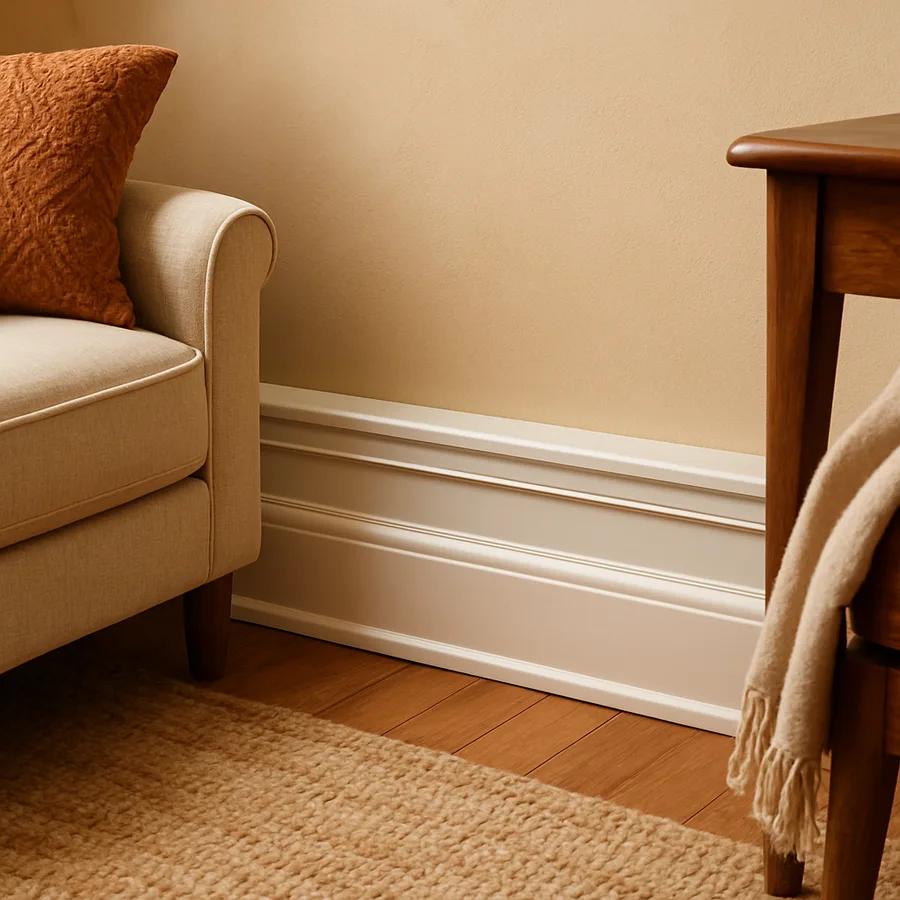
Baseboard heating works. It quietly distributes warmth along the perimeter of a room, requires no ductwork, runs whisper-quiet, and rarely fails for decades. The problem is that the standard sheet-metal cover that comes from the factory looks exactly like what it is: a stamped utilitarian object that screams nineteen-seventies rental apartment. For homeowners who otherwise care about millwork details, casing profiles, and the architectural language of a room, that ribbed metal cover is a constant visual irritant.
The good news is that an entire small industry now exists to solve this problem. Architectural baseboard heater covers that mimic real trim molding can transform an awkward heating element into what looks like an oversized, well-detailed baseboard. Done properly, the cover reads as architecture rather than mechanical equipment. Visitors do not notice it. Photographers can shoot the room without distraction. According to industry estimates referenced in a 2024 trade publication, residential demand for premium baseboard heater covers grew approximately thirty-two percent between 2022 and 2024, driven largely by the renovation market and the growing population of homeowners renovating older homes with hydronic baseboard systems.
Understanding the Two Categories of Baseboard Heater
Before discussing covers, a homeowner needs to know which type of baseboard system they have, because the cover options differ significantly between them. The two dominant residential systems are hydronic baseboard, which circulates hot water through a finned copper tube, and electric baseboard, which uses an electric resistance element inside a similar finned housing.
Hydronic baseboard systems run cooler at the surface, typically between 130 and 180 degrees Fahrenheit at the cover face, and can accept a wider range of cover materials including engineered wood with appropriate clearance and finish. They also tend to have longer service lives, often forty to sixty years for the copper tube itself, which makes them a better long-term investment for premium covers. The U.S. Department of Energy publishes consumer guidance noting that hydronic baseboards typically deliver more even, comfortable heat than electric baseboards, partly because they run at lower surface temperatures with longer cycle times.
Electric baseboard systems run hotter at the surface, often 200 to 250 degrees Fahrenheit, which significantly restricts the materials and clearances that are safe to use. They also have specific code requirements regulated by the National Electrical Code and enforced locally, including minimum clearances to combustible materials and specific requirements around outlet placement above electric baseboard units. Any cover for an electric baseboard must respect those clearances, and any modification that obstructs the original cover should be reviewed by a licensed electrician familiar with local code.
Mixing up the two is a real risk. A wood cover engineered for hydronic baseboard can scorch, smoke, or create a fire hazard if installed over an electric baseboard. If you are uncertain which type you have, the giveaway is the connection point. Hydronic baseboards have small copper pipes entering at one or both ends. Electric baseboards have a thermostat dial built into one end and a sealed metal connection box at the other.
The Profile Vocabulary That Makes a Cover Look Like Trim
The reason factory baseboard heater covers look cheap is partly material and partly profile. The standard cover has a flat front, a vented top, and a flat bottom that meets the floor at a square corner. Real architectural baseboards almost never have that geometry. They have shoe molding at the floor, a primary baseboard with a profile, and often a cap molding at the top.
The most successful aftermarket covers replicate that three-part baseboard composition. A flat or fluted front face, between five and seven inches tall, sits on top of a half-round shoe molding. The top edge carries an applied cap molding, often a Roman ogee or a simple bullnose, that visually closes the assembly. The vent slot, where heat escapes, is recessed beneath the cap molding so it reads as a shadow line rather than a functional grille. From across the room, the eye reads a generous baseboard with a satisfying profile, not a heating element.
The premium manufacturers in this category, including companies like Beauti-Vent, Embassy, and several smaller millwork specialists, offer profile selections that mirror the baseboard styles common in different architectural periods. A 1920s Craftsman bungalow benefits from a five-and-a-quarter-inch flat-face cover with a Craftsman-style cap. A 1900 Victorian rowhouse asks for a seven-inch fluted face with a more ornate compound cap. A 1960s mid-century home wants a clean four-inch flat face with no cap at all, the modernist version of the same idea.
Material Selection Across Heat Tolerance and Aesthetics
Material choice for baseboard heater covers walks a tighter line than for radiator covers, because the heat source runs continuously along the entire length of the cover rather than being concentrated in one spot. Three primary material families dominate the residential market.
Powder-coated steel is the workhorse material for both hydronic and electric applications. It tolerates any operating temperature these systems produce, accepts a huge range of color and texture finishes, never warps, and resists dents reasonably well. The visual penalty is that even with applied molding profiles, steel reads as steel under raking light. The premium manufacturers solve this by using texture finishes that scatter light and break up the visual identification of the substrate.
Engineered wood with high-temperature finish is the most architectural option but only safe for hydronic systems with appropriate clearances. The cover assembly typically uses poplar or paint-grade hardwood for the visible faces, MDF for non-load-bearing back panels with mandatory clearance from the heating element, and a high-temperature primer and topcoat rated for the operating temperature of the radiator. This Old House has profiled several restoration projects where custom wood baseboard heater covers replaced original metal covers, almost always specifying a one-and-a-half-inch minimum clearance between any wood face and the finned tube itself.
Aluminum extrusions are the lightweight, high-end option for modern interiors. Premium aluminum covers can be anodized, powder coated, or painted in any wall color, and the inherent thermal conductivity of aluminum actually improves heat output by acting as an extension of the heating fin itself. The trade-off is cost. Aluminum covers from boutique European manufacturers can run three to four times the price of equivalent steel covers, though the cleanness of the visual result often justifies the premium in modern interiors.
Color and Finish Strategies for a Seamless Look
The visual goal of a premium baseboard heater cover is to be read as part of the room's trim package, not as a separate object. Color selection follows directly from that goal. The cover should match the rest of the room's trim in both hue and sheen, with the same paint product if possible and the same application technique.
The most common trim treatment in contemporary homes is white or near-white in semi-gloss or satin. Cover manufacturers sell pre-finished options in these standard tones, but the field finish almost always reads as slightly off compared to the trim it is meant to match. The professional move is to specify the cover in primer-only, mount it in place, and have the painter apply the same trim color and product over both the cover and adjacent baseboards in a single continuous coat. The result is a perfect match because the topcoat literally is the same paint.
For homes with stained or natural wood trim, the calculus changes. Wood-finish covers exist but are expensive and rarely match the existing trim perfectly because the cover wood is typically a different species and the stain absorbs differently. The pragmatic alternative is to specify a powder-coated metal cover in a custom color matched to the dominant wood tone, which reads as architectural metal rather than as failed wood matching. The American Society of Interior Designers resource library includes case studies on this exact challenge in historic home renovations.
Have you considered what the cover looks like at the corners and end caps, which are the spots where most installations visually fail? End caps that simply terminate the cover with a flat plate read as cheap. End caps that mitre into the adjacent wall or wrap around an outside corner with a finished return read as architectural. Specifying premium end caps is one of the cheapest ways to elevate a baseboard heater cover from functional to genuinely beautiful.
Installation Realities and Code Considerations
The installation of a premium baseboard heater cover is generally a straightforward retrofit. The original factory cover unscrews, the heating element stays in place, and the new cover slides over the element and fastens to the wall through hidden mounting clips or directly through the back panel into wall studs. A competent homeowner with basic hand tools can typically complete the installation in two to four hours per twenty linear feet of baseboard.
The complications, when they arise, almost always involve obstructions. Existing electrical outlets, switches, telephone jacks, cable runs, and door casings frequently interfere with the new cover's footprint. Premium cover manufacturers offer factory-cut openings for outlets if you provide measurements at order time, but field cuts are inevitable in many installations. A multi-tool with a fine-tooth metal-cutting blade handles steel covers cleanly. Wood covers cut beautifully with a track saw or a careful jigsaw with a fine-tooth blade.
The code considerations are most important for electric baseboard installations. The National Electrical Code requires specific clearances between electric baseboard units and combustible materials, and any cover modification that brings combustibles closer than the original installation may violate code. In many jurisdictions, modifications to electric baseboard installations require a permit and inspection. Hydronic baseboard covers are generally not subject to these restrictions, but local mechanical codes may still apply to clearances and accessibility for service. When in doubt, a thirty-minute consultation with a local code official before purchasing covers can save significant cost and frustration.
Cost, Sourcing, and Value Considerations
Premium baseboard heater covers occupy a wider price range than most homeowners initially expect. Entry-level powder-coated steel replacement covers from manufacturers like Neatheat or Baseboarders run roughly thirty to fifty dollars per linear foot for stock white finishes in standard heights. Architectural wood-look covers with applied molding profiles from specialty millwork suppliers run sixty to one hundred and forty dollars per linear foot. Custom aluminum extrusions with bespoke finishes can exceed two hundred dollars per linear foot for boutique European products.
For a typical room with twenty linear feet of baseboard, the total cost range therefore runs from roughly six hundred dollars at the entry tier to four thousand dollars at the high end. The middle of that range, the eight hundred to fifteen hundred dollar zone, is where most thoughtful renovators land for their primary living spaces. Bedrooms and secondary spaces often justify the entry-tier products, while living rooms and primary bedrooms reward the architectural tier.
The value calculation extends beyond the visible aesthetics. According to data published by the National Association of Home Builders, kitchen and bath renovations consistently top the list of projects with the highest resale return, but trim and millwork upgrades increasingly appear in the top ten because they signal overall quality of finish to prospective buyers. A home with thoughtful trim details, including baseboard heater covers that read as architectural rather than mechanical, simply shows better in listing photographs and during showings.
Conclusion
The transformation of a baseboard heater from utility eyesore to architectural baseboard is one of those small renovation moves that punches well above its weight. The cost is modest relative to its visual impact, the installation is approachable for a competent homeowner, and the result improves the perceived quality of the room every single day for as long as the heating system stays in service. For homeowners renovating older homes with hydronic baseboard systems in particular, premium covers represent one of the highest-return millwork upgrades available short of full trim replacement.
The decisions worth thinking through carefully are heating system type, profile selection, material category, finish strategy, and installation method. Hydronic systems offer broader material flexibility than electric systems, which means hydronic homeowners can pursue wood-look architectural covers while electric baseboard owners are wisely limited to powder-coated metal. Profile should reflect the architectural period of the home rather than chasing whatever happens to be in style this year. Finish should match the rest of the trim package as closely as possible, ideally by painting the cover and the adjacent baseboards together in a single coat of the same product.
If you have been staring at ugly metal baseboard covers in your living room for years, this is the project that finally fixes the problem. Start by identifying which type of baseboard system you have, measure the total linear feet of cover needed in each room, photograph the obstructions including outlets and corner conditions, and request quotes from at least two specialty cover manufacturers. Order samples before committing to a full purchase, install the new covers during a stretch when the heating system can be off for a few hours, and have a painter integrate the topcoat with the rest of the trim. By the next heating season, the baseboard you used to actively avoid looking at will quietly do its job behind millwork that disappears into the architecture exactly the way good trim should.
More Articles You May Like



Comments
Post a Comment