Stenciled Wall Patterns Using Removable Stencils Renters Can Try
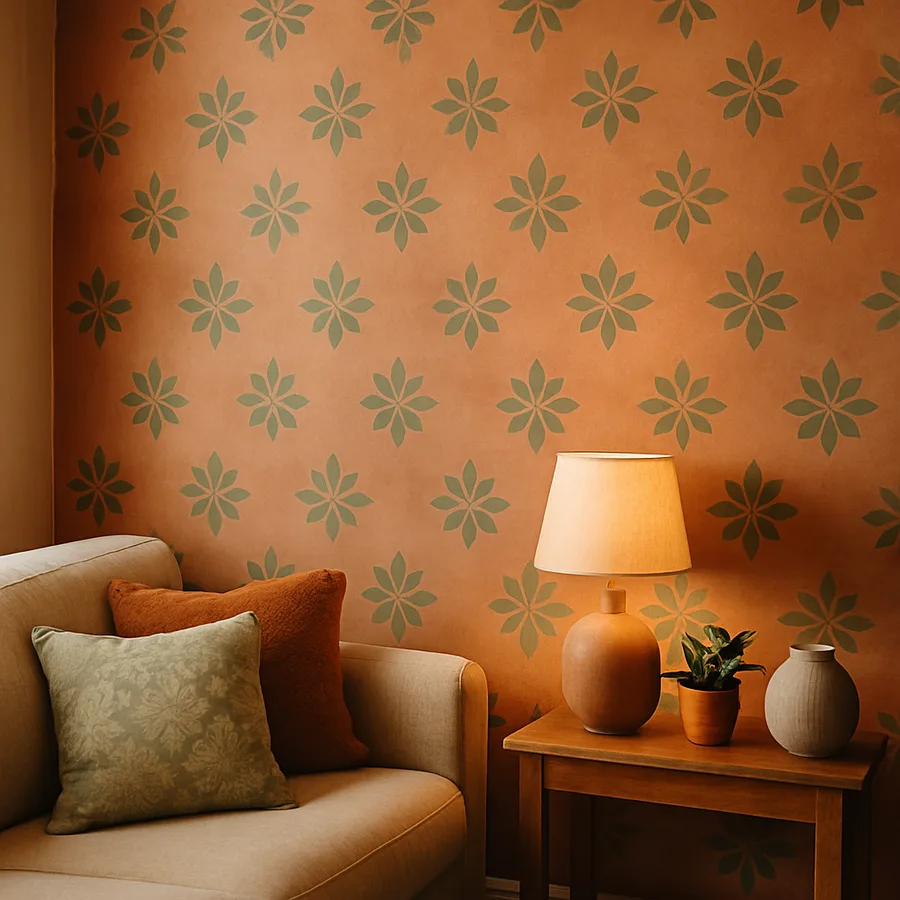
Blank rental walls are one of the most common frustrations among apartment dwellers, and according to a recent National Multifamily Housing Council resident preferences study, more than 88 percent of renters say the ability to personalize their interior surfaces directly affects how long they stay in a unit. Stenciling sits in a sweet spot: it produces high-impact pattern, costs a fraction of wallpaper, and when you choose removable stencils paired with the right paint system, the result lifts cleanly when your lease ends. The catch is that the technique is unforgiving when planned badly. Crooked repeats, paint bleed, and gummy adhesive residue are the three failures that turn a fun weekend into a security-deposit conversation.
This guide walks through the entire decision tree for renters who want stenciled wall patterns without committing to permanent change. You will see how to evaluate stencil materials, pick paint that adheres to existing landlord-grade finishes, plan a layout that survives the inevitable wall imperfections, and execute the actual stenciling pass with predictable results. We will also cover the specific approaches that landlords tend to accept on inspection and the shortcuts that almost always trigger repainting fees.
Why Removable Stencils Beat Wallpaper For Most Renters
The first decision is whether to stencil at all, or whether to default to peel-and-stick wallpaper, fabric panels, or a removable mural. Each has trade-offs, and the right answer depends on your wall texture, your timeline, and how much variation you want from room to room. Stenciling tends to win when the wall has any texture, when you need to match an exact color in another piece of furniture, or when the pattern is bold enough that a printed repeat would look mechanical. It also wins on cost: a single high-quality stencil panel runs between $25 and $60, and one panel can pattern an entire feature wall.
Wallpaper, by contrast, almost always loses on heavily textured walls. Knockdown, orange peel, and skip-trowel finishes are nearly universal in builder-grade rentals, and adhesive backings cannot bridge the valleys without bubbling. Stenciled paint works because the paint itself fills the texture as it goes on. The American Society of Interior Designers has noted in member surveys that stenciling has surged in popularity for renters specifically because of how forgiving it is on imperfect surfaces. You can read more on rental-friendly design strategies through resources like ASID, which publishes regular guidance on residential application techniques.
There is also a question of reversibility. Vinyl peel-and-stick wallpapers leave residue more often than their packaging admits, especially in warm rooms or on flat-finish paint. Removable stencils, by definition, leave nothing behind: they are tools, not installations. The only material that ends up on your wall is paint, and paint is what landlords expect to deal with anyway. If you stencil in a color close to the existing wall and use a flat or matte sheen, a single coat of touch-up paint covers the pattern at move-out.
Choosing The Right Stencil Material
Stencils come in several materials, and the differences matter enormously when you are working on a vertical surface for several hours. The four common categories are Mylar, laser-cut polypropylene, adhesive-backed vinyl, and oversized paper. Mylar and polypropylene dominate the reusable market because they hold a clean edge through dozens of paint passes, flex enough to follow minor wall waves, and clean up under running water without warping.
Adhesive-backed vinyl stencils, sometimes marketed as one-time-use designs, can produce the crispest edges of any option because the stencil bonds directly to the wall. They are excellent for small accents but a poor choice for large repeating patterns because lifting and repositioning a long sticky panel without stretching the design is genuinely difficult. Paper stencils are the cheapest option but tear under foam-roller pressure and absorb paint, which causes bleed-through after only a few repeats.
For renters specifically, the right choice is almost always a Mylar or polypropylene stencil sized between 18 and 24 inches per panel. Panels in that range balance manageable handling against fewer repeat seams, and they are large enough that you can pattern a 10-foot wall in roughly four to six hours of focused work. Have you considered how much time you actually want to spend, and whether you would rather do an accent strip than a full wall? Renters who answer that question honestly tend to finish the project they start.
Paint Systems That Lift Cleanly At Move-Out
Paint choice is the single biggest variable in whether a stenciled wall reads as renter-friendly or disastrous. The ideal system is a water-based acrylic in a flat or matte sheen, applied in thin coats with minimal solvent strength. Avoid oil-based paints, chalk-based formulations marketed as ultra-matte, and any product whose label warns against painting over without primer. Those are signals that the paint will require its own removal step, not just a cover coat.
Sheen matters because flat and matte finishes accept a cover coat with less flashing than satin or eggshell. Most rental units are painted in flat builder-grade white or off-white, and matching that sheen makes touch-up nearly invisible. According to color guidance summarized by trade publications such as Better Homes & Gardens, the most forgiving stencil colors for renters fall within two shades of the base wall color, because the contrast is low enough that any minor paint creep at the edges reads as intentional shadow rather than a mistake.
Color saturation is the second consideration. High-pigment paints, especially deep navies, forest greens, and saturated terracottas, can require two to three cover coats at move-out. If you love those colors, plan ahead by buying an extra quart of the wall color from your landlord or matching it at a paint counter on day one of move-in. The National Apartment Association reports that more than 70 percent of move-out paint disputes involve color mismatch, not damage, so a single matched quart in your closet is the cheapest insurance available.
Wall Prep That Prevents Bleed And Lift
Even the best stencil and paint combination fails on a poorly prepared wall. Prep is where most renters cut corners, and where most stenciling projects develop the fuzzy-edge or peeling-paint problems that get blamed on materials. The non-negotiable steps are cleaning, drying, and tape-testing.
Cleaning means a damp microfiber pass with mild dish soap, followed by a clean-water rinse pass, followed by at least two hours of drying. Dust, cooking residue, and cleaning-product films all interfere with paint adhesion, and they also reduce how well low-tack adhesive holds the stencil. Tape-testing is the step almost everyone skips: before you commit to a full session, press a six-inch piece of painter's tape onto the wall in an inconspicuous corner, leave it for an hour, and pull it off at a 45-degree angle. If any paint flakes come up with the tape, the existing finish is too fragile for stenciling, and you should switch to a non-adhesive plan that uses a stencil-positioning spray on a backer board.
Wall texture is the third prep variable. Heavy knockdown texture creates valleys that a foam roller cannot reach, leaving uneven pattern density. The fix is to switch from a roller to a stencil brush, which lets you stipple paint into the valleys without flooding the high points. Stencil brushes also sharply reduce paint bleed under the stencil edge, because they apply much less paint per pass than a roller.
Layout Planning For Repeating Patterns
Pattern layout is where stenciling projects either look professional or look homemade. The fundamental rule is that walls are never plumb and ceilings are never level, so you cannot rely on the ceiling line or the floor line as a reference. Instead, snap a vertical chalk line at the exact center of the wall using a laser level or a long bubble level, and start your pattern from that center line outward in both directions.
This approach, sometimes called center-out registration, ensures that the pattern looks symmetrical from the most common viewing angle, which is straight-on from the doorway. It also concentrates any necessary partial repeats in the corners, where they are visually less prominent. Have you mapped out where furniture will sit in front of the wall? If a bed headboard or sofa back covers the lower 30 percent of the wall, you can save hours by stenciling only above that line.
Most quality stencils include registration marks, small dots or arrows at the panel edges that you align with the previous repeat. Use them. Eyeballing the seam between repeats produces drift that compounds across a wall: a one-eighth inch error per repeat becomes a full inch off-grid by the seventh repeat, and the eye notices that immediately. Resources from organizations like Apartment Therapy regularly feature renter stenciling case studies with detailed registration walkthroughs that are worth reviewing before you start.
Execution Workflow For A Single Weekend
A realistic timeline for a 10-foot by 8-foot accent wall is one full Saturday plus a Sunday morning for cleanup and any touch-up. The Saturday workflow breaks into four blocks. Morning is prep: clean the wall, tape the trim and ceiling line, and lay down drop cloths. Late morning is layout: snap your center line, position your first stencil panel, and confirm with photos from across the room that the pattern reads correctly at viewing distance. Photos taken from 10 to 15 feet away reveal alignment issues that your eye misses at arm's length.
Afternoon is the main paint pass. Load a stencil brush by tapping it onto the paint and then offloading 80 percent of the paint onto a paper towel. The brush should look almost dry. Stipple straight down onto the stencil, never side to side, and avoid the temptation to thicken any single area. Two thin passes always look cleaner than one thick pass, and they dry fast enough that you can reposition the stencil within 10 to 15 minutes. Late afternoon is the touch-up pass, where you correct any bleed lines with a small artist's brush and the wall base color.
Sunday morning is for fresh-eye inspection. Walk into the room with morning light, look at the wall from multiple angles, and fix any inconsistencies you missed when you were tired. Painter's tape should come off the trim within 24 hours of the final coat, pulled at a 45-degree angle while the paint is still slightly tacky. Pulling tape after paint has fully cured can lift cured paint along with the tape, which creates exactly the kind of damage you were trying to avoid.
Conclusion
Stenciled wall patterns give renters something rare: a high-impact, high-personality wall treatment that comes off cleanly with a single coat of matched paint. The technique rewards careful planning more than artistic skill, and almost every failure traces back to one of three issues: incompatible paint, skipped wall prep, or eyeballed alignment. Address those three, and you can produce work that looks indistinguishable from professional decorative painting at a fraction of the cost.
The renters who succeed with stenciling treat it as an engineering exercise rather than a craft project. They tape-test before committing, they snap chalk lines instead of trusting ceilings, they use registration marks instead of eyeballing repeats, and they keep a quart of matched base paint in the closet for inevitable touch-up. None of those steps are difficult, but they are easy to skip when excitement runs ahead of process. The cost of skipping them, measured in lost weekends and forfeited deposits, far exceeds the cost of doing them right the first time.
If you are weighing your first stenciling project, start small. A four-foot bathroom accent strip teaches you everything you need to know about your stencil, your paint, and your wall texture without committing you to a full feature wall. Once that first strip looks clean and lifts cleanly during a cover-coat test in an inconspicuous spot, you can scale up to bedrooms and living rooms with real confidence. Try stenciling one small section this weekend using the workflow above, photograph the result, and compare it to printed wallpaper samples in the same color. The cost difference, the personalization upside, and the rental-friendliness will speak for themselves.
More Articles You May Like


Comments
Post a Comment