Home Bar Backsplash Ideas With LED Shelf Lighting Accents
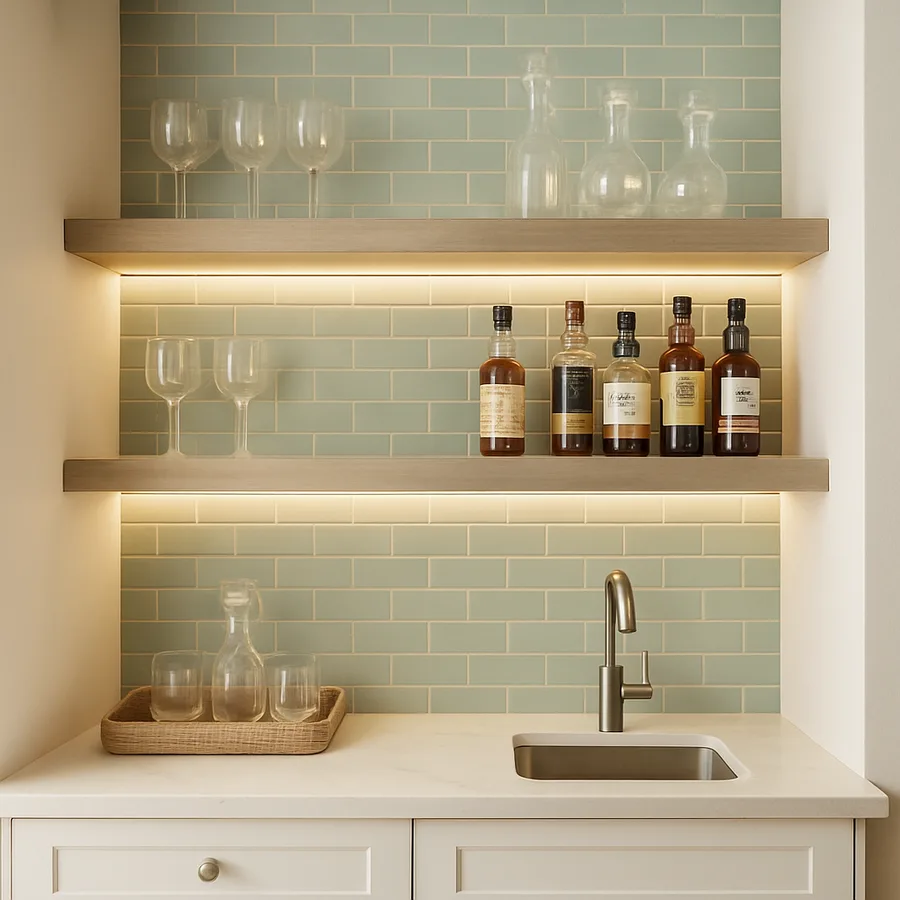
The backsplash behind a home bar does far more than protect the wall from splashed gin and citrus zest, and when paired with properly specified LED shelf lighting, it becomes the design anchor that holds the entire bar together. Surveys published by the National Kitchen and Bath Association (NKBA) show that home bar renovations grew by roughly 41% between 2019 and 2023, and within those projects, the backsplash has become the most photographed design moment. A well-lit, well-detailed backsplash transforms a wet bar from a functional pour station into a destination, and the interplay of surface material and accent lighting is where that transformation happens.
Why the Backsplash Matters More at a Bar Than Anywhere Else
Unlike a kitchen backsplash, which is primarily functional and often partially hidden behind a range hood or upper cabinets, a home bar backsplash is almost always on full display. The bar wall typically lacks upper cabinets, meaning the entire backsplash surface is visible from every angle in the room, and the eye naturally follows the gleam of glassware up to the wall behind it. This visibility means material quality and installation detail carry outsized weight, because there is nothing distracting the viewer from imperfect grout lines or mismatched tile lots.
The bar backsplash is also the canvas for layered lighting in a way that kitchen backsplashes rarely are. Because home bars typically include open floating shelves or glass-front cabinetry rather than solid upper cabinets, the backsplash becomes visible both in front of and between shelf levels. LED lighting installed under each shelf washes the backsplash in a way that emphasizes its texture and color, creating a layered composition that feels closer to retail display than to residential construction. Pinterest Predicts identified "moody wet bars" as a top home trend in early 2024, and the defining feature of nearly every image in that category is a deeply colored backsplash glowing from within.
Finally, the backsplash is where many homeowners invest in materials they would not use anywhere else in the home. A bar backsplash is typically less than 25 square feet of surface area, which makes high-end stones, hand-glazed tiles, or specialty metals financially accessible in a way that a kitchen backsplash never would be. That compact footprint is license to be bold, and the most memorable home bars in design publications almost always feature a backsplash material that would be impractical anywhere else in the house.
Natural Stone Backsplashes
Natural stone remains the default premium choice for home bar backsplashes, and for good reason: few materials reward backlighting as beautifully as veined marble, layered onyx, or crystalline quartzite. Calacatta and Statuario marbles have been bar-backsplash standards for decades because their dramatic gray and gold veining creates visual interest even without lighting, and when lit from above by LED shelf strips, the veins glow like rivers across the surface. Honed finishes, which are matte rather than polished, resist fingerprints and water spots better than polished surfaces and read as more sophisticated in low-light bar settings.
Onyx deserves a special mention because it is one of the few natural stones that is actually translucent, and a properly installed backlit onyx backsplash can become a light source in its own right. Slabs between 3/4 inch and 1-1/4 inch thick allow enough light transmission to glow when backlit, and specialized installers use sealed LED panels behind the slab to create a uniform luminous surface. The Natural Stone Institute (NSI) publishes technical bulletins on translucent stone installation, and their guidance on adhesive selection and backing panel preparation is essential reading for anyone considering this approach.
Quartzite has emerged as a practical alternative to marble for bar backsplashes because it is significantly harder, more stain-resistant, and often more dramatically veined. Taj Mahal, Sea Pearl, and Fusion quartzites are three varieties that have dominated high-end residential installations, and their durability makes them better suited to the inevitable splashes of red wine and lemon juice that land on bar backsplashes. Sealing remains important, and most stone professionals recommend an impregnating sealer applied every 12 to 18 months to maintain stain resistance, especially for natural stone behind a wet bar where acidic citrus is a regular occurrence.
Tile Backsplashes: Zellige, Glass, and Handmade Ceramic
Tile backsplashes offer far more design flexibility than stone and can deliver equal or greater visual impact at a fraction of the cost, especially when paired with thoughtful lighting. Zellige tile, the hand-made Moroccan ceramic that has dominated high-end interior design for the past several years, is nearly ideal for home bar backsplashes because its irregular surface catches and scatters LED light in a way that mass-produced tiles cannot match. Each zellige tile has subtle variations in glaze depth, edge profile, and color saturation, and when lit from above by warm LED strips, the surface shimmers with hundreds of small variations.
Glass tile, particularly hand-fused or kiln-formed glass, offers a contemporary alternative with very different light behavior. Where zellige scatters light, glass tile transmits and reflects it, creating a cleaner, more modern shimmer. Large-format glass tiles in sizes of 4 by 12 inches or 6 by 24 inches have largely replaced the classic one-inch mosaic in bar installations, because fewer grout lines mean cleaner maintenance and a more sophisticated visual scale. Brands like Ann Sacks, Heath Ceramics, and Fireclay Tile each offer glass and hand-glazed ceramic lines suited to this application.
Handmade ceramic tiles occupy a middle ground between zellige and glass, with more consistency than true zellige but more character than mass-produced tile. Fireclay Tile, a B-Corp certified California manufacturer, and Heath Ceramics, founded in 1948 and long associated with California craft ceramics, both produce handmade tiles in colors and glazes developed specifically for feature walls and backsplash installations. Have you thought about how the grout color will affect the final appearance? A dark grout with light tile creates a strong grid pattern, while a matching grout allows the tile itself to dominate, and either can work depending on the mood you want the bar to set.
LED Shelf Lighting: Specification and Installation
LED shelf lighting is the quiet hero of any modern home bar backsplash, and the specifications that separate a great installation from a mediocre one are surprisingly specific. Start with color temperature: for residential bar applications, a temperature in the 2700K to 3000K range is almost universally preferred. Cooler temperatures feel commercial or clinical, and warmer temperatures below 2500K can make some tile colors read muddy. The Illuminating Engineering Society (IES) publishes color temperature guidance for residential installations, and their 2700K recommendation for living and entertaining spaces translates directly to bar lighting.
Color Rendering Index (CRI) is at least as important as color temperature. A CRI of 90 or higher ensures that the actual colors of bottle labels, glassware, and the backsplash material itself read accurately under the light. Cheap LED strips with CRI values below 80 tend to flatten colors and make amber spirits look grayish, which defeats the purpose of an illuminated display. Premium LED strips from brands like WAC Lighting, Juno, and Kichler publish both CRI and R9 values (R9 is the extended color rendering metric for red saturation), and the best residential specifications target CRI 95+ with R9 above 80.
Installation matters as much as specification. LED strips should be mounted in aluminum channels with frosted diffusers, which hide the individual LED dots and create a continuous line of light rather than a string of bright spots. The channel should be placed at the front edge of each shelf, facing backward toward the backsplash, which washes the wall surface from the shelf down and illuminates bottles from the front rather than from behind. A low-voltage 24V DC driver feeds the strips through a dimmer, and separating different shelf levels onto individual zones allows for layered lighting effects that single-zone installations cannot match.
Mirror, Metal, and Unexpected Materials
Not every memorable home bar backsplash uses stone or tile, and some of the most striking installations in recent design history rely on mirror, metal, or unexpected composite materials. Antiqued mirror backsplashes, which are manufactured with intentional age spotting and silvering, add depth and sparkle in a way that flat mirror cannot match. The gentle imperfections scatter light unpredictably, which reduces the cold reflection of ordinary mirror and makes the bar feel more like a speakeasy than a gym locker room.
Metal backsplashes, particularly brushed brass, blackened steel, and hammered copper, have made a significant return in high-end residential bars over the past five years. Brass is the marquee choice for its warmth under LED lighting, and it pairs exceptionally well with warm wood shelving and amber-colored spirits. The Copper Development Association (CDA) has long documented copper and brass as naturally antimicrobial surfaces, which is a genuine practical advantage on a backsplash that will be splashed with drinks and handled regularly.
Unexpected materials include end-grain wood mosaic, which arranges small wood blocks end-up to create a dimensional, almost tactile surface, and architectural ceramic panels like those produced by Neolith or Dekton, which offer large-format surfaces with the look of stone and the installation practicality of porcelain. These materials are less common but increasingly specified in custom residential work, especially when the bar is part of a larger design statement that rejects conventional choices in favor of something more distinctive. What would it feel like to walk up to a bar backsplash that you had never seen in any other home? That sense of surprise is exactly what these materials deliver.
Coordinating the Backsplash With the Rest of the Bar
A stunning backsplash can only succeed when it is coordinated with the rest of the bar composition, and several specific relationships matter more than homeowners often realize. The first is the relationship between the backsplash material and the countertop material. A full-height slab backsplash that matches the countertop creates a continuous surface that reads as a single sculptural gesture, while a tile or stone backsplash that contrasts with the countertop creates a layered composition with visible hierarchy. Either is correct, but mixing the two approaches half-heartedly reads as indecision.
The second relationship is between the backsplash and the shelving. Floating shelves with visible end-grain or exposed brackets create horizontal lines that should respect the tile coursing or stone veining behind them. In a zellige installation, shelves are usually best placed to land at grout line intersections rather than mid-tile, because breaking the tile grid visually cheapens the effect. For veined stone, shelf placement should avoid obscuring the most dramatic veining, and working with your stone fabricator to map out the slab before installation is a worthwhile step that many projects skip.
The third relationship is between the backsplash and the bottle display. Bottles themselves become part of the backsplash composition when they sit on open shelves in front of it, and their color and silhouette should enhance rather than fight the material behind them. A dark green wine wall of 60 bottles reads very differently in front of a white marble backsplash than in front of a blackened steel backsplash, and thoughtful bar design considers both the empty-shelf view and the bottles-in-place view from the first sketch. Do you want the bottles to disappear against the backsplash or to stand out sharply? Both are valid choices, but they lead to very different material selections.
Conclusion
A home bar backsplash paired with well-specified LED shelf lighting is one of the highest-return design moves in any residential entertaining space, because the two elements work together to create a focal point far greater than the sum of their parts. The backsplash provides the color, texture, and material story, while the lighting provides the drama, rhythm, and mood. When either element is specified carelessly, the whole bar falls flat. When both are specified with intention, the bar becomes the room guests remember.
The best home bars also acknowledge that the backsplash is seen far more often than it is used, because pouring happens at the counter but viewing happens from across the room every time the bar is walked past. Investing in materials and lighting that reward that constant peripheral attention is how the bar earns its central place in the home's social architecture, rather than functioning as a room only used during gatherings.
Finally, remember that the backsplash and lighting should evolve with how you actually entertain. Dimmable LED zones allow the same bar to function as a quiet morning coffee station and an evening cocktail lounge, and the material you choose should welcome both uses gracefully. A thoughtfully designed bar backsplash rewards its owners dozens of times a week, not just during parties, and that daily pleasure is the real measure of whether the design succeeded.
Ready to design your own illuminated home bar backsplash? Start by identifying three material samples that excite you, sketch your shelf layout with accurate LED channel placement, and commit to a warm color temperature that flatters both your bottles and your guests. The backsplash you finish this year will be the feature your friends remember for years.
Authority resources: National Kitchen and Bath Association, Natural Stone Institute, and Illuminating Engineering Society.
More Articles You May Like



Comments
Post a Comment