Nightstand Alternatives From Stools to Wall Shelves Compared
Nightstand Alternatives From Stools to Wall Shelves Compared
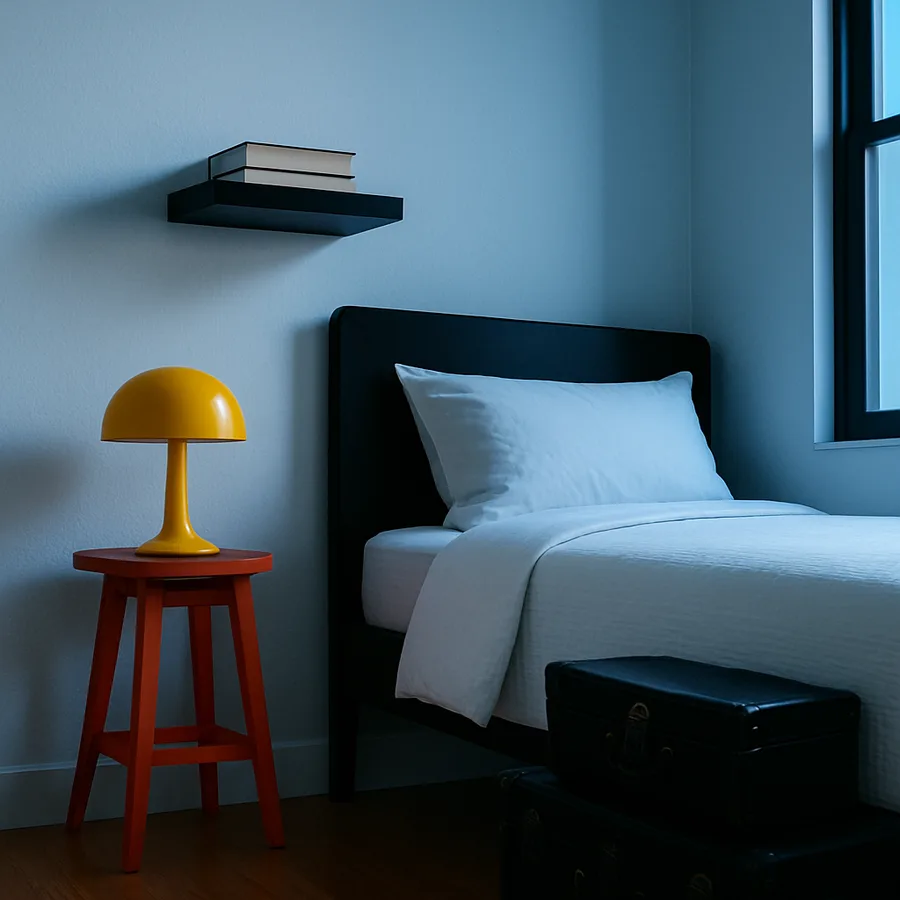
The traditional pair of matching nightstands is one of the most predictable bedroom moves in residential design, and also one of the most overcorrected. Surveys from the American Home Furnishings Alliance show that more than 60 percent of bedroom buyers regret their nightstand decision within two years, usually because the pieces ended up too large, too short, too cluttered, or too expensive for what they actually do. The job of a nightstand is narrow: support a lamp, hold a glass of water, charge a phone, and occasionally tuck away a book. Almost any flat surface near the bed can do that, and many alternatives do it better than the showroom default.
This guide compares the most credible nightstand alternatives across small spaces, rental constraints, and modern bedroom layouts. We will look at stools, wall-mounted shelves, floating ledges, stacked vintage trunks, low credenzas, and a few outsider options like wall-hung baskets. Each option is evaluated on the variables that actually matter at 6 a.m. and 11 p.m.: surface area, height relative to mattress top, lamp stability, cord routing, and how the piece looks when the bed is unmade.
What A Nightstand Actually Has To Do
Before evaluating alternatives, it helps to define the functional brief precisely. A useful bedside surface needs three things: a flat top tall enough that a lamp throws light onto the page of an open book, enough surface area for a glass plus a phone plus whatever else you keep within reach, and a stable footprint that does not wobble when you set down a coffee mug at 6 a.m. The conventional nightstand height of 24 to 28 inches exists because mattress-top heights cluster around 22 to 26 inches, and a bedside surface should sit within two inches of mattress top to read as integrated rather than detached.
That height range, sometimes called the mattress-plus-two rule, is the single most important spec when evaluating alternatives. A beautiful 16-inch stool sitting next to a 26-inch mattress looks awkward and is functionally useless because you cannot reach down comfortably from a seated position. Conversely, a 32-inch console next to an 18-inch platform mattress hovers like a dining piece. Get out a tape measure before you shop. Have you measured your actual mattress top height with the bedding on it, not just the bed frame? Most people are surprised by how much higher a fully made bed sits than the spec sheet suggests.
Surface area is the second functional spec. A useful bedside top is at least 10 inches square, ideally 12 inches by 14 inches, which is enough for a lamp base, a stable glass, and a phone or book. Surfaces smaller than 10 inches square force a choice between lamp and water, and that choice shows up as nightly clutter on the bed itself.
Stools And Garden Stools As Nightstands
Stools are the most popular alternative for good reason: they come in a wide variety of materials, they sit naturally at the right height range, and they shift the visual weight of the bedroom from rectilinear to sculptural. Ceramic garden stools in particular have become a design staple because their cylindrical or barrel shapes create breathing room around a bed that traditional nightstands do not.
The trade-offs are real. Most stools have surface tops between 11 and 15 inches in diameter, which is workable for one item but cramped for the lamp-glass-phone combo. Stool heights also tend to fall between 18 and 24 inches, which is too low for the mattress-plus-two rule on most modern beds. The fix is to choose a tall stool specifically, often labeled as a counter or bar stool with the seat removed, or a Moroccan tea-table stool style which can run 22 to 26 inches tall with a top up to 16 inches across.
Material affects practicality. Wood stools dent under heavy lamps but can be refinished. Ceramic stools are stable but can chip if a hard object falls on them, and the glaze sometimes scratches with sliding objects. Metal stools are nearly indestructible but transmit cold to anything resting on them, which can fog a glass of water on a humid night. Resources like Better Homes & Gardens regularly publish stool-as-nightstand styling guides that show how to mitigate these issues with trays and runners.
Wall-Mounted Shelves And Floating Ledges
Wall-mounted shelves are the strongest alternative for small bedrooms because they take zero floor space, which compounds the perceived size of the room. A single 24-inch deep shelf at mattress-plus-two height delivers more usable surface than most freestanding nightstands while also freeing up the floor for a robot vacuum, a basket of books, or simply visual breathing room.
The structural caveat is that wall shelves have to be installed into studs or with proper drywall anchors rated for the actual load, including the dynamic load of someone leaning on the shelf. A loaded bedside shelf can carry 15 to 25 pounds easily, and that mass plus a forearm lean creates a moment force that pulls toggles out of unreinforced drywall. According to installation guidance from the National Association of Home Builders, bedside-style shelving should be anchored into at least one stud whenever possible, with a minimum 1.5-inch screw penetration into solid wood.
Ledges, which are essentially shallow shelves between three and five inches deep, work surprisingly well when paired with a wall-mounted lamp or sconce. The ledge does not need to support a lamp base, so it can be narrower and lighter, and the cord-routing problem disappears entirely. Floating ledges are also one of the cheapest alternatives, often in the $30 to $60 range per side, and they can be repainted or stained to match any bed frame.
Stacked Trunks And Vintage Suitcases
Stacked vintage trunks deliver something almost no other alternative offers: substantial storage volume in the bedside footprint. A single trunk holds extra bedding, off-season clothing, or photo archives, and a stack of two reaches comfortable mattress-plus-two height while creating a layered, collected-over-time aesthetic that feels lived-in rather than staged.
The functional issues are weight and access. A loaded trunk can weigh 40 to 60 pounds, which is fine for a permanent installation but punishing during a move. Access to the lower trunk requires lifting the upper trunk off, which means anything stored in the bottom trunk realistically gets used twice a year. Steamer trunks, with side handles and reinforced corners, handle stacking better than soft-sided suitcases because they distribute load evenly and resist crushing under repeated lamp placement.
Aesthetically, trunks work best in bedrooms that already lean eclectic, traveler, or vintage. They look out of place in strict mid-century, minimalist, or contemporary rooms because their proportions and patina pull visual weight that competes with cleaner-lined furniture. If you love a trunk but the rest of your bedroom is sleek, consider using a single trunk on one side and a contemporary stool on the other to break the matched-pair convention entirely.
Low Credenzas And Single Long Surfaces
The boldest move in bedside furniture is to abandon the matched pair entirely and run a single long surface across the wall behind the bed. A 60- to 72-inch credenza, mid-century console, or custom built-in delivers continuous bedside surface on both sides of the bed plus the visual benefit of a connected horizontal line that anchors the bed in the room.
This approach is increasingly common in primary bedrooms designed by professionals, and the American Society of Interior Designers has noted in member trend reports that single-surface bedside solutions are among the fastest-growing design choices in residential bedrooms since 2024. The functional advantages are substantial: the surface is wide enough for both partners' belongings without crowding, the credenza usually delivers significant drawer or cabinet storage, and the long horizontal element makes the bed feel intentional rather than dropped into the room.
The constraints are wall length and price. A useful credenza needs 12 inches of clearance on each side of the bed for usable surface, which means a queen bed needs an 84-inch credenza or a wall at least 84 inches wide before considering any other furniture. Price-wise, quality credenzas in the right height range start around $700 and run well past $3,000 for solid-wood pieces. Have you priced this against the cost of two matching nightstands plus a dresser? In many bedrooms, a single credenza replaces both line items and ends up cheaper.
Outsider Options And Hybrid Solutions
A few unconventional alternatives deserve mention because they solve specific problems that the mainstream options do not. Wall-hung baskets, suspended from a single hook at mattress-plus-two height, work well in nursery-adjacent bedrooms or small guest rooms where surface area matters less than corral-style storage. They cost almost nothing, hold a phone and a book, and read as decorative rather than functional.
Hairpin-leg side tables made from reclaimed wood slabs hit the sweet spot between stool and nightstand: they typically run 22 to 26 inches tall with surface areas of 14 by 18 inches, and they can be built for $40 to $80 in materials. The National Association of Productivity and Organizing Professionals has noted that simple bedside surfaces with no drawers actually correlate with less bedside clutter, because the absence of hidden storage forces a daily decision about what stays out.
Hybrid solutions combine two of the above. A wall-mounted ledge plus a low stool below it delivers two surface levels: the upper ledge for the lamp and small items, the lower stool for a bag, a folded throw, or seating during a phone call. This vertical-stacking approach works particularly well in narrow bedrooms where horizontal space is at a premium. Resources from Apartment Therapy document many such hybrid setups in small-space tours, and the patterns repeat often enough that they are worth studying before committing to a single solution.
Choosing The Right Alternative For Your Bedroom
The right choice depends on three variables: room size, bed height, and storage needs. For rooms under 120 square feet, wall-mounted ledges or shelves almost always win because they preserve floor space. For rooms with platform beds under 18 inches tall, stools and small trunks shine because they meet the mattress-plus-two rule without towering over a low bed. For rooms where bedside storage matters, low credenzas or stacked trunks beat any other option on cubic-inch capacity.
Budget considerations also matter, but less than most shoppers expect. The price spread between a generic big-box nightstand and a good wall ledge is small, and the price spread between a pair of nightstands and a single quality credenza often favors the credenza when storage value is included. The hidden cost of conventional nightstands is the visual weight they add to a small room, which is a cost that does not appear on any receipt.
Finally, consider the lamp question. Wall sconces remove the lamp from the bedside surface entirely, which doubles the usable surface of any alternative and eliminates the lamp-stability concern that disqualifies many smaller pieces. Sconce installation is more involved than a tabletop lamp, but in a renter-friendly version with a plug-in cord, the upgrade is reversible and dramatic.
Conclusion
The matched-pair nightstand convention is a default, not a requirement, and it is rarely the best answer for any specific bedroom. Stools, wall shelves, ledges, trunks, credenzas, and hybrid combinations all outperform conventional nightstands on at least one variable, and the right alternative for your bedroom is the one that wins on the variables that matter most to you. The honest assessment is usually that floor space, surface area, and visual weight matter more than the symmetry of two identical pieces.
The exercise of choosing an alternative is also clarifying. When you measure your mattress-plus-two height, audit what you actually need on a bedside surface, and look at your floor plan with fresh eyes, you discover constraints and opportunities that the showroom default obscures. Most people find they need less surface area than they thought and more floor space than they have, which is exactly the trade-off that wall-mounted alternatives optimize.
If you are weighing a swap, take a weekend to test before committing. Pull your existing nightstands out of the room, set up a temporary alternative with a stool from the kitchen or a stack of books at the right height, and live with it for a week. Notice what you reach for, what you wish was there, and what you stopped using. Make that test before you buy, and your final choice will be one you keep for a decade rather than the next round of regret. Bedrooms reward intentionality more than any other room in the house, and the bedside surface is where intentionality compounds most directly into morning and night routines.


Comments
Post a Comment