Smokeless Wood Fire Pits That Reduce Backyard Smoke Output
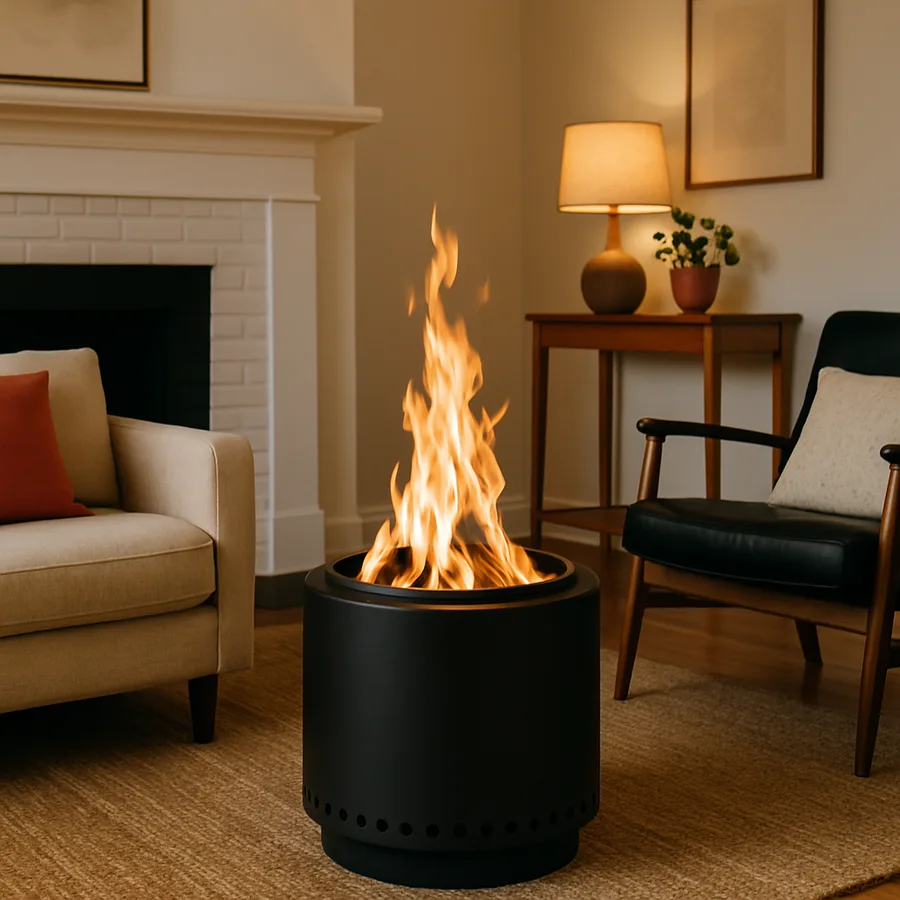
The phrase smokeless wood fire pit sounds like marketing fiction, but the engineering behind it is real and effective. By forcing partially burned smoke through a ring of preheated air at the top of the burn chamber, these pits trigger a secondary combustion that consumes most of the volatile gases that would otherwise rise as visible smoke. The result is a wood fire that produces noticeably less haze, less odor on clothing, and dramatically less particulate matter in the air around your patio.
For homeowners who love the crackle and warmth of wood but cannot stomach the smoke conflicts with neighbors, secondary-burn pits offer a credible compromise. They are not literally smokeless, but a well-engineered model in proper use produces somewhere between 60 and 90 percent less visible smoke than a traditional steel bowl burning the same wood. This guide explains how the technology works, what to look for when buying, how to maximize the smoke reduction in actual use, and where these pits still fall short.
The Physics of Secondary Combustion
Wood combustion happens in stages. As wood heats, it releases volatile organic compounds as a flammable gas mixture sometimes called wood gas. In a traditional fire pit, much of that wood gas escapes upward as visible smoke before reaching a temperature high enough to ignite. In a secondary-burn pit, room air is preheated as it rises through the cavity between the inner and outer walls, then injected back into the burn chamber through a ring of small holes near the top.
Because that injected air is already hot and oxygen-rich, the wood gas reaching the upper combustion zone ignites a second time, producing the characteristic tall yellow flames you see dancing above the rim of a quality smokeless pit. Roughly 70 to 90 percent of the visible smoke is consumed in this secondary burn, depending on wood quality, fuel load, and how recently the pit was started.
The same engineering principle drives commercial wood-fired boilers and the EPA-certified woodstoves that have replaced older non-certified models in many regions. The EPA Burn Wise program publishes data showing that EPA-certified woodstoves produce roughly 70% less particulate emissions than older non-certified models, and the same physics applies in a backyard fire pit context. Smokeless pits do not currently fall under EPA certification, but the underlying combustion improvement is real.
Construction Features That Matter
The market for smokeless pits has expanded fast, and quality varies. Several construction features separate the genuine performers from the lookalikes that produce only marginal smoke reduction.
Look for 304 stainless steel construction on both the inner burn chamber and the outer wall. Lesser-grade steel will warp and discolor within a season of moderate use, and the warping disrupts the airflow geometry the secondary burn depends on. Wall thickness should be at least 14 gauge; thinner walls heat faster but warp sooner. The best models use a 12-gauge or even 10-gauge inner wall in the high-heat zone.
The secondary-burn port ring at the rim should consist of evenly spaced holes of consistent diameter, typically 3/16 to 1/4 inch across. Inconsistent spacing or hole sizes produce an uneven secondary burn with localized cold spots where smoke escapes unconsumed. Examine the rim closely before purchase or read enough independent reviews to verify the build quality.
Base ventilation matters as much as the rim ports. Air enters the lower outer wall, rises through the inter-wall cavity to preheat, and exits through the upper rim. Adequate base ventilation requires unobstructed airflow under the pit, which means you should never set a smokeless pit directly on grass, sand, or a flat solid surface that blocks intake. Use the manufacturer-supplied stand or a heat-resistant elevation that maintains at least 1.5 inches of base airflow.
Wood Selection and Moisture Content
The single largest variable in actual smoke output is wood moisture content, not pit design. Properly seasoned hardwood at under 20% moisture content burns hot enough to feed the secondary burn reliably. Wet or freshly cut wood at 30% moisture or higher will smoke heavily even in the best-engineered smokeless pit because so much of the fire's energy goes to evaporating water rather than reaching combustion temperature.
Buy a $20 moisture meter and test the inner face of split logs before burning. Surface moisture from dew or rain is irrelevant; the meter should read the freshly split inner wood. Hardwoods such as oak, hickory, ash, and maple burn cleaner and longer than softwoods and produce better secondary-burn behavior. Avoid resinous softwoods such as pine and spruce when smoke is the priority concern; their high resin content produces more particulate even in a secondary-burn unit.
Wood length and diameter affect performance too. Most smokeless pits perform best with logs roughly 12 to 16 inches long and 3 to 5 inches in diameter. Larger logs take longer to reach the temperature where secondary burn engages, leaving a smoky window during the first 15 minutes of the fire. Splitting larger logs into smaller pieces accelerates the transition to clean burn.
Lighting Method and Burn Management
How you build the fire matters more in a smokeless pit than in a traditional one. The top-down burn method works particularly well: place the largest logs on the bottom, smaller splits in the middle, kindling on top, and ignition material at the very top. The fire burns downward, and combustion gases from the lower logs pass through the active flame above, getting partially burned on the way out. This method reaches secondary-burn temperature faster and produces less initial smoke than the conventional log-cabin or teepee build.
Once the secondary burn engages and you see the characteristic tall yellow flames at the rim, resist the urge to add more fuel. Adding fresh wood drops the chamber temperature and temporarily disrupts the secondary burn, producing a brief smoke flare. If you must add fuel, add small splits one at a time and place them where they will heat quickly rather than smother existing flame.
The end of the burn is when most smoke escapes. As fuel runs out and chamber temperature drops, the secondary burn weakens and remaining fuel may smolder. To minimize end-of-burn smoke, time your last log addition so the fire reaches embers roughly when you want to leave. Allow the embers to die naturally rather than smothering them with sand or water, which can produce a final puff of smoke and steam.
Setbacks, Code, and Real-World Limitations
Smokeless pits are still wood fires and remain subject to the same setback codes as any open-flame recreational fire. The NFPA standard generally referenced is a minimum 25-foot setback from structures for permanent fires with portable units allowed at 15 feet, although your local fire marshal's interpretation governs. The reduced smoke output does not generally exempt these pits from local burn-day rules either; if your county has declared a no-burn day for air quality reasons, smokeless wood pits are typically still prohibited.
Manufacturer marketing sometimes implies these pits can sit closer to the home than traditional pits. Be skeptical. Even the cleanest secondary burn produces significant heat, and most code language references heat radiation to combustible material rather than smoke per se. The International Code Council model fire code language treats wood-burning pits as a single category regardless of secondary-burn design, so confirm with your local jurisdiction before reducing your setback based on a marketing claim.
Insurance carriers similarly tend to treat all wood-burning fire features the same. Notify your carrier before installing any wood-burning pit, smokeless or not, and ask whether the installation triggers any policy adjustment. The Hearth, Patio & Barbecue Association maintains educational resources that may help frame the conversation with your insurer if they are unfamiliar with secondary-burn technology.
Comparing Smokeless Pits to Other Smoke-Reduction Strategies
Smokeless wood pits are not the only option for households trying to enjoy fires without bothering neighbors. Several alternative strategies merit comparison before settling on a secondary-burn unit as the answer.
Switching to gas eliminates particulate emissions almost entirely and is the single most effective smoke-reduction strategy available. Households unwilling to give up the wood experience often dismiss gas too quickly. A high-quality gas pit with tall flame settings and lava rock filler delivers a surprisingly satisfying fire experience, especially for families whose primary use case is conversation and warmth rather than the ritual of building a wood fire.
Pellet fire pits burn compressed wood pellets that are pre-dried and uniformly sized, producing cleaner combustion than typical cord wood almost as a side effect. The flame character is different and the fuel cost is higher than free firewood, but the smoke reduction is meaningful and the lighting process is faster than building a traditional fire.
Burning behavior changes alone, with no equipment upgrade, can reduce smoke significantly. Use only thoroughly seasoned hardwood, build hot small fires rather than smoldering large ones, light from the top down, and burn only when wind is favorable. Many households find that disciplined fire-building practice reduces smoke complaints to a level they can live with even without changing pits.
Maintenance, Storage, and Longevity
A smokeless pit needs more attention than a basic steel bowl. The double-wall construction creates internal cavities that can collect ash, moisture, and debris over time. After every two or three burns, lift the pit, dump residual ash from the inter-wall cavity, and brush out any buildup that could obstruct airflow. Annual maintenance should include a thorough cleaning, an inspection of the rim ports for blockage, and a check of the inner wall for warping or cracking.
Storage extends life dramatically. The same stainless steel that resists corrosion in clean conditions will pit and discolor when exposed to road salt spray, pool chemistry, or constant rain runoff. A simple fitted weatherproof cover when not in use, plus indoor or covered storage during winter months, can double the visible lifespan of the finish. Store the pit on a raised stand or pallet rather than directly on damp ground.
Replacement parts vary by manufacturer. Some premium brands offer replaceable inner liners that extend total pit life by three to five years; others treat the pit as a sealed unit that must be replaced wholesale when the inner wall fails. Consider parts availability as part of your purchase decision because the most beautiful pit is also the most disappointing one when its inner wall warps and no replacement is available.
Conclusion
A smokeless wood fire pit is a genuine improvement over a traditional steel bowl for households that love wood fires but want to reduce neighbor friction and clothing odor. The secondary-burn technology is real, the smoke reduction is meaningful, and the payback for households that actually use a fire pit weekly is significant. That said, these pits still produce smoke during startup, during fueling events, and during the final ember phase, so they do not eliminate the conflict entirely.
The performance you actually experience depends as much on your habits as on the pit itself. Use seasoned hardwood at under 20% moisture, build top-down fires, resist constant fueling, and let the embers die naturally rather than smothering them. Each of these habits compounds the engineering advantage of the secondary burn and produces visibly cleaner fires. Skip the habits and even the best pit will smoke more than you hoped.
Have you talked to your most fire-sensitive neighbor before buying? A frank conversation that previews your intent, your secondary-burn pit choice, and your seasoned-wood discipline often resolves what would otherwise become an awkward summer of complaints. Most neighbors respond well to being asked rather than informed after the fact, and a small gesture such as inviting them over for the inaugural fire builds enough goodwill to absorb the occasional smoky startup.
Cost is a fair consideration too. Quality smokeless pits typically retail between $400 and $1,200 depending on diameter, materials, and accessories. That is meaningfully more than a $150 basic steel bowl but substantially less than a built-in masonry feature. For households who already burn wood weekly during fire-pit season, the smoke-reduction benefit alone often justifies the upgrade within a single season. For occasional users who burn only a handful of times per year, the cost-benefit math is less clear and a basic bowl plus careful site selection may serve just as well.
Resale and portability are underrated advantages. A premium smokeless pit holds its value reasonably well on the secondary market because the build quality is visible and the technology continues to attract new buyers. If you move or change patios, a portable smokeless pit moves with you, unlike a built-in masonry pit that becomes part of the property. For renters and frequent movers, this portability alone often tips the decision in favor of a quality smokeless unit over any built-in option.
Ready to upgrade? Compare two or three smokeless pits in person at a local hearth retailer, examine the rim port quality and wall gauge, ask about replaceable inner liners, and read independent reviews focused on long-term durability rather than out-of-the-box impressions. The right pit will reward you with cleaner air, friendlier neighbors, and many years of fires you can actually invite people to without apology.
More Articles You May Like



Comments
Post a Comment