Slim Bidet Seats That Fit Under a Closing Toilet Lid
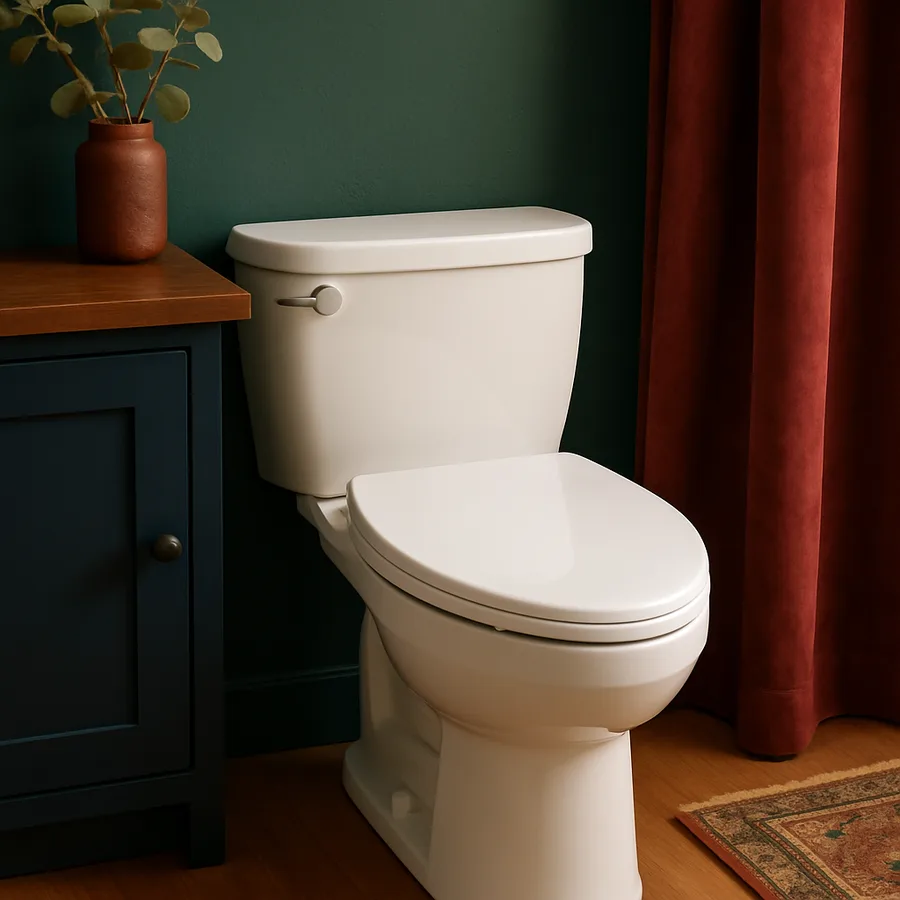
Anyone who has shopped seriously for a bidet seat has run into the same disappointing moment: you've found the perfect electric model with every feature on your list, you've measured your bowl twice, you bring it home, install it, and then discover the lid no longer closes flush. The lid hovers half an inch above the seat, the seat hovers half an inch above the bowl, and the whole thing looks unmistakably aftermarket. The fix is to start your search from a different premise - choose a slim bidet seat first and accept the feature trade-offs second, rather than the other way around.
Slim or low-profile bidet seats are a distinct subcategory engineered specifically to preserve the visual line of a normal toilet seat-and-lid stack. The best of them measure roughly 1.5 inches at the rear hub (compared to 2.5 to 3.5 inches for a standard electric seat) and taper to less than half an inch at the front. According to Consumer Reports, the slim category has grown faster than the broader bidet category for several consecutive years, driven primarily by buyers retrofitting designer one-piece toilets and modern wall-hung toilets where standard bidet seats simply don't fit visually or physically.
Why Lid Clearance Matters More Than You Think
The toilet lid is the most-overlooked component in a bidet upgrade conversation, and it matters for three independent reasons. The first is purely aesthetic: a lid that won't close flush turns the toilet from a clean architectural object into a piece of obviously aftermarket equipment. The second is functional: lids that hover open allow more bowl odor into the bathroom, partially defeating the deodorizer feature most premium electric bidets include. The third is practical: a lid that doesn't close is a lid that won't soft-close on its hinges, eliminating one of the small daily luxuries premium toilet seats are designed to provide.
The National Kitchen and Bath Association (NKBA) includes lid-line continuity in its small-bath visual-design checklist, treating it as a marker of professional versus amateur installation. Their broader guidance on bathroom fixture aesthetics is collected at the NKBA professional resources hub. The industry consensus is straightforward: if a bathroom upgrade visibly degrades the existing fixture's clean line, the upgrade has not actually improved the bathroom.
Have you walked back into your bathroom after a major fixture purchase and noticed something visually off, even though every individual element looked right in the store? That sensation almost always traces back to lid line, faucet line, or trim line discontinuity. Choosing a slim bidet seat from the start prevents the most common version of that frustration in this product category.
The Critical Profile Measurements to Compare
When evaluating slim bidet seats, three measurements matter more than the marketing copy: rear-hub thickness, front-rim thickness, and tank-clearance requirement. Rear-hub thickness is what determines whether your existing lid closes; front-rim thickness affects how the seat looks from across the bathroom; tank-clearance requirement determines whether the seat physically fits between your existing tank and the front of the bowl.
Slim category leaders typically report rear-hub thickness in the 1.4 to 1.8 inch range, compared to 2.5 to 3.5 inches for standard electric seats. Front-rim thickness on slim models is often under half an inch, comparable to a normal toilet seat. Required tank clearance varies more widely - some slim models need only one inch behind the seat-bolt holes, while others still need 1.75 inches. Pull a tape measure across the back of your bowl before you shop and write down the actual number rather than relying on a general impression.
Manufacturers typically publish all three measurements in their spec sheets, but the rear-hub thickness sometimes hides under labels like "back height" or "rear profile." If a spec sheet omits the measurement entirely, that is itself a useful signal: brands that don't compete on slimness rarely highlight their rear-hub thickness, and the omission usually means the seat is in the standard rather than slim category.
Feature Trade-Offs You Should Expect
Slimness comes from packing the same components into a thinner enclosure or from omitting components altogether, and both approaches have consequences. The thinnest slim seats on the market - those at the 1.4 inch rear-hub end - almost always use a tankless instant-heater architecture rather than a tank-style heater, simply because the storage tank cannot fit in that depth. Tankless heaters are arguably the better technology anyway, but they require correspondingly higher wattage during use, which can be a consideration in homes with overloaded bathroom circuits.
Some slim seats omit the warm air dryer entirely to save vertical space; others include a smaller, lower-wattage dryer that takes longer to dry and operates at a lower temperature. The American Society of Heating, Refrigerating and Air-Conditioning Engineers (ASHRAE) categorizes warm air dryers above 200 watts as "effective" for residential bathroom drying duty; many slim models drop below that threshold and the user experience suffers accordingly. Read the wattage spec carefully; it is the single best proxy for actual dryer performance.
Other features that sometimes get sacrificed for a slimmer profile include the deodorizer (the carbon filter assembly takes vertical space), the integrated night light, the second oscillating-spray nozzle, and per-user memory presets requiring multiple control board layouts. Read the spec sheet feature-by-feature against your priority list rather than assuming a slim seat includes everything a standard electric seat includes - this is the single most common source of post-purchase regret in the slim category.
Toilet Compatibility Considerations Specific to Slim Models
Slim bidet seats are particularly well-matched to three specific toilet types: skirted one-piece toilets where the smooth tank line continues uninterrupted to the bowl, wall-hung toilets where the bowl projects from the wall with no floor connection, and contemporary designer toilets where the manufacturer has made deliberate styling choices that a thick aftermarket seat would visually destroy. They work fine on standard two-piece toilets too, but the aesthetic payoff is largest on designer fixtures.
Skirted one-piece toilets often have minimal tank-to-bolt clearance because the manufacturer designed the toilet for a thin factory seat. The International Association of Plumbing and Mechanical Officials (IAPMO) standardizes the seat-bolt hole spacing at 5.5 inches across U.S. residential toilets - reference at the official IAPMO site - but it does not mandate any specific tank-to-bolt distance, and designer manufacturers often push that distance to its visual minimum. A slim bidet seat with a one-inch tank-clearance requirement may be the only aftermarket seat that fits.
Wall-hung toilets present a related challenge: the in-wall carrier supporting the bowl is engineered for a specific load envelope, and a thick electric bidet seat with a heated reservoir adds weight that pushes the bowl forward of its design center. Slim seats minimize that load and preserve the carrier's intended geometry. The Plumbing-Heating-Cooling Contractors Association (PHCC) recommends consulting the carrier manufacturer's specifications before adding any aftermarket seat to a wall-hung installation, and a slim model is far more likely to fall within those specifications.
Installation Notes Specific to Slim Seats
The mechanical install of a slim bidet seat is identical to any other bidet seat - shut off water, remove existing seat, install new mounting plate, attach seat, splice T-valve, pressure-test - but two details deserve specific attention with slim models. First, the mounting plate on a slim seat is correspondingly thin and depends on a flat porcelain surface around the bolt holes; some older toilets have slight molding irregularities that prevent the slim plate from sitting flush. Run your finger across the bolt-hole area before installing and look for any visible bump or dip.
Second, the supply hose connection on a slim seat often exits at a tighter angle than on a standard seat, simply because there's less rear depth to absorb a gentle curve. Plan the supply-hose route in advance: from the T-valve, the hose should curve gently up and into the seat's rear inlet without any sharp bend. The U.S. EPA WaterSense program reports residential water pressure averages 60 to 80 psi in American homes - full reference at the EPA WaterSense site - and that pressure on a kinked plastic line is the most common cause of slow leaks behind aftermarket bidets.
If the slim seat is electric, the GFCI-outlet requirement is the same as for any electric bidet seat: a grounded outlet within four feet of the toilet. Slim electric seats often ship with a slightly shorter power cord (4 to 5 feet rather than 6 feet) to reduce visible cord clutter behind a designer fixture, so confirm the cord length against your outlet location before purchase rather than after.
Top Categories of Slim Bidet Seats Worth Considering
Without endorsing specific brands, the slim bidet seat market sorts naturally into four categories. The first is premium designer slim seats at the $500 to $800 price point, typically from established Japanese and Korean manufacturers with decades of bidet engineering experience and full feature sets in remarkably thin enclosures. The second is mid-tier slim electric seats at $250 to $450, generally from established American or Asian brands offering tankless heating and a basic dryer in a slim form.
The third category is non-electric slim seats at $90 to $200, which deliver a thin profile by virtue of having no heating elements or electronics to fit inside the housing. These are an excellent choice for guest bathrooms or temperate climates where heated water is not a priority. The fourth category is budget electric slim seats at $150 to $250, which achieve thinness primarily by omitting features rather than by miniaturizing them - read these spec sheets especially carefully.
The American Society of Interior Designers (ASID) notes in its premium-bath-specification guidance that the visual difference between a properly slim bidet seat and a standard one is large enough to justify the often-modest price premium in any bathroom where aesthetics matter, especially primary baths in mid-to-high-end homes. Have you looked at your own bathroom and asked whether the existing fixture's design integrity justifies that premium for your situation? If yes, the slim category is the right starting point.
Conclusion
The slim bidet seat category exists because the standard bidet-seat profile is too thick for a meaningful percentage of modern American toilets, and because the lid-line discontinuity of a thick aftermarket seat ruins the aesthetic of designer fixtures. If you've already invested in a one-piece, wall-hung, or contemporary designer toilet, the slim category is essentially the only aftermarket option worth considering. If you have a standard two-piece toilet, slim seats are still worth considering whenever aesthetics matter to you.
The trade-offs are real and worth examining honestly. Slim seats often (not always) sacrifice dryer performance, deodorizer capacity, or tank-style heating in exchange for the thinner enclosure, and the spec sheet is the only reliable place to identify which compromises a specific model has made. Read every line of the spec sheet against your feature priority list, and don't assume that a thinner seat from a premium brand includes the same feature set as the same brand's standard seat.
Measure before you buy. The three measurements that matter most are rear-hub thickness against your existing seat-and-lid stack, tank-to-bolt clearance behind your bowl, and bowl shape (round versus elongated). With those three numbers in hand and a clear feature priority list, the right slim bidet seat for your bathroom is genuinely easy to identify; without them, you're back to the disappointing post-install moment that drove you to read this article in the first place.
Spend twenty minutes this weekend with a tape measure and a notepad in your bathroom, then build a short list of two or three slim models that fit both your fixture and your feature requirements. Compare those models head-to-head on price, warranty length, and dryer wattage - and order the one that wins on the dimensions you've already decided matter most. By next weekend you'll have an upgrade that disappears into your existing design rather than fighting against it.
More Articles You May Like



Comments
Post a Comment