Basement Bathroom Plumbing: Upflush Toilet Systems Explained
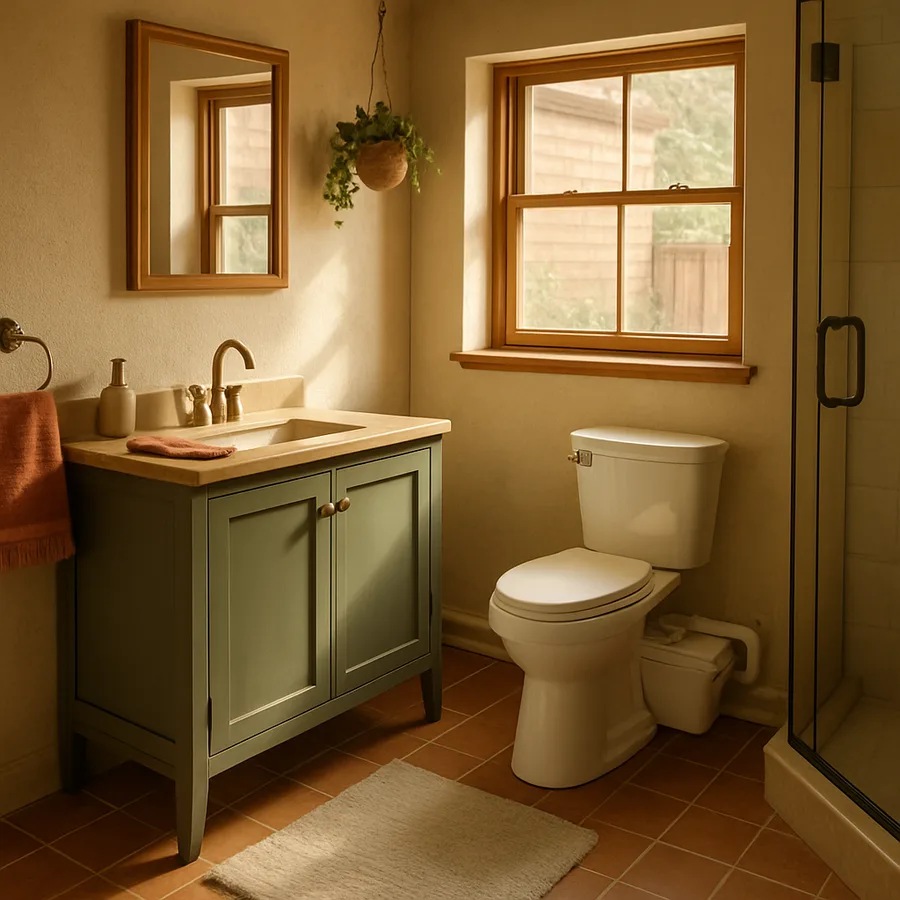
The single biggest obstacle to adding a basement bathroom is almost never the framing, the finishes, or even the budget; it is the elevation of the sewer line. In most American homes the main building drain exits the house at or near the basement floor slab, which means any fixture installed below that drain has nowhere for its waste to flow by gravity. The traditional solution is to jackhammer the concrete slab, trench to the main drain, install a below-slab ejector pit with a sealed pump, and patch the floor. It works, it lasts decades, and it is expensive, noisy, and dusty. The alternative, an upflush toilet system with a macerating pump, sits on top of the existing slab and pushes waste upward through a small-diameter pipe to the main drain. For many homeowners, it transforms a basement bathroom from impossible to weekend project.
Upflush systems have been mainstream in Europe for more than fifty years and have been sold in North America since the 1980s, primarily under the Saniflo brand. Competitors now include Liberty Pumps Ascent II, Zoeller Qwik Jon, and the Thetford line. According to industry data compiled by the Plumbing-Heating-Cooling Contractors Association (PHCC), macerating toilet installations in U.S. single-family retrofits have grown at roughly 8 percent annually since 2015, driven almost entirely by basement and garage conversions. Before you commit to either a below-slab ejector or an upflush unit, it helps to understand exactly what an upflush does, where it belongs, and where it does not.
How a Macerating Upflush Toilet Actually Works
A macerating system is two components that work together: a toilet bowl and a macerator-pump unit. The toilet bowl looks like any normal rear-discharge toilet, with a short 4-inch stub that connects to the pump unit. When you flush, water and waste flow the few inches from the bowl into the pump housing, which sits either directly behind the toilet or inside a wall cavity. Inside the housing, a pressure switch detects the rising water level and activates a small electric motor, typically between 400 and 1,000 watts. The motor drives a stainless steel blade assembly that rotates at roughly 3,600 rpm, reducing solid waste to a slurry fine enough to pass through a pipe as small as 3/4 inch in diameter.
Once the waste is macerated, a centrifugal impeller pushes the slurry through a check valve and up the discharge pipe. A typical residential unit can lift waste roughly 15 vertical feet and push it horizontally up to 150 feet to the main drain connection. The pump runs for 10 to 30 seconds per flush and then shuts off automatically. Water from a connected sink or shower enters the same pump housing through auxiliary inlets and is expelled the same way. The entire cycle is self-contained, and the unit requires only a standard 120-volt GFCI receptacle to operate.
The small pipe diameter is what makes upflush practical. Running a 3/4-inch or 1-inch discharge line up a wall cavity and across a joist bay is trivial compared to trenching a 4-inch gravity drain through a concrete slab. It is also why the system can be removed cleanly if you ever remodel, because nothing is embedded in concrete.
When an Upflush Is the Right Choice, and When It Is Not
Upflush systems excel in scenarios where gravity drainage is impractical or prohibitively expensive. A typical candidate is a finished basement in a home built on a concrete slab with the main drain exiting high on a basement wall. Another common case is an unfinished basement where the homeowner wants a bathroom but is not willing to remove part of the slab. Garage conversions, pool houses, and in-law suites above attached garages are also strong candidates because the main drain is often far away.
There are cases where an upflush is the wrong answer. High-use primary bathrooms with daily shower and tub demand push upflush units toward their duty cycle limits and shorten their service life. Commercial applications and short-term rentals with heavy guest turnover stress the macerator blades and pressure switches. Any application where a power outage would create a health hazard, such as a basement apartment that is the only bathroom for an occupant, should include either a generator-backed circuit or a gravity-drain alternative.
Have you priced the alternative? Before ruling out a below-slab ejector, get a real quote. Concrete cutting and patching in a typical basement runs $3,500 to $8,000 per Angi contractor data, while a complete upflush installation averages $2,200 to $4,500 including the unit itself, new fixtures, and tie-ins. The upflush often wins on budget, but the gap narrows in large bathrooms.
Code, Venting, and Permit Requirements
Upflush systems are regulated under the same plumbing codes as any other fixture, but they have specific provisions that trip up first-time installers. In jurisdictions that follow the Uniform Plumbing Code (UPC) published by the IAPMO, macerating toilets are addressed under the pumped-waste sections with requirements for backflow protection, vent connections, and electrical isolation. In jurisdictions following the International Plumbing Code (IPC), the relevant provisions appear under sewage ejectors and macerating toilet assemblies.
The most commonly missed requirement is the vent connection. Every upflush unit requires a dry vent tied back to the main vent stack, typically 1-1/2 or 2 inches in diameter. The vent prevents pressure buildup inside the pump housing and allows the check valve to close cleanly after each cycle. Skipping or undersizing the vent causes gurgling, slow flushes, and eventually macerator failure. Listed units such as the Saniflo line carry CSA and UPC certifications that specify the required vent diameter in the installation manual.
Permits are required in virtually every U.S. jurisdiction for any new bathroom, regardless of the drainage method. A typical permit package requires a fixture layout, a drain and vent schematic, an electrical permit for the dedicated GFCI circuit, and a rough-in inspection before closing walls. The American Society of Plumbing Engineers (ASPE) recommends scheduling a pre-rough inspection with the local building department even for projects that appear to be minor, because a failed inspection on a finished basement is an expensive remedy.
Electrical requirements are straightforward but often overlooked. The pump motor draws a significant inrush current at startup, and it should sit on its own 15-amp or 20-amp circuit with a GFCI breaker. Sharing the circuit with lighting or a bathroom fan risks nuisance tripping and occasional overvoltage events that damage the motor winding. Follow the manufacturer's electrical specification exactly.
Fixtures You Can and Cannot Connect
Every upflush pump has a finite number of auxiliary inlets and a rated capacity for flow. A standard Saniflo Saniplus, for example, accepts a toilet plus a sink or a shower. A Saniaccess 3 accepts a toilet, a sink, and either a shower or a tub. The larger Sanibest Pro handles a toilet, sink, shower or tub, and a washing machine. Before you specify a unit, list every fixture the system will serve and compare it to the manufacturer's inlet schedule.
Showers and tubs have a specific constraint that confuses many homeowners: the upflush pump sits above the slab, so the shower drain must exit the shower at a height greater than the pump inlet. A standard curbed shower with a 2-inch drain will not work; you need a shower built on a raised platform of at least 8 to 12 inches, or a specially designed low-profile shower tray with a horizontal drain. Some manufacturers sell matched upflush-and-tray kits that solve this geometry out of the box.
Kitchen sinks and dishwashers can be connected to certain high-capacity upflush models but should be confirmed in writing with the manufacturer, because grease loading shortens macerator blade life. Laundry discharge is acceptable on units rated for it, but long-drain washing machines with high-temperature discharge can stress older-generation pumps. Newer units from Liberty Pumps and Saniflo explicitly support laundry connections and publish rated flow in gallons per minute that should exceed your washer's peak drain rate.
Installation, Maintenance, and Lifespan Expectations
A competent DIY homeowner with basic plumbing and electrical experience can install an upflush system in a weekend, provided the rough plumbing and framing are ready. The steps are: set the toilet bowl, bolt the pump housing to the rear of the bowl, connect the 3/4-inch discharge line up through the wall and across to the main stack, tie in the vent, connect auxiliary inlets for the sink and shower, and plug the unit into a dedicated GFCI receptacle. Every connection should use the manufacturer's supplied gaskets and clamps, and the discharge line should rise as vertically as possible before turning horizontal, to let gravity help the pump.
Maintenance is minimal but not zero. Manufacturers typically recommend running a cleaning cycle every month with a citric-acid-based descaler, which dissolves scale on the macerator blades without damaging the impeller seals. Regular chlorine bleach should never be poured into an upflush pump because it degrades the rubber gaskets and the motor shaft seal. An annual visual inspection of the check valve, the vent connection, and the discharge pipe for any leaks is a reasonable minimum.
How long should you expect an upflush to last? According to warranty and service data published by the Plumbing Manufacturers International (PMI), a properly installed residential macerating pump has an expected service life of 10 to 15 years, with the macerator blade assembly as the most common failure point. Most units carry a 2-year manufacturer warranty with extended coverage available. When the pump eventually fails, replacement is straightforward because the toilet bowl, discharge piping, and electrical supply remain in place; you swap only the pump housing.
Cost, Value, and the Resale Conversation
The all-in cost for a typical basement bathroom built around an upflush system ranges from $6,500 to $14,000 depending on finishes, fixtures, and framing complexity. That figure includes the upflush unit itself ($900 to $1,900), a new toilet bowl that is compatible with the unit, a vanity and sink, a shower or tub, framing and drywall for the bathroom envelope, flooring, venting, and the electrical circuit. The gravity-drain alternative with below-slab ejector adds roughly $3,500 to $8,000 for concrete work and sometimes more if the existing slab encounters unexpected rebar or plumbing.
Resale value is the question most homeowners ask last but should ask first. Does an upflush bathroom add the same appraisal value as a gravity-drain bathroom? According to surveys by the National Association of Realtors (NAR) and the annual Remodeling Impact Report produced with NKBA input, a finished basement bathroom typically recovers 50 to 65 percent of its cost at resale, and appraisers do not meaningfully discount upflush systems in the finished-bathroom count as long as the installation is permitted, inspected, and documented. What hurts value is an unpermitted bathroom, regardless of the drain method, because lenders and inspectors can require removal.
Will the noise bother you? This is the second most-asked question. A modern upflush pump produces 50 to 60 decibels during its 10-to-30-second run, roughly equivalent to a dishwasher cycle. In a closed bathroom with drywall walls and an exhaust fan running, you hear it clearly but briefly. Older units were louder. If noise is a concern, the pump can be placed inside a small insulated closet or a wall cavity with acoustic damping, and listed assemblies often include sound-dampening foam in the housing itself.
Conclusion
An upflush toilet system is the difference between a basement bathroom that happens and one that sits on the wish list for a decade. The technology is mature, the codes are clear, and the installation is within reach of a homeowner willing to read the manual and pull a permit. The key questions are not whether it works, because it does; the questions are which fixtures you need to connect, whether the vent path back to the main stack is feasible, and whether your intended use matches the duty cycle the pump is rated for. Answer those three and the rest of the project becomes standard bathroom construction.
Before you buy a unit, map the discharge route from the pump to the main drain. Measure the vertical rise, the horizontal run, and the number of elbows along the way. Compare that total to the manufacturer's published pumping curve and leave at least 25 percent headroom. If your planned route exceeds the published capacity, either relocate the bathroom closer to the main stack or step up to a higher-capacity model. Undersizing the pump is the single most common failure mode and the one that is hardest to fix after the walls are closed.
Build a service plan before the bathroom is finished. Note the model number, the installation date, the descaler brand and cadence, and the location of the pump on a laminated card inside the vanity cabinet. Future owners, future plumbers, and future you will all benefit from having the information documented. An upflush system is not a fire-and-forget appliance; it is a small piece of mechanical infrastructure that rewards a little attention and punishes neglect.
Thinking about a basement bathroom? Send us the rough layout of your basement along with a note about where your main drain exits and how far the planned bathroom sits from it, and we will help you decide between an upflush system and a below-slab ejector. The right choice depends on geometry, budget, and how often you plan to use the space, and we can walk through each factor with you before you commit. For deeper technical reading, consult the IAPMO Uniform Plumbing Code, guidance from the Plumbing-Heating-Cooling Contractors Association, and the EPA WaterSense program for efficient fixture selection.
More Articles You May Like



Comments
Post a Comment