The Ultimate Guide to Creating a Motivating Fitness Space at Home
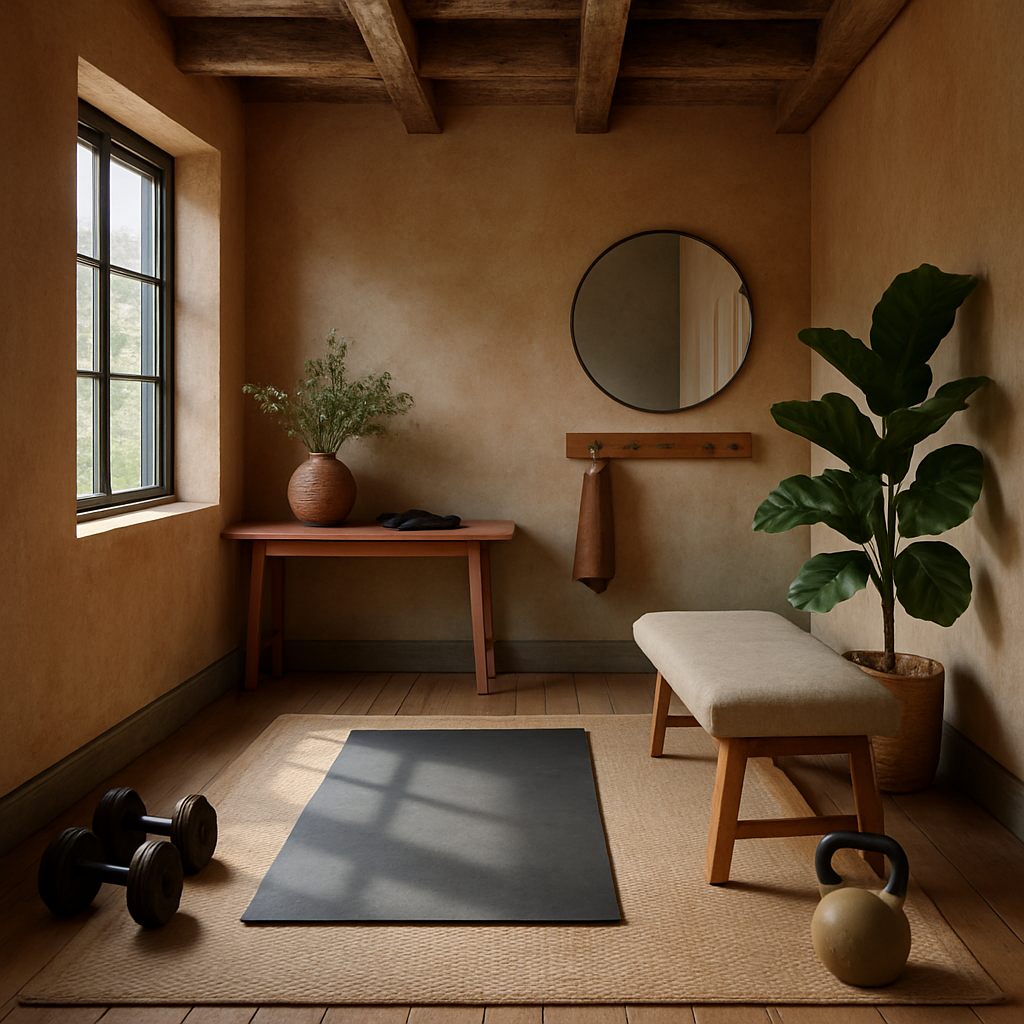
A home fitness space that actually motivates you to train requires far more than dumbbells in a corner and a rubber mat on the floor. It requires design, the same disciplined, intentional process that interior professionals apply to kitchens, offices, and hospitality venues. The American Society of Interior Designers (ASID) has documented a surge in demand for residential wellness rooms, with member firms reporting that home gym projects now account for a meaningful share of their annual billings. The reason is straightforward: homeowners who once tolerated bland basement setups have realized that environment drives behavior. A room designed to inspire movement will be used daily; a room that feels like an afterthought will collect dust within weeks. This comprehensive guide covers every layer of the design process, from initial space planning through material specification, lighting engineering, sensory finishing, and the integration of technology that keeps you accountable. Whether you are converting a spare bedroom, a garage bay, or a dedicated addition, these principles scale to fit your footprint and your budget. What if the difference between abandoning your fitness goals and exceeding them came down to how you designed a single room?
Space Planning: The Architectural Foundation of Every Great Home Gym
Space planning is the discipline of allocating square footage to functions in a way that maximizes usability and minimizes friction. In residential gym design, this means mapping every activity you intend to perform, including equipment footprint, movement arc, safety clearance, and traffic flow, before selecting a single piece of hardware. Designers holding NCIDQ certification follow standardized clearance guidelines: a minimum of three feet around any piece of cardio equipment, four feet behind a squat rack for safe bailing, and six feet of unobstructed height above any bench press position. Ignoring these minimums creates rooms that look functional in photographs but prove dangerous or uncomfortable during actual use.
Traffic flow through and around the gym matters even if the room has only one occupant. The path from the door to each workout station should be clear and intuitive, with no equipment blocking the route. Designers affiliated with the IIDA refer to this as the circulation zone, and they protect it as aggressively as the functional zones themselves. In a small room, the circulation zone and the stretching zone can overlap because both require open floor space, but the key constraint is that you should never have to step over or around equipment to reach any station. This principle borrows from universal design standards that prioritize accessibility, and it has the practical benefit of making your gym safe to use when you are fatigued and your coordination is diminished.
Ceiling height deserves as much attention as floor area. Overhead presses, pull-ups, box jumps, and jump rope all require vertical clearance that standard eight-foot ceilings may not provide. Before committing to a room, stand in it and reach overhead with a broomstick to simulate your tallest movement. If you have fewer than twelve inches of clearance above the tip, the room will limit your exercise selection or force you to modify movements in ways that reduce their effectiveness. Garages and basements often offer nine or ten-foot ceilings, making them superior candidates for gym conversion despite their other challenges. Once your spatial framework is locked, the next step is selecting materials that make every surface in the room earn its place.
Flooring, Walls, and Ceiling: A Material Specification Guide
Flooring is the most physically interactive surface in any gym, and its selection should balance impact absorption, traction, durability, moisture resistance, and aesthetic harmony with your home. Vulcanized rubber tiles in three-quarter-inch thickness represent the professional standard, offering enough cushion to protect joints during standing work and enough rigidity to stabilize heavy lifts. Installation costs typically range from ten to eighteen dollars per square foot, depending on tile quality and whether you use professional installation or a DIY interlocking system. ASID recommends professional installation for rooms larger than two hundred square feet to ensure level seams and proper expansion gaps at the perimeter.
Wall finishes should address both visual design and acoustic performance. A single accent wall clad in natural wood slats, reclaimed barn board, or textured acoustic panels creates a focal point that anchors the room visually while absorbing sound energy that would otherwise bounce between parallel hard surfaces. This approach aligns with biophilic design principles, which emphasize natural materials and organic textures as tools for reducing physiological stress. Houzz data confirms that wood accent walls are the most-saved gym design feature on the platform, outpacing exposed brick, chalkboard paint, and graphic murals by a significant margin. The remaining walls benefit from a matte or eggshell latex finish in a color chosen for its psychological effect, a topic we will address in detail shortly.
Ceilings are the forgotten surface in most home gym projects, yet they contribute substantially to the room's sense of volume and its acoustic character. A flat white ceiling maximizes perceived height, which is desirable in rooms with standard eight-foot construction. Exposed ceiling treatments, popular in industrial-loft conversions, add visual interest but can also increase noise reflection unless you paint the exposed joists with acoustic-dampening paint or install batt insulation between them. For rooms where noise transmission to the floor above is a concern, resilient channel or sound-isolation clips between the ceiling drywall and the joists can reduce impact sound by as much as twenty decibels, a worthwhile investment when your early-morning deadlifts would otherwise wake the household. With your surfaces specified, the next design layer to address is the lighting that reveals them.
Lighting Architecture: Engineered Illumination for Every Training Mode
Lighting design in a home gym serves three distinct purposes: visibility for safety, ambiance for motivation, and adaptability for the physiological demands of different training phases. The base layer of illumination should provide uniform, shadow-free coverage at a minimum of fifty foot-candles, the threshold at which barbell knurling, weight markings, and digital displays become clearly legible. Recessed LED downlights on a six-foot grid pattern achieve this standard in most room geometries, and smart home integration through platforms like Control4 or Savant allows you to adjust intensity and color temperature from a wall panel, phone app, or voice assistant.
Color temperature is the variable that most directly affects your training state. Research cited by AD PRO links 5000-Kelvin daylight-equivalent illumination to increased alertness, faster reaction time, and higher self-reported energy, all desirable during the working phase of a workout. Dropping to 2700-Kelvin warm white during cooldowns and stretching supports the parasympathetic shift that accelerates recovery. Color-tunable fixtures, once a premium product limited to high-end commercial projects, now cost as little as fifteen dollars per bulb in smart-enabled formats, making this physiological tool accessible at every budget level.
Natural light remains the gold standard for human well-being, and any gym with access to windows should exploit them fully. Position your primary cardio station facing the window so that daylight enters your visual field during the most monotonous portion of your workout. If privacy is a concern, top-down bottom-up cellular shades let light in from above while blocking sightlines from the street. For windowless rooms, circadian lighting systems that simulate the sun's arc across the day provide a partial substitute, and AR/VR visualization headsets can overlay scenic outdoor environments onto your actual room, tricking the brain into perceiving openness and natural light that the architecture cannot provide. Lighting sets the visual stage; the next section addresses the palette of colors that populate it.
Color Psychology Applied to Fitness Environments
Color selection in a gym is not decorative; it is functional. Every hue on the visible spectrum triggers a measurable neurological response, and interior designers trained in evidence-based practice use this knowledge to engineer rooms that feel energizing, calming, or focused depending on their intended use. For a home gym that hosts multiple training modalities, a zoned color strategy delivers the best results. The strength zone benefits from deep, saturated tones, think navy, charcoal, or dark olive, that narrow visual focus and create a sense of containment that supports heavy, controlled lifts. The cardio and stretching zone responds well to lighter, cooler tones like sage, sky blue, or pale eucalyptus that open the visual field and reduce the perception of time passing.
The quiet luxury movement has reshaped the color conversation in residential design, moving away from bold primary accents toward complex, desaturated hues that read as sophisticated and timeless. In a gym context, this means replacing the fire-engine red accent wall of previous decades with a smoky burgundy or a muted terracotta that delivers the same warm-spectrum stimulation without the visual harshness that causes fatigue over time. Designers registered with the NCIDQ increasingly recommend sampling paint colors under the specific lighting conditions of the gym, including both daylight and artificial settings, because a color that looks perfect in a showroom can shift dramatically under LED illumination at different Kelvin values.
Do not overlook the psychological power of black and white. A monochromatic scheme with black accent walls, white trim, and gray flooring creates a commercial-grade atmosphere that some homeowners find deeply motivating. This palette photographs exceptionally well, which matters if you document workouts for social media or virtual coaching clients. It also provides a neutral backdrop for colorful equipment, wall art, and LED accent lighting, allowing you to change the room's mood seasonally without repainting. How does your current gym color scheme make you feel when you walk through the door? If the answer is anything less than energized and focused, a weekend with a roller and two gallons of thoughtfully chosen paint may be the highest-return investment you can make. Color determines the emotional entry point; the sensory and technological details that follow determine whether that energy sustains through the final rep.
Sensory Design: Sound, Scent, and Tactile Details That Sustain Effort
Sound management in a home gym operates on two levels: controlling the noise that escapes the room and curating the sound within it. For noise containment, mass-loaded vinyl barriers behind the drywall, solid-core doors with perimeter seals, and decoupled flooring systems represent the gold standard. These measures matter most in shared dwellings where early-morning or late-night training would otherwise disturb other occupants. For sound curation, a distributed speaker system with two to four ceiling or wall-mounted drivers provides even coverage without the dead spots and hot spots that a single portable speaker creates. IIDA case studies on wellness spaces consistently highlight audio quality as a factor that separates abandoned gym concepts from thriving ones.
Scent is the most underutilized sense in home gym design, yet it has one of the most direct pathways to the brain's motivational circuitry. Peppermint has been shown in controlled studies to improve athletic performance by reducing perceived effort, while eucalyptus opens airways and enhances breathing efficiency. A small ultrasonic diffuser placed on a high shelf, away from equipment where it could be knocked over, delivers these benefits at minimal cost and zero maintenance beyond refilling the water reservoir. Avoid synthetic fragrance plugins, which emit volatile compounds at concentrations that become problematic during heavy breathing. Natural essential oils, preferably organic and steam-distilled, provide clean scent without chemical load.
Tactile variety prevents the sensory monotony that makes long training sessions feel tedious. Alternate between rubber flooring under your shoes, a cork or natural-fiber mat under your bare feet during stretching, a textured steel barbell in your grip, and a smooth wood pull-up bar overhead. Each surface engages a different set of mechanoreceptors in your skin, maintaining the sensory novelty that keeps your nervous system alert and engaged. Designers working on luxury residential gym projects, where total budgets often reach ten to twenty-five percent of the home's value and hourly consultation fees range from one hundred fifty to five hundred dollars, specify these tactile contrasts as deliberately as they specify colors and lighting. The final frontier of home gym design sits at the intersection of physical space and digital technology, and it is evolving faster than any other category.
Technology Integration: Smart Systems That Keep You Accountable
Smart home integration in a fitness context means more than voice-controlled lights, though that alone is a meaningful convenience when your hands are chalked and gripping a barbell. A comprehensive gym technology stack includes automated scene control, where a single command or scheduled trigger adjusts lighting, temperature, music, and display content simultaneously to match your programmed workout phase. Systems like Crestron, Savant, and the more accessible Apple HomeKit ecosystem all support this level of automation, with setup costs ranging from a few hundred dollars for DIY smart switches to several thousand for professionally programmed whole-room scenes.
Connected fitness equipment generates data that, when displayed on a wall-mounted screen, transforms abstract effort into visible progress. Cycling power, rowing split times, heart rate trends, and lifting volume tracked over weeks and months provide the accountability feedback loop that keeps motivation alive long after the initial excitement of a new gym wears off. Designers working with AD PRO have noted that clients who integrate data displays into their gym design report higher usage rates and longer average session durations than those who rely solely on phone-based tracking, because a large, always-visible screen makes avoidance harder and progress more tangible.
AR/VR visualization is reshaping both the design process and the training experience itself. During the planning phase, AR apps allow you to place virtual equipment in your actual room through a tablet camera, testing layouts and proportions before purchasing anything. During training, VR headsets transport you to mountain trails, ocean roads, or competitive race environments that make stationary cardio feel dynamic and immersive. The technology is maturing rapidly, with headset weight dropping and visual fidelity rising to the point where extended use is comfortable rather than nauseating. For homeowners who cannot dedicate a room with scenic views to their gym, VR provides a digital window that no architectural renovation could match. The convergence of physical design and digital capability means that the ceiling on what a home gym can deliver is rising every year, and the homeowner who invests in both dimensions simultaneously builds a space that improves with every software update and every design refinement.
Conclusion
Creating a motivating home fitness space is an exercise in intentional design, not equipment accumulation. Every decision, from the floor plan that allocates square footage to the smart system that orchestrates your training environment, contributes to a cumulative effect that either propels you forward or holds you back. The principles outlined in this guide, spatial zoning, material specification, lighting architecture, color psychology, sensory layering, and technology integration, represent the same toolkit that NCIDQ-certified designers and ASID members bring to professional residential wellness projects. You can apply them incrementally, starting with a single accent wall or a set of smart bulbs, and build toward a fully integrated space over time.
The financial case is compelling. A well-designed home gym eliminates monthly studio memberships that typically run between one hundred and three hundred dollars, removes commute time that compounds into hundreds of hours annually, and adds measurable resale value to your property. Houzz reports that dedicated fitness rooms rank among the top features that attract buyers in the current real estate market, particularly when those rooms show evidence of professional design thinking. If you have been waiting for the right moment to transform a neglected room into a space that genuinely supports your health, that moment is now. Pick one section of this guide, implement it this week, and notice how even a single design improvement changes the way you feel when you step into the room. Then come back for the next layer. Your fitness space, like your fitness itself, is built one deliberate step at a time. Contact an IIDA-listed designer in your area for a consultation, or begin with the spatial planning exercise described above and let the room tell you what it needs.
More Articles You May Like



Comments
Post a Comment