Screened Porch Flooring Options Comparing Tile Wood and Concrete
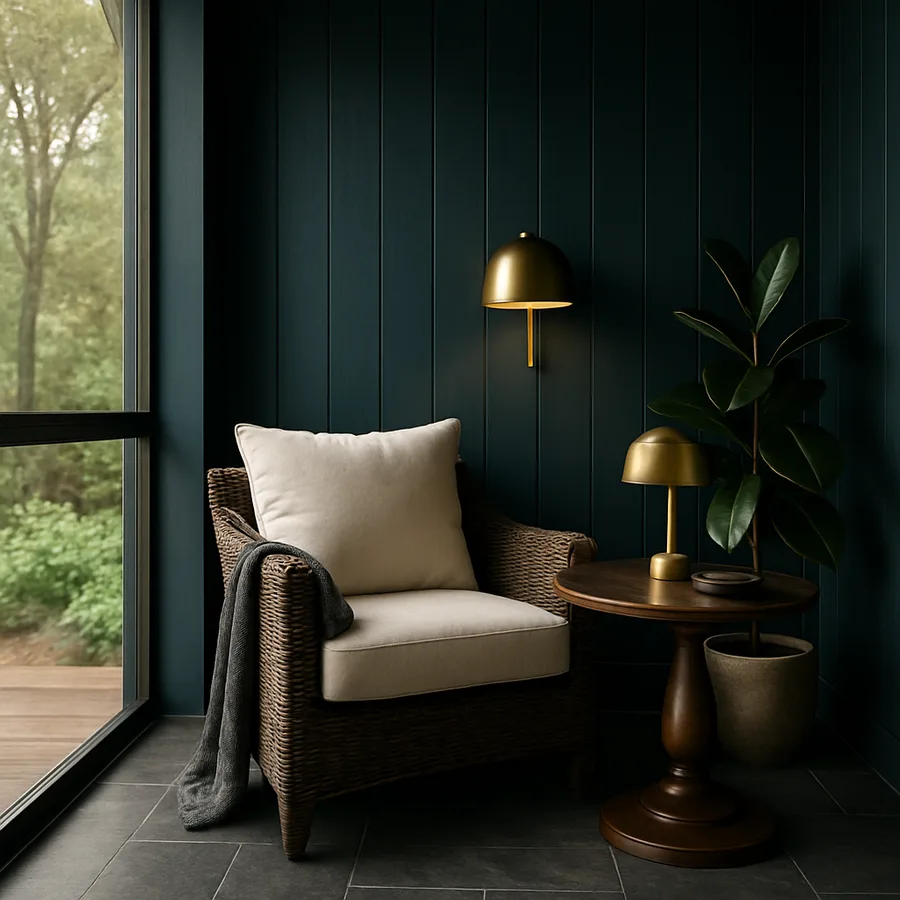
The floor of a screened porch lives a strange double life. It is technically indoors, sheltered from rain by a roof and shielded from bugs by mesh, yet it endures the temperature swings, humidity, and grit of an outdoor structure. According to the National Association of Home Builders (NAHB), porches and screened-in rooms remain among the most requested outdoor amenities in new home construction, present in roughly 65% of single-family homes built in the South Atlantic region. That popularity has produced a crowded marketplace of flooring options, and choosing the wrong one can mean warped boards, cracked tile grout, or a slick concrete slab that is unusable in shoulder seasons. This guide compares tile, wood, and concrete for screened porches, examining moisture tolerance, comfort, lifecycle cost, and installation realities so you can match the surface to your climate, budget, and how you actually plan to use the space.
Why Porch Flooring Is Different From Indoor Flooring
A screened porch occupies a category that the building codes call "covered, unconditioned space." That phrase carries serious implications for materials. The floor will see relative humidity routinely above 70% in summer, dew and condensation on cool mornings, and surface temperatures that can swing 40 degrees Fahrenheit between dawn and mid-afternoon. The American Society of Heating, Refrigerating and Air-Conditioning Engineers (ASHRAE) classifies these conditions as Class 3 or 4 service environments, the same category used for unheated garages and pool houses. Materials engineered for living rooms simply do not survive there, regardless of how attractive they look on a showroom slab.
Pollen is the second uninvited guest. Anyone who has ever swept a screened porch in April knows that the mesh blocks insects but happily admits oak, pine, and grass pollen, plus dust and fine particulates that drift in on the breeze. A flooring surface that hides this debris between weekly cleanings will feel cleaner without actually being cleaner, while a surface that displays every grain will demand constant attention. Texture, color, and grout-line strategy all become functional choices, not just aesthetic ones.
Finally, structural movement is unavoidable. A screened porch is typically built on a slab, on piers, or on a ledger-attached deck frame, and each support style flexes differently as temperatures and moisture change. Rigid materials like ceramic tile require an unusually stable substrate, while flexible materials like engineered wood can absorb seasonal movement but pay for it with reduced lifespan. Understanding your structural starting point is therefore the first step in choosing flooring, and it should happen before you even open a manufacturer's catalog.
Tile: Porcelain, Quarry, and Natural Stone
Tile remains the most popular choice for screened porches in warm and humid climates, and for good reason. Modern through-body porcelain rated for exterior use carries a Porcelain Enamel Institute (PEI) rating of IV or V, meaning it can handle sustained foot traffic, dropped tools, and the abrasive grit that wind and shoes deliver to the surface. Properly installed porcelain shrugs off moisture, resists fading from the partial UV that filters through screens, and can be hosed clean with no risk of damage. Expect installed costs of roughly $9 to $18 per square foot for porcelain in 2026, with quarry tile slightly less and natural stone like travertine or bluestone often double that figure.
The catch with tile is the substrate. A tile floor is only as durable as what sits beneath it, and that means a properly cured concrete slab or a cement-board-over-plywood deck system designed to handle deflection of less than L/360. Skip the moisture barrier or the uncoupling membrane and you will see hairline cracks within two seasons, especially in climates that experience hard frosts. Hire an installer who is certified by the National Tile Contractors Association and who specifies an exterior-rated grout, ideally an epoxy or a high-performance polymer-modified product, because standard sanded grout will crumble within a few years on a porch.
Texture matters more on a porch than indoors. Specify a tile with a Dynamic Coefficient of Friction (DCF) of 0.42 or higher, the threshold the Tile Council of North America considers acceptable for wet exterior use. A polished surface looks beautiful in marketing photos, but it becomes a hazard the moment morning dew or a spilled glass of iced tea hits it. Honed, matte, or lightly textured finishes are the safer choice and they hide pollen far better than gloss. Have you considered how the tile will look after a long pollen season, not just on installation day?
Wood: Tongue-and-Groove, Decking Boards, and Composites
Wood remains the traditional porch floor, and there is a reason it has held that role for more than a century. A properly installed tongue-and-groove fir or pine porch floor is comfortable underfoot, warm to the touch, and visually softens what would otherwise be a hard architectural surface. The American Hardwood Furniture Association (AHFA) notes that softwood porch flooring milled at 3/4-inch thickness with a vertical grain remains the most stable wood option for covered exterior use, outperforming wider, flat-sawn boards by a significant margin in moisture cycling tests.
The species you choose matters enormously. Traditional Southern yellow pine, when pressure-treated and properly finished, can give you 25 to 30 years of service. Cypress and cedar, both naturally rot-resistant, perform similarly without the chemical treatment but cost roughly 40% more. Tropical hardwoods such as ipe and cumaru deliver 50-year lifespans but command $14 to $22 per square foot installed and require specialized fasteners because their density chews through standard screws. Engineered wood products designed for indoor use will fail on a porch within a few seasons; do not let an enthusiastic flooring salesperson tell you otherwise.
Composite decking has become a serious contender for screened porches, particularly products that combine recycled wood fiber with high-density polyethylene. Modern composites resist mold, do not splinter, and require only soap-and-water cleaning. The trade-off is appearance and feel. Even the best composite still reads as plastic up close, and many products become uncomfortably hot in direct sun where the porch screens do not provide full shade. They also cost more per square foot than pressure-treated pine, though their lifecycle cost is competitive when you factor in the absence of staining and sealing every two to three years.
Whatever wood you choose, finish strategy is non-negotiable. Use a penetrating oil finish or a high-quality marine-grade alkyd paint, never a film-forming polyurethane intended for indoor floors. Films trap moisture against the wood and lead to peeling and rot. Plan to refresh the finish every 24 to 36 months at minimum, and inspect the floor each spring for popped fasteners, loose boards, and any sign of fungal staining at the perimeter where screens meet the deck.
Concrete: Slabs, Stains, and Overlays
If your screened porch is built over an existing concrete slab, you already own the most durable porch floor material in existence. The question is what to do with that slab so it looks intentional rather than industrial. The good news is that the menu has expanded dramatically over the last decade, and a properly finished concrete porch can rival the most expensive tile installation in appearance while costing a fraction as much.
The simplest treatment is an acid stain, which reacts chemically with the slab to produce mottled, variegated color in earth tones. Acid stains penetrate the concrete rather than coating it, which means they cannot peel and they age gracefully. Expect to pay $4 to $8 per square foot for a professionally applied stain plus sealer. The result is striking on porches that take partial sun, where the stain seems to shift color through the day. The downside is that acid stains are unforgiving; cracks, oil spots, and prior repairs all show through. The slab needs to be in genuinely good condition, or you need to accept and embrace the imperfections.
For slabs that are too damaged or too plain for staining, a thin polymer-modified concrete overlay offers a fresh canvas. Applied at thicknesses between 1/8 inch and 3/8 inch, overlays can be stamped to mimic flagstone, broom-finished for traction, or troweled smooth and then dyed and sealed. The Portland Cement Association reports that decorative concrete overlays now represent more than 30% of all residential porch floor installations in the Sunbelt states. Sealers are the weak link; plan to reseal every 18 to 24 months on a porch that gets meaningful UV exposure, and always specify a sealer with a slip-resistant additive for a screened space where moisture will reach the surface.
Climate, Comfort, and Maintenance Realities
Climate is the single most powerful filter for porch flooring choice. In the Pacific Northwest and the Northeast, where porches see freeze-thaw cycles, exterior-rated porcelain on a properly built substrate or a pressure-treated wood deck handle the conditions best. Concrete works as well but cracks are inevitable over a 20-year horizon, and tile must be installed with movement joints to absorb seasonal expansion. In the Southeast and Gulf states, where humidity is the dominant stressor, porcelain and stained concrete dominate, and wood requires diligent sealing to avoid mildew. In the arid Southwest, all three materials perform well, and the choice usually comes down to comfort and aesthetics.
Comfort is harder to quantify but easy to feel. Tile and concrete are cool underfoot in summer, which most people enjoy, but they are also cold in shoulder seasons and unforgivably hard if you stand on them for hours. Wood is the most comfortable of the three under bare feet and dropped objects. If you intend to use the porch for yoga, gardening prep, or anything that puts you on the floor, wood or a wood-look composite wins decisively. If you plan to entertain with chairs and a coffee table only, the comfort gap narrows considerably.
Maintenance loads also vary widely. Tile requires the least week-to-week attention but the most expensive repair when something goes wrong, since cracked tiles in a discontinued color can be impossible to match. Wood demands the most ongoing care with periodic refinishing, but minor damage can be sanded out and individual boards replaced. Concrete sits in between, requiring resealing rather than refinishing, with cracks treatable through specialized fillers that blend reasonably well with stained surfaces. Be honest with yourself about how much weekend time you are willing to spend maintaining a porch before you commit to a material that demands more than you can deliver.
Cost, Installation, and Project Timeline
Budget conversations should always happen in installed terms, not material-only terms, because porch installations are labor-intensive and the labor often exceeds the material cost. A reasonable 200-square-foot screened porch in 2026 will run roughly $1,800 to $3,600 for stained concrete on an existing slab, $3,200 to $5,400 for pressure-treated tongue-and-groove wood on an existing deck frame, and $4,800 to $9,000 for porcelain tile on a new exterior-rated substrate. Tropical hardwoods and natural stone push the upper end of those ranges considerably higher.
Installation timelines vary almost as much as costs. A concrete stain project typically takes two to three days from prep to final sealer cure. A wood floor installation runs four to seven days, with extra time if a new deck frame is required underneath. Tile is the longest, often 10 to 14 days when you account for substrate preparation, thinset cure, grout, and sealer. Plan around these timelines if you are coordinating with other porch work like screen replacement, electrical, or ceiling fan installation, and always sequence the floor near the end of the project so it is not damaged by other trades.
Permits are easy to overlook. Most jurisdictions require a permit for any porch floor that involves structural work, and some require permits even for surface refinishing if the porch is part of an addition. The International Code Council and many state-level adoptions require that porch floors meet specific live-load requirements, typically 60 pounds per square foot for residential porches. Verify with your local building department before you start, because failed inspections after the fact are far more expensive than the permit itself.
Conclusion
There is no single best floor for a screened porch, only the floor that best matches your climate, your structure, your maintenance tolerance, and the way you actually plan to use the space. Tile delivers the longest service life and lowest week-to-week maintenance but demands a stable substrate and a real installation budget. Wood provides unmatched warmth and comfort and connects the porch visually to traditional architecture, at the cost of regular refinishing. Concrete, especially when stained or overlaid, gives you decorative range at a price point neither tile nor wood can match, provided you have a slab to work with.
Start the decision process by walking your existing porch in different conditions. Visit it in the early morning when dew is heavy, in mid-afternoon at peak heat, and during a rainstorm to see how water reaches the perimeter. Note how much pollen accumulates between cleanings and how often you actually use the space barefoot. These observations will tell you more about which floor will work than any showroom visit, and they will sharpen the questions you ask installers when you start gathering bids.
Whichever direction you choose, do not skimp on the substrate, the sealer, or the installer's experience with porch-specific conditions. The flooring is the most visible surface in the space, but the unseen layers beneath it determine whether you will be enjoying that floor a decade from now or replacing it. Get three written quotes, ask each contractor for references on porch projects specifically, and inspect at least one of those references in person before you sign.
Ready to start your screened porch flooring project? Walk your porch this weekend, take photos of the existing condition, and bring those photos plus this guide to a consultation with a NAHB-affiliated remodeler in your area. The right floor turns a screened porch from a seasonal afterthought into the most-used room in the house.
More Articles You May Like



Comments
Post a Comment