Scratch-Resistant Flooring Options for Homes With Large Dogs
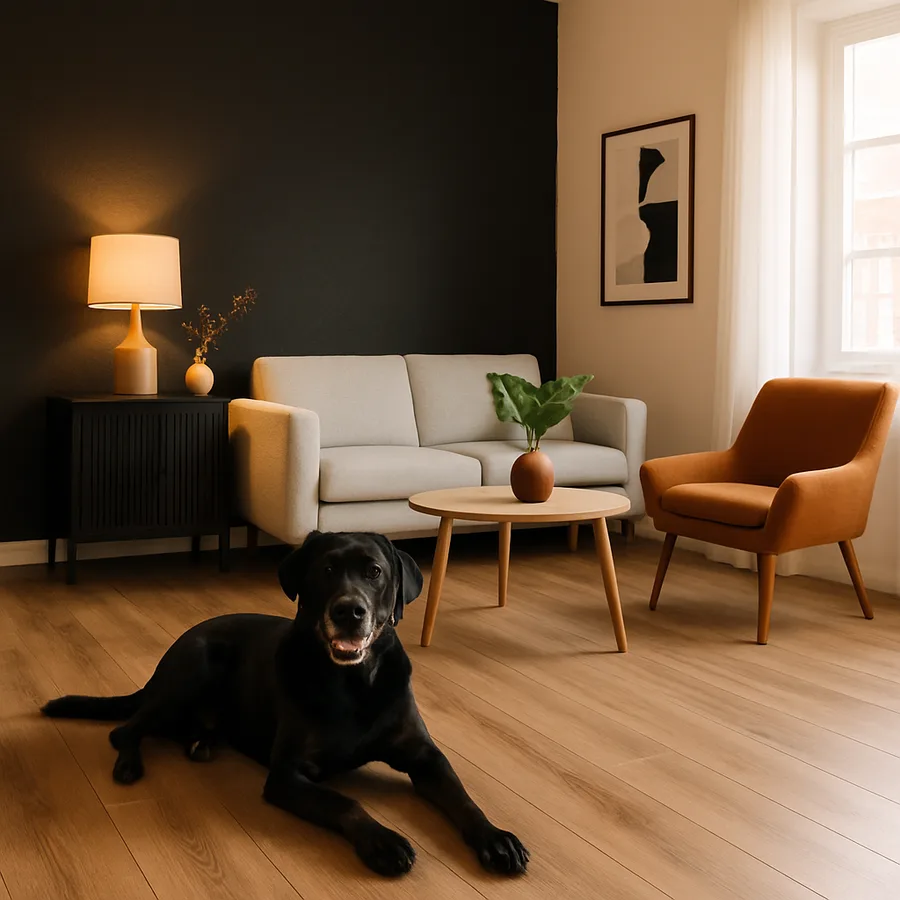
Large dogs bring boundless joy, unwavering loyalty, and an unfortunate talent for destroying floors. Their claws act like tiny chisels with every sprint down the hallway, every excited greeting at the front door, and every scramble for traction on a slippery surface. For homeowners who refuse to choose between a beautiful home and a happy dog, the flooring decision becomes one of the most consequential choices in the entire design process. The National Wood Flooring Association reports that scratch damage is the number-one complaint among pet-owning hardwood floor customers, and the cost of refinishing an entire floor can run between three and eight dollars per square foot depending on the region. That expense, combined with the disruption of sanding and recoating, makes choosing the right material from the start far more economical than repairing the wrong one later. This comprehensive guide evaluates every major flooring category through the lens of large-dog durability, aesthetic versatility, and real-world maintenance demands so you can make a confident, informed decision.
What Makes a Floor Scratch-Resistant
Before comparing specific materials, it helps to understand the science behind scratch resistance. Hardness is the primary factor, and in the flooring industry it is measured by the Janka hardness test, which quantifies the force required to embed a steel ball halfway into a wood sample. Softer species like pine (Janka rating around 690) dent and gouge under minimal pressure, while harder species like hickory (1,820) and Brazilian walnut (3,680) resist surface damage far more effectively. For engineered and synthetic floors, scratch resistance depends on the wear layer's composition, thickness, and any surface treatments such as aluminum oxide coatings or ceramic bead infusions.
Texture also plays a role that many homeowners overlook. A wire-brushed or hand-scraped finish disguises minor scratches by incorporating surface variation into the design itself. When a dog's claw leaves a light mark on a distressed-look floor, the mark blends into the existing texture and becomes virtually invisible. By contrast, the same scratch on a high-gloss, smooth-finished floor catches light at a different angle than the surrounding surface and screams for attention. Choosing a textured finish is one of the simplest, lowest-cost strategies for maintaining a flawless appearance in a home with large dogs.
The finish chemistry matters as well. Aluminum oxide finishes, applied in the factory during manufacturing, create a microscopic shield of mineral particles embedded in the urethane topcoat. This shield resists abrasion far better than a site-applied polyurethane alone. The Resilient Floor Covering Institute notes that floors with factory-applied aluminum oxide finishes can withstand up to ten times more abrasion cycles than those finished on site. When shopping for any hard-surface flooring, asking about the wear-layer composition and the number of aluminum oxide grit layers is one of the most revealing questions you can pose to a sales representative.
Have you ever dragged a heavy piece of furniture across a floor and watched in horror as a white scratch appeared? That same physics applies every time a seventy-pound dog changes direction on a hard surface. Understanding hardness ratings, texture strategies, and finish chemistry arms you with the knowledge to prevent that horror from becoming a daily occurrence.
Luxury Vinyl Plank: The Top Contender
Luxury vinyl plank flooring, commonly abbreviated as LVP, has emerged as the single most popular flooring choice for pet owners in recent years, and the reasons are compelling. LVP consists of multiple layers: a rigid or flexible core, a photographic design layer that mimics wood or stone, and a clear wear layer that provides scratch and stain resistance. Premium LVP products feature wear layers of twenty mils or thicker, which places them in the commercial-grade durability category. A large dog's claws, even untrimmed ones, rarely penetrate a twenty-mil wear layer under normal household conditions.
The waterproof nature of LVP addresses another common pet-owner concern. Accidents happen, water bowls tip, and muddy paws track moisture across the floor. Unlike hardwood, which swells and cups when exposed to standing water, vinyl plank is impervious to moisture at every layer. This means a puddle left by a slobbery Great Dane or a knocked-over water dish can sit on the surface for hours without causing any damage. For homes with large dogs, this water resistance alone justifies serious consideration of LVP over traditional hardwood.
Aesthetic options have expanded dramatically. Modern LVP products use high-definition photographic printing and embossed-in-register texturing to replicate the look and feel of genuine oak, walnut, hickory, and even reclaimed barnwood with remarkable accuracy. Houzz user reviews consistently note that visitors cannot distinguish premium LVP from real hardwood without getting on their hands and knees for a close inspection. Available in planks up to nine inches wide and sixty inches long, LVP can be installed in the same running-bond or herringbone patterns used for traditional wood floors, ensuring that choosing a pet-friendly material does not mean compromising on design sophistication.
Installation is another advantage. Most LVP products use a click-lock system that floats over the existing subfloor without glue or nails, making it a viable weekend project for a handy homeowner. If a single plank does suffer severe damage from an extreme event, it can be replaced individually without disturbing the surrounding floor. This modularity is a significant long-term benefit in a household where the unexpected is a daily occurrence.
Tile and Polished Concrete for Maximum Durability
Porcelain tile sits at the top of the scratch-resistance hierarchy. With a rating of seven or higher on the Mohs hardness scale, porcelain laughs off dog claws, furniture legs, and dropped objects alike. Large-format porcelain tiles in wood-look finishes have become a design favorite for open-concept living areas, offering the warmth of hardwood's appearance with the indestructibility of fired ceramic. The Tile Council of North America classifies porcelain rated PEI 4 or PEI 5 as suitable for heavy commercial traffic, which means residential pet traffic barely registers on its durability spectrum.
The primary drawback of tile is hardness in a different sense: it is unforgiving underfoot and under paw. Large dogs that spend hours lying on tile may develop calluses on elbows and hips, so providing rugs or padded beds in resting areas is essential. The grout lines between tiles also require sealing to prevent staining from pet accidents. Epoxy grout, while more expensive than standard cement grout, is virtually impervious to moisture and stains and eliminates this maintenance concern entirely. For rooms where maximum durability and water resistance are the top priorities, such as mudrooms, entryways, and kitchens, porcelain tile is an outstanding choice.
Polished concrete offers similar scratch immunity with an industrial-chic aesthetic that suits loft apartments, modern farmhouses, and contemporary homes. A properly sealed concrete floor resists scratches, stains, and moisture while providing a continuous, grout-free surface that is exceptionally easy to clean. Decorative treatments such as acid staining, scoring, and aggregate exposure allow concrete floors to range from sleek monochromatic slabs to richly variegated surfaces with the depth and movement of natural stone. The Architectural Digest design team has noted that polished concrete is experiencing a renaissance in residential spaces precisely because it delivers both beauty and near-indestructible performance.
If you are building new or undertaking a major renovation, concrete is worth evaluating for areas where your dog spends the most time. Combined with radiant floor heating embedded in the slab, polished concrete provides comfortable warmth in winter and stays cool in summer, a combination that most dogs find irresistible for napping. The initial cost per square foot is competitive with mid-range hardwood, and the maintenance cost over a twenty-year lifespan is substantially lower.
Engineered Hardwood: Finding the Right Compromise
For homeowners who insist on genuine wood underfoot, engineered hardwood offers a compromise between the beauty of real timber and the resilience needed in a dog-friendly home. Engineered hardwood features a thin veneer of real wood bonded to a plywood or high-density fiberboard core, which provides greater dimensional stability than solid hardwood. Choosing a species with a high Janka rating, such as hickory at 1,820 or white oak at 1,360, significantly reduces the visibility of claw marks compared to softer options like American cherry at 950.
The finish is where engineered hardwood lives or dies in a pet household. Factory-applied finishes with multiple coats of aluminum oxide-infused urethane vastly outperform site-applied polyurethane in scratch resistance. Wire-brushed and hand-scraped textures add another layer of visual camouflage, as discussed earlier. Some manufacturers now offer ceramic-bead-enhanced finishes that add a layer of mineral hardness directly to the surface, and independent testing reported by the National Wood Flooring Association shows these finishes resist micro-scratches up to five times longer than standard urethane alone.
Maintenance is straightforward but non-negotiable. Sweep or vacuum daily to remove grit that could grind into the finish under the pressure of a dog's weight. Keep nails trimmed, apply protective wax or polish monthly, and place mats at exterior doors to catch moisture and debris. A well-maintained engineered hardwood floor in a hard species with a premium finish can look beautiful for fifteen to twenty years even with a large dog in the house. The key is realistic expectations: the floor will develop a patina of fine surface marks over time, which many designers argue adds character and warmth to a lived-in home.
Is the authentic look and feel of real wood a non-negotiable priority for you? If so, engineered hardwood in hickory or white oak with a wire-brushed, aluminum-oxide finish is your strongest option. Pair it with strategically placed area rugs in high-traffic zones, such as hallways and the area around the dog's bed, and you can enjoy genuine wood beauty alongside genuine dog companionship without constant anxiety about the floor's condition.
Bamboo, Cork, and Other Alternatives
Strand-woven bamboo deserves special mention because its Janka hardness rating, often exceeding 3,000, surpasses nearly every domestic hardwood species. This extreme hardness makes it exceptionally resistant to denting and scratching from dog claws. Strand-woven bamboo is manufactured by shredding bamboo fibers and compressing them under extreme heat and pressure, resulting in a material that is denser and harder than the traditional horizontal or vertical bamboo products that gave the category a reputation for softness. Available in natural blonde, carbonized amber, and stained finishes, strand-woven bamboo fits into a wide range of interior palettes.
The environmental story adds appeal. Bamboo reaches harvest maturity in five to seven years compared to the decades required for hardwood trees, making it a rapidly renewable resource. The U.S. Green Building Council recognizes bamboo as a sustainable flooring material, and it can contribute points toward LEED certification in residential and commercial projects. For homeowners who value both pet-friendliness and environmental responsibility, strand-woven bamboo checks both boxes convincingly.
Cork flooring presents an interesting case. Its soft, cushioned surface is gentle on joints, which benefits large breeds prone to hip dysplasia and arthritis. The natural give of cork also absorbs impact rather than reflecting it, making the floor quieter under heavy paws. However, cork is softer than hardwood and can dent under sustained pressure from furniture legs or heavy dogs standing in one spot. A thick urethane topcoat and regular resealing mitigate this, but cork remains a better choice for low-traffic rooms like bedrooms and studies than for the main living areas where the dog spends most of its active time.
Rubber flooring, typically associated with gyms and commercial kitchens, is gaining traction in residential mudrooms and dog-grooming stations. Available in tile, sheet, and interlocking-mat formats, rubber is virtually indestructible, waterproof, and provides excellent traction for dogs that slip on hard surfaces. While its aesthetic range is more limited than wood-look options, modern rubber flooring comes in a surprising variety of colors and textures, including faux-stone and matte-metallic finishes, that can complement a utilitarian or industrial interior without looking institutional.
Making the Final Decision and Protecting Your Investment
Choosing the right scratch-resistant flooring starts with an honest assessment of your household. How many dogs live in the home, and how large are they? Do they have a habit of sprinting through the house or are they mostly sedentary? Is the home in a climate where muddy paws are a seasonal or year-round concern? Answering these questions narrows the field quickly. For maximum durability with minimal maintenance, LVP and porcelain tile lead the pack. For the warmth of real wood, engineered hardwood in a hard species with a premium finish is the strongest contender. For eco-conscious households willing to invest in a unique material, strand-woven bamboo offers an exceptional combination of hardness and sustainability.
Regardless of the material you choose, protective measures extend the life of any floor. Trim your dog's nails every two to three weeks, or more frequently for breeds with fast-growing claws. Place washable rugs or runners in hallways, entryways, and the path between the dog's bed and the back door. Use felt pads under all furniture legs and replace them every six months as they compress and lose effectiveness. These simple habits cost almost nothing and can double the interval between professional refinishing or replacement. The National Kitchen and Bath Association recommends creating a written maintenance schedule for all hard-surface flooring to ensure that cleaning products and protective treatments are applied consistently.
Consider requesting samples of your top two or three materials and placing them on the floor in a high-traffic area for a week-long trial. Let the dog walk over them, let water sit on them, drag a key across the surface, and evaluate how each sample looks after seven days of real-world abuse. This low-cost experiment provides more actionable information than any showroom visit or online review. Flooring is a long-term commitment, typically lasting fifteen to twenty-five years, and spending one week on a trial is a trivial investment against that timeline.
Your dog should not have to tiptoe through its own home, and you should not have to wince every time claws click across the floor. The right material, chosen with clear-eyed awareness of your household's demands and installed with attention to finish quality and protective accessories, lets both of you live comfortably in a space that looks as good on day three thousand as it did on day one. Take the first step by ordering those samples and letting your dog cast the deciding vote.
More Articles You May Like



Comments
Post a Comment