Modern Radiator Cover Designs Using Perforated Metal Panels
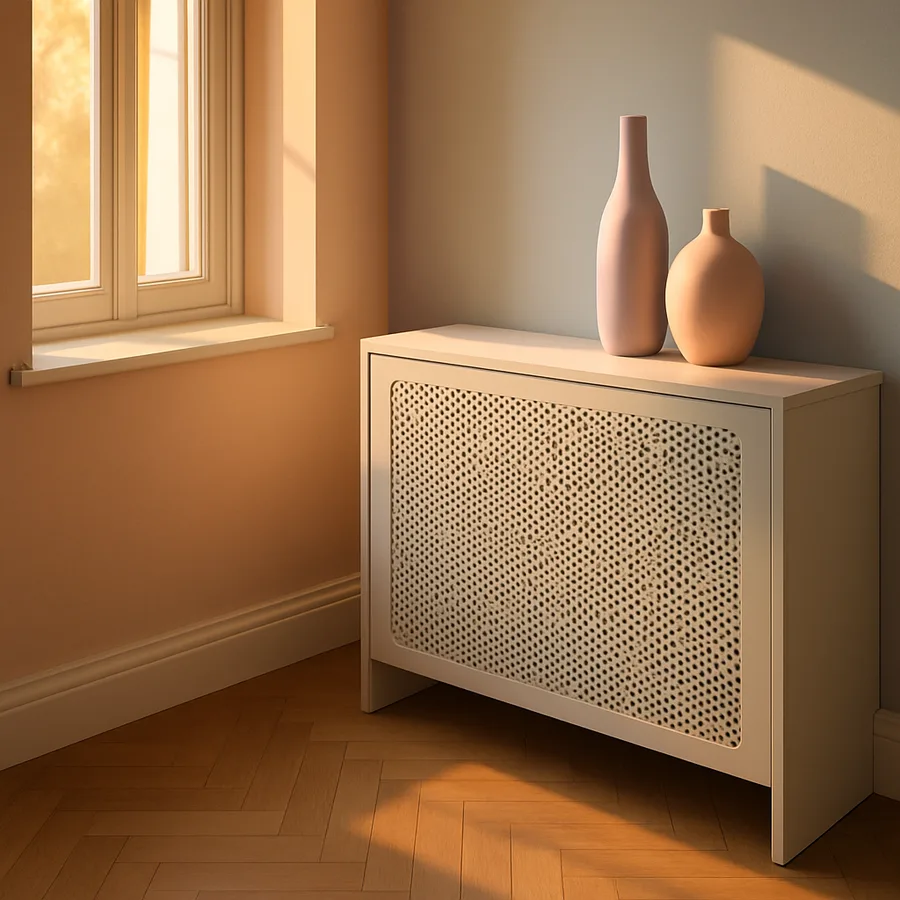
The radiator cover is having a quiet moment. After two decades of being treated as an afterthought, or worse, as a flat-pack box from a big-box retailer, it has resurfaced in design publications as a piece of architectural punctuation. The driver behind that revival is almost entirely material. Specifically, it is the rise of perforated metal panels as the front face of choice for designers who want a radiator cover to feel deliberately modern rather than apologetically functional.
Perforated metal does several useful things at once. It lets warm air escape with almost no thermal penalty, it casts dappled light patterns across the floor when sun hits it from behind, it accepts a wide range of finishes from matte powder coat to brushed brass, and it photographs well, which matters more than it should in an era when interior decisions are increasingly made on screens. According to a market analysis published by an architectural metals trade group in early 2025, residential demand for decorative perforated panels grew roughly twenty-eight percent year over year, with custom radiator covers and HVAC grilles accounting for the largest single application.
Why Perforated Metal Outperforms Traditional Wood Grilles on Heat Output
Start with the physics. A radiator transfers heat into a room through two mechanisms: radiation from the hot surface itself and convection from air currents rising past the fins or panels. A solid cover blocks both. A traditional wooden lattice or fretwork panel typically offers between thirty and forty percent open area, meaning sixty to seventy percent of the front face is solid material that radiant heat cannot pass through and that convective airflow has to dodge around.
Perforated steel and aluminum panels routinely deliver fifty to sixty-three percent open area depending on the perforation pattern, hole diameter, and center-to-center spacing. That improvement in open area translates almost linearly into improved heat output. Independent testing referenced by the ENERGY STAR program has shown that high-open-area grilles can recover six to nine percent of the heat output that conventional decorative covers sacrifice. In a thirty-thousand BTU radiator running for four months a year, that recovery is not a rounding error. It is a measurable improvement in comfort and a small but real reduction in fuel use.
There is also a long-term durability argument. Perforated metal does not warp, swell, split, or yellow with repeated heat cycles. Wooden grilles in heated rooms tend to develop hairline cracks at glue joints within five to seven years, particularly when humidity drops below thirty percent during winter heating season. Metal panels under the same conditions look identical at year one and year fifteen, provided the finish is appropriate to the substrate.
Pattern Selection That Actually Affects How a Room Reads
Pattern is where personality lives. The four families of perforation patterns dominate residential applications, and each carries a distinct visual register that can either support or fight the rest of a room's design language.
Round-hole staggered patterns are the workhorse. They read as quietly industrial, pair easily with both warm and cool palettes, and tend to disappear into the architecture rather than competing with it. Hole diameters between three and six millimeters at staggered centers between five and nine millimeters are the residential sweet spot. Smaller and the panel reads as mesh, which feels more commercial. Larger and the open area gets aggressive, which works in lofts but rarely in traditional rooms.
Square-hole patterns read as more contemporary and slightly more architectural. They photograph beautifully because the orthogonal grid plays nicely with the lines of casework and windows. The visual penalty is rigidity. In a room with otherwise soft, organic forms, a square-perforated panel can feel like it is shouting. Slotted patterns, particularly horizontal slots, give the cover a strong directional energy that can reinforce a wide, low room or fight a tall, narrow one. Custom decorative perforations using laser-cut artwork, geometric repeats, or generative parametric patterns are the dramatic option, but they age the fastest because they tie the room to a specific design moment.
Have you walked through a furniture showroom recently and noticed how often the same staggered round-hole pattern appears across speakers, planters, room dividers, and radiator covers? That ubiquity is a feature, not a bug. It means the pattern reads as neutral, almost generic in the way that subway tile is generic, and you can lean on it without committing to a stylistic statement you might regret in a decade.
Finishes That Match Your Hardware and Lighting
The finish on a perforated metal radiator cover should be coordinated with at least two other metallic elements in the room. Door hardware, lighting fixtures, faucets, picture frames, and curtain hardware are the usual reference points. Coordination does not mean perfect match. It means the metal on the radiator cover should land in the same temperature family, warm or cool, as the other visible metals.
The five finishes that dominate residential applications are matte black powder coat, satin nickel or brushed stainless, antique or unlacquered brass, raw or blackened steel, and color-matched custom powder coat. Matte black is the safest modern choice because it disappears against most wall colors and reads as deliberately graphic against pale walls. Brass adds warmth and tends to look more residential, particularly when the rest of the room leans traditional. Color-matched powder coat, where the panel is finished in the exact wall color, is the trick that high-end designers use when they want the radiator cover to dissolve into the architecture entirely.
Beware the lacquer trap. Many off-the-shelf brass and copper panels arrive with a clear lacquer coating that protects the finish during shipping but degrades unpredictably under repeated heat cycles. Within two to three years, lacquered finishes above radiators commonly develop a milky cast or visible flaking. Unlacquered brass avoids the problem entirely by simply patinating naturally over time, which is the look most designers actually want anyway.
Frame Construction Behind the Panel
The perforated panel is the visible piece, but the frame behind it determines whether the cover looks expensive or cheap. The two dominant approaches are a welded steel frame with the panel attached as an integral face, and a painted wood carcass with a perforated metal insert dropped into a routed rebate at the front face.
Welded steel frames look the most architectural and read as a single piece of furniture. They are heavier, more expensive, and harder to retrofit because the entire assembly typically arrives as one rigid unit. They also tend to be the choice for taller covers under windows where the structure has to span a wider opening without sagging.
Wood carcass with a metal insert is the more flexible approach and the one most local cabinet shops are equipped to build. The wood frame can be primed and painted to match wall trim, the metal insert can be removed for cleaning or replaced if the homeowner ever wants a different pattern, and the assembly can accommodate side-mounted access doors for valve service. The National Association of Home Builders publishes guidance on millwork detailing that consistently recommends keeping at least one removable face on any built-in that conceals plumbing or controls, and a removable perforated insert satisfies that recommendation elegantly.
Joinery on the wood carcass matters too. Pocket-screw construction is fine for the back and bottom but visible face frames should be assembled with mortise-and-tenon or domino joinery for the longest service life. Glued butt joints with finish nails will telegraph through the paint film within three winters as the wood expands and contracts.
Sizing the Cover for Modern Heat Output Requirements
One mistake that recurs constantly in DIY radiator cover projects is sizing the cover to the radiator with no margin for airflow at all. The cover ends up flush to the top of the radiator, flush to the sides, and tight to the floor with a solid kick panel. The resulting installation can suppress radiator output by twenty-five to thirty-five percent, which the homeowner notices the first cold week and then blames on the radiator.
The geometry that works is straightforward. Plan for a minimum of two inches of clearance above the top of the radiator before the underside of the cover top. Plan for a minimum of three inches of clearance at the bottom front, vented by either a perforated kick panel or a continuous slot. Plan for at least one inch of side clearance from each end of the radiator to the inside face of the cover. These dimensions are the practical floor for residential convection radiators and align with general guidance from the American Society of Heating, Refrigerating and Air-Conditioning Engineers.
A useful diagnostic question to ask before finalizing dimensions: if the radiator were a small wood-burning stove, would the cover give it enough air to burn cleanly? That mental model is exaggerated but useful. Heat needs a path in and a path out, and any cover that constricts either path will underperform.
Installation, Mounting, and Long-Term Maintenance
Most radiator covers are designed to sit on the floor and lean against the wall without permanent fastening, which sounds casual but is actually the recommended approach. The radiator's plumbing connections expand and contract with temperature, and a cover rigidly fastened to the radiator itself will eventually telegraph stress into the joints. Free-standing covers can be tipped forward and lifted away for service in under a minute, which matters the day a thermostatic valve starts dripping.
For tall covers or those at risk of being pulled forward by climbing children, the standard solution is a pair of low-profile furniture anti-tip brackets screwed into wall studs and engaging discreet slots in the back of the cover. These are the same brackets used for tall dressers and bookcases under modern furniture safety standards, and they cost less than fifteen dollars per pair. Specify them by default in any household with toddlers.
Maintenance is minimal. Vacuum the perforated panel quarterly with a soft brush attachment to clear dust from the holes, since accumulated dust meaningfully reduces open area over time. Wipe the metal face annually with a damp cloth and a drop of dish soap. For unlacquered brass that has patinated unevenly, a paste of baking soda and lemon juice will reset the surface to bare metal in about ten minutes if you ever want to start the patina over. Most homeowners learn to love the natural patina and stop interfering with it after the first year.
Conclusion
A perforated metal radiator cover is one of the rare design upgrades that improves performance and aesthetics simultaneously. The higher open area lets the radiator do its job better than a solid wood lattice ever could, the metal substrate resists the heat-cycle damage that plagues wooden alternatives, and the visual register reads as quietly modern in a way that ages slowly. For homeowners who own radiators and are tired of looking at them, the upgrade represents one of the highest design-impact-per-dollar moves available short of replacing the radiators entirely, which is an order of magnitude more expensive and almost never justified.
The decisions that matter are pattern, finish, frame construction, and clearance. Pattern sets the room's emotional register. Finish ties the cover into the rest of the metallic vocabulary in the space. Frame construction determines whether the cover lasts five years or thirty. Clearance determines whether the radiator delivers the heat output it was engineered to deliver or whether you spend the next decade wondering why the room is colder than it should be. Get those four right and the rest is detail work.
Pricing varies wildly by region and customization level, but a reasonable budget range for a quality semi-custom perforated metal radiator cover from a local cabinet shop runs between six hundred and seventeen hundred dollars per linear foot of radiator, installed. Off-the-shelf options from established manufacturers like the Wooden Radiator Cabinet Company or specialty metal fabricators land somewhat lower for stock sizes but rarely fit awkward radiator geometries without modification. Ready to upgrade the radiators in your home? Measure each radiator's height, width, and projection from the wall this weekend, photograph the plumbing connections, and bring that information to a metal fabricator or design-build firm. The lead time on custom perforated panels typically runs three to six weeks. Order now and the new covers can be installed before next heating season begins.
More Articles You May Like



Comments
Post a Comment