Indoor-Outdoor Pool House Furniture That Withstands Humidity
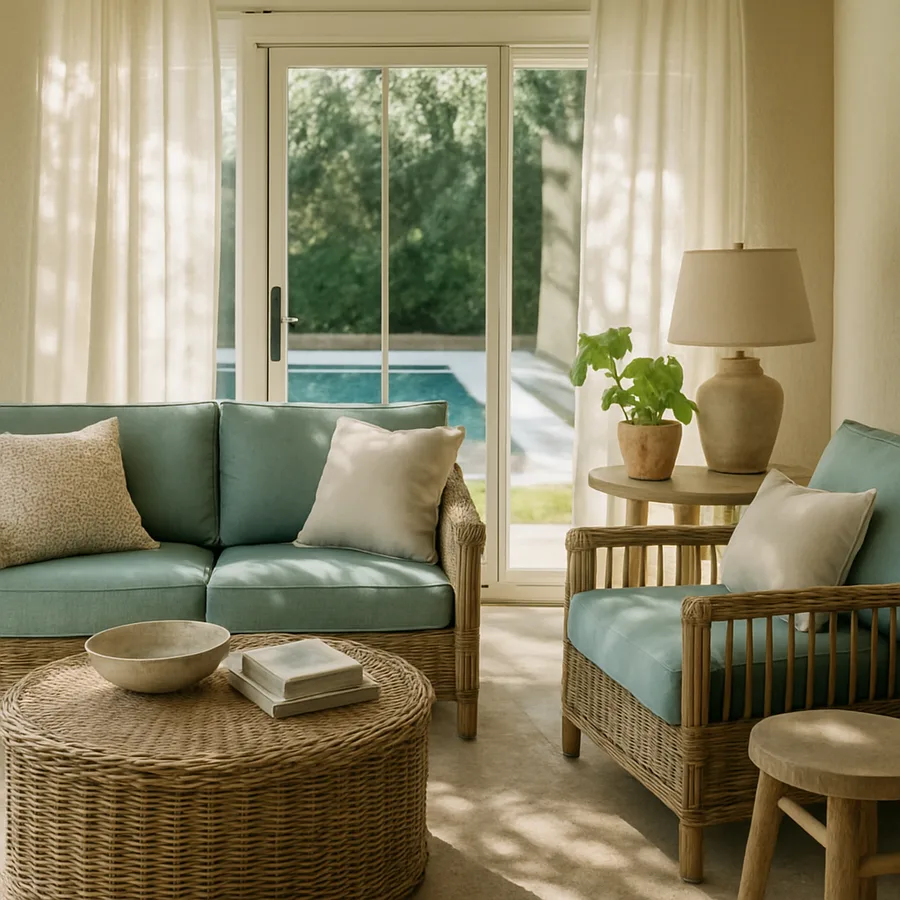
Pool house furniture has the strangest job in any home. It lives indoors, but it shares a humidity profile with the deck. It handles wet swimsuits, sunscreen-covered hands, and bare feet, but it is also expected to look like the kind of furniture you would happily put in a guest bedroom. It needs to survive a closed-up winter, a steamy summer, and the constant temperature swings of a three-season structure. Standard residential furniture, no matter how beautiful, will fail in this environment within a few seasons. The right indoor-outdoor furniture handles all of it without complaint and looks intentional doing so.
The American Society of Interior Designers (ASID) has tracked steady growth in the indoor-outdoor furniture category, driven by exactly this kind of transitional space, and the National Association of Home Builders (NAHB) reports that more than 70 percent of recent custom-home buyers ranked outdoor and three-season living spaces as a high priority. According to the Pool & Hot Tub Alliance (PHTA), the more than 10.7 million U.S. residential pools in service all need furniture nearby, and pool house pieces face a uniquely demanding microclimate. This guide covers what actually performs.
Understanding the Pool House Microclimate
The first step in choosing furniture is understanding what the room actually does to it. A pool house typically runs 20 to 40 percent higher humidity than the main house, especially during heavy use periods. Air conditioning is often absent or part-time. Doors open frequently, bringing in warm humid air and chlorine drift from the pool deck. Sun streams through large windows, accelerating UV degradation on textiles and finishes. Off-season closure traps stagnant humid air for months at a time.
This combination is more demanding than either a fully indoor or fully outdoor environment. Indoor furniture is not designed for this humidity load, and standard outdoor furniture is often visually too utilitarian for a space that doubles as a guest lounge or living area. The right pool house furniture sits in the middle category, sometimes called indoor-outdoor or three-season, with construction methods and materials that genuinely handle the conditions while looking refined enough for daily living.
Have you noticed how your existing pool house furniture has aged? If cushions have grown musty, frames have rusted at fasteners, or finishes have hazed and cracked, those are the symptoms of furniture chosen for the wrong microclimate. The good news is that the right materials and construction are widely available, and the cost premium over standard residential furniture is usually modest. The American Home Furnishings Alliance (AHFA) publishes guidance on furniture for transitional environments that is worth consulting before you specify.
Frame Materials That Actually Last
The frame is the bones of the piece, and the wrong frame material will fail invisibly until the day a leg snaps off or a joint pulls apart. Five frame materials handle pool house humidity reliably: marine-grade powder-coated aluminum, teak, ipe, HDPE (high-density polyethylene), and certain treated all-weather wicker over an aluminum core.
Powder-coated aluminum is the workhorse of high-end outdoor and indoor-outdoor furniture. It is light, completely rustproof when the powder coating is intact, and finishes range from matte black to bronze to nearly any custom color. Look for frames with welded rather than mechanically fastened joints, and inspect the powder coat for consistency at corners and underneath, which is where shortcuts usually show. Architectural Digest regularly features pool houses where the entire furniture program is built around aluminum frames precisely because of this combination of durability and design flexibility.
Teak is the classic outdoor hardwood for good reason. Its natural oil content makes it essentially impervious to humidity, and it ages from a warm honey color to a soft silver patina that many designers prize. Plantation-grown teak certified by the Forest Stewardship Council (FSC) is widely available and addresses the sustainability concerns that have made some homeowners wary of tropical hardwoods. Ipe is denser and even more durable but harder to work with and more expensive. HDPE, sometimes branded as recycled marine lumber, is unaffected by humidity and chemicals and increasingly available in colors and grain patterns that mimic real wood. Avoid ordinary hardwoods like oak, maple, or walnut, which will check, swell, and eventually fail in pool house conditions.
Fabrics, Cushions, and the Quick-Dry Revolution
Fabric and cushion construction is where most pool house furniture either succeeds or fails. The wrong upholstery will mildew within a single damp summer, and once mildew is established in a cushion it is nearly impossible to remove. The right combination handles wet swimsuits, occasional rain through an open door, and months of off-season storage without complaint.
The fabric standard for pool house upholstery is solution-dyed acrylic, with brand names like Sunbrella, Outdura, and Bella-Dura dominating the high-performance category. Solution-dyed means the color is added before the fiber is extruded rather than dyed onto the surface, so the color is genuinely throughout the fiber and resists fading even under sustained UV exposure. Most major brands carry warranties of five to ten years against fade and degradation, which is a reasonable benchmark for any fabric that will see real pool house conditions.
Foam choice matters as much as fabric. Standard closed-cell upholstery foam will absorb water and grow mildew within weeks in a pool house. Specify open-cell quick-dry foam, sometimes called reticulated foam, which is engineered to drain water rather than absorb it. Pair it with a breathable mesh liner between the foam and the outer fabric so air can move through the cushion even when it is sitting on a solid frame. The American Society for Testing and Materials (ASTM) publishes test methods for foam moisture performance that distinguish genuine quick-dry foam from marketing claims.
Wicker, Woven, and the Modern All-Weather Look
Woven furniture has been a pool house and patio favorite for decades, and modern all-weather wicker bears little resemblance to the natural rattan of earlier eras. Today's high-performance wicker is woven from HDPE or polyethylene resin strands over a powder-coated aluminum frame, producing pieces that look traditional or contemporary depending on the weave pattern but perform like outdoor furniture should.
The quality range in all-weather wicker is enormous. Inexpensive pieces use thin, brittle resin that cracks within a few seasons and unravels at edges. High-end pieces use thicker, hand-woven resin strands tested for thousands of hours of UV exposure and rated for genuine outdoor or three-season use. The American Home Furnishings Alliance (AHFA) notes that woven outdoor furniture is one of the categories where price and quality correlate most strongly, and a midrange-or-better piece will outlast three or four budget alternatives.
For pool house lounging, deep-seated wicker chairs and small wicker sectionals provide visual texture and warmth that pure aluminum or wood pieces sometimes lack. Pair them with quick-dry cushions in solution-dyed acrylic and you have a combination that handles humidity beautifully and reads as resort luxury rather than utilitarian patio furniture. Have you considered how the texture of woven pieces would balance the harder surfaces of tile, stone, or wood elsewhere in your pool house?
Tables, Storage, and the Functional Pieces
Tables and case goods in a pool house need the same humidity-tolerant construction as upholstered pieces, but the material choices are slightly different. Teak, ipe, and HDPE dominate the table category for good reason. Powder-coated aluminum with a porcelain or stone top is another excellent option, especially for dining tables that need to handle hot serving dishes and frequent wipe-downs.
Avoid wood veneers, MDF cores, and standard plywood case goods, all of which will swell and delaminate in pool house humidity. Solid wood (in the right species) or marine-grade plywood for hidden structure are the only construction methods that hold up across years of humid conditions. Storage pieces like benches with hinged seats, slim cabinets for extra towels, or bar carts for drink service all benefit from the same construction logic.
For coffee and side tables, concrete and cast stone have become popular options because they are essentially unaffected by humidity and provide visual weight that grounds a lounge area. The National Association of Home Builders (NAHB) notes that mixed-material furniture programs (a wood dining table, a stone coffee table, an aluminum bar cart) often read as more sophisticated than a matched set, and they age more gracefully because each material brings its own patina over time.
Hardware, Fasteners, and the Details That Fail First
The single most overlooked detail in pool house furniture is the hardware. A beautiful teak chair held together with ordinary plated steel screws will leak rust streaks down the wood within two seasons, ruining the visual appeal even though the wood itself is fine. Specify all visible and structural hardware as marine-grade 316 stainless steel, which handles chlorine and salt drift without spotting or pitting. Standard 304 stainless will work for less exposed applications but will eventually show staining in heavy pool environments.
Glides, casters, and feet deserve the same attention. Standard furniture glides will compress, rust, and fail in humid conditions. Specify marine-grade nylon glides or stainless steel adjustable feet that can be cleaned and replaced if needed. Casters, where used (such as on bar carts or rolling planters), should be rated for outdoor use with sealed bearings.
Joinery is the structural detail that determines how long a piece actually lasts. Mortise-and-tenon joinery in solid hardwood holds up beautifully across decades. Welded aluminum joints are equally durable. Mechanically fastened joints in any material will eventually loosen with the seasonal expansion and contraction of a pool house environment, requiring periodic tightening or, eventually, repair. The American Society of Interior Designers (ASID) publishes specification guides that distinguish joinery quality, and ASID resources are well worth consulting before any major furniture order.
Care, Storage, and the Long Life of a Good Piece
Even the best pool house furniture benefits from a simple care routine. The good news is that the routine is genuinely simple. A weekly wipe-down of frames with a damp cloth, a periodic wash of cushion covers in mild soap (most quality outdoor fabric covers are removable and washable), and a seasonal deep clean and inspection is enough to keep most pieces performing for ten to twenty years.
Sunscreen is the underrated villain of pool house furniture care. The oils transfer easily from skin to fabric to frame, and over time they discolor lighter fabrics and dull the surface of stone and aluminum tables. A quick wipe with a mild detergent solution after heavy use, especially on light-colored cushions, prevents the buildup that becomes nearly impossible to remove later. The International Sanitary Supply Association (ISSA) publishes residential cleaning guidance that aligns well with pool house realities, and most outdoor fabric manufacturers publish specific care instructions on their websites.
Off-season storage matters more than most homeowners realize. Even in a fully enclosed pool house, leaving cushions stacked tightly against humid walls for months invites mildew. Store cushions upright with air space between them, ideally in a breathable storage bag rather than a sealed plastic bin. Cover or move furniture away from windows where intense winter sun can degrade fabrics even in a closed-up space. Have you thought about where your furniture will live during the months you do not use the pool house, and whether that storage spot has any of the same humidity issues as the main room?
Conclusion: Build a Furniture Program That Lasts
The pool house furniture programs that look beautiful five and ten years in share a few clear traits. They use frame materials that genuinely handle humidity, not just materials that look outdoorsy in a showroom. They specify cushions with solution-dyed acrylic covers and quick-dry foam cores, not ordinary residential upholstery dressed up with a marketing label. They invest in marine-grade hardware where it counts, because a single rust streak on a beautiful teak chair ruins years of otherwise good performance. They balance materials so the room reads as designed rather than utilitarian.
The investment is real but the return is significant. A $4,000 quick-dry sectional that lasts twelve years is dramatically cheaper than three $1,500 indoor sectionals each replaced after four mildew-ridden summers. The American Home Furnishings Alliance (AHFA) consistently emphasizes that lifecycle cost, not sticker price, is the right way to evaluate furniture for demanding environments, and pool houses are one of the most demanding environments in residential design.
The most successful pool house furniture programs also feel like real living rooms rather than upgraded patios. They include a few unexpected pieces (a small bar cart, a leather-look HDPE accent chair, a stone-topped console) that lift the room out of the standard outdoor-furniture vocabulary. They layer textiles and accessories within the same humidity-tolerant performance category. They pay attention to the small details, the lamp finish, the rug fiber, the side table material, that determine whether the room feels designed or assembled.
Ready to plan your program? Make a real list of how you actually use your pool house through a typical season, including the wet morning swims, the long lounging afternoons, the family dinners, and the late-evening conversations. Bring that list to a licensed designer or a furniture specialist who works regularly with three-season spaces, share this guide as your shared vocabulary, and ask them to design a furniture program that fits your real life rather than a magazine photograph. The furniture you end up with will carry you through a decade of pool seasons looking as intentional in year ten as it did the day it arrived.
More Articles You May Like



Comments
Post a Comment