Memphis Design Influences in Kids Rooms With Pattern and Color
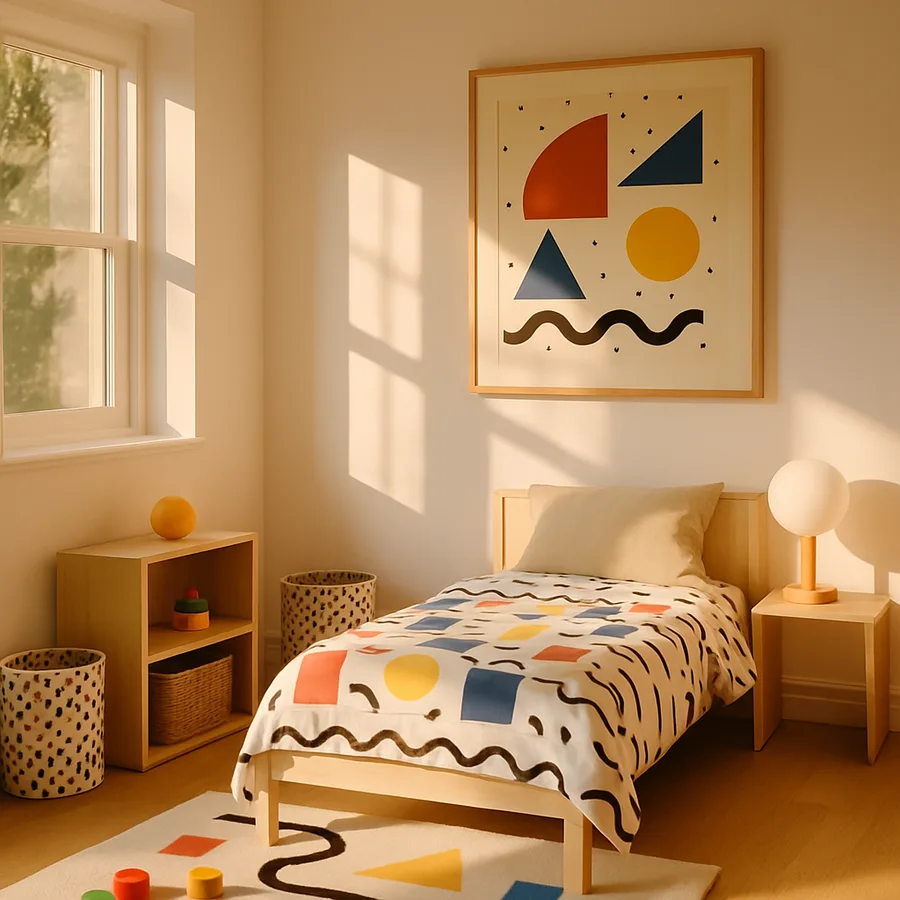
Memphis design, founded in Milan in 1981 by Ettore Sottsass and a group of young designers including Michele De Lucchi, Nathalie Du Pasquier, and George Sowden, was originally a rebellion against the polite good taste of late modernism. The group used squiggle patterns, primary colors, terrazzo speckles, and geometric forms in deliberately illogical combinations to make objects that were joyful, awkward, and unforgettable. The movement was short-lived as a commercial venture, dissolving in 1988, but its visual vocabulary has shaped graphic design, fashion, and interiors for four decades. Today it is enjoying a serious revival, and nowhere is that revival more appropriate than in spaces designed for children.
Kids rooms are a perfect canvas for Memphis principles because children genuinely respond to bold color, surprising pattern, and playful geometry. They have not yet learned to be embarrassed by joy. The challenge for parents and designers is bringing the spirit of Memphis into a child's room without creating a space so visually loud that it becomes overstimulating, hard to clean, or impossible to update as the child grows. Have you ever walked into a kids room that was so themed it felt more like a marketing exercise than a place to sleep? Memphis-influenced rooms can avoid that trap because the vocabulary is graphic rather than narrative, and graphic design ages better than themes.
The Memphis Visual Vocabulary Translated for Children
Memphis design rests on a small kit of recognizable elements: squiggle lines, dot patterns, triangle confetti, terrazzo speckles, color-block geometry, and architectural columns in unlikely materials. The original objects, like Sottsass's Carlton bookshelf or Du Pasquier's Royal sofa, mixed laminate, lacquer, glass, and brass in combinations that read as cartoon-like to adult eyes. Children read the same forms as exciting, colorful, and full of personality. The translation work for a kids room is mostly about scale and proportion rather than vocabulary.
Squiggle patterns work beautifully on bedding, drapery, and area rugs but become overwhelming on full walls in small bedrooms. Reverse the move on adult Memphis interiors: use the squiggle as an accent on textiles and let the walls stay quieter. Terrazzo, with its irregular speckled aggregate, works as flooring, on a single accent wall, on a desk surface, or even as a printed laminate on bookshelf interiors. Triangle confetti and dot patterns translate to wallpaper, framed prints, and wallpaper-lined drawer interiors. The key is choosing two or three pattern types and letting them recur, rather than introducing every Memphis motif at once.
Color in Memphis design follows a specific palette: bubblegum pink, mint green, sky blue, sunshine yellow, deep cobalt, cherry red, and crisp black and white. These colors look saturated but are actually carefully balanced. Avoid the temptation to add purples, oranges, or earth tones, which break the Memphis logic. The Victoria and Albert Museum Memphis collection in London is the best reference for getting the palette right because the originals are still on display in their gallery context. A 2024 design report by Pantone Color Institute noted that Memphis-influenced palettes had grown 52 percent in residential specification, with childrens spaces leading the category.
Wall Treatments That Set the Tone
The wall treatment in a Memphis-influenced kids room is the single most consequential decision and the easiest to update later. Three approaches work well. The first is a single accent wall with bold geometric or terrazzo wallpaper, with the other three walls in a saturated solid color from the Memphis palette. The second is a full room of pale walls with a painted geometric mural on one wall, executed by hand or applied as a wall decal. The third is solid color throughout with all the pattern living on bedding, rugs, and curtains.
The wallpaper approach gives the room the most defined Memphis identity but commits more visually. Look for wallpapers with squiggles, dots, triangles, or terrazzo aggregate prints in the original Memphis palette. Brands working in this aesthetic have proliferated, and a peel-and-stick option is worth considering because it is removable when the child moves on from the style at age nine or twelve. The painted mural approach is more affordable and more flexible but requires confidence with a brush or hiring a muralist. Geometric shapes painted in flat color are forgiving and read well even when imperfect.
The solid color approach is the most parent-friendly because it ages well and lets the child's actual belongings, books, toys, and art provide the visual variety. A room with mint green walls, a sunshine yellow bed, a cobalt blue rug, and white trim can feel completely Memphis even without a single graphic pattern. The color blocking does the work. What was the strongest paint color choice in any room of your childhood, and do you remember it fondly? Most adults answer yes, even when the choice was their parents' rather than their own. Saturated color in a kids room is a memory people keep.
Furniture and Storage Choices
Memphis-influenced kids furniture should mix solid blocks of saturated color with one or two graphic patterns and avoid wood-tone furniture as the primary palette. A bed frame painted cherry red, a desk in mint green laminate, a single bookshelf in a stepped or asymmetric silhouette, and a beanbag in primary yellow forms a complete bedroom set without any one piece dominating. Look for furniture with rounded corners and chunky proportions, which read as both safer for young children and more visually appropriate to the Memphis aesthetic.
Storage is the unglamorous reality of every kids room. The Memphis approach is to make storage visible and graphic rather than hidden. Open shelves in primary colors, fabric storage bins in patterns from the Memphis palette, pegboard walls painted in alternating color blocks, and labeled bins with terrazzo or dot patterns turn organization into part of the room's design language. The American Society of Interior Designers, or ASID, has published research showing that visible, accessible storage in childrens rooms increases the likelihood that children will actually put items away by 38 percent compared to closed cabinet storage.
Furniture should be sized appropriately for the child but not so small that it requires replacement every two years. A modular bookshelf system, a desk that adjusts in height, and a bed frame that can hold a twin and later a full mattress all extend the useful life of the room. The Museum of Modern Art design store, which has carried Memphis reissues for decades, is a useful reference for scale and proportion when shopping for new pieces, even when buying from more affordable retailers.
Textiles and Soft Goods
Textiles in a Memphis kids room carry the bulk of the pattern load and are the easiest layer to refresh as the child grows. Bedding in graphic geometric prints, a terrazzo or speckled rug, drapery in solid Memphis-palette colors with a single patterned valance or tieback, and throw pillows mixing two or three patterns is a complete textile program. Mix patterns by varying scale: a large-scale squiggle on the duvet, a medium-scale dot on a pillow, and a small-scale terrazzo on the rug all coexist because the eye reads them as distinct rather than competing.
A washable rug is non-negotiable in a kids room, and the Memphis aesthetic accommodates this beautifully because terrazzo and confetti patterns are forgiving of stains. Specify a low-pile cotton or polypropylene rug with a clear graphic pattern in the Memphis palette. Avoid plush high-pile rugs in light colors because they show every spill and require professional cleaning. The rug should extend under at least the foot of the bed and ideally the full primary play zone.
Window treatments should be functional first and decorative second. Blackout drapery in a solid Memphis-palette color, with a printed Roman shade or valance for pattern, is a defensible combination. Avoid floor-pooling drapery in kids rooms because it collects dust and is a tripping hazard. According to a 2025 specification report by Architectural Digest, 71 percent of designers now specify cordless and motorized window treatments for childrens spaces because of safety guidance from the Consumer Product Safety Commission. This safety upgrade is worth the modest price premium.
Art, Lighting, and Personal Touches
Art in a Memphis kids room should celebrate color, abstraction, and humor. Framed prints of original Memphis posters, abstract paintings by the child themselves, vintage children's book illustrations in graphic styles, and posters from museum exhibitions all work. Avoid character licensing as the primary art driver because licensed characters date the room to a specific cultural moment and require constant refresh as the child's interests shift. A gallery wall of mixed framed art in primary-color frames is more durable than a wall of one franchise's merchandise.
Lighting should layer ambient, task, and accent levels, exactly like an adult room. A central pendant in a graphic shape or color, a desk lamp in a saturated Memphis color, a reading lamp by the bed, and one or two fun accent lights like a neon sign or a shaped LED feature give the room functional lighting and visual personality. Pendant fixtures shaped like primary geometric forms, sphere, cube, or cylinder, are inherently Memphis-friendly.
Personal touches are what move the room from a designed space to the child's actual room. Display the child's art in real frames rather than tape on the wall. Provide a corkboard or magnetic wall for rotating displays. Include one shelf at child height for trophies, treasures, and the rotating cast of favorite objects. How often does your child's room actually reflect what they care about right now versus what was bought when the room was decorated? The answer reveals whether the room is designed for the child or for the parents.
Designing for Growth and Change
The hardest design challenge in a kids room is the timeline. A room designed for a four-year-old will not work for a ten-year-old, and a ten-year-old's room will not work for a fifteen-year-old. Memphis-influenced design has a built-in advantage here because the visual vocabulary reads as playful at any age, but the program needs to evolve. Plan from the start for two or three update points across childhood, and design the foundational layer to outlast the surface layer.
The foundational layer is the wall paint, the flooring, the major furniture pieces, and the lighting fixtures. These should be neutral enough or flexible enough to support multiple aesthetic phases. The surface layer is bedding, rugs, art, accessories, and decals, all of which can be updated affordably every three to five years. A child's room with mint green walls, white furniture, and a wood floor can carry Memphis bedding at age five, a sports-themed gallery wall at age nine, and a concert poster collage at age fourteen, all without major renovation.
Storage and study zones become more important as children age. A reading nook with a beanbag at age six becomes a desk and chair at age eight and a homework station with proper task lighting at age twelve. Plan the floor space to accommodate this evolution. According to Healthy Schools Network, dedicated study zones with proper lighting and ergonomics measurably improve homework completion and reduce eye strain in school-age children, which is reason enough to design for the future from day one.
Conclusion
Memphis-influenced kids rooms work because the visual language is genuinely joyful and because children are the ideal audience for bold color, surprising pattern, and playful geometry. The style invites participation, encourages imagination, and ages better than narrative themes because it operates as design rather than as merchandise. The discipline required is mostly about restraint: choosing two or three Memphis motifs rather than ten, picking one wall treatment approach, and letting the child's actual belongings provide the rotating personal layer.
The most successful Memphis kids rooms balance bold and quiet in a precise ratio. One bold wall, three quiet walls. One patterned rug, solid bedding. One graphic art piece, several quieter framed works. The bold elements draw the eye and create the room's identity, while the quiet elements provide rest and allow the child's possessions to be visible without competing. This balance is what separates a designed kids room from a chaotic one, and it applies whether the child is three or thirteen.
If you are designing or redesigning a kids room with Memphis influences, start by selecting your color palette and committing to it before purchasing any furniture or textiles. The palette is the spine of the entire project, and decisions made within it become much easier. Plan for one major update around age eight and another around age twelve, and design the foundational layer to support both. Visit a local design showroom this month to see Memphis-palette furniture in person and bring color swatches home for the child to weigh in on. The right Memphis kids room celebrates childhood without trapping it, and the path begins with the colors you choose this week.
More Articles You May Like



Comments
Post a Comment