Hot Tub Built Into Deck Construction With Reinforced Framing
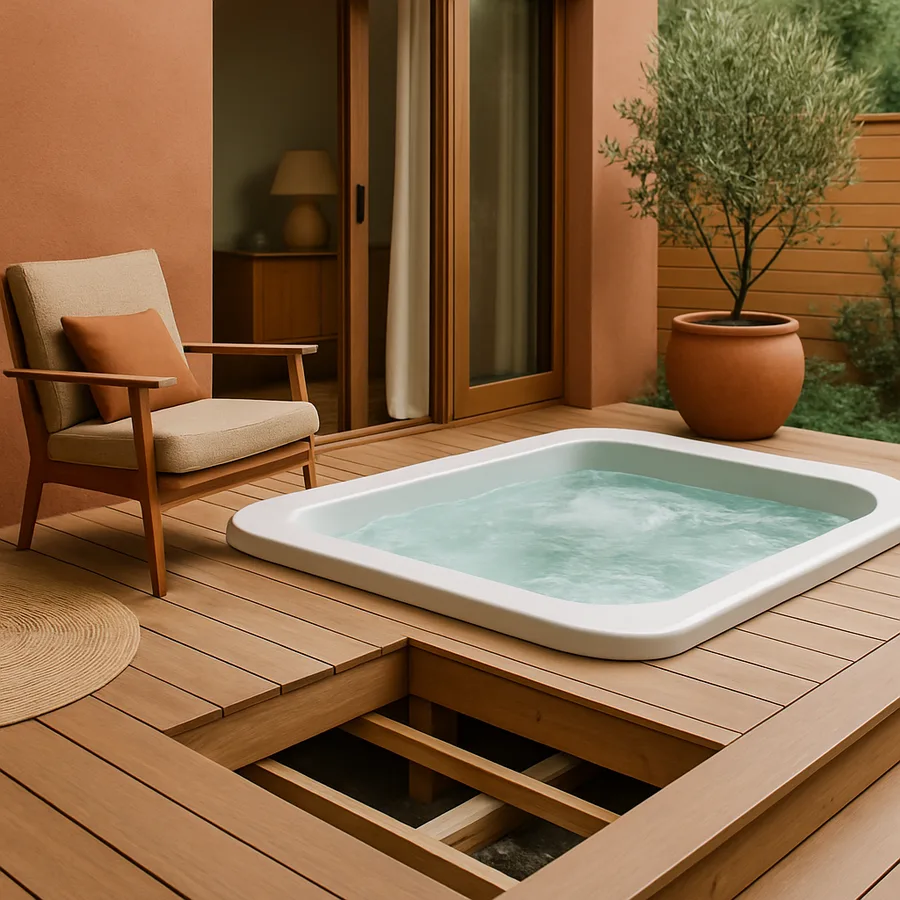
A hot tub recessed into a deck looks effortless and is anything but. The visual move is straightforward: drop the tub so the rim sits flush with the decking, surround it with composite or hardwood, and you get an outdoor wellness installation that reads as architecture rather than equipment. The structural and code work behind that move is considerable. A filled spa with bathers concentrates more weight in a small footprint than almost anything else a residential deck will ever carry, and the consequences of getting the math wrong are not theoretical.
This guide is the framing-and-foundation version of the conversation, written so that homeowners can brief a structural engineer and a deck contractor competently and so that DIYers can recognize when the project has crossed the line from carpentry into licensed engineering. The numbers below are typical for a six-person tub on a residential rear deck; your specific build should be confirmed by an engineer or a contractor pulling stamped drawings.
Why Recessed Tubs Demand More Than Standard Decks
A standard residential deck is engineered for a 40 pounds per square foot live load with a 10 to 15 pounds per square foot dead load, per International Residential Code requirements. That assumes people, furniture, snow, and the occasional party. A filled six-person hot tub weighs roughly 4,500 to 6,500 pounds with water and bathers, distributed across a footprint of typically 50 to 80 square feet. The point load on the deck framing under the tub is on the order of 80 to 120 pounds per square foot, which is two to three times what the structure is designed for.
The result is straightforward and unforgiving. A standard deck cannot safely support a hot tub. Recessing the tub also removes the option of placing it on a concrete pad on grade, which is the simplest engineering solution. The recess must be supported on its own framing, and that framing must transfer the load to the ground through additional posts and footings beyond what a normal deck would have. The American Wood Council's Deck Construction Guide (DCA 6) explicitly notes that hot tubs and spas require engineered framing distinct from typical deck design.
None of this means the project is unreasonable. Tens of thousands of recessed-tub decks exist and perform well for decades. The cost is doing the structural work properly, including additional posts, larger or doubled joists, possibly a beam directly beneath the tub footprint, and footings sized for the concentrated load.
Foundation and Footing Requirements
Footings under a hot tub deck must be sized to the actual concentrated load, not the standard deck-load tables. A typical configuration uses four to six dedicated concrete pier footings directly beneath the tub corners and at midpoints of the perimeter, with each footing sized to roughly 24 inches in diameter and extending below the local frost line. The National Association of Home Builders notes that frost depth varies from 0 inches in southern Florida to 60+ inches in northern Minnesota; the footing must extend below this depth or the freeze-thaw cycle will lift it and crack the framing above.
The footings are typically poured concrete with rebar reinforcement. A 24-inch diameter pier four feet deep contains roughly 12 to 14 cubic feet of concrete, or about half a cubic yard per footing. For a recessed-tub deck with six dedicated tub footings, the concrete order alone is roughly three cubic yards. Mixing this on site with bagged concrete is impractical above one or two footings; for a project this size, order ready-mix delivery.
An alternative for some sites is a continuous concrete pad beneath the tub footprint, four to six inches thick with 1/2-inch rebar at 12 inches on center, extending beyond the tub footprint by at least 12 inches on all sides and supported on undisturbed or compacted soil. The pad approach is common when the tub footprint sits within a foot of grade and there is room to excavate. The deck framing then sits on the pad through pressure-treated sleepers, transferring the load directly to the pad and through it to the soil.
Joist Sizing and Framing Reinforcement
Standard residential deck framing uses 2x8 or 2x10 joists at 16 inches on center, supported on a beam every 8 to 12 feet. Under a recessed hot tub, that framing is inadequate by every span table. The standard reinforcement strategies are tighter joist spacing, larger joist depth, doubled or tripled joists, or a dedicated beam directly beneath the tub, often in combination.
A common engineered solution for a six-person tub uses 2x10 joists at 12 inches on center, doubled directly beneath the tub footprint, with a tripled 2x10 or 2x12 beam running the long dimension of the tub directly under its midline, supported by dedicated posts to the footings below. The decking around the recess is normal but the framing immediately beneath and adjacent must be upsized. The American Wood Council's span tables in DCA 6 will not cover this directly; an engineered design with stamped drawings is appropriate and typically required by inspectors.
Lateral loads are also a consideration. A filled tub above frost line on a tall deck creates a tipping moment in seismic and high-wind scenarios. Lateral bracing using diagonal knee bracing or galvanized steel hold-downs at posts is required by code in many jurisdictions and recommended in all of them. The International Residential Code Section R507 covers deck lateral connections explicitly; the requirements have tightened in successive code cycles after a number of high-profile deck collapses.
Electrical, Bonding, and Code Compliance
The electrical for a hot tub is governed by NFPA 70 (the National Electrical Code) Article 680, which is one of the most heavily-cited sections of the code in residential inspections. The basics: a 240-volt 50-amp or 60-amp dedicated GFCI-protected circuit, the disconnect within sight of the tub but not closer than five feet, and equipotential bonding of all metal components within five feet of the water.
The bonding requirement catches DIYers regularly. NEC 680.26 requires a #8 solid copper bonding conductor connecting all metal parts of the tub, the equipment, and any metal within five feet of the water surface, including reinforcing steel in the deck framing if exposed metal connectors are used. The purpose is to prevent dangerous voltage gradients in the unlikely event of a fault. Bonding is checked by inspectors with a multimeter and is one of the most common reasons for a failed hot tub electrical inspection.
Have you considered whether your existing electrical panel has the headroom for a 50-amp 240-volt circuit? Many older homes with 100-amp service are already at 70 to 80 percent load and require a service upgrade to add a tub safely. The cost of a panel upgrade ranges from $1,800 to $4,500 depending on local rates and complexity, and is a hidden cost that many tub buyers discover only after the dealer schedules the install. Confirm panel capacity before you fall in love with a particular tub.
Waterproofing, Drainage, and Skirting Details
The recessed installation creates a subtle drainage problem. Splash water, rain, and the inevitable overflow from getting in and out collect in the recess and soak the framing immediately beneath the tub apron. Without active drainage, this water rots the framing in a region you cannot inspect easily. The standard solution is a sloped membrane or pan beneath the tub that drains to a small floor drain or a gravel sump.
The pan can be a heat-welded EPDM or TPO membrane, a fiberglass pan custom-built for the application, or a sheet-metal tray with soldered seams. The slope should be at least 1/4 inch per foot toward the drain, and the drain should daylight to grade or to a dry well rather than tying into the home's perimeter drainage. The American Society of Home Inspectors reports that improperly drained recessed-tub installations are among the most common sources of hidden deck rot, with damage often invisible from above for five to ten years before structural failure becomes apparent.
Skirting around the tub serves both aesthetic and practical roles. The skirting hides the tub apron and equipment access panels while still allowing service access. Composite or thermally modified hardwood skirting with concealed fasteners and a removable section over the equipment compartment is the contemporary standard. Avoid permanent skirting that locks you out of the equipment; every tub will need pump or heater service eventually and a sealed skirt turns a one-hour service call into a half-day demolition.
Deck Decking, Surround, and Slip Considerations
The decking material around the tub takes more abuse than typical decking. It is wet most of the time the tub is in use, exposed to chemical splash from sanitizers, and walked on with bare wet feet that find slick surfaces unforgiving. The three reasonable choices are thermally modified hardwood, premium grooved composite, or hardwood with a textured oil finish that provides traction.
Thermally modified ash, accoya, and ipe are the high-end choices and behave well in the presence of chemical splash. Standard pressure-treated pine works structurally but the surface degrades quickly under daily wet use and requires aggressive maintenance. Composite decking has improved dramatically and grooved or embossed surfaces from major manufacturers offer slip resistance superior to many wood options. The American National Standards Institute publishes ANSI A137.1 with slip resistance criteria; surfaces around water should target a wet dynamic coefficient of friction of 0.42 or higher.
The transition between the deck surface and the tub rim deserves design attention. A flush-set tub with its rim sitting at exactly deck height looks clean and works well if drainage is correct. A slightly raised rim (a half-inch above deck level) creates a visible threshold and prevents debris from washing into the tub during storms. Both approaches are valid; the choice is largely aesthetic. Avoid recessing the tub below deck level, which creates a permanent water-collection bowl in the surround.
Permits, Engineering, and Realistic Budgets
Permits are required for both the deck and the hot tub electrical in nearly every jurisdiction. A recessed-tub deck typically requires a structural permit with stamped engineered drawings rather than a standard prescriptive deck permit, because the load conditions exceed what prescriptive tables cover. Engineering fees for a residential recessed-tub deck typically run $800 to $2,500 depending on complexity and local market rates, and that is money exceptionally well spent.
The total budget for a recessed-tub deck, exclusive of the tub itself, typically runs $15,000 to $40,000 for an average-sized installation. The tub adds another $6,000 to $20,000 for a quality six-person unit. That puts the realistic all-in number for a serious project somewhere between $25,000 and $60,000, including engineering, permits, electrical, deck structure, decking, and the tub. Cheaper projects exist; cheaper projects often have problems by year five.
According to the National Association of Home Builders remodeling impact survey, outdoor wellness installations including hot tubs and recessed spa decks recover roughly 50 to 70 percent of their cost at resale in markets where outdoor living is valued, and contribute to faster days-on-market in nearly all markets. The investment is justifiable on resale terms in many cases and easily justifiable on use terms if the homeowner actually uses the tub regularly.
Conclusion
A hot tub recessed into a deck is one of the most rewarding outdoor installations a homeowner can commission, and one of the easiest to build wrong. The visual payoff is genuinely worth the structural complexity, but the structural complexity is real and is not optional. The framing beneath the tub must be designed for the actual load, the footings must extend below frost depth and be sized for concentrated bearing, the electrical must comply with Article 680 of the NEC including bonding, and drainage beneath the recess must be planned during framing rather than retrofitted later.
Hire a structural engineer for the design, hire an electrician familiar with hot tub installations for the wiring, and hire a deck builder who has done at least three recessed-tub projects rather than the cheapest contractor with availability. The premium for experienced trades on a project of this complexity is typically 15 to 25 percent over the cheapest bid, and it eliminates roughly 90 percent of the problems that show up in years two through ten. Bring stamped drawings to the inspector before framing starts; the inspector is your second set of eyes and is generally happy to discuss the design before construction rather than after.
Plan for the long term in the details. Use stainless or hot-dip galvanized hardware throughout the structure, since the tub equipment will produce occasional chemical splash and the framing beneath the recess will live in a high-humidity microclimate. Specify a removable equipment access panel rather than a sealed skirt. Document the build with photographs of the framing and waterproofing before the decking is installed; future you will thank present you the first time a service technician needs to know what is under the deck.
Begin your project this month by requesting a site visit from a structural engineer and a deck builder simultaneously. Ask each for a rough scope and a rough budget before commissioning drawings. Confirm panel capacity with a licensed electrician, and verify your local frost depth with the building department. For authoritative reference on framing standards and electrical code, consult the American Wood Council and the National Fire Protection Association directly, and ask your contractor which specific code editions your local jurisdiction has adopted before drawings are finalized.
More Articles You May Like



Comments
Post a Comment